


TL;DR: Scytale vs Optro vs Workiva
- SOX ITGC compliance involves managing access controls, change management, and IT operations to ensure system integrity and reliability.
- Traditional methods like manual sampling and periodic testing hinder real-time control visibility, leading to reactive compliance.
- SOX ITGC automation streamlines evidence collection, control validation, and continuous monitoring across systems.
- Scytale stands out as a leading SOX ITGC compliance platform, offering 24/7 deficiencies monitoring and seamless integration to ensure continuous audit readiness.
- Selecting the right SOX platform depends on an organization’s specific needs for automation, visibility, and scalability.
SOX ITGC compliance is an ongoing operational challenge, requiring teams to manage numerous controls across systems, users, and processes while meeting tight audit deadlines and ensuring complete accuracy. Many SaaS organizations still rely on fragmented tools, manual sampling, and time-consuming evidence collection, which limits visibility and increases pressure on leadership.
As Governance, Risk, and Compliance (GRC) requirements become more complex, traditional methods struggle to keep up. Manual workflows, sampling errors, and disconnected systems prevent real-time ITGC control visibility, resulting in reactive compliance. Compliance automation platforms like Scytale, Optro (previously AuditBoard), and Workiva each offer unique solutions to these challenges. Understanding these differences is crucial when selecting the right compliance software.
In this article, we’ll compare how Scytale, Optro, and Workiva address key aspects of SOX ITGC compliance, helping you make an informed choice for your organization.
Overview of Scytale, Optro (AuditBoard), and Workiva
Scytale, Optro, and Workiva each support SOX compliance, but with different focuses. Scytale is the top AI GRC platform, designed to streamline SOX ITGC compliance through ITGC automation, SOX audit management and continuous monitoring. Scytale connects directly to systems to extract data, monitor controls in real time, and automatically generate audit-ready working papers. This approach reduces manual work, increases visibility, and ensures ongoing SOX audit readiness, allowing teams to stay compliant year-round.
Optro, formerly known as AuditBoard, focuses on audit and risk management workflows, providing structured processes for control management, testing, and issue tracking. While it helps standardize and document compliance activities, it continues to rely on manual inputs and periodic testing, which can be time-consuming.
Lastly, Workiva adopts a reporting-first approach, with strong capabilities in financial reporting and documentation. While it supports SOX ITGC compliance, its strengths are primarily in reporting and audit coordination, rather than in continuous control monitoring and automation, making it less suited for real-time compliance.
Streamline GRC workflows with no blind spots.
Key SOX ITGC features and controls
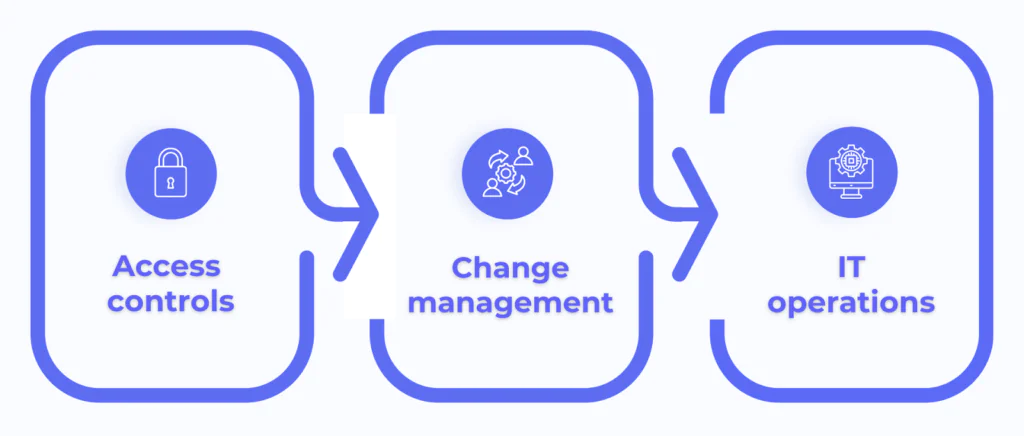
SOX compliance revolves around three core control areas that ensure the integrity, security, and reliability of financial systems. While Scytale, Optro, and Workiva support these areas, each platform differs in how ITGC controls are monitored, tested, and documented.
Access controls
Access controls are essential for ensuring that only authorized users can access systems and sensitive data, covering aspects such as user provisioning, deprovisioning, and periodic access reviews. Scytale continuously validates access across systems in real time, providing continuous, automated oversight. In contrast, Optro and Workiva primarily rely on structured reviews, certifications, and manual evidence collection.
Change management
Change management ensures that all system and application changes are properly tested, approved, and documented before deployment to reduce risk. Scytale automates change tracking and approval validation directly from source systems, whereas Optro and Workiva primarily manage this through periodic testing cycles.
IT operations
IT operations controls ensure systems run reliably through processes like backups, job monitoring, and incident management. Scytale continuously monitors these activities and generates up-to-date working papers automatically, while Optro and Workiva depend more on scheduled testing, documentation, and manual validation.
💡 For more details, take a look at our 5-step guide to ITGC for SOX compliance to better understand how to streamline controls, evidence collection, and audit readiness.
Automation and evidence collection for ITGC audits
Evidence collection is one of the most resource-intensive aspects of a SOX ITGC audit, which is why many organizations turn to SOX compliance tools to optimize and automate the process. It is also where many of the biggest inefficiencies arise.
In many organizations, evidence collection still involves manual exports, screenshots, and cross-team coordination, making the process time-consuming and prone to errors. As audit requirements increase and environments become more complex, this approach becomes harder to scale. Automation plays a critical role in addressing this challenge by enabling continuous evidence collection, improving data accuracy, and reducing the operational burden on teams. Here’s an overview of how Scytale, Optro, and Workiva handle evidence collection:
Scytale
Scytale revolutionizes evidence collection by automating the process and integrating seamlessly with core systems like IAM, HRIS, ERP, and cloud platforms. It continuously validates control data, generates real-time audit-ready evidence, and eliminates manual intervention. For example, instead of exporting user access reports manually, Scytale captures access changes and logs time-stamped evidence automatically, reducing reliance on screenshots and periodic sampling, and providing more consistent, real-time data.
Optro (AuditBoard)
Optro employs structured workflows to manage evidence collection, where control owners are tasked with uploading supporting documentation during designated testing cycles. Although this approach ensures a documented traceable record, it still relies heavily on manual data exports, reviews, and uploads, which can extend the process and introduce delays.
Workiva
Workiva platform facilitates evidence collection by centralizing documentation and linking data across reports and systems. Teams can connect data sources to ensure consistency across financial and compliance reports while attaching supporting documents to controls. However, much of the evidence collection process still depends on manual coordination and validation, which can limit the overall efficiency of the process.
ITGC audit workflow and working papers
IT General Controls (ITGC) audits require efficient workflows, clear ownership, and well-documented working papers to support audit conclusions. A SOX ITGC platform’s approach to testing, documentation, and collaboration significantly impacts audit efficiency, quality, and GRC readiness.
Scytale
Scytale excels in streamlining the ITGC audit process through AI-powered automation. By continuously extracting data from integrated systems, Scytale automatically conducts control testing and generates working papers in real time. Audit evidence, timestamps, and test results are immediately documented and stored in a centralized dashboard. Rather than relying on manual processes like compiling spreadsheets and screenshots, auditors can access pre-built working papers with linked evidence and control results. Collaboration among IT, security, and audit teams is seamless, with efficient ownership, automated notifications, and full visibility across all controls, ensuring a faster and more accurate audit process.
Optro (AuditBoard)
Optro (AuditBoard) compliance software offers a structured approach to audit execution through predefined workflows. Auditors can assign control testing tasks, track progress, and review uploaded evidence within the platform. Working papers are generated through documented test procedures, sign-offs, and attached evidence. While this creates a standardized audit trail, much of the testing and documentation process remains manual and dependent on cross-team coordination.
Workiva
Workiva emphasizes collaboration and documentation throughout the audit lifecycle. Teams can link data, controls, and narratives across reports while ensuring version control and maintaining audit trails. Working papers are created and managed within the platform, typically tied to broader financial reporting processes. While collaboration is a key strength, control testing and evidence collection often require manual input, limiting automation in the audit process.
Integrations for ITGC compliance: ERP, cloud, and identity systems
Integrations are critical to effective IT governance and SOX ITGC compliance by facilitating the seamless collection, validation, and monitoring of control data across ERP systems, cloud infrastructure, and identity providers. The depth, flexibility, and automation capabilities of these integrations are key to optimizing evidence collection, continuous monitoring, and audit readiness.
Scytale
Scytale offers direct integrations with ERP, IAM, HRIS, ITSM, and cloud systems, along with custom integrations that allow organizations to connect any system to the platform. This enables continuous extraction and validation of control data across complex environments. It automatically captures access logs, tracks approvals, and monitors configurations in real time, supporting continuous control testing and automated evidence collection while reducing manual effort.
Optro (AuditBoard)
Optro supports integrations primarily to streamline workflows and centralize data. It enables teams to connect systems or import data to assist with audits, but evidence collection often still requires manual uploads or scheduled data extraction. While these integrations improve organization, they offer limited impact on continuous monitoring and real-time validation.
Workiva
Workiva focuses on linking data across financial and compliance reports to ensure consistency and traceability. Its integrations help align data sources and maintain documentation cohesion, but they are less effective when it comes to automating control validation at the system level or enabling continuous monitoring.
Get SOX ITGC Compliant
Reporting, dashboards, and ITGC documentation
Effective SOX reporting and clear visibility are crucial for managing ITGC compliance and ensuring audit readiness across all teams and stakeholders.
Real-time dashboards for control status
Modern ITGC platforms provide intuitive dashboards that give a real-time view of security and compliance posture across all systems, allowing teams to quickly identify effective controls, critical deficiencies, and areas needing attention. This enables proactive monitoring and rapid response to compliance gaps.
Reporting for internal teams and executives
Internal teams require detailed, actionable insights into control performance and remediation efforts, while executives need high-level reports on risk and audit readiness. Continuous, updated reporting ensures timely decision-making and aligns teams with broader compliance objectives.
Reporting for external auditors
External auditors require well-organized, traceable documentation to assess control effectiveness and validate compliance. Automated, time-stamped evidence and control logs simplify the audit process and ensure consistency in the documentation.
Exportable documentation
Exportable documentation, such as working papers and control summaries, is essential for finalizing the audit process. Automated generation of audit-ready documentation reduces manual effort and ensures consistency across audit packages.
Scytale, Optro, and Workiva for ITGC: Pros and cons
Choosing the right SOX ITGC platform depends on balancing manual effort with automation. While all three platforms support ITGC audit workflows, their respective strengths and weaknesses are highlighted through their automation capabilities, ease of use, and ability to keep organizations audit-ready year-round.
Scytale
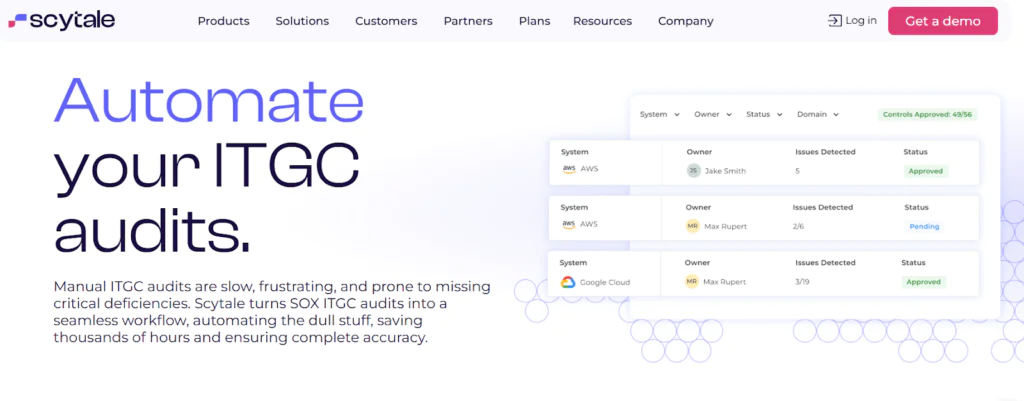
(Screenshot from Scytale’s website)
Pros:
- ITGC automation with real-time control monitoring, 24/7 deficiency detection, and full visibility into your security and risk posture
- SOX audit management with automated working papers, streamlined audit workflows, and audit-ready documentation
- AI-powered ITGC testing with Scy, the AI GRC agent, to identify gaps, automate control testing, and prioritize remediation
- Seamless integrations with ERP, IAM, HRIS, ITSM, and cloud systems for centralized control validation
- Continuous monitoring of access reviews and change management controls to ensure proper authorization and documentation
- Dedicated GRC expert support to guide implementation, testing, and ongoing SOX compliance
- Customizable Trust Center to clearly showcase your security and compliance posture
Cons:
- Requires initial system integrations to fully unlock its capabilities
Optro (AuditBoard)
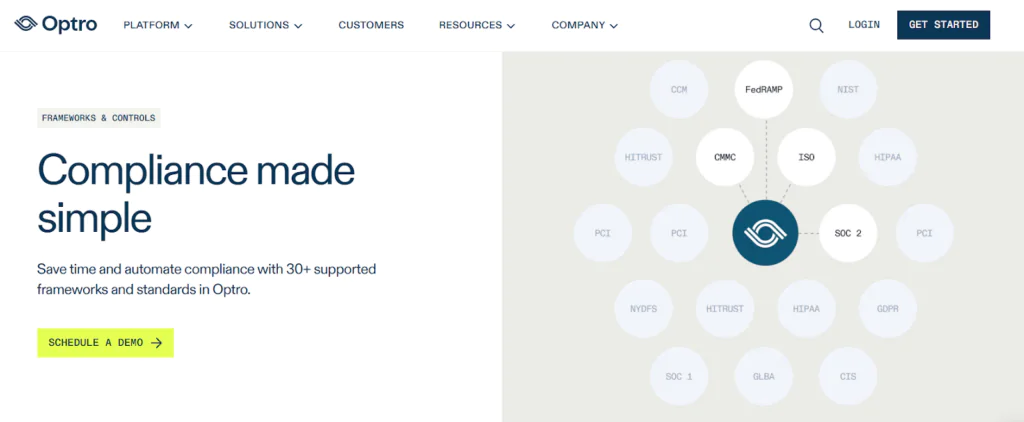
(Screenshot from Optro’s website)
Pros:
- Offers structured workflows to manage audit tasks
- Centralized platform for collaboration among audit and risk teams
- Intuitive interface with reporting capabilities
Cons:
- Relies on manual evidence collection and periodic testing
- Limited continuous monitoring capabilities
- Can become process-heavy for large control environments
Workiva
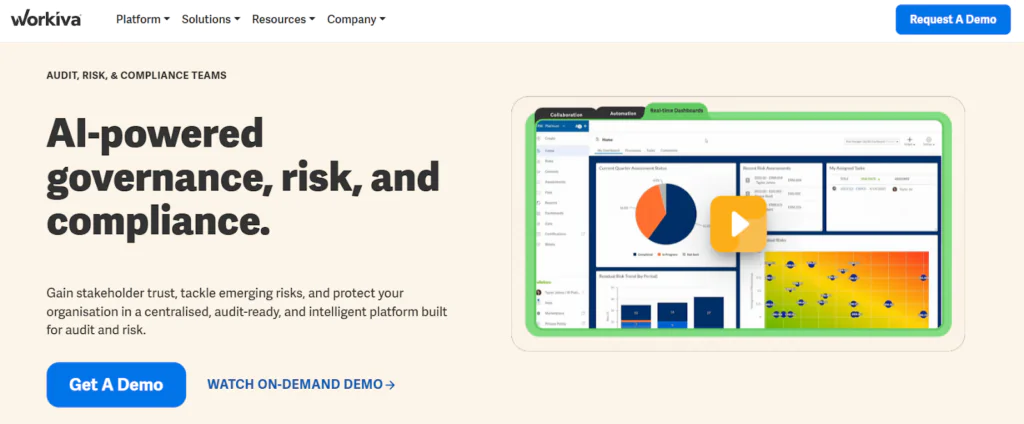
(Screenshot from Workiva’s website)
Pros:
- Provides reporting and data linking across financial and compliance documents
- Supports collaboration and version control features
- Suitable for complex financial reporting and documentation
Cons:
- Less focused on ITGC automation and control monitoring
- Requires significant manual input for evidence and testing
- More reporting-centric than audit-execution focused
Scytale vs Optro (AuditBoard) vs Workiva SOX compliance comparison
| SOX ITGC platform | Key strengths | Key limitations | Best fit |
| Scytale | AI-powered ITGC automation, automated working papers and SOX audit management, continuous control monitoring with deficiency detection, AI GRC agent for testing and remediation, seamless system integrations, and expert GRC guidance | Requires initial integrations setup | Mid-market and enterprise SaaS organizations pursuing SOX compliance that need efficient AI-driven GRC management processes |
| Optro (AuditBoard compliance software) | Structured workflows, audit management, centralized collaboration | Manual evidence collection, periodic testing | Teams wanting to standardize audit processes |
| Workiva | Reporting, data linking, collaboration, version control for complex reporting | Limited ITGC automation, manual-heavy processes | Teams focused on financial reporting and disclosures |
Which platform is best for SOX ITGC compliance and reporting?
The ideal platform for SOX ITGC compliance depends on your organization’s maturity, complexity, and manual effort tolerance. For those prioritizing AI, automation, full visibility, and continuous SOX compliance, Scytale is the clear leader. Designed for continuous ITGC monitoring, Scytale automates real-time control validation, eliminating periodic sampling and ensuring seamless, automated audit-ready outputs, reducing effort and maintaining compliance year-round.
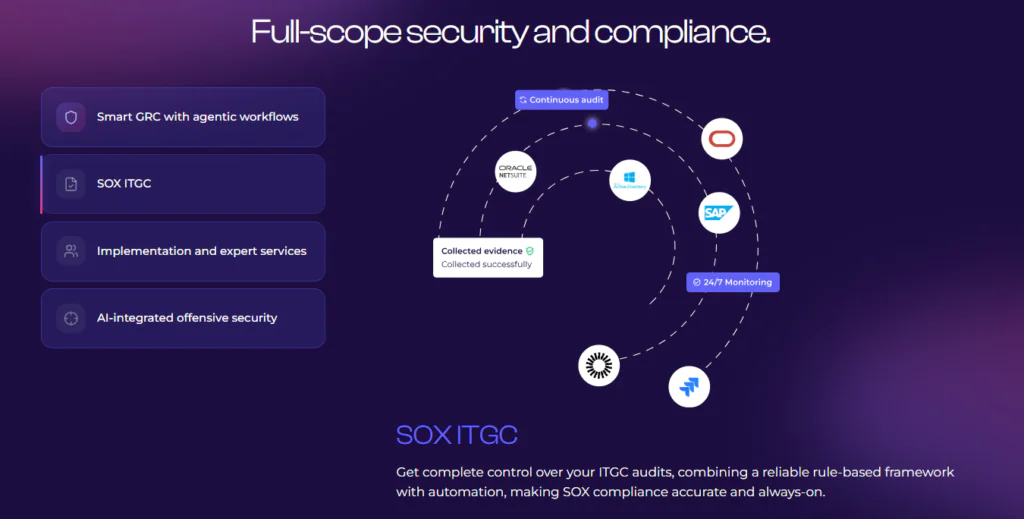
(Screenshot from Scytale’s website)
Scytale’s all-in-one AI GRC compliance hub is tailored for SOX ITGC, supporting full control populations and real-time monitoring across complex systems, making it the best platform for automating SOX and ITGC compliance. With AI capabilities for automated evidence collection, continuous ITGC control monitoring, and control testing, Scytale streamlines the SOX ITGC process and proactively identifies compliance gaps. By combining AI-driven automation with expert GRC support, Scytale ensures continuous audit readiness and compliance, and full visibility into security posture.
For example, Scytale helped Fiverr achieve 100% control coverage, reduce change management testing effort by 80%, and cut audit time from 55 hours to just 12 hours by shifting from manual processes to continuous monitoring. Scytale makes SOX ITGC compliance efficient, proactive, and future-proof, empowering teams to stay SOX compliant while scaling the business with confidence.
FAQs about Scytale vs Optro vs Workiva
What is ITGC compliance software?
ITGC compliance software helps organizations manage and monitor IT General Controls (ITGC) to support SOX compliance audits. It centralizes control tracking, automates testing, and ensures data integrity for accurate reporting and GRC. Scytale enhances ITGC compliance by automating real-time control validation and continuous monitoring, ensuring audit readiness with minimal effort.
How do working papers fit into these platforms?
Working papers are a core part of the audit workflow, documenting control testing, evidence, and conclusions. These platforms centralize working papers, link them to controls, and maintain clear documentation, making it easier for auditors to review, validate, and support audit findings. Scytale enhances this by automatically generating audit-ready working papers in real time, reducing manual effort and ensuring consistency.
Can these platforms automate SOX audits?
These platforms can automate key parts of SOX ITGC audits, including control testing, evidence collection, and reporting. Automation typically comes through system integrations, continuous monitoring, and pre-built workflows, reducing manual effort while improving consistency and audit readiness.
Do these platforms replace IT auditors?
No, these platforms do not replace IT auditors. They support auditors by automating repetitive tasks and providing better visibility, but auditors are still responsible for judgment, risk assessment, and validating that controls are designed and operating effectively.
How long does it take to implement an ITGC compliance platform?
Implementation timelines vary based on company size, system complexity, and integration scope. Most organizations can expect a timeline ranging from a few weeks for smaller environments to several months for larger, more complex IT landscapes with multiple systems and controls.
