



TL;DR: Vendor risk management solution
- Vendor risk management (VRM) solutions help organizations identify third-party risks, maintain compliance, and strengthen security.
- The best platforms automate vendor assessments, continuous monitoring, reporting, and customizable workflows to reduce manual effort.
- Leading solutions such as Scytale, LogicGate, and Optro each serve different business sizes and vendor risk management needs.
- Choosing the right VRM solution depends on your compliance requirements, workflows, and risk management goals.
- Scytale’s AI GRC platform combines agentic compliance automation, continuous monitoring, and dedicated GRC experts to simplify vendor risk management.
Third-party vendors play a critical role in modern business, but they also introduce security, compliance, and operational risks that organizations cannot afford to overlook. As regulatory requirements grow and supply chains become more interconnected, businesses need greater visibility into vendor risk and a more efficient way to manage assessments, monitoring, and remediation.
Vendor risk management (VRM) solutions help organizations centralize vendor oversight, automate manual processes, and maintain continuous compliance across their third-party ecosystem. The right platform can reduce administrative effort, improve risk visibility, and support stronger security and compliance outcomes.
In this article, we’ll explore the best vendor risk management solutions for 2026, the key features to look for, and how to choose the right platform for your organization.
5 Best Vendor Risk Management Solutions
- Scytale
- Bitsight
- LogicGate
- Archer
- Optro
Why vendor risk management is essential in 2026
As organizations rely on larger vendor ecosystems and regulatory expectations continue to grow, third-party risk has become a key focus for security, risk, and compliance teams. A single vendor weakness can lead to data breaches, operational disruptions, regulatory penalties, and reputational damage. Managing these risks requires more than periodic reviews. Companies need continuous visibility into vendor security, compliance, and risk posture throughout the vendor lifecycle.
This is where vendor risk management (VRM) solutions add value. By automating assessments, centralizing vendor information, and supporting ongoing monitoring, they help organizations reduce manual effort while strengthening third-party risk oversight. Here are some of the key ways a strong VRM solution can support your organization:
Mitigate risks
Vendor risk management solutions help identify, assess, and monitor third-party risks before they impact your business. Continuous monitoring and structured assessments enable organizations to address security and compliance issues proactively.
Stay compliant
As frameworks such as SOC 2, ISO 27001, GDPR, HIPAA and SOX ITGC continue to evolve, VRM solutions help organizations demonstrate vendor oversight, maintain documentation, and support ongoing compliance requirements.
Build trust
Strong vendor risk management demonstrates to customers, partners, and auditors that your organization takes third-party security seriously. Greater visibility and transparency into vendor risk strengthen confidence and support long-term business relationships.
Streamline GRC workflows with no blind spots.
Key features to look for in vendor risk management solutions
Not all vendor risk management solutions offer the same capabilities. The right platform should help you assess and manage third-party risk efficiently, reduce manual effort, and maintain continuous visibility across your vendor ecosystem. Here are the key features to look for:
Vendor risk assessments
Look for a solution that enables you to assess vendors against security controls, compliance frameworks, and organizational risk criteria. Standardized assessments help identify potential risks early and support more consistent vendor evaluations.
Automation and continuous monitoring
Manual questionnaires, evidence collection, and follow-up tasks quickly become difficult to manage at scale. The best VRM solutions automate vendor onboarding, assessments, evidence collection, and continuous monitoring to reduce administrative effort and surface new risks as they emerge.
Reporting and risk insights
A strong risk management platform should provide clear dashboards, risk scoring, and reporting that help teams quickly understand their risk exposure, prioritize remediation, and track progress over time.
Customizable workflows
Every organization manages vendors differently. A flexible platform should allow you to customize approval workflows, assessment processes, notifications, and reporting to align with your internal requirements.
Compliance framework support
If your organization must comply with frameworks such as SOC 2, ISO 27001, GDPR, HIPAA, or SOX ITGC, choose a solution that supports those requirements and helps simplify evidence collection, vendor oversight, and audit readiness.
AI-native GRC for how teams work today.
Best vendor risk management solutions in 2026
The best vendor risk management solution depends on your organization’s size, compliance requirements, and third-party risk management priorities. Some platforms focus on security ratings, while others specialize in configurable workflows, governance, or AI-driven automation. Here are five leading vendor risk management solutions, each with different strengths.
1. Scytale
Scytale is an AI GRC platform that helps organizations streamline vendor risk management by combining agentic AI-powered compliance automation with dedicated GRC experts. It centralizes vendor due diligence, assessments, evidence collection, and continuous compliance in a single platform, making it easier to manage third-party risk at scale.
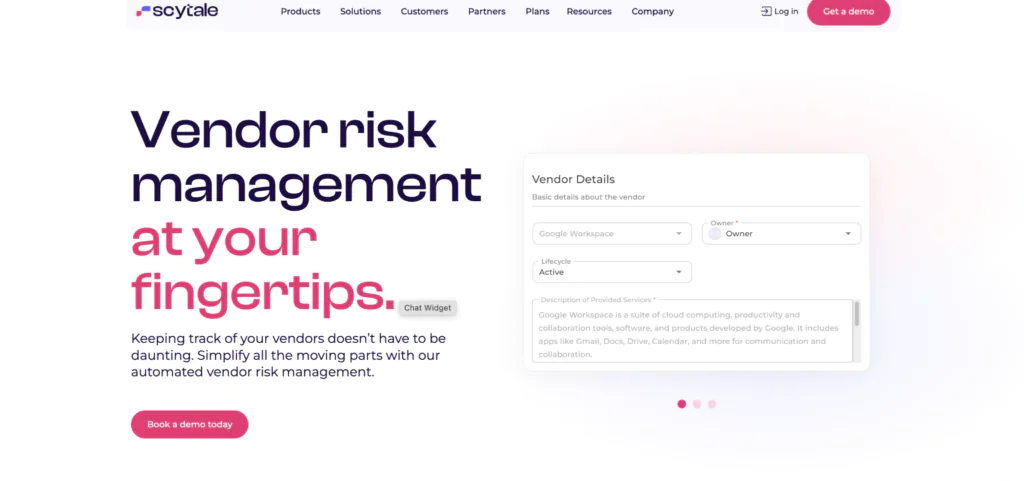
(Screenshot from Scytale’s website)
Why Scytale is the best:
- AI-powered vendor risk management: Automates vendor due diligence, evidence collection, vendor assessments, and ongoing compliance activities, reducing manual effort while strengthening third-party oversight.
- Continuous compliance monitoring: Provides real-time visibility into your security, compliance, and vendor risk posture, helping teams identify and address risks before they become larger issues.
- Dedicated GRC experts: Receive tailored guidance throughout your compliance journey, from vendor assessments and audit preparation to ongoing compliance and risk management.
- Multi-framework compliance management: Cross-maps controls across frameworks including SOC 2, ISO 27001, GDPR, HIPAA, and SOX ITGC, eliminating duplicate work across multiple compliance standards.
- Customizable Trust Center and integrations: Showcase your security and compliance posture with a customizable Trust Center while connecting with your existing tools to automate workflows and streamline vendor risk management.
2. Bitsight
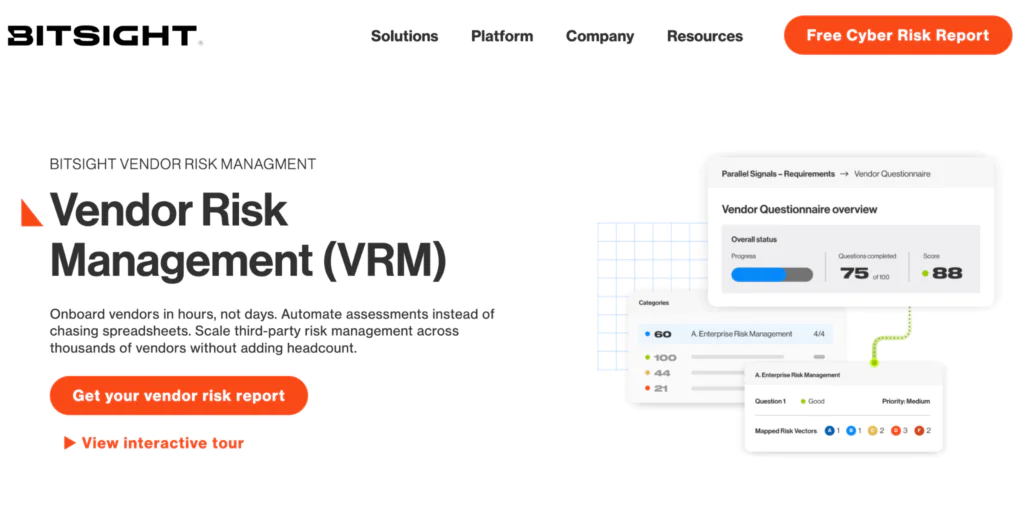
Bitsight is a cybersecurity ratings platform that provides organizations with visibility into vendors’ external security posture. Its security intelligence helps companies evaluate third-party cyber risk without relying solely on vendor questionnaires or self-reported information.
(Screenshot from Bitsight’s website)
Key capabilities include:
- Security ratings: Generates objective, data-driven security scores that help organizations assess and compare vendor cybersecurity performance.
- External attack surface monitoring: Continuously monitors vendors’ internet-facing assets to identify newly discovered vulnerabilities and security issues.
- Cyber risk benchmarking: Compares vendor security performance against industry peers, helping companies prioritize vendors that may require additional review.
3. LogicGate
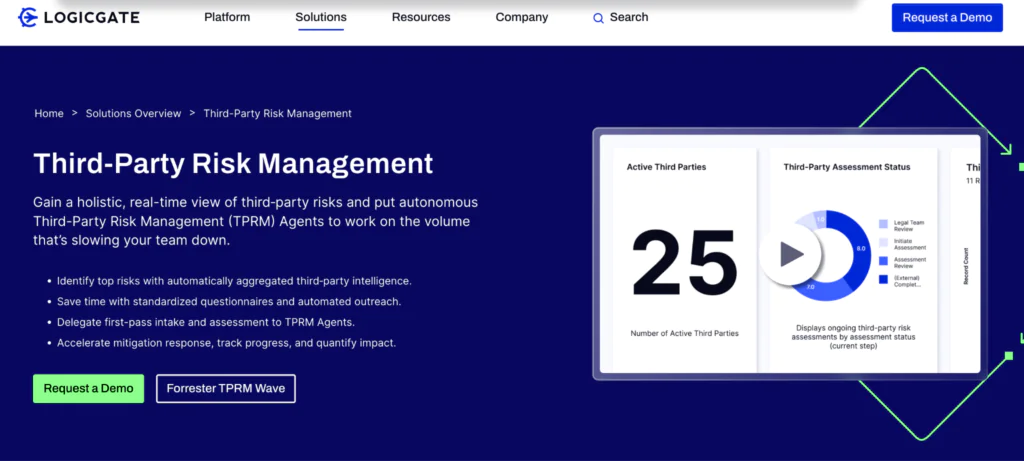
LogicGate’s Risk Cloud is designed for organizations that need flexible vendor risk management processes tailored to their internal governance requirements. Its platform allows teams to build workflows that align with their existing business processes.
(Screenshot from LogicGate’s website)
Key capabilities include:
- Configurable workflows: Allows organizations to customize vendor onboarding, assessments, approvals, and remediation processes to fit their internal requirements.
- No-code process builder: Enables teams to create and modify workflows without extensive development resources, making updates faster and easier.
- Cross-functional collaboration: Supports collaboration between security, compliance, procurement, legal, and other stakeholders throughout the vendor review process.
4. Archer
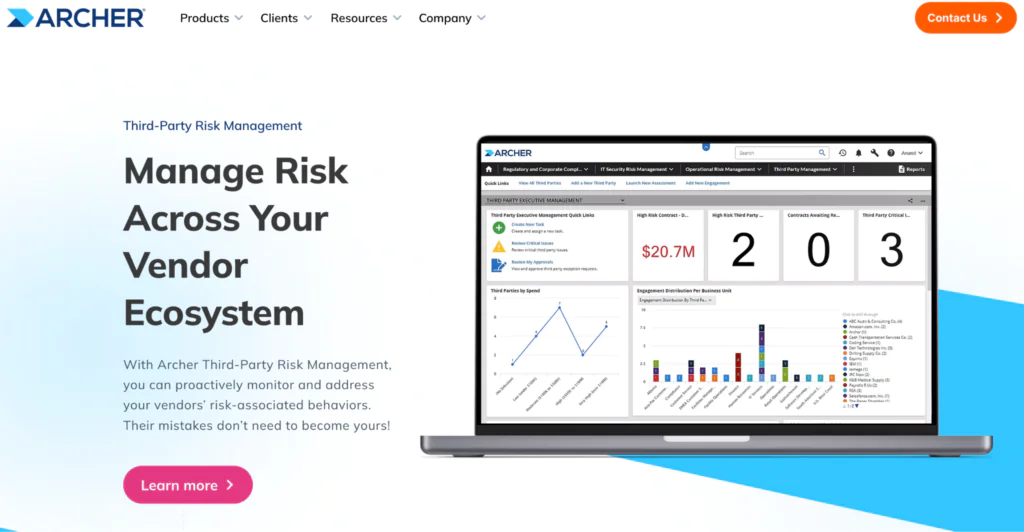
Archer is an enterprise GRC platform that helps large organizations manage vendor risk as part of a broader governance and enterprise risk management strategy. It is designed for companies with complex vendor ecosystems and mature risk management programs.
(Screenshot from Archer’s website)
Key capabilities include:
- Third-party governance: Centralizes oversight of vendors, suppliers, and third parties across large and complex business environments.
- Risk register management: Tracks identified risks, remediation activities, ownership, and risk status throughout the vendor lifecycle.
- Enterprise GRC integration: Connects vendor risk management with enterprise risk, compliance, audit, and governance initiatives to provide broader organizational visibility.
5. Optro
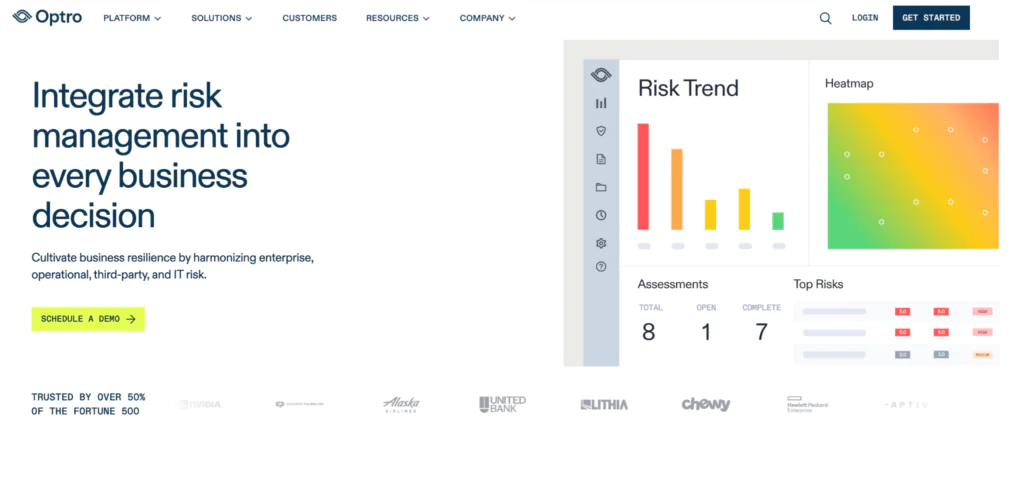
Optro is an AI-powered third-party risk management platform that helps organizations centralize vendor information, automate assessments, and gain greater visibility into vendor risk. Its focus is on improving efficiency by reducing manual processes and simplifying vendor oversight.
(Screenshot from Optro’s website)
Key capabilities include:
- Vendor data centralization: Consolidates vendor records, documentation, assessments, and supporting evidence within a single platform.
- AI-driven risk insights: Uses AI to identify, prioritize, and highlight vendor risks, helping teams focus on higher-risk third parties.
- Assessment management: Automates vendor questionnaires, review processes, and remediation tracking to improve the efficiency of third-party risk management.
Top 5 vendor risk management solutions
| Vendor risk management solution | Best for | Key strength | Standout feature |
| Scytale | Organizations of all sizes seeking AI-powered vendor risk management and continuous compliance | AI GRC platform with AI-powered vendor risk management, continuous compliance, and expert guidance | Automated vendor due diligence, continuous vendor risk monitoring, and dedicated GRC experts |
| Bitsight | Organizations prioritizing cybersecurity visibility | External security intelligence | Independent security ratings and continuous attack surface monitoring |
| LogicGate | Organizations with complex internal processes | Configurable workflow automation | No-code workflow builder for vendor risk management |
| Archer | Large enterprises | Enterprise governance and risk management | Integrated third-party governance with enterprise GRC |
| Optro | Teams looking to automate vendor operations | AI-powered third-party risk management | Centralized vendor management with AI-driven risk insights |
How to choose the right vendor risk management solution
Choosing the right VRM solution goes beyond comparing feature lists. The best platform should align with your organization’s security, compliance, and operational requirements while supporting your long-term growth. As your vendor ecosystem expands and regulations evolve, you’ll need a solution that can scale with your business and simplify ongoing vendor oversight.
Here are the key factors to consider when evaluating vendor risk management software:
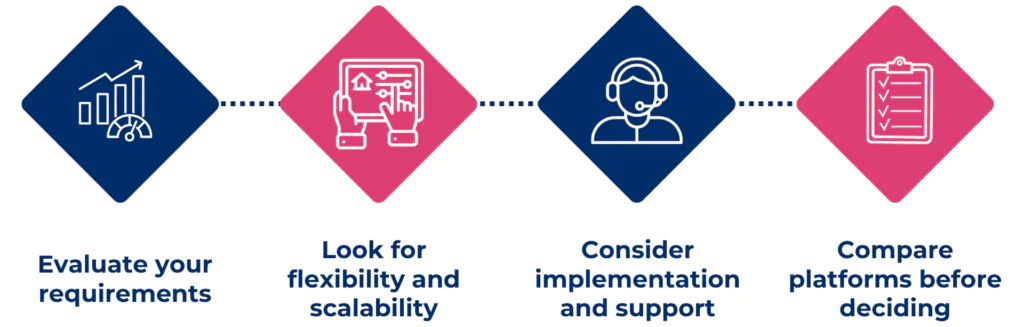
Evaluate your requirements
Start by identifying your organization’s key vendor risk management priorities. Think about the features you need most, such as automation, third-party visibility, or compliance support. Understanding your requirements will help you narrow down your options.
Look for flexibility and scalability
Your vendor management processes will change as your business grows. Choose a platform that supports customizable workflows, integrates with your existing tools, and can adapt to changing compliance requirements without adding unnecessary complexity.
Consider implementation and support
Technology is only part of the solution. Platforms like Scytale combine compliance automation with dedicated GRC experts who provide guidance throughout implementation, ongoing compliance activities, and vendor risk management, helping teams get value from the platform more quickly.
Compare platforms before deciding
Request demos, evaluate core features, and compare how each platform handles vendor assessments, automation, reporting, and continuous monitoring. A hands-on evaluation will help you determine which solution best aligns with your team’s workflows and long-term compliance goals.



Streamlining vendor risk management with Scytale
Scytale helps organizations simplify vendor risk management by combining agentic AI-powered compliance automation with dedicated GRC experts. From vendor due diligence and evidence collection to continuous monitoring and risk assessments, Scytale centralizes the entire process in a single AI GRC platform. By automating repetitive tasks and providing real-time visibility into vendor risk, organizations can reduce manual effort, strengthen third-party oversight, and maintain continuous compliance across multiple frameworks.
Rather than relying on disconnected tools and manual processes, organizations can manage vendor risk as part of a centralized GRC program. With AI-powered automation and expert support, Scytale helps teams scale their compliance efforts and respond more efficiently to changing security and compliance requirements.
FAQs about best vendor risk management solutions
What industries require advanced vendor risk management tools?
Industries that handle sensitive data or operate under strict regulatory requirements, such as healthcare, financial services, technology, government, and defense, benefit most from advanced vendor risk management tools. These organizations often rely on large networks of third-party vendors, making it essential to continuously assess and monitor vendor security and compliance. AI-powered VRM solutions like Scytale help automate vendor assessments, streamline compliance, and provide ongoing visibility into third-party risk.
What are the risks involved in vendor management?
Vendor management risks include data breaches, regulatory non-compliance, operational disruptions, financial losses, and reputational damage. Because third-party vendors often have access to sensitive systems and data, a single vendor security or compliance failure can expose your organization to significant business and regulatory risk. A robust vendor risk management solution helps identify, assess, and mitigate these risks before they impact your operations.
How do vendor risk management solutions ensure compliance?
Vendor risk management solutions help automate compliance by continuously monitoring vendors, conducting assessments, and tracking adherence to standards such as SOC 2, ISO 27001, and GDPR. They identify risks early, enabling businesses to take swift action, gain actionable insights, and stay on top of security and privacy requirements. Top AI GRC platforms like Scytale further streamline this process by automating evidence collection, centralizing compliance workflows, and helping organizations maintain continuous compliance across multiple frameworks.
How often should vendor risk assessments be conducted?
Vendor risk assessments should be conducted regularly, with the frequency depending on the vendor’s level of risk and the nature of the services they provide. High-risk vendors may require more frequent assessments and continuous monitoring, while lower-risk vendors can typically be reviewed less often. Ongoing assessments help businesses identify new risks early and maintain compliance as vendor relationships and regulatory requirements change. Solutions like Scytale support this ongoing process by automating evidence collection, simplifying vendor oversight, and helping organizations maintain continuous compliance without relying on manual reviews.
What’s the difference between vendor risk management and third-party risk management?
Vendor risk management focuses specifically on assessing and managing the risks associated with vendors and suppliers that provide products or services to your business. Third-party risk management is a broader discipline that covers all external entities your organization works with, including vendors, contractors, consultants, partners, and service providers. Vendor risk management is therefore a key component of a comprehensive third-party risk management strategy.