



TL;DR: Compliance audit software
- Compliance audit software streamlines time-consuming GRC tasks, such as evidence collection and audit preparation.
- It provides continuous visibility into your compliance posture, helping teams identify gaps early and take action before risks escalate.
- Leveraging compliance audit software helps organizations improve efficiency, reduce compliance risk and support long-term growth.
- Choosing the right compliance audit software solution depends on your industry, size, and scalability needs.
- Scytale is the top compliance audit software among the eight reviewed, combining an all-in-one AI platform with expert GRC support for continuous compliance.
Keeping up with changing compliance requirements is becoming more complex as organizations face new regulations, frameworks, and audit expectations. Maintaining an effective compliance program is essential for managing risk, meeting regulatory obligations, and building trust with customers and stakeholders.
Compliance audit software helps organizations manage these demands by automating manual processes, improving visibility, and keeping controls and evidence audit-ready. The right platform can reduce compliance workload while helping teams maintain a more consistent and scalable approach as requirements grow. In this article, we’ll explore how compliance audit software works, its key benefits, what to look for in a platform, and the leading solutions for 2026.
Top 8 compliance audit software
- Scytale
- MetricStream
- ZenGRC
- TrustCloud
- OneTrust
- Drata
- Hyperproof
- Vanta
What is compliance audit software?
Compliance audit software is a centralized platform that helps organizations manage and document compliance with regulatory requirements, industry standards, and internal controls.
The software brings audit-related activities into one system, giving teams a structured way to manage controls, evidence, policies, risk assessments, and reporting throughout the audit lifecycle. It can support streamlined audit management across frameworks and regulations such as SOC 2, ISO 27001, ISO 42001, HIPAA, GDPR, and SOX ITGC.
In practice, compliance audit software creates a central record of compliance activities and the evidence needed to demonstrate that requirements are being met. Teams can use it to assign responsibilities, document control activity, maintain audit trails, and organize information for internal and external reviews. This provides a consistent system for managing compliance across teams, frameworks, and audit cycles.
Streamline GRC workflows with no blind spots.
Why compliance audit software is essential
Managing compliance becomes more complex as organizations grow, adopt new frameworks, and face changing regulatory requirements. Compliance audit software supports your audit management system by centralizing processes, automating repetitive work, and providing greater visibility into controls, risks, and audit readiness. Here are five key benefits of using compliance audit software:
1. Continuous visibility and audit readiness
Compliance audit software provides ongoing visibility into controls, evidence, risks, and overall compliance status. Teams can identify gaps earlier, prioritize remediation, and keep documentation organized throughout the year. This helps maintain audit readiness without relying on time-consuming, last-minute preparation.
2. Greater efficiency and automation
Manual compliance processes often involve repetitive evidence collection, control tracking, documentation, and follow-ups across multiple teams. Compliance audit software automates many of these activities while maintaining clear records and audit trails. This reduces administrative work and allows security and compliance teams to focus on higher-value priorities.
3. Stronger risk and regulatory management
Regulatory and framework requirements continue to evolve, making manual tracking increasingly difficult. Compliance audit software helps teams monitor requirements, identify compliance gaps, and address issues before they create greater risk. Continuous oversight also supports a stronger security posture and reduces the likelihood of compliance issues going unnoticed.
4. Scalable compliance management
As organizations enter new markets, add frameworks, and expand their technology environments, compliance requirements become more difficult to coordinate. A centralized platform provides a scalable foundation for managing additional controls, evidence, risks, and audit activities. This allows compliance processes to grow alongside the organization without creating the same increase in manual work.
5. Improved collaboration and stakeholder trust
Compliance requires coordination across security, IT, legal, GRC, operations, and other teams. A centralized platform provides shared visibility into responsibilities, tasks, evidence, and progress, helping improve accountability across stakeholders. More consistent compliance and audit readiness can also strengthen trust with customers, partners, investors, and prospects during security reviews and procurement.
| Key benefit | How it helps | Business impact |
| Continuous visibility and audit readiness | Keeps controls, evidence, and compliance status accessible. | Reduces audit preparation and maintains readiness. |
| Greater efficiency and automation | Automates repetitive compliance tasks and manual processes. | Saves time for higher-value work. |
| Stronger risk and regulatory management | Identifies gaps and tracks changing requirements. | Reduces risk and supports faster remediation. |
| Scalable compliance management | Supports new frameworks and requirements as organizations grow. | Scales compliance with less manual work. |
| Improved collaboration and stakeholder trust | Centralizes tasks, evidence, and responsibilities. | Improves accountability and stakeholder confidence. |
Always-on GRC. Built for modern teams.
Key features to look for in compliance audit software
Not every compliance audit platform offers the same level of automation, monitoring, customization, or audit support. When comparing solutions, consider how well each platform fits your current compliance requirements, technology environment, and plans for future growth. Here are the main capabilities to evaluate:
Compliance automation
Look for compliance software that automates repetitive activities such as control tracking, evidence collection, reminders, and recurring reviews. The platform should reduce reliance on spreadsheets, screenshots, and manual follow-ups while keeping compliance workflows consistent and traceable.
Automated evidence collection
Evidence collection is a major part of audit preparation, so consider how easily the platform connects with your existing systems and gathers relevant documentation. Strong solutions automatically map evidence to applicable controls, keep records organized, and maintain clear proof that requirements are being met.
Continuous monitoring
Evaluate whether the platform monitors controls and compliance status between formal audits rather than providing only point-in-time visibility. Continuous monitoring can help teams detect control failures and compliance gaps earlier, giving them more time to investigate and address issues before an audit.
Regulatory and framework updates
Compliance requirements can change, making it important to understand how a platform handles updates to relevant frameworks and regulations. Look for software that helps teams identify changing requirements and understand where controls, policies, or processes may need adjustment to maintain continuous compliance.
Customizable workflows and templates
Standard templates can provide a useful starting point, but organizations may have unique controls, policies, approval processes, and reporting requirements. Look for platforms that allow teams to customize templates and workflows without making the compliance program unnecessarily difficult to manage.
Document management
Audit documentation should be easy to organize, maintain, and retrieve when needed. Evaluate whether the platform provides centralized storage, version control, clear ownership, and easy access to policies, evidence, reports, approvals, and other compliance records.
Centralized compliance management
A strong platform should provide a clear, centralized view of controls, risks, tasks, evidence, and audit progress. Dashboards and reporting capabilities should make it easy to understand compliance status, identify outstanding work, track ownership, and communicate progress to relevant stakeholders.
Multi-framework scalability
Consider whether the platform can support additional frameworks, business units, systems, and regulatory requirements as your organization grows. Multi-framework capabilities such as control mapping and evidence reuse can help reduce duplicate work when the same requirements apply across multiple compliance programs.
AI-native GRC for how teams work today.
8 top compliance audit software for 2026
The following compliance audit tools have been selected based on functionality, ease of use, and adaptability to evolving requirements. Each offers strengths suited to different organizational needs, helping you choose the right fit for your compliance program.
1. Scytale
Scytale stands out as the leading compliance audit software solution, offering a comprehensive AI platform designed to streamline audits and continuous compliance management. It helps organizations, from startups to enterprises, manage compliance processes across key security and privacy frameworks, including SOC 2, ISO 27001, GDPR and SOX ITGC, making it well-suited for organizations managing multiple audit and compliance requirements.
What sets Scytale apart is its end-to-end approach to compliance audit management. The platform combines AI-powered automation, dedicated expert support, and an AI GRC agent to streamline evidence collection, continuous monitoring, and multi-framework management. This reduces manual work, improves visibility, and makes audit workflows easier to manage as compliance requirements grow.
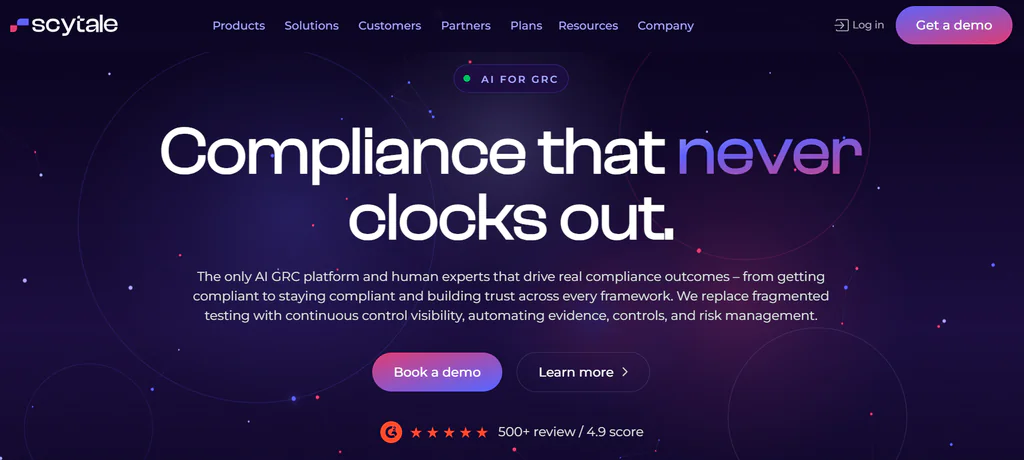
(Screenshot from Scytale’s website)
Why Scytale is the best:
- Automated evidence collection keeps audit documentation organized, current, and ready for review
- Continuous control monitoring identifies compliance gaps early and maintains ongoing audit readiness
- Built-In Audit centralizes audit preparation, evidence, communication, and progress in one platform
- Multi-framework cross-mapping reuses controls and evidence across SOC 2, ISO 27001, HIPAA, GDPR, and SOX ITGC
- Customizable Trust Center makes it easier to securely share compliance documentation with customers
- Dedicated GRC experts provide hands-on guidance throughout audit preparation and ongoing compliance
2. MetricStream
MetricStream is an enterprise GRC platform designed for organizations managing complex risk, compliance, and audit programs. Its broad approach makes it particularly relevant for larger organizations that need to coordinate governance activities across multiple business units, regulations, and geographies.
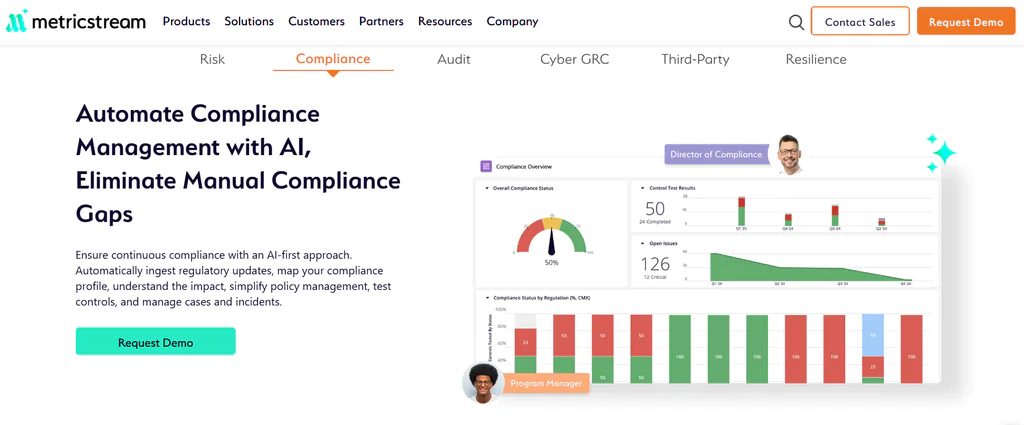
(Screenshot from MetricStream’s website)
Key features:
- Integrated GRC capabilities connect compliance, risk, audit, and cybersecurity management processes.
- Configurable workflows support assessments, control testing, remediation, and compliance activities.
- Dashboards provide centralized visibility into compliance status, issues, and control effectiveness.
Limitations:
- Broad enterprise functionality can make implementation more complex for smaller organizations.
- Configuration and ongoing management may require significant internal resources and expertise.
3. ZenGRC
ZenGRC, now part of RiskOptics, provides a centralized environment for managing governance, risk, and compliance activities. It is designed to help organizations move away from spreadsheets and coordinate compliance work through more structured processes.
(Screenshot from ZenGRC’s website)
Key features:
- Centralized workspaces organize compliance requirements, controls, evidence, and audit activities.
- Framework support helps teams structure compliance programs around established security requirements.
- Risk and compliance dashboards provide visibility into program status and priorities.
Limitations:
- Some processes may still require manual evidence collection and ongoing updates.
- Complex compliance environments may require additional configuration to support specific workflows.
4. TrustCloud
TrustCloud is a security assurance platform focused on helping organizations manage compliance and demonstrate trust to customers. Its approach connects compliance activities with customer assurance, making it particularly relevant for businesses where security reviews influence sales.
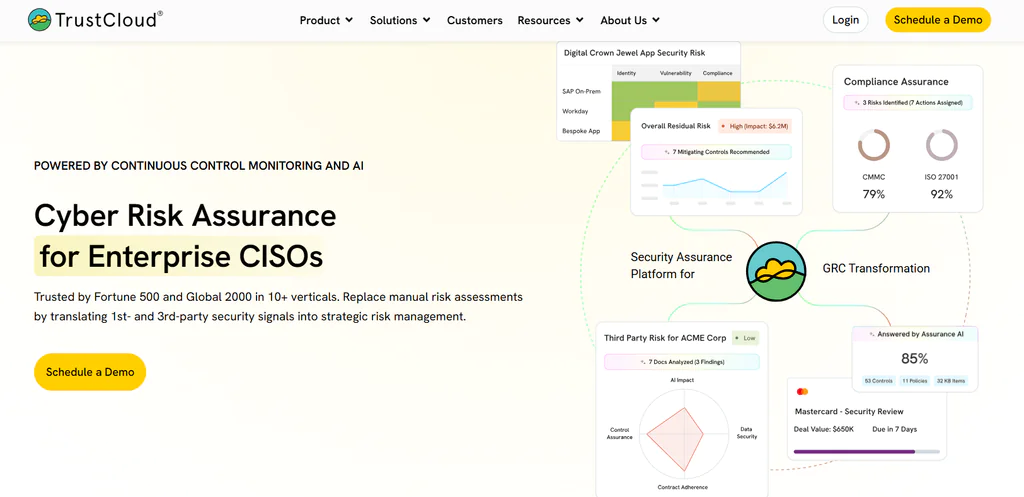
(Screenshot from TrustCloud’s website)
Key features:
- Continuous compliance capabilities help teams maintain visibility between formal audit cycles.
- Customer assurance tools support sharing security and compliance information with prospects.
- Centralized risk and control visibility helps teams track their overall compliance posture.
Limitations:
- Audit lifecycle management may be less comprehensive than dedicated audit-focused platforms.
- Organizations may need additional processes for more complex audit execution requirements.
5. OneTrust
OneTrust is an enterprise platform for managing privacy, security, risk, and compliance programs. The company acquired Tugboat Logic, a security assurance and compliance automation platform, expanding its capabilities for audit readiness and security compliance management.
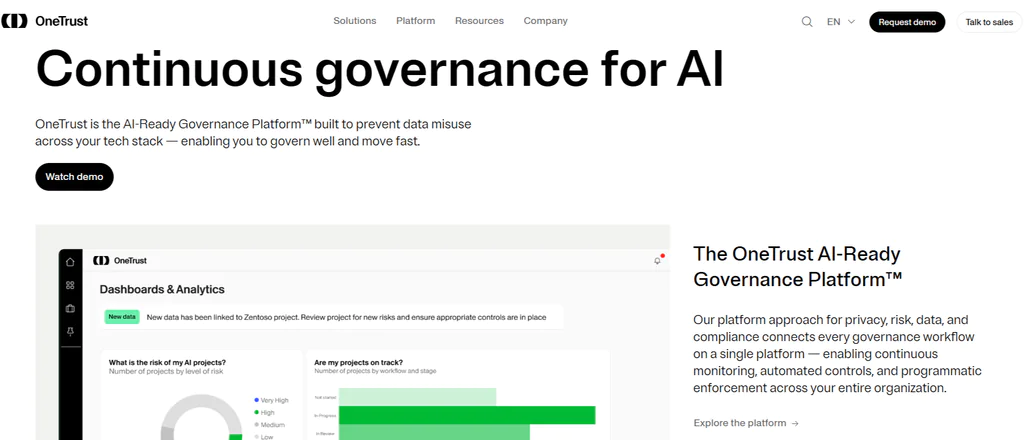
(Screenshot from OneTrust’s website)
Key features:
- Structured workflows help organize security compliance and audit-readiness activities efficiently.
- Framework guidance helps teams understand and work through common compliance requirements.
- Evidence management supports preparation for security assessments and certification audits.
Limitations:
- Broad enterprise functionality may be more complex than smaller organizations require.
- Implementation and configuration may require more time and resources than simpler compliance platforms.
6. Drata
Drata is a compliance automation platform focused on helping organizations maintain continuous visibility into their controls and audit readiness. It connects with existing systems to automate evidence collection and control testing across multiple security and compliance frameworks.
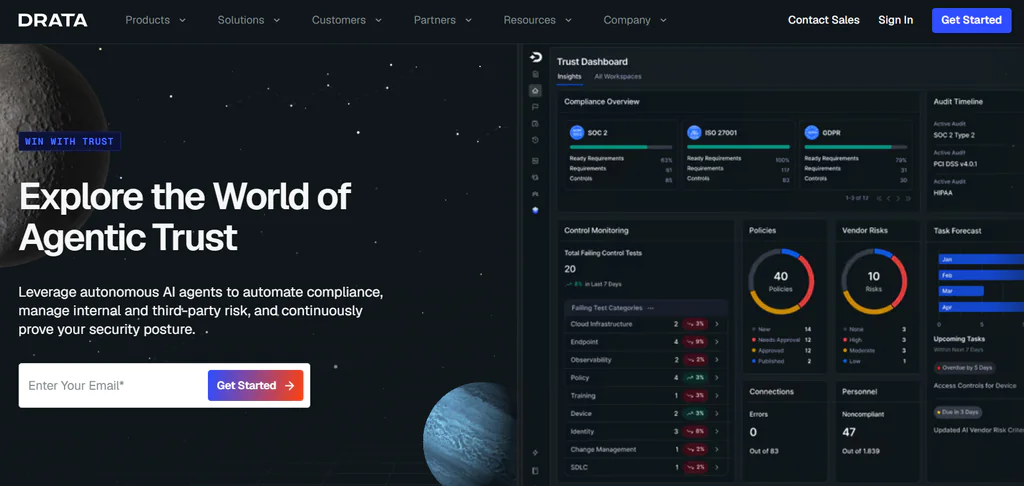
(Screenshot from Drata’s website)
Key features:
- Automated evidence collection connects compliance data directly to relevant controls and frameworks.
- Continuous control testing helps teams identify failures and compliance gaps earlier.
- Cross-framework control mapping reduces duplicate work when managing multiple compliance programs.
Limitations:
- Advanced configurations may require additional setup for organizations with specialized workflows.
- Broad functionality can introduce complexity for teams with relatively simple compliance requirements.
7. Hyperproof
Hyperproof is a GRC platform designed to help organizations coordinate compliance, risk, and assurance work across teams. It provides a structured environment for managing ongoing compliance operations and maintaining visibility into program progress.
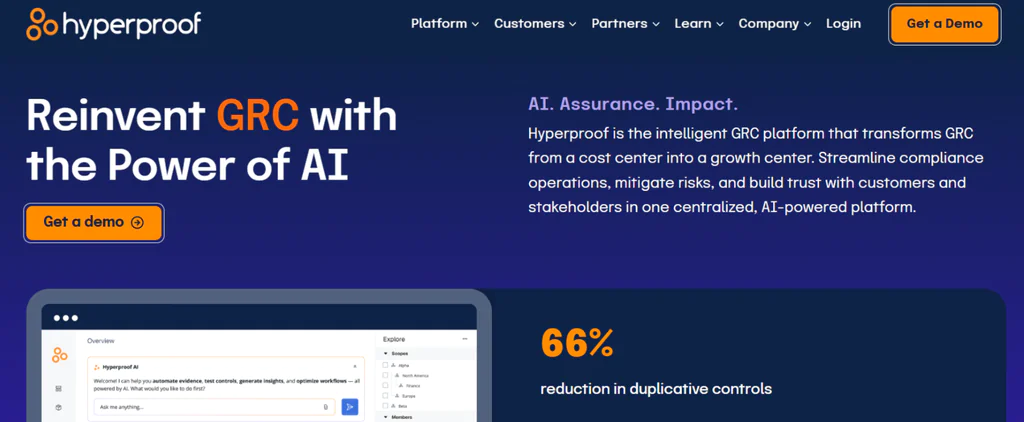
(Screenshot from Hyperproof’s website)
Key features:
- Workflow management helps teams assign, track, and coordinate recurring compliance activities.
- Centralized evidence management keeps compliance documentation connected to relevant requirements.
- Dashboards and reporting provide visibility into controls, tasks, risks, and program progress.
Limitations:
- Certain workflows may still require manual input and ongoing team coordination.
- Smaller organizations may find the platform broader than their immediate compliance needs.
8. Vanta
Vanta is a trust management platform that helps organizations manage security and compliance programs through automation and integrations. It supports common frameworks and is widely oriented toward helping teams establish and maintain audit readiness as their compliance requirements expand.
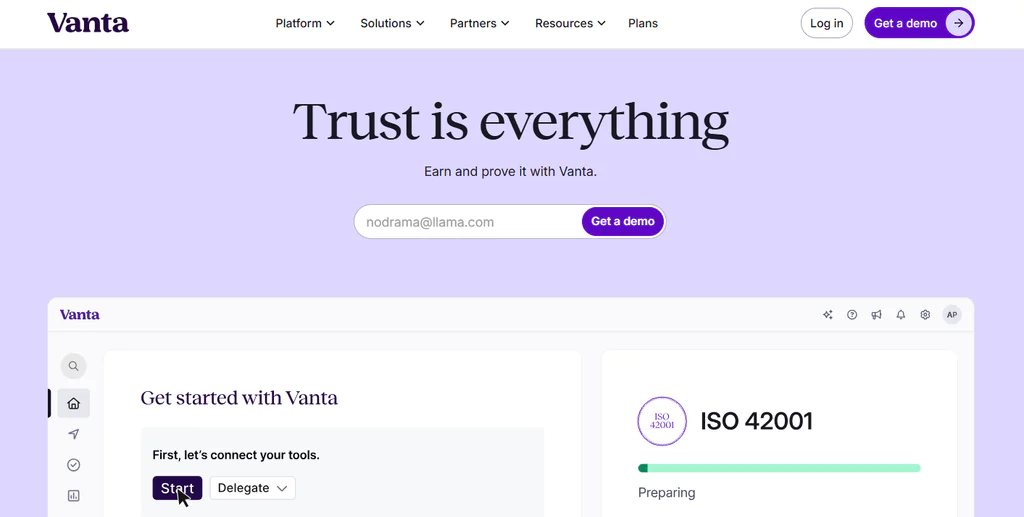
(Screenshot from Vanta’s website)
Key features:
- Automated evidence collection reduces manual work across common security compliance frameworks.
- Integrations connect compliance controls with data from an organization’s existing technology stack.
- Continuous monitoring helps teams identify control issues and maintain ongoing audit readiness.
Limitations:
- Some capabilities and frameworks may require additional products or higher-tier packages.
- Organizations with highly customized workflows may require more flexibility than standardized configurations provide.
Compliance audit software comparison
| Platform | Best suited for | Key strength |
| Scytale | SaaS organizations managing complex or growing compliance requirements | AI GRC automation, continuous monitoring, multi-framework management, and expert GRC guidance |
| MetricStream | Large enterprises with complex GRC requirements | Comprehensive management of enterprise risk, compliance, and audits |
| ZenGRC | Growing teams managing multiple compliance requirements | Centralized management of controls, risks, evidence, and audit activities |
| TrustCloud | Companies focused on security assurance | Continuous compliance combined with customer trust and assurance capabilities |
| OneTrust | Organizations using the broader OneTrust ecosystem | Structured audit readiness with framework guidance and evidence management |
| Drata | Growing technology and SaaS companies | Automated evidence collection with continuous control testing and monitoring |
| Hyperproof | Mid-market and enterprise compliance teams | Centralized compliance workflows, evidence management, and program tracking |
| Vanta | Startups and growing technology companies | Compliance automation supported by a broad range of integrations |
How to choose the best compliance audit software for your business
Choosing the right compliance audit software depends on your organization’s needs, resources, and goals. When comparing compliance platforms, consider how well each solution fits your current processes and can support future requirements. Follow these five steps to find the right solution:
Step 1: Define your compliance requirements
Start by identifying the frameworks, regulations, and audit requirements your organization needs to manage. Consider both current obligations and frameworks you may need in the future, particularly if you plan to enter new markets or serve customers with additional compliance requirements.
Step 2: Consider your team and resources
Assess who will manage the platform and how much internal compliance expertise you have available. Some organizations may primarily need automation, while others may benefit from a comprehensive AI compliance platform that combines technology with expert guidance and ongoing support.
Step 3: Evaluate your technology environment
Consider how well the software fits with the systems and workflows your teams already use. Strong integrations can reduce manual evidence collection and make it easier to incorporate compliance into existing security, IT, HR, and business processes.
Step 4: Assess implementation and support
Evaluate how easy the platform will be to implement, adopt, and maintain over time. Consider onboarding, training, customer support, and access to compliance expertise, particularly if your organization has limited internal GRC resources.
Step 5: Compare cost and value
Compare pricing against the functionality, support, and efficiency each solution provides. Look beyond the initial subscription cost and consider how much manual work, external support, and additional tooling the compliance software could replace over time.
Streamline compliance audit management with Scytale
Scytale brings audit and compliance management into one centralized platform, supporting more than 80 frameworks and regulations. Its AI-powered automation helps teams manage compliance requirements and maintain clear visibility across their audit activities as their programs grow.
Scytale combines automated evidence collection, continuous control monitoring, and cross-framework mapping with dedicated GRC expert support. Built-In Audit keeps audit workflows and collaboration in one place, while the customizable Trust Center helps teams securely share their compliance posture with customers. This gives organizations an end-to-end approach to managing audits and ongoing compliance.
FAQs about top compliance audit software
What are the advantages of using compliance audit software?
Compliance audit software like Scytale helps organizations save time and resources by automating manual tasks, improving visibility, and keeping compliance activities organized. It can also help teams stay aligned with changing requirements, identify compliance gaps earlier, and maintain greater accuracy and audit readiness.
How does auditing software improve compliance management?
Auditing software streamlines compliance management by automating activities such as evidence collection, control tracking, monitoring, and reporting. This reduces manual errors, shortens audit preparation time, and keeps compliance information centralized and consistently maintained.
Can auditing software integrate with other business tools?
Yes, compliance audit software can integrate with cloud platforms, security tools, HR systems, project management software, and other business applications. These integrations allow compliance data and evidence to flow between systems with less manual work. Scytale also supports custom integrations, helping organizations automate evidence collection across their technology environment.
What is the best compliance audit software for tech startups in the US?
Scytale is a strong option for tech startups in the United States, combining compliance automation, an AI GRC agent, and dedicated expert guidance in one platform. It supports frameworks such as SOC 2, ISO 27001, HIPAA, and GDPR, helping startups build and maintain compliance as their requirements grow.
Is compliance audit software necessary for European companies under GDPR?
Compliance audit software is not specifically required under GDPR, but it can make managing GDPR requirements significantly easier. Automated evidence collection, continuous monitoring, and centralized compliance management can help organizations maintain documentation, track controls, identify gaps, and support ongoing GDPR compliance.
Can compliance audit software automate audits?
Compliance audit software can automate many parts of the audit process, including evidence collection, control monitoring, documentation, and recurring compliance tasks. More advanced platforms can also centralize auditor collaboration and audit workflows, reducing manual preparation while helping teams maintain ongoing audit readiness.
Can compliance audit software support multiple regulatory frameworks?
Yes, many compliance audit platforms support multiple frameworks and regulations, such as SOC 2, ISO 27001, HIPAA, GDPR, and SOX ITGC. Cross-mapping common controls and reusing evidence across frameworks can reduce duplicate work and make multi-framework compliance easier to manage from one platform.