





TL;DR: SOX Compliance
- SOX compliance means following the rules of the Sarbanes-Oxley Act of 2002 to help protect investors and stakeholders.
- The main goal is to ensure financial reporting integrity and reduce the risk of corporate fraud.
- Mid-market and enterprise companies must implement effective IT General Controls (ITGC) and undergo SOX ITGC audits to meet SOX compliance requirements.
- The best SOX ITGC automation platforms like Scytale can significantly speed up critical compliance processes and reduce the risk of errors.
- Continuous monitoring and regular audits are crucial for maintaining SOX compliance and supporting a scalable GRC program.
For mid-market and enterprise SaaS companies, SOX compliance is more than a regulatory requirement. It’s a core pillar of a strong GRC (Governance, Risk and Compliance) strategy. With increasing regulatory pressure, investor scrutiny, and stakeholder expectations, getting SOX wrong can quickly become costly. It is also a framework that often raises numerous questions and can contribute to significant stress. If you’re wondering what SOX is, why it matters, and how it impacts your business, you’re in the right place.
Let’s break down what SOX compliance entails, core requirements, and what it really takes to achieve effective GRC risk management while strengthening your overall security and compliance posture.
What is SOX compliance?
The Sarbanes-Oxley Act (SOX), passed in 2002, was a response to major corporate scandals like Enron and WorldCom that eroded investor trust. The aim of SOX compliance is to make companies more transparent, accountable, and reliable in their financial reporting, ultimately reducing surprises and enhancing integrity.
SOX ensures companies implement the right internal controls and processes to maintain accurate and trustworthy financial information. This includes clear documentation, proper approval workflows, segregation of duties, regular testing and SOX reporting. Think of it as setting up guardrails to catch errors or misconduct early. SOX compliance plays a crucial role in building trust with investors and customers, ensuring that financial data is reliable and secure.
Who needs to comply with SOX?
SOX compliance was initially designed for publicly traded companies, but it extends beyond that. If your business plans to go public or has shareholders, SOX applies to you, especially for SaaS companies handling sensitive financial data.
Even private companies may be affected. If you work with public companies, manage public funds, or rely on investor-backed financing, SOX compliance may still be required.
Here’s a quick checklist to see if SOX compliance applies to your business:
- Publicly traded companies on U.S. stock exchanges
- SaaS companies focused on security compliance for financial transactions and sensitive data
- Private companies working with public companies or managing public funds
- Companies planning to go public or seeking investors
If your business handles financial data, supports public companies, or is preparing for growth, SOX compliance should be on your radar. It’s a key part of building a strong long-term GRC strategy and avoiding costly surprises down the road.
Get SOX Compliant 90% Faster
Key SOX compliance requirements
While SOX compliance may seem complex initially, the core principles are straightforward: ensuring the accuracy, security, and transparency of financial data. Whether you’re overseeing day-to-day financial processes or preparing reports, SOX provides a structured framework to help maintain smooth and secure operations.
Here are some of the essential requirements of SOX Compliance:
1. Internal controls
A key element of SOX compliance is establishing strong internal controls to ensure accurate and reliable financial reporting. These controls cover everything from access management to audit trails. From a GRC strategy that works, internal controls are key to managing financial risk and enforcing governance policies, ensuring compliance and efficiency.
💡 Pro Tip: Tools like Scytale can automate and streamline internal control monitoring, reducing errors and ensuring continuous compliance.
2. Transparency
Transparency is key in SOX compliance. Your company must maintain a clear, traceable audit trail for all financial transactions. Maintaining clear and up-to-date documentation is essential for both compliance and effective enterprise risk management, enabling teams to identify and address issues before they escalate.
💡 Pro Tip: Automating your evidence collection with Scytale ensures secure records, making SOX ITGC audits faster and smoother.
3. CEO and CFO certification
Under SOX, the CEO and CFO are personally responsible for certifying the accuracy of financial statements, placing accountability squarely on senior leadership. Inaccuracies or fraud can result in serious penalties, a requirement that has strengthened transparency and responsibility across publicly traded companies.
4. Data security
Protecting financial data goes beyond record-keeping, it’s about security. IT General Controls (ITGC) secure access, maintain data integrity, and support backups to prevent unauthorized changes or loss. For SaaS companies, strong ITGCs are essential for safeguarding financial data and meeting SOX compliance.
💡Pro Tip: SOX automation software like Scytale streamline ITGC monitoring, saving time and ensuring continuous compliance.
5. External audits
External audits validate whether internal controls are effective and aligned with financial reporting standards. For GRC managers and leaders, audits provide independent assurance that governance and the organization’s risk control matrix are working as intended, not just on paper.
Common SOX compliance challenges
While SOX regulatory compliance is crucial for transparency and financial integrity, it can be challenging, especially for SaaS companies. Navigating complex financial reporting and maintaining SOX ITGC compliance as your business scales can be daunting, but with the right SOX automation tools, you can overcome these challenges.
Let’s look at some key challenges and how to tackle them:
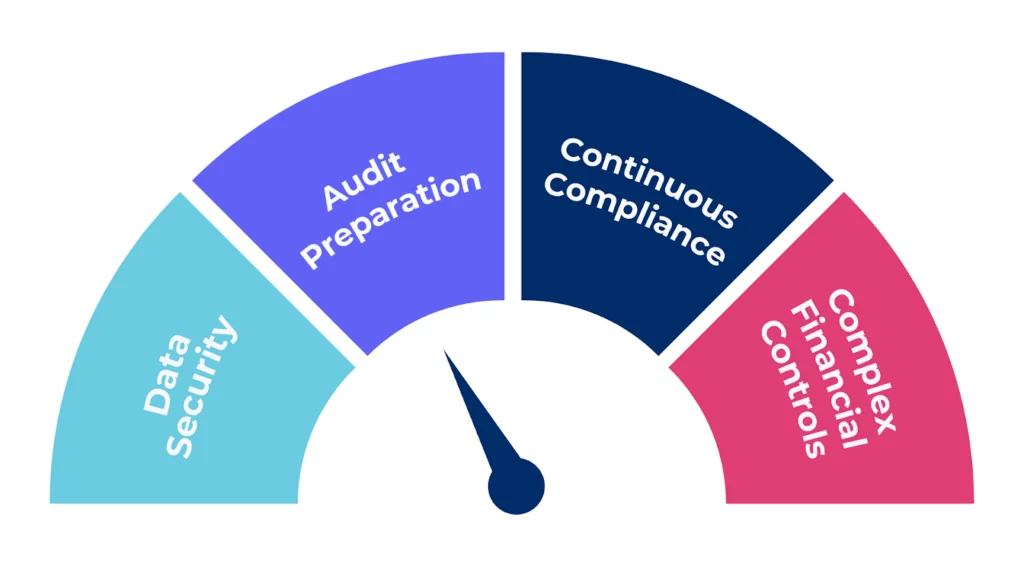
Top SOX compliance challenges in 2026
| Compliance challenge | Description | Solution |
| Data security | Protecting sensitive financial data can be challenging with evolving systems. | Use ITGC tools to manage access control and data integrity. |
| Audit preparation | Time-consuming and stressful audit prep, especially without robust systems. | Automate SOX ITGC workflows and track evidence with AI-powered tools like Scytale. |
| Maintaining continuous compliance | Scaling and evolving systems create gaps in compliance over time. | Use automated monitoring tools to ensure ongoing compliance. |
| Complexity of financial controls | Struggles with accurate financial reporting, especially with SaaS subscription models. | Implement strong internal controls and automate data collection. |
By recognizing these challenges early and leveraging SOX ITGC automation tools, you can stay ahead of the curve, ensuring your SOX compliance is always in check without slowing down growth or efficiency.
What are the key steps to achieve SOX compliance?
Achieving SOX compliance is a continuous commitment that requires ongoing vigilance, transparency, and periodic audits. Here are some key steps you can follow to help your business become and stay SOX compliant.
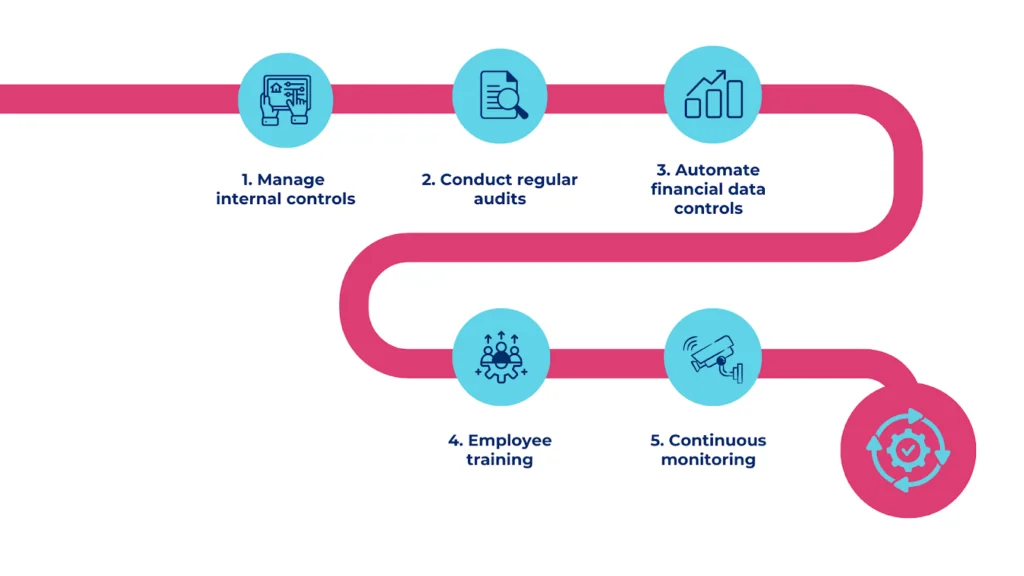
Step 1: Manage internal controls
Start by defining and implementing strong internal controls, including IT General Controls (ITGC), to protect financial data, manage access, and ensure accurate, reliable reporting from day one.
Step 2: Conduct regular audits
Regular internal and external audits help assess how well your internal controls are working. Tracking changes, especially around financial transactions, is key to maintaining an effective audit management system and ensuring continuous SOX compliance.
Step 3: Automate financial data controls
Automation streamlines critical GRC processes including data collection and reporting, reducing errors and improving accuracy. Automating ITGC and compliance workflows with platforms like Scytale makes SOX compliance more efficient.
💡 Have a look at our 5-step guide to ITGC for SOX compliance to get started.
Step 4: Employee training
Educate your team on the importance of SOX compliance and their role in maintaining it. Security awareness training is key to creating a culture of accountability and ensuring everyone is on the same page.
Step 5: Continuous monitoring
Monitoring your internal controls continuously is critical for identifying potential issues early. Scytale’s automated monitoring keeps your ITGC controls up-to-date, automatically detects and tracks SOX deficiencies, and ensures your organization remains audit-ready, compliant, and proactive in managing risks.


Streamline SOX compliance with Scytale
Managing SOX compliance doesn’t have to be complicated. With Scytale’s AI-powered platform and expert GRC team, you can automate critical SOX compliance processes, continuously monitor ITGCs, and seamlessly integrate SOX compliance into a centralized, scalable GRC strategy.
Scytale streamlines the management of internal controls, risk assessments, and continuous compliance monitoring, ensuring your organization remains SOX compliant, proactive in identifying risks, and consistently prepared for audits.
FAQs about SOX compliance
What is SOX compliance in simple terms?
SOX compliance means following the standards set by the Sarbanes-Oxley Act to ensure accurate and reliable financial reporting. It helps protect investors, prevent corporate fraud, and maintain trust in a company’s financial statements. With Scytale’s AI-powered compliance automation software, companies can streamline critical compliance processes, ensuring continuous adherence to SOX requirements and enhancing financial transparency.
What are examples of SOX violations?
Examples of SOX violations include failing to maintain proper internal controls, submitting false financial statements, or lacking evidence to support financial data during audits. These violations undermine financial integrity and can result in severe legal and financial consequences, including penalties, legal actions, and loss of investor confidence.
How often should companies perform SOX audits?
Companies should conduct annual SOX audits, including external audits by a certified CPA firm, to ensure controls are effective. Regular audits help identify compliance gaps and maintain financial integrity. Scytale is the leading SOX compliance platform, helping you stay on top of SOX requirements and remain audit-ready throughout the year.
What are the most common weaknesses found in SOX IT controls?
Common weaknesses include inadequate access controls, poor financial documentation, and outdated internal controls. Automating ITGC monitoring helps address these issues. By leveraging top SOX compliance tools like Scytale, you can keep your SaaS company SOX compliant, reduce risk, and build trust with investors. Ensure your financial systems remain secure, accurate, and audit-ready with continuous monitoring and automated compliance.