



TL;DR: Top 10 compliance automation tools
- Compliance automation tools replace manual processes with automated workflows for evidence collection, continuous monitoring, and audit readiness.
- They help save time, reduce errors, lower costs, and provide real-time visibility into compliance status.
- Leading automation tools support multiple frameworks and help organizations of all sizes manage growing compliance complexity in one place.
- Scytale stands out as the best compliance automation tool among the 10 we mention, combining AI-driven automation with expert support to ensure continuous compliance.
- Choosing the right compliance automation platform depends on your organization’s size, compliance goals, and need for expert support.
Staying on top of compliance can often feel like a full-time responsibility. With compliance requirements and regulations constantly changing, keeping up can be challenging. But what if there was a more efficient way to manage it?
Compliance automation tools provide that solution by reducing manual effort, streamlining compliance processes, and helping teams stay continuously audit-ready. They allow organizations to shift focus from repetitive tasks to more strategic priorities, while maintaining accuracy and control. Whether you’re a fast-growing startup or a well-established enterprise, the right solution can make achieving continuous compliance far more manageable.
In this article, we’ll explore the top ten compliance automation tools for 2026, comparing key features and capabilities to help you find the best fit for your organization.
Top 10 compliance automation tools in 2026
- Scytale
- Tugboat Logic
- LogicGate
- Diligent
- Onspring
- Optro (AuditBoard)
- Hyperproof
- Secureframe
- Thoropass
- OneTrust
5 key benefits of compliance automation
Compliance automation provides a range of advantages for organizations of all sizes, helping to simplify complex processes and improve overall efficiency. Here are some of the most significant benefits:
1. Time efficiency
Automating compliance processes saves a significant amount of time. Instead of manually gathering and organizing data, compliance automation tools automatically collect, analyze, and report compliance information. This allows compliance teams to focus on more strategic tasks.
2. Enhanced accuracy
Human errors in cybersecurity and compliance are inevitable, especially when dealing with vast amounts of data. Compliance automation tools reduce the risk of errors by consistently applying compliance rules and standards across all data and processes.
3. Cost savings
Automating compliance functions helps organizations optimize resource allocation and reduce expenses related to non-compliance, including severe fines, regulatory penalties, and legal costs.
4. Real-time monitoring
Compliance software provides real-time monitoring and alerts, allowing organizations to identify and address compliance issues promptly. This proactive approach helps prevent minor issues from escalating into more serious concerns.
5. Streamlined compliance audits
Compliance automation tools keep records organized and up to date, making audits easier to manage. Auditors can quickly access the required compliance documentation, reducing audit preparation time and effort.



Essential features of compliance automation tools
When selecting a compliance automation tool, it’s important to focus on automated compliance platform features that deliver real value and support your organization’s unique needs. Here are some key capabilities to look for:
Automated evidence collection
Compliance automation tools should be able to automatically collect evidence from various systems and sources. This feature saves time and ensures all required documentation remains accurate and up to date.
Real-time monitoring and alerts
Real-time monitoring and alert capabilities are crucial for maintaining ongoing compliance. These features allow organizations to quickly identify and address any compliance issues before they escalate.
Policy management
Effective policy management is essential for maintaining compliance. Compliance automation tools should assist in creating, updating, and distributing compliance policies across the organization. This is especially important to ensure your organization adheres to new regulations and as new internal changes occur across the company.
Risk assessment
AI-driven risk assessment tools involve a thorough analysis of potential vulnerabilities that could impact the security, availability, processing integrity, confidentiality, and privacy of customer data.
Audit readiness
Audit readiness features help prepare and organize all necessary materials for auditors, simplifying the audit process and reducing stress. This feature ensures that all evidence is complete, accurate, and well-organized, helping reduce the time and effort required to prepare for an audit.
Get Compliant 90% Faster
Compliance automation workflow
A modern compliance automation workflow is what separates leading tools in 2026 from conventional solutions. The best platforms streamline the entire compliance lifecycle, reducing manual effort, minimizing errors, and keeping teams continuously audit-ready. Here are the key steps that define an effective workflow:
1. Identification of requirements
Define the relevant compliance requirements, including applicable regulations, internal policies, and industry standards the organization is expected to meet.
2. Rule definition
Establish specific controls and criteria based on these requirements to determine what needs to be monitored and validated.
3. Automated evidence collection
Collect compliance-related data automatically from various systems, such as logs, reports, and audit records through various integrations.
4. Automated monitoring
Continuously monitor collected data to ensure ongoing adherence to defined compliance controls and requirements.
5. Alerts and notifications
Generate real-time alerts when deviations or violations occur, enabling timely and appropriate corrective action by relevant stakeholders.
6. Reporting and documentation
Generate reports that provide real-time visibility into compliance status and maintain comprehensive records for audits and reviews.
7. Remediation
Address identified issues through predefined remediation actions to restore compliance efficiently.
8. Continuous improvement
Refine and optimize the compliance process using insights from audits, incidents, and compliance requirement updates or changes.

Best compliance automation tools in 2026
These tools have been selected based on functionality, ease of use, support, and ability to adapt to evolving requirements. Each offers strengths suited to different organizational needs, helping maintain strong security compliance. By evaluating their capabilities, you can choose the solution that best aligns with your goals and supports a more efficient approach to Governance, Risk, and Compliance (GRC) management.
1. Scytale
Scytale stands out as the top AI-powered compliance automation platform, offering an all-in-one compliance hub designed to streamline processes across more than 60 frameworks, including SOC 2, ISO 27001, GDPR, HIPAA, and SOX ITGC. Designed specifically for SaaS organizations, from fast-growing startups to established enterprises, the platform supports every stage of growth. Its AI-powered capabilities, including automated evidence collection, continuous monitoring, policy management, and vendor risk management, help organizations streamline and maintain compliance.
What differentiates Scytale is its end-to-end approach to compliance. By combining AI-driven automation with dedicated GRC expert support and a unique AI GRC agent, it proactively identifies gaps, reduces manual effort, and keeps organizations continuously audit-ready. With seamless integrations, a user-friendly interface, and full visibility across compliance programs, Scytale enables teams to scale efficiently while maintaining control, accuracy, and alignment with key business goals.
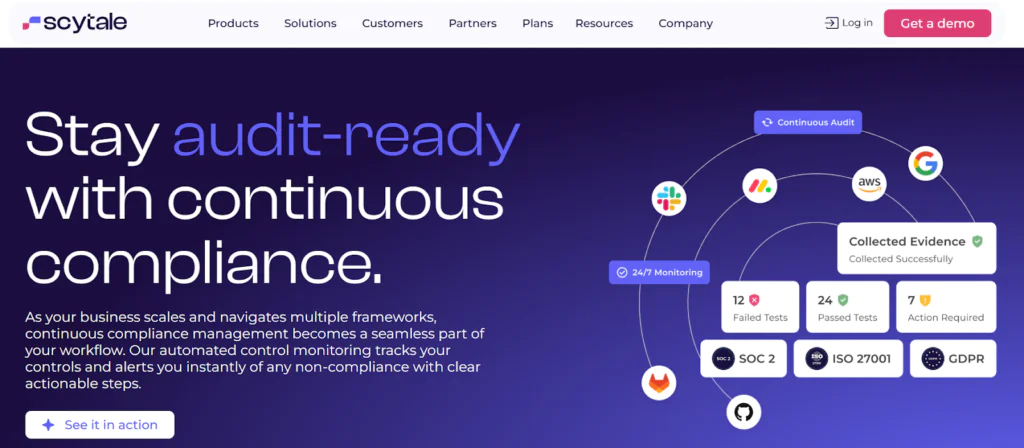
(Screenshot from Scytale’s website)
Why Scytale is the best:
- AI-powered automation that streamlines key compliance processes, including evidence collection, access reviews, continuous monitoring, and vendor risk management
- Continuous compliance through real-time monitoring, with full visibility into your security and risk posture
- Multi-framework management to eliminate duplicate work across multiple standards like SOC 2, ISO 27001, ISO 42001, GDPR, PCI DSS, and HIPAA
- Dedicated GRC expert support, providing tailored guidance throughout the entire compliance journey
- Customizable Trust Center to easily showcase your security and compliance posture
- Built-in AI GRC agent (Scy) that enhances compliance automation processes by providing actionable insights
2. Tugboat Logic
Tugboat Logic is a compliance platform focused on simplifying audit preparation and managing security programs. It provides structured workflows and guidance to help organizations progress through compliance requirements.
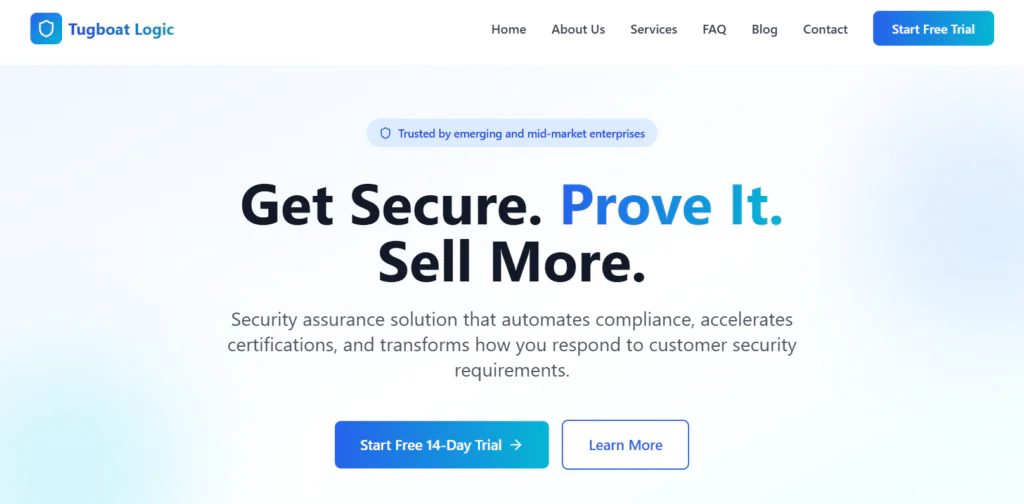
(Screenshot from Tugboat Logic’s website)
Key Features:
- Guided compliance workflows and task management
- Evidence tracking and audit readiness tools
- Unified dashboard for compliance activities
Limitations:
- Less suited for for highly customized workflows
- May require manual effort for continuous monitoring
3. LogicGate
LogicGate is a flexible platform designed to support risk and compliance management through process customization. It enables organizations to build and adapt processes based on their specific operational needs.
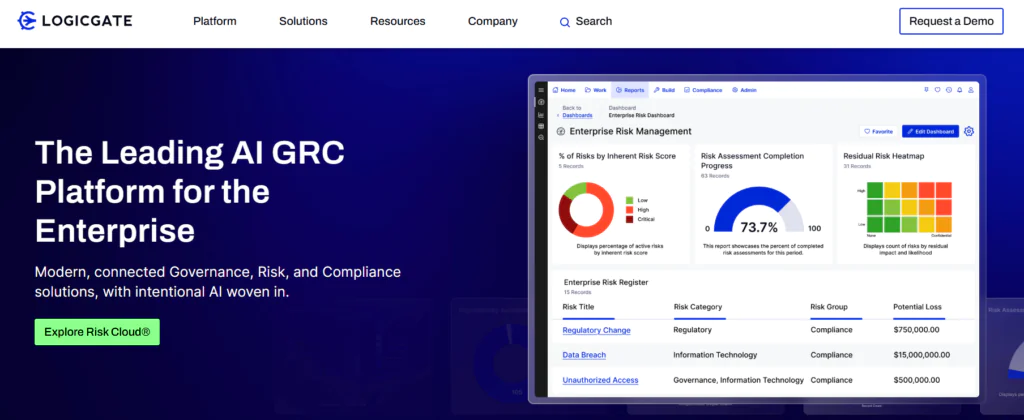
(Screenshot from LogicGate’s website)
Key Features:
- Customizable workflow builder for compliance processes
- Consolidated risk and compliance management
- Reporting and analytics for performance tracking
Limitations:
- Requires setup time to configure workflows
- May depend on internal expertise to manage effectively
4. Diligent
Diligent offers governance and oversight with a focus on enterprise-level oversight and reporting. It supports organizations looking to centralize risk visibility and improve decision-making.
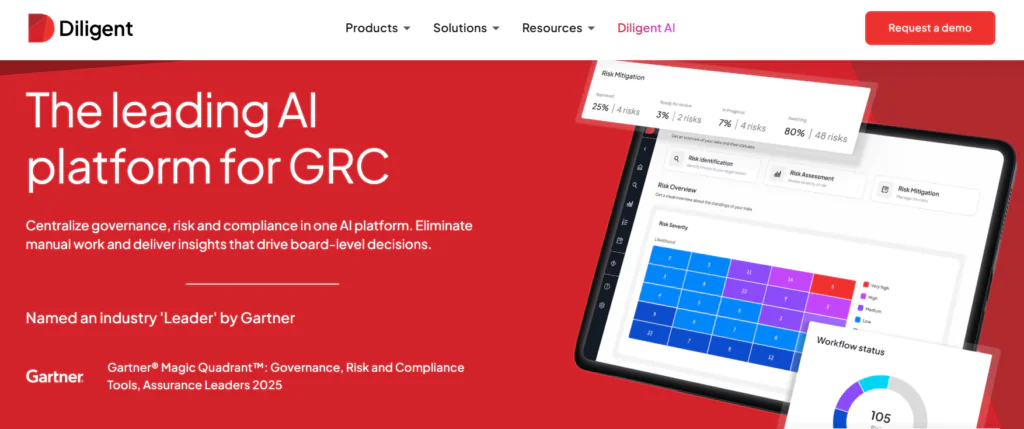
(Screenshot from Diligent’s website)
Key Features:
- Centralized governance and risk management
- Reporting tools for executive visibility
- Support for enterprise-wide compliance programs
Limitations:
- Can be complex to implement and navigate
- May be more suited to larger organizations
5. Onspring
Onspring is a no-code platform designed for process and workflow management. It enables teams to structure and manage their programs with flexibility and control through configurable processes.
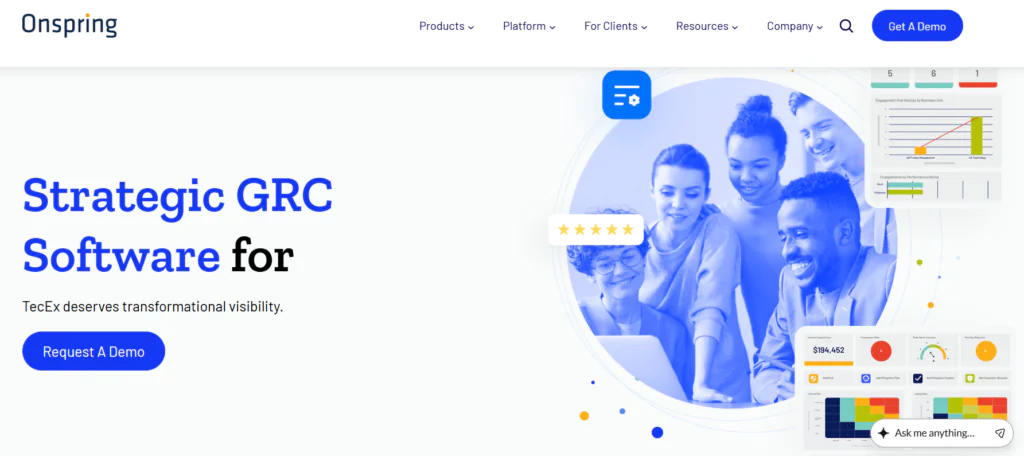
(Screenshot from Onspring’s website)
Key Features:
- No-code workflow customization
- Risk and compliance tracking in one platform
- Reporting and dashboard capabilities
Limitations:
- Customization may require time to configure properly
- Less prescriptive guidance for compliance processes
6. Optro (AuditBoard)
Optro, previously known as AuditBoard, is a compliance automation platform focused on audit, risk, and compliance management, with tools designed to enhance collaboration and support audit readiness. It is commonly used by teams responsible for managing internal audits and control environments.
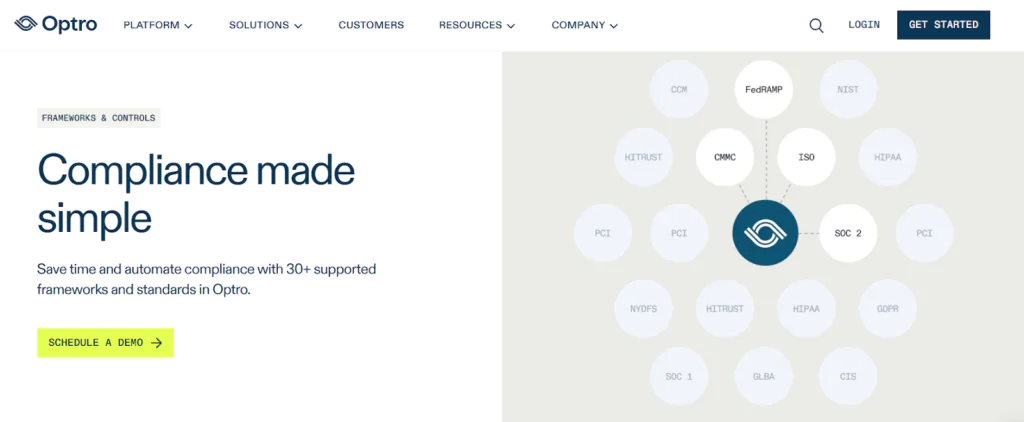
(Screenshot from Optro’s website)
Key Features:
- Audit management and documentation tools
- Collaboration features across teams
- Reporting and audit trail visibility
Limitations:
- Primarily audit-focused rather than end-to-end automation
- May require additional tools for full compliance coverage
7. Hyperproof
Hyperproof is an automation platform designed to help organizations manage compliance programs and track controls over time. It emphasizes organization and visibility across all compliance activities.
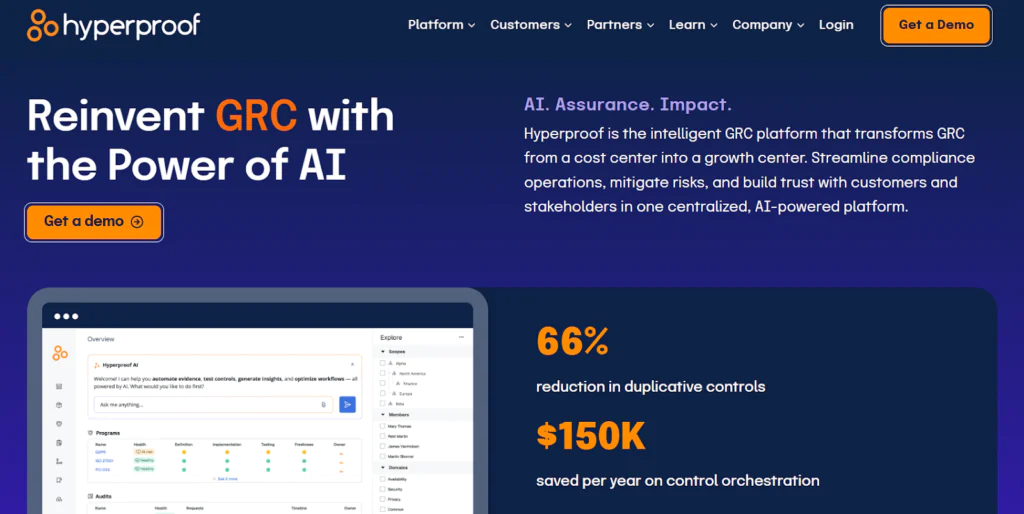
(Screenshot from Hyperproof’s website)
Key Features:
- Control tracking and monitoring
- Organized evidence and documentation management
- Integration with common business tools
Limitations:
- Requires manual input for certain processes
- May involve ongoing administrative effort
8. Secureframe
Secureframe is a compliance automation platform that helps organizations manage security and compliance processes. It provides tools for tracking controls, collecting evidence, and preparing for audits.
(Screenshot from Secureframe’s website)
Key Features:
- Automated evidence collection
- Compliance tracking and audit preparation
- Vendor risk and security management
Limitations:
- May be less scalable for complex compliance needs
- Less adaptable for highly customized programs
9. Thoropass
Thoropass combines compliance software with audit and advisory services to support organizations through their compliance journey. It is designed for teams looking for a mix of GRC tooling and external support.
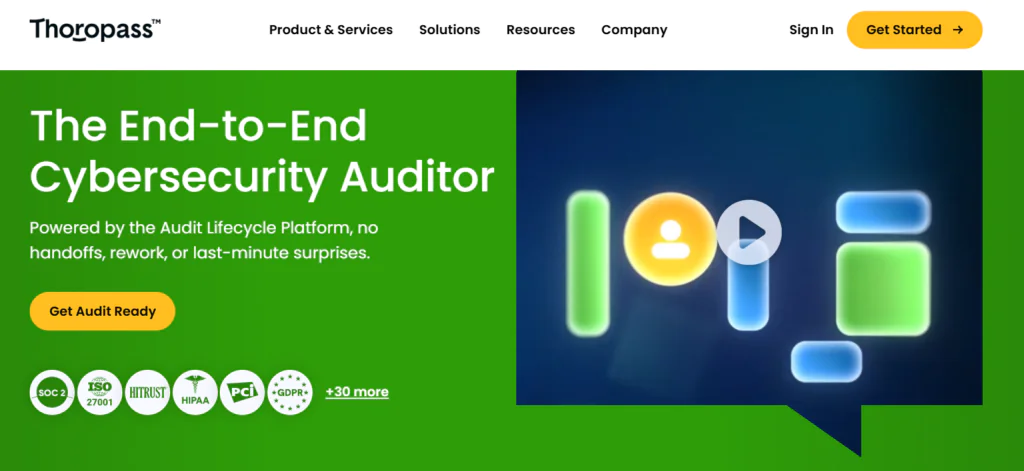
(Screenshot from Thoropass’ website)
Key Features:
- Compliance platform with audit support services
- Guided processes for audit support and guidance
- Continuous compliance assistance
Limitations:
- Heavier reliance on service components
- May offer less flexibility for self-managed programs
10. OneTrust
OneTrust is a broad automation platform focused on privacy, data governance, and compliance management. It is often used by organizations managing complex data and privacy requirements.
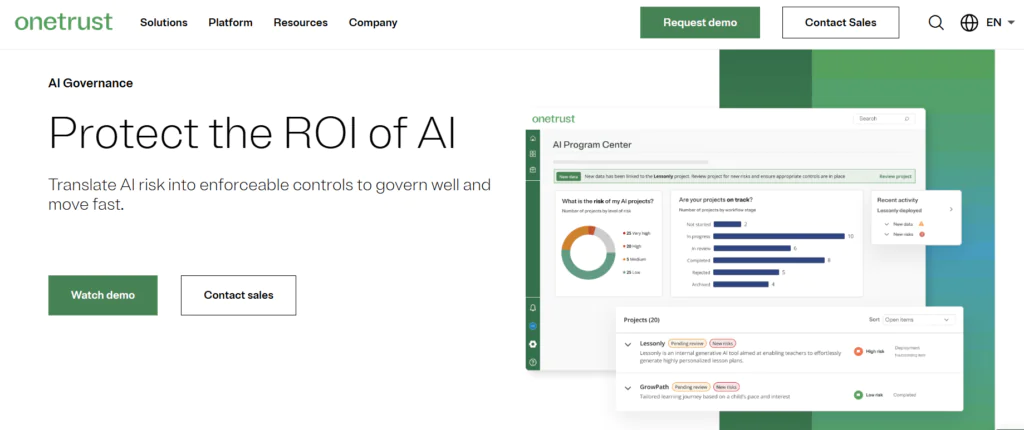
(Screenshot from OneTrust’s website)
Key Features:
- Data governance and privacy management tools
- Holistic view of compliance and risk posture
- Scalable platform for large organizations
Limitations:
- Can be complex to implement and manage
- May require significant configuration and resources
Top 10 compliance automation tools in 2026
| Platform | Ideal For | Key Strengths |
| Scytale | SaaS organizations, from startups to enterprises, with complex compliance needs seeking efficient AI-driven compliance management processes | AI compliance automation, next-gen AI GRC agent, continuous security and compliance monitoring, multi-framework management, streamlined GRC processes, expert guidance, custom integrations |
| Tugboat Logic | Teams looking for guided audit preparation | Structured workflows, audit-focused guidance, centralized task tracking |
| LogicGate | Organizations needing customizable compliance workflows | Flexible workflow builder, centralized risk management, reporting and analytics |
| Diligent | Large enterprises focused on governance and oversight | Enterprise-level risk visibility, reporting tools, centralized governance |
| Onspring | Teams wanting configurable, no-code compliance processes | No-code customization, workflow flexibility, reporting dashboards |
| Optro (AuditBoard) | Audit and internal control teams | Audit management tools, collaboration features, strong audit documentation |
| Hyperproof | Organizations prioritizing visibility across compliance activities | Control tracking, centralized documentation, integrations with business tools |
| Secureframe | Organizations seeking structured compliance tracking and audit prep | Automated evidence collection, compliance tracking, vendor risk management |
| Thoropass | Teams looking for combined software and audit support services | Integrated audit services, guided compliance processes, ongoing assistance |
| OneTrust | Enterprises managing privacy and data governance at scale | Privacy management tools, centralized compliance visibility, scalable platform |
Streamline GRC workflows with seamless automation.
Choosing the right compliance automation tool for your business in 2026
In 2026, compliance automation tools are essential for organizations looking to streamline GRC processes and meet standards and frameworks such as SOC 2, ISO 27001 and SOX ITGC. The tools highlighted in this guide offer features that improve efficiency, accuracy, and overall security posture. Whether you’re a startup or a scaling business, they provide the capabilities needed to manage compliance effectively.
By leveraging top AI compliance automation platforms, organizations can save time, reduce costs, and lower the risk of non-compliance. Choosing the right GRC solution can significantly improve your ability to manage complex requirements and maintain a strong security posture over time. Adopting these tools helps ensure more efficient, scalable compliance in 2026.
FAQs about top compliance automation tools
What sectors benefit most from compliance automation?
Compliance automation benefits industries such as finance, healthcare, technology, and manufacturing. It helps streamline processes, reduce errors, and improve audit readiness. By automating compliance, organizations can meet key standards while saving time and lowering operational costs.
How much does compliance management software cost?
The cost of compliance management software varies based on common factors such as company size and framework requirements. While prices can range annually, tools like Scytale offer transparent pricing and customizable plans to fit your needs. Learn more about Scytale’s pricing here: Scytale Pricing.
How do compliance automation tools handle updates to regulatory requirements?
Compliance automation tools are designed to help you keep up with changing regulations. They incorporate changes through automated policy updates, real-time alerts, and integration with regulatory databases. This way, your organization stays compliant without the hassle of constant manual updates, freeing your team to focus on more important tasks.
What are compliance automation tools?
Compliance automation tools are platforms that help organizations manage and maintain compliance by automating tasks like evidence collection, control monitoring, and audit preparation. They replace manual processes with a centralized system that keeps everything organized and up to date. This reduces operational overhead and makes it easier to stay audit-ready.
What frameworks do compliance automation tools support?
These tools typically support a wide range of security and regulatory frameworks, allowing organizations to manage multiple requirements in one place. The exact coverage varies by platform and can include global standards as well as region-specific regulations. Many tools also map overlapping controls to reduce duplication across frameworks.
How do compliance automation tools work?
Compliance automation tools integrate with your existing systems to collect data and monitor controls continuously. They automate evidence gathering, track compliance status, and flag potential gaps in real time. This helps teams stay organized, reduce manual effort, and prepare more efficiently for audits.