



TL;DR: Top cloud compliance tools
- Cloud compliance is critical for protecting data and meeting GRC requirements as cloud environments grow more complex.
- Top cloud compliance tools automate repetitive tasks, improving efficiency and reducing the risk of errors.
- The right solution depends on your company’s size, complexity, and long-term GRC goals.
- Scytale stands out as the top cloud compliance tool among the ten we mention, offering continuous monitoring and an all-in-one AI GRC platform that keeps organizations compliant year round.
- Addressing compliance early helps minimize risk, control costs, and support scalable growth.
Managing compliance in the cloud is essential for every organization, not just large enterprises. With data breaches on the rise and regulations constantly evolving, maintaining cloud compliance is a critical challenge for organizations of all sizes, from startups navigating their first audit to established enterprises ensuring continuous compliance. Fortunately, with the right tools, cloud compliance becomes more streamlined, reducing complexity and stress.
In this article, we’ll explore the top cloud compliance tools for 2026 and how they can help your organization stay compliant with confidence.
Top cloud compliance tools
- Scytale
- VComply
- Trend Cloud One
- Lacework
- SentinelOne
- Vanta
- LogicGate
- Thoropass
- Scrut
- CrowdStrike
What is cloud security compliance?
Migrating to the cloud offers numerous benefits, including reduced IT costs, increased operational speed, enhanced product flexibility, and seamless collaboration. However, these advantages also introduce a new layer of security challenges and risks.
Whether you use AWS, GCP, or Microsoft Azure as your Infrastructure as a Service (IaaS) provider, hosting data in the cloud doesn’t automatically ensure its security. Without proper data security and cloud compliance measures, SaaS companies expose themselves to security vulnerabilities, data breaches, and potential penalties for non-compliance.
Cloud security compliance ensures your cloud infrastructure adheres to industry standards, data protection laws, and best security practices, mitigating these risks.
Streamline GRC workflows with no blind spots.
Cloud compliance tools explained
Cloud compliance tools act as a centralized layer to manage controls, enforce policies, and monitor cloud-based data. These solutions assist in managing Governance, Risk and Compliance (GRC) requirements and enforcing security protocols related to cloud services.
Whether it’s implementing Cloud Security Alliance (CSA) best practices, aligning with major security and privacy frameworks like ISO 27001, SOC 2, GDPR, NIST, or CIS Controls, or conducting cloud security evaluations, these tools ensure your organization stays on track with compliance. Cloud-based compliance software is essential for maintaining secure, compliant operations.
Why your business needs a cloud compliance tool
Securing data in the cloud is just one of the many benefits of investing in a cloud compliance tool. These solutions play a critical role in helping organizations manage risk, maintain regulatory alignment, and operate more efficiently.
Stay ahead of changing compliance requirements
Cloud compliance tools enable organizations to meet standards such as SOC 2, ISO 27001 and GDPR while staying aligned with ongoing security requirements. This supports consistent compliance and reduces the risk of gaps or non-compliance.
Enhance security posture
These tools incorporate cloud security audit capabilities to identify and remediate vulnerabilities. This strengthens your overall security posture and helps protect your organization from breaches, financial penalties, and reputational damage.
Improve operational efficiency
By automating key compliance tasks, organizations can reduce manual effort and minimize human error. This allows teams to focus on strategic initiatives rather than time-consuming activities such as risk assessments, evidence collection, control monitoring, and vendor risk management.

The 10 best cloud compliance tools for 2026
Compliance tools are crucial for organizations to streamline processes, enhance security, and stay ahead of compliance requirements. Here are the top 10 best cloud compliance management software options for 2026, each designed to address specific business needs.
1. Scytale
Scytale is a top cloud compliance tool built for organizations that need full visibility and continuous control over their compliance posture. Designed for fast-growing SaaS startups to well-established enterprises, it combines AI-powered automation with expert GRC support. This enables organizations to simplify complex compliance operations across cloud environments.
By automating key processes such as evidence collection, continuous monitoring, and risk management, Scytale helps teams reduce manual effort while maintaining alignment with security and GRC requirements. Its multi-framework management with cross-mapping eliminates duplicate work, while its AI-powered agents identify gaps, validate evidence, and support faster, more accurate compliance at scale.
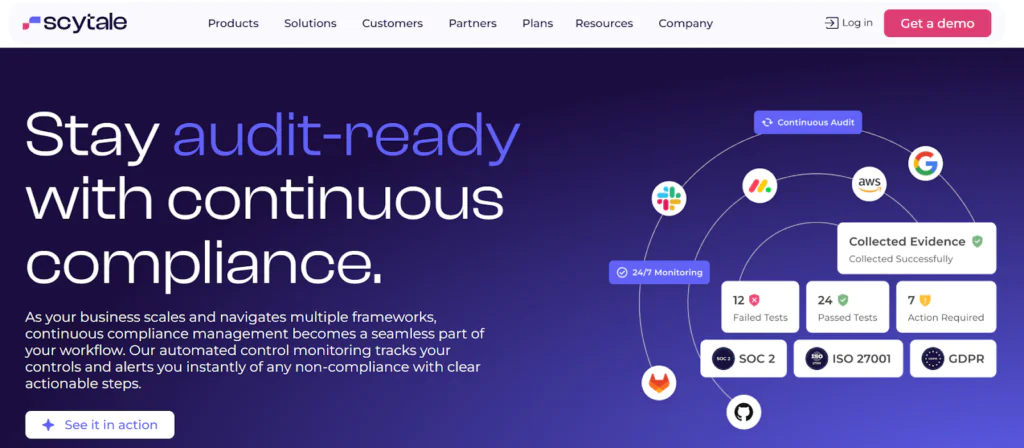
(Screenshot from Scytale’s website)
Why Scytale is the best:
- Continuous cloud compliance through real-time monitoring, with full visibility into your security and risk posture across cloud environments
- AI-powered automation that streamlines core compliance processes, including evidence collection, access reviews, and cloud control monitoring
- Customizable Trust Center to clearly showcase your security and compliance posture to customers and stakeholders
- Multi-framework management with cross-mapping to eliminate duplicate work across standards and simplify cloud compliance at scale
- Dedicated GRC expert support, providing tailored guidance throughout the entire compliance journey
- Built-in AI GRC agent (Scy) that identifies gaps and delivers actionable insights to strengthen ongoing compliance
2. VComply
VComply is a cloud-based GRC platform focused on simplifying compliance management through a clean and accessible interface. It is well-suited for organizations looking for a structured and easy way to manage compliance processes.
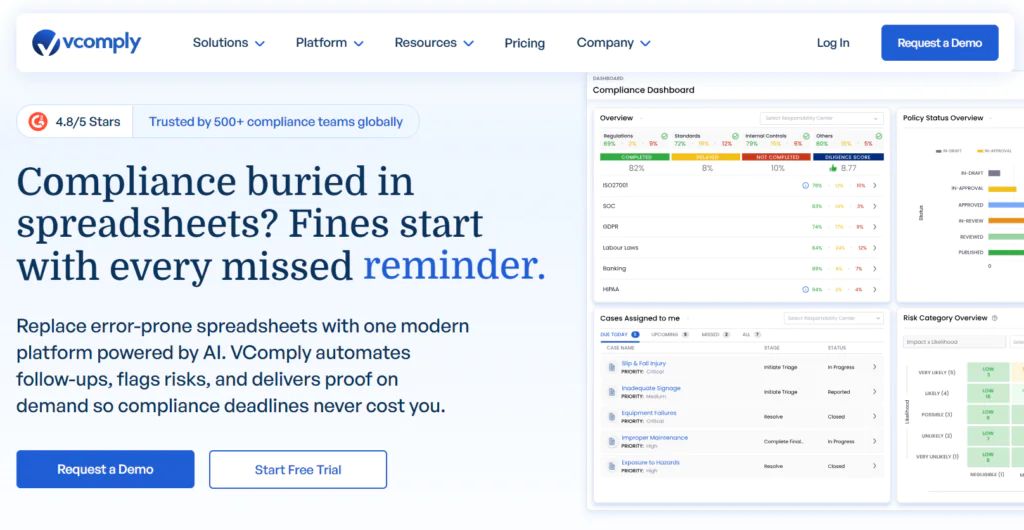
(Screenshot from VComply’s website)
Key strengths:
- Simple and scalable platform for growing teams
- Strong usability for non-technical users
- Fast setup with pre-built workflows
Limitations:
- Limited advanced capabilities for complex programs
- Fewer third-party integrations compared to other tools
3. Trend Cloud One
Trend Cloud One focuses on cloud security posture and compliance monitoring across multi-cloud environments. It is particularly relevant for organizations managing infrastructure across multiple cloud providers.
(Screenshot from Trend Cloud One’s website)
Key strengths:
- Multi-cloud visibility and compliance coverage
- Real-time posture monitoring across environments
- Scales well for complex cloud infrastructures
Limitations:
- Configuration can be resource-intensive
- May be too complex for smaller organizations
4. Lacework
Lacework is a cloud security and compliance platform that emphasizes behavioral analytics and anomaly detection. It helps organizations identify risks and maintain compliance through deep visibility into cloud activity.
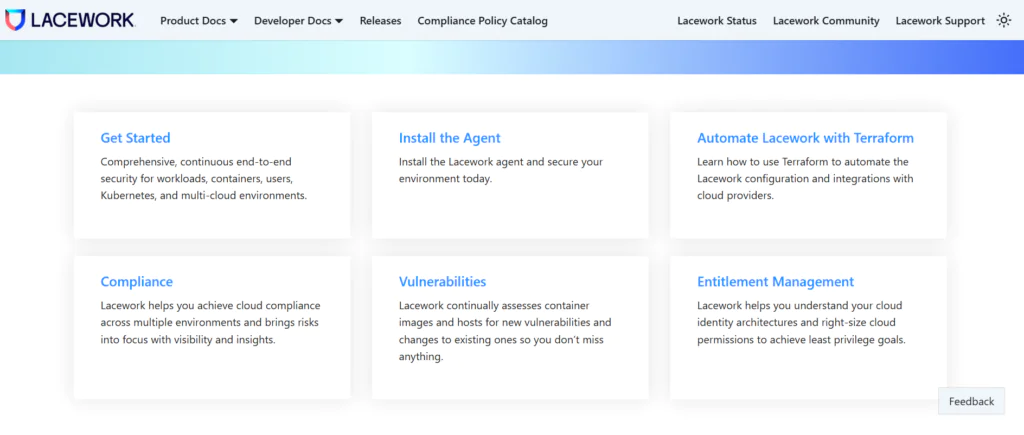
(Screenshot from Lacework’s website)
Key strengths:
- Advanced threat detection using behavioral analysis
- Deep visibility across cloud environments
- Supports compliance through behavioral insights and anomaly detection
Limitations:
- Requires tuning to optimize alert accuracy
- Pricing may be a barrier for smaller teams
5. SentinelOne
SentinelOne is primarily a security platform with capabilities that extend into cloud compliance. It focuses on protecting cloud workloads while supporting organizations in maintaining secure environments.
(Screenshot from SentinelOne’s website)
Key strengths:
- Strong cloud workload protection capabilities
- Automated threat detection and response
- Broad coverage of security risks
Limitations:
- More security-focused than compliance-focused
- May require onboarding time for full adoption
6. Vanta
Vanta is a cloud compliance platform designed to help organizations automate and manage compliance processes as they scale. It is often used by teams looking to streamline audit readiness and reduce manual effort.
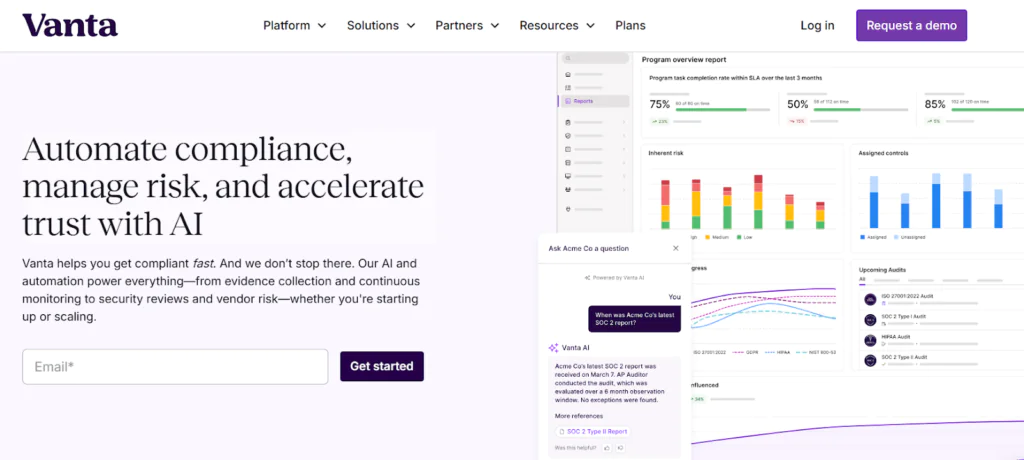
(Screenshot from Vanta’s website)
Key strengths:
- Strong audit readiness workflows and task tracking
- Easy integration with cloud tools and systems
- Automation of evidence collection processes
Limitations:
- Additional features can increase overall cost
- Risk scoring may offer limited depth
7. LogicGate
LogicGate is a flexible GRC platform that allows organizations to design and customize their compliance workflows. It is suited for businesses that need a tailored approach to managing risk and compliance.
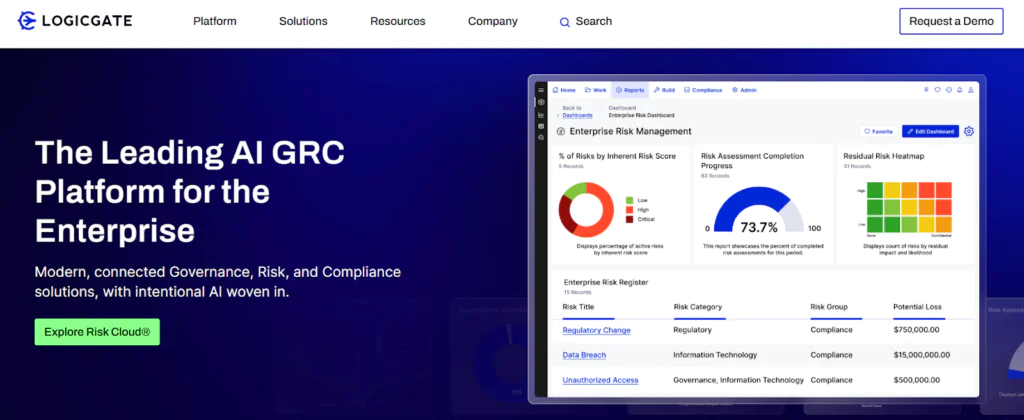
(Screenshot from LogicGate’s website)
Key strengths:
- Highly customizable to fit unique workflows
- Strong automation for compliance processes
- Flexible integrations with other systems
Limitations:
- Steeper learning curve for new users
- Requires internal expertise to fully leverage
8. Thoropass
Thoropass is designed to support organizations through audit and certification processes with guided workflows. It is a practical option for teams focused on achieving compliance milestones efficiently.
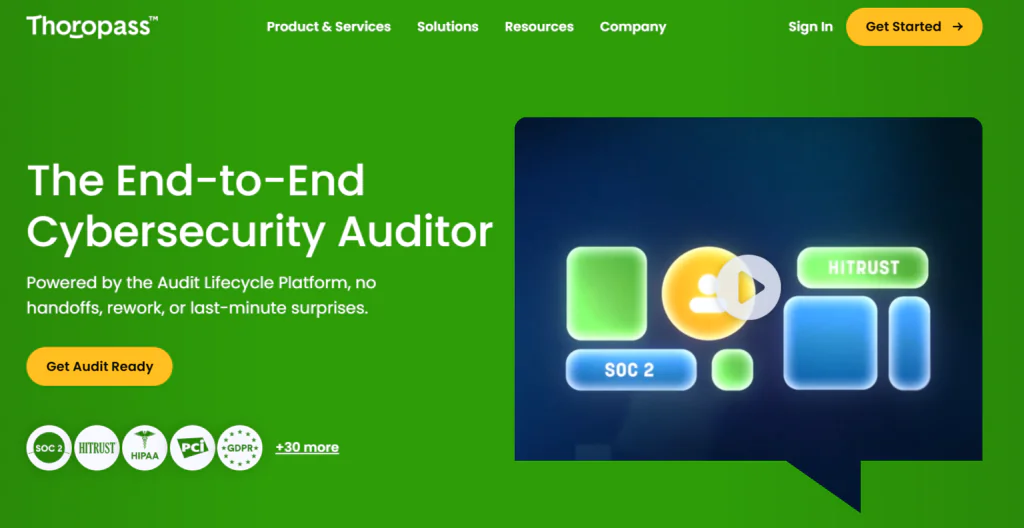
(Screenshot from Thoropass’ website)
Key strengths:
- Guided audit and certification support
- Easy-to-use interface with pre-built templates
- Quick implementation for smaller teams
Limitations:
- Focused more on certifications than continuous compliance
- Less flexibility for scaling across multiple frameworks
9. Scrut
Scrut Automation is a lightweight compliance platform aimed at startups and SMBs. It simplifies compliance tracking and reduces operational overhead through an intuitive interface.
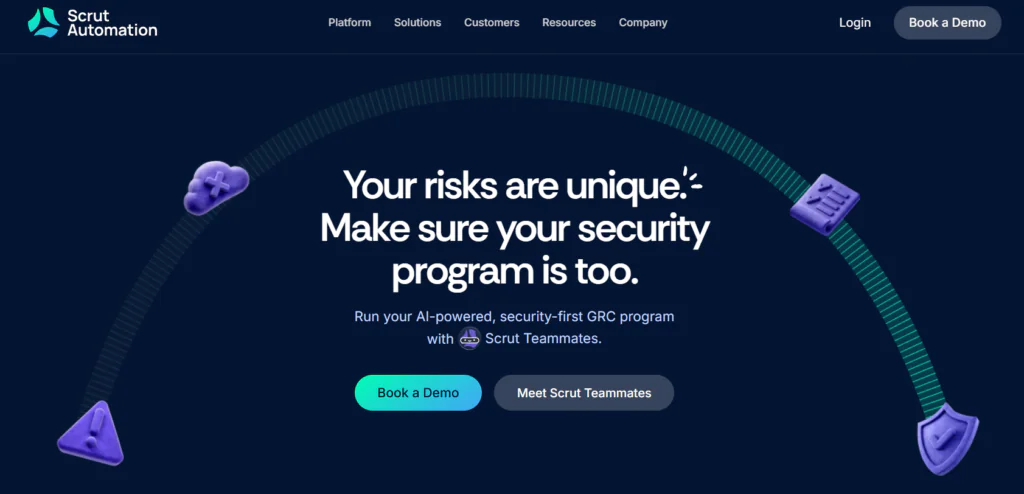
(Screenshot from Scrut’s website)
Key strengths:
- Fast onboarding and ease of use
- Simplified compliance management for smaller teams
- Clear visibility through a user-friendly dashboard
Limitations:
- May lack depth for complex enterprise needs
- Less suited for multi-entity compliance structures
10. CrowdStrike
CrowdStrike is a security-first platform that extends into cloud compliance through threat detection and risk insights. It is commonly used by organizations prioritizing security alongside compliance efforts.
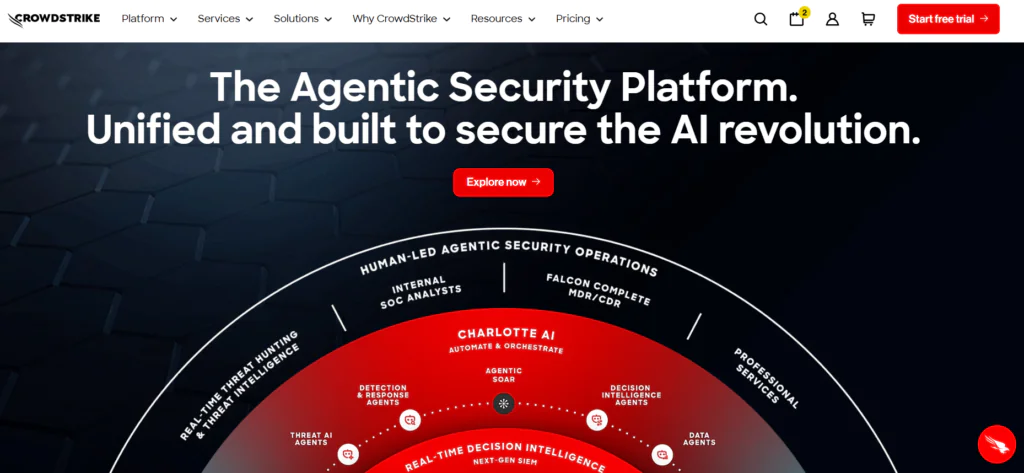
(Screenshot from CrowdStrike’s website)
Key strengths:
- Proactive threat detection with actionable insights
- Strong endpoint and workload protection
- Strong visibility into threats across cloud workloads
Limitations:
- Primarily security-focused with limited compliance depth
- Can be resource-intensive for smaller teams
Top cloud compliance tools comparison
| Tool | Best for | Key strength |
| Scytale | Mid-market and enterprise SaaS organizations with complex cloud environments, seeking continuous compliance and full visibility | Continuous cloud compliance with AI automation, real-time monitoring, and expert GRC support |
| VComply | Teams looking for simple, structured compliance management | Easy-to-use platform with quick setup |
| Trend Cloud One | Organizations managing multi-cloud environments | Strong cloud posture monitoring across providers |
| Lacework | Security-focused cloud teams | Advanced threat detection using behavioral analytics |
| SentinelOne | Security-first organizations protecting cloud workloads | Automated threat detection and response |
| Vanta | Startups and growing teams preparing for audits | Streamlined audit readiness and automation |
| LogicGate | Organizations needing customizable compliance workflows | Highly flexible and configurable GRC platform |
| Thoropass | Teams focused on certifications and audits | Guided audit and certification workflows |
| Scrut | Startups and SMBs needing simple compliance tracking | Fast onboarding with an intuitive interface |
| CrowdStrike | Enterprises prioritizing cloud security | Proactive threat detection and protection |
Choosing the right cloud compliance tool
With a wide range of options available, selecting the right cloud compliance tool requires a structured approach. Much like choosing a compliance framework, the decision should be guided by your organization’s specific requirements and long-term goals.
Key factors include:
- Your organization’s size and operating model
- Governance and regulatory requirements
- The type of data you store and process, including geographic considerations
- Your team’s capacity to implement and fully utilize the platform, with access to expert GRC support as a valuable advantage
Start by defining your business needs and compliance priorities. Focus on tools that integrate seamlessly with your existing systems and provide the flexibility to scale as your organization grows. A product-led startup may prioritize ease of implementation and automation, while more mature organizations may require advanced capabilities to manage multiple frameworks and maintain continuous compliance.
Addressing cloud compliance early is critical. Delays can lead to increased complexity, higher costs, and greater risk exposure over time. Establishing a strong foundation from the outset enables organizations to scale securely and maintain alignment with evolving regulatory requirements.
AI-native GRC for how enterprise teams work today.
Simplify cloud compliance with Scytale
Cloud compliance becomes significantly easier when processes are centralized, automated, and continuously maintained. Scytale enables organizations to replace fragmented workflows with a unified approach, delivering greater visibility and control across cloud environments.
Scytale’s AI GRC platform streamlines cloud compliance by automating key processes. Its multi-agent suite runs continuously across your environment to identify gaps and validate evidence. With multi-framework management and cross-mapping, teams can reduce duplication and manage compliance more efficiently as they scale across cloud systems.
With the added support of GRC experts, Scytale provides the structure, precision, and scalability needed to navigate complex compliance requirements and maintain a consistently strong cloud compliance posture.
FAQs about top cloud compliance tools
How do cloud compliance tools improve security audits?
Cloud compliance tools automate tasks such as evidence collection, control monitoring, user access reviews, and vendor risk management, streamlining the audit process. This reduces human error, saves time, and ensures compliance. AI GRC tools like Scytale also centralize audit logs and reporting, making audits more efficient and easier to manage.
Which industries benefit most from cloud security compliance tools?
Industries like healthcare, fintech, and technology, which handle sensitive data, benefit most. These sectors must comply with strict regulations like HIPAA, GDPR, and CCPA. Cloud compliance tools help them maintain compliance, safeguard data, and avoid penalties.
How do cloud compliance tools help with real-time threat detection?
Cloud compliance tools provide continuous monitoring for security threats and vulnerabilities. Real-time alerts enable rapid responses to suspicious activity, ensuring data security and ongoing compliance with evolving security standards.
What are cloud compliance tools?
Cloud compliance tools are software solutions designed to help companies meet security and compliance standards when using cloud services. They guide organizations through compliance processes, ensuring adherence to frameworks like SOC 2, GDPR, HIPAA, and ISO 27001.
Why do organizations need cloud compliance tools?
Organizations need cloud compliance tools to manage security risks, meet regulatory requirements, and avoid penalties. Solutions like Scytale simplify this process by automating key tasks, reducing manual effort, and enabling continuous compliance through real-time monitoring.
What features should I look for in a cloud compliance tool?
Look for features such as automated evidence collection, real-time threat detection, integration with existing cloud providers, continuous monitoring, and user access management. Cloud compliance tools like Scytale also offer cross-framework mapping and centralized visibility, helping organizations stay aligned across multiple compliance requirements.
How do cloud compliance tools integrate with cloud providers?
Cloud compliance tools integrate with major cloud providers such as AWS, Google Cloud, and Microsoft Azure through native integrations or APIs. These integrations enable seamless data synchronization, compliance tracking, and real-time monitoring across your cloud infrastructure.