










TL;DR: Top penetration testing solutions
- Penetration testing proactively uncovers security gaps before they can be exploited, helping reduce overall risk.
- A combination of automated scans and expert-led testing delivers both speed and depth of insight.
- Different tools focus on different layers of security, from infrastructure and networks to applications and credentials.
- Continuous testing ensures ongoing visibility into new vulnerabilities as systems and environments change.
- Scytale is the top penetration testing solution that stands out by unifying testing, monitoring, and compliance for faster, more actionable remediation.
With large volumes of sensitive data stored and processed in the cloud, protecting your organization’s information is a core business priority. Security directly impacts customer trust, compliance, and overall resilience, and as digital environments grow more complex, the need for proactive security measures continues to increase.
Cyberattacks are also becoming more sophisticated, targeting internal systems, third-party tools, APIs, and cloud infrastructure. Penetration testing helps identify vulnerabilities by simulating real-world attacks, enabling organizations to address risks before they are exploited. With many solutions available, it’s essential to choose one that delivers clear, actionable insights aligned with your specific needs.
In this article, we review the top 10 penetration testing companies of 2026 to help you make an informed decision.
Top 10 penetration testing solutions
- Scytale
- Astra Security
- Sophos
- Wati
- Valency Networks
- Intruder
- CrowdStrike
- Veracode
- Cobalt Strike
- Tenable Nessus
What is a penetration testing tool?
Penetration testing tools are software solutions used to simulate cyberattacks on systems, networks, and applications in order to identify and assess security vulnerabilities. Rather than focusing on why security matters, these tools focus on how organizations can actively test their defenses and uncover gaps before they become real issues.
These tools typically fall into two main categories:
- Automated penetration testing solutions: These tools scan environments for known vulnerabilities, providing fast coverage and structured reports that highlight common security gaps with minimal manual effort.
- Manual testing tools: These rely on skilled security professionals to perform deeper analysis, uncover more complex vulnerabilities, and validate how real-world attackers might exploit them.
Most organizations combine both methods, using automated offensive security tools to achieve broad coverage and efficiency, while leveraging manual testing for deeper analysis and more comprehensive security assurance.
Types of penetration testing tools
Penetration testing requires a range of specialized tools, each designed to identify different types of vulnerabilities across systems, networks, and applications. Rather than relying on a single solution, effective testing typically involves a combination of tools that work together to provide a comprehensive view of an organization’s security posture. Here are some of the most common types of tools used in penetration testing:
Port scanners
Port scanners are used to identify open ports on a system, providing visibility into active services and applications. This forms a critical part of the reconnaissance phase, helping security teams map the attack surface and identify potential entry points.
Vulnerability scanners
Vulnerability scanners detect known security weaknesses across operating systems, applications, and configurations. They generate detailed reports that help prioritize remediation efforts by highlighting the most critical and exploitable issues.
Network sniffers
Network sniffers monitor and analyze traffic across a network, capturing data such as source and destination addresses, communication protocols, and transmission patterns. This allows testers to identify insecure data flows, including unencrypted sensitive information.
Web proxies
Web proxies act as intermediaries between a user’s browser and web applications, enabling testers to intercept, inspect, and modify requests. They are particularly effective in identifying web application vulnerabilities such as cross-site scripting (XSS) and cross-site request forgery (CSRF).
Password cracking tools
Password cracking tools are used to evaluate the strength of authentication mechanisms by testing for weak or commonly used passwords. They help identify risks related to poor credential practices, which can lead to unauthorized access or privilege escalation.
Who needs penetration testing?
Penetration testing is essential for any organization that relies on digital systems to operate, store data, or deliver services. As technology environments become more interconnected, the potential impact of a security breach increases, making regular testing a key part of risk management.
It is particularly important for:
- SaaS and technology companies: To secure applications, APIs, and cloud environments that handle customer data and are frequently targeted by attackers.
- Organizations handling sensitive data: Including healthcare, finance, and e-commerce businesses that process personal, financial, or regulated information.
- Companies undergoing compliance audits: Organizations preparing for frameworks such as SOC 2, ISO 27001, HIPAA, or GDPR often require a structured penetration testing plan to meet security requirements.
- Growing companies and startups: As systems scale and new tools are introduced, testing helps identify gaps early before they become larger risks.
- Enterprises with complex infrastructures: Organizations with multiple environments, integrations, and third-party dependencies benefit from regular testing to maintain visibility and control.
Streamline GRC workflows with no blind spots.
Criteria for top penetration testing solutions
When evaluating penetration testing solutions, it’s important to assess more than just features. The right tool should align with your organization’s security requirements, operational workflows, and long-term goals. Here are key factors to consider:
- Comprehensive coverage: Ensure the solution supports testing across networks, applications, and cloud environments to provide full visibility into potential vulnerabilities.
- Usability: A clear, intuitive interface reduces the learning curve and enables teams to operate the tool efficiently without unnecessary complexity.
- Automation capabilities: Built-in automation can improve efficiency by enabling continuous assessments, faster identification of vulnerabilities, and streamlined remediation processes.
- Integration: The solution should integrate seamlessly with your existing security stack and workflows, allowing for better data sharing and operational consistency.
- Compliance alignment: For regulated industries, look for tools that support relevant standards such as PCI DSS, HIPAA, SOC 2, or ISO 27001.
- Vendor reputation and support: A proven track record, along with responsive and guided support, can significantly impact implementation and ongoing success.
- Cost and value: Evaluate pricing in relation to functionality, scalability, and the overall value the solution delivers to your security program.
Top 10 penetration testing solutions
With many penetration testing providers available, choosing the right one depends on understanding their strengths and focus areas. Here are the top solutions for 2026 to help you find the best fit for your needs.
1. Scytale
Scytale stands out as the leading penetration testing solution by combining automated assessments with expert-led manual testing within a fully integrated Governance, Risk and Compliance (GRC) platform. Built for SaaS organizations of all sizes, it goes beyond traditional testing by mapping vulnerabilities directly to frameworks such as SOC 2, ISO 27001, and HIPAA. This allows teams to move faster from identification to remediation while maintaining clear alignment with audit requirements and overall security goals.
What differentiates Scytale is its ability to unify penetration testing with continuous compliance and security visibility. Its AI capabilities streamline evidence collection, risk identification, and gap analysis, while translating findings into clear, prioritized actions. Combined with an intuitive AI GRC platform and dedicated GRC expert support, Scytale enables organizations to strengthen their security posture, maintain ongoing visibility, and stay continuously audit-ready without adding operational complexity.
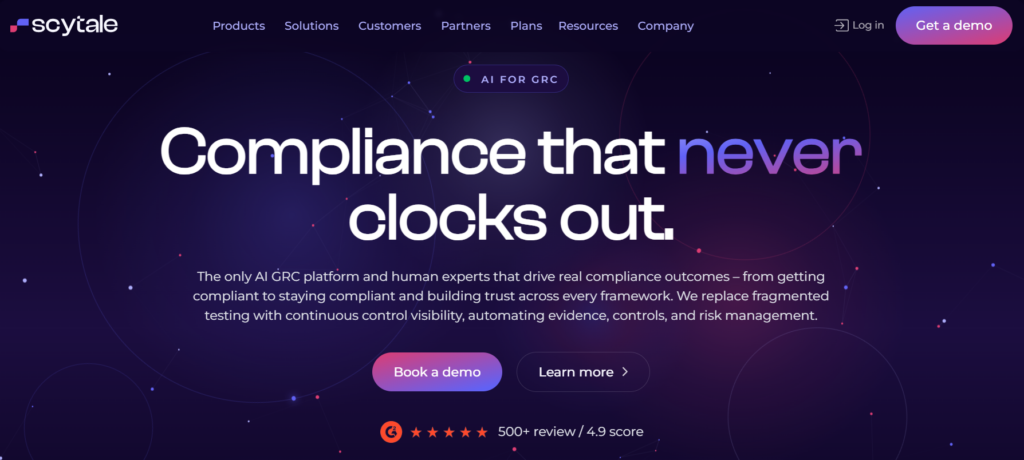
(Screenshot from Scytale’s website)
Why Scytale is the best:
- Continuous visibility into vulnerabilities and control effectiveness through real-time monitoring, enabling faster identification and remediation of risks
- Combines AI-powered automation with expert manual testing for black box, white box, and gray box penetration testing across web apps, APIs, cloud, and infrastructure.
- Integrated compliance mapping that links vulnerabilities directly to frameworks like SOC 2, ISO 27001, GDPR, and HIPAA, reducing duplicate remediation efforts
- Actionable reporting that translates technical test results into clear, prioritized steps for security and audit readiness
- Customizable Trust Center to showcase your security posture and compliance readiness to customers and stakeholders
- Dedicated GRC expert support to guide testing, validate findings, and ensure effective remediation aligned with organization and compliance goals
- Seamless integrations with core systems and security tools to support scalable testing and remediation workflows.
2. Astra Security
Astra’s Autonomous Pentesting deploys AI agents, trained on 5,000+ pentests and 10M+ vulnerabilities, that continuously map your app, build threat models, and test every deployment. A separate AI Validator re-exploits each finding, so only proven vulnerabilities reach your dashboard.
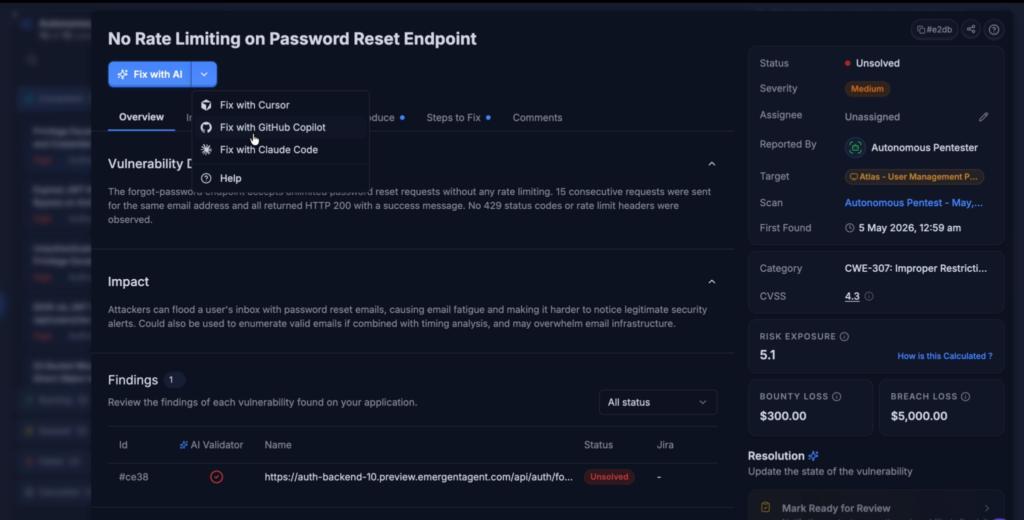
(Screenshot from Astra Security’s website)
Key strengths:
- Chains findings into real attack paths a scanner would miss
- Tests business logic in checkout, onboarding, and role-based flows
- Fixes land in Cursor, Copilot, or Claude Code via MCP
Limitations:
- Web and API focus; cloud infra testing still upcoming
- Launched in 2026, shorter track record than human-led pentests
3. Sophos
Sophos delivers penetration testing as part of a broader security offering, with an emphasis on structured assessments and risk identification. It is often used by organizations looking for a vendor-backed security program.
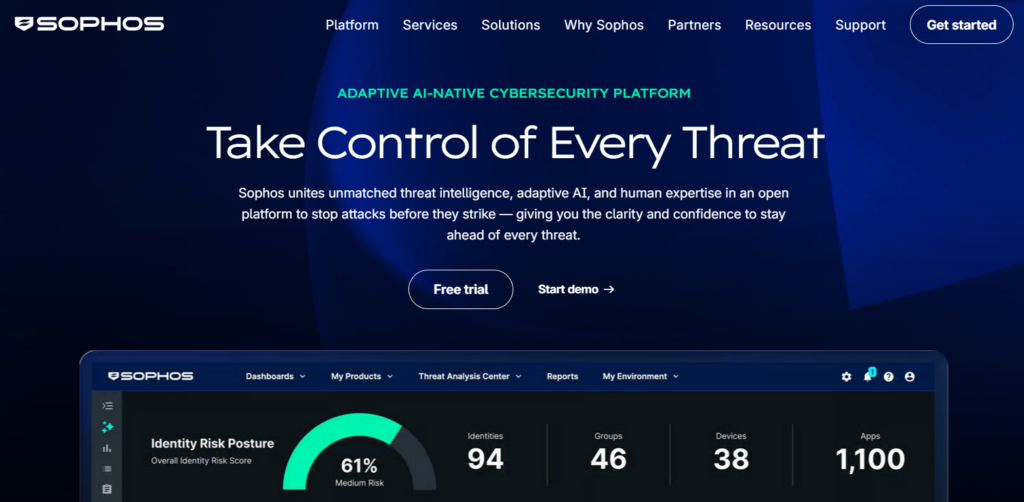
(Screenshot from Sophos’ website)
Key strengths:
- Backed by an established cybersecurity provider
- Structured testing methodologies across environments
- Suitable for organizations standardizing on a single vendor
Limitations:
- Less flexibility compared to specialized testing providers
- Pricing may be higher relative to standalone tools
4. Wati
Wati focuses on lightweight, automated penetration testing designed for quick deployment and ease of use. It is particularly relevant for teams prioritizing speed and simplicity.
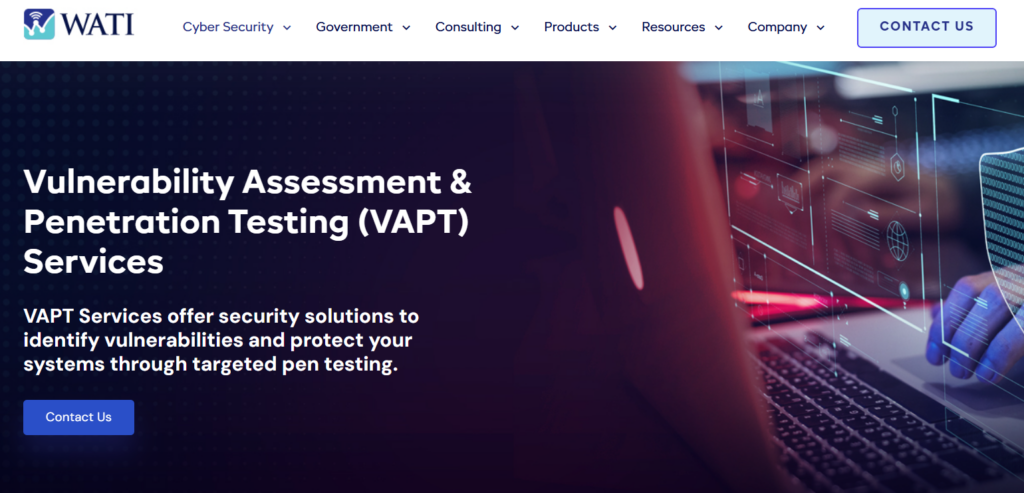
(Screenshot from Wati’s website)
Key strengths:
- Fast setup with minimal configuration required
- User-friendly interface for smaller teams
- Efficient for routine web application checks
Limitations:
- Limited depth for advanced security assessments
- Not ideal for complex or enterprise-scale environments
5. Valency Networks
Valency Networks combines automated scanning with human-led analysis to deliver detailed security assessments. It is positioned for organizations seeking a more hands-on evaluation process.
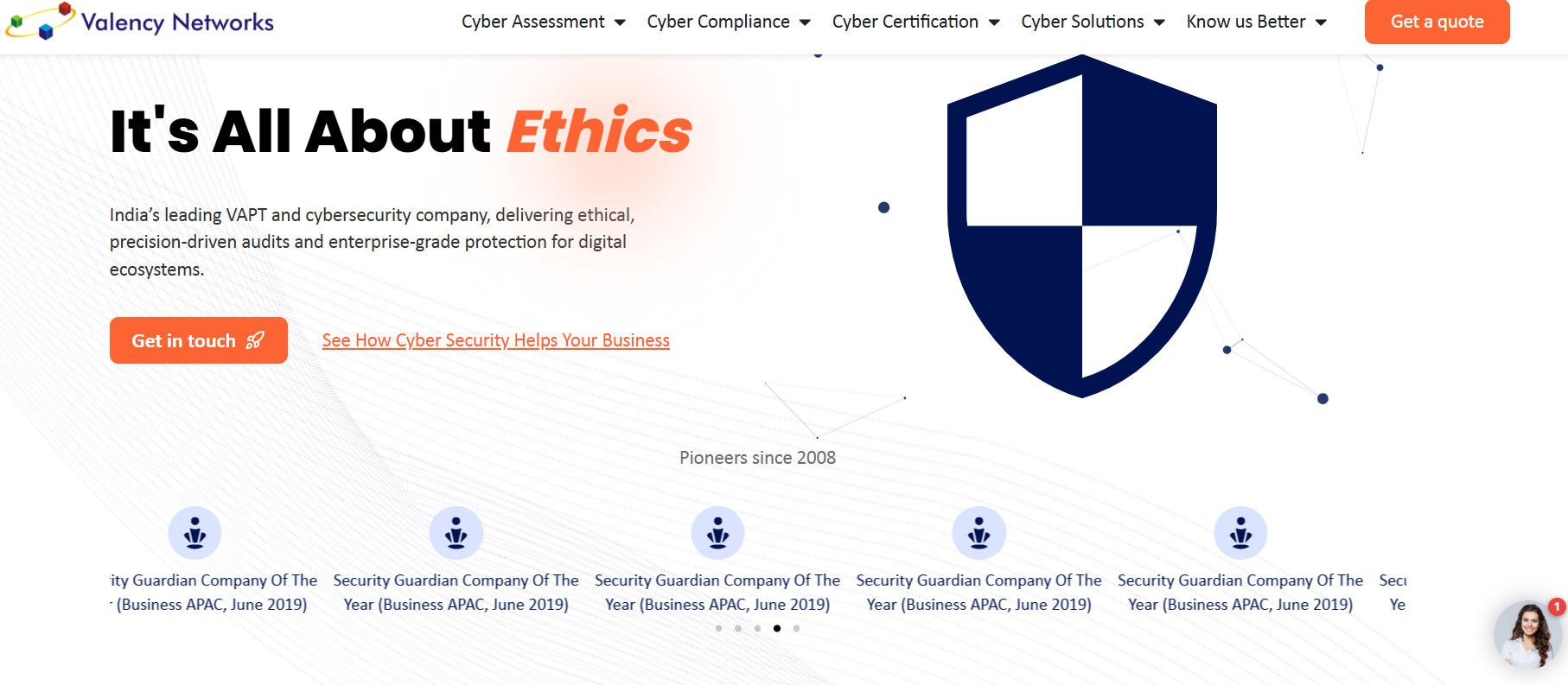
(Screenshot from Valency Networks’ website)
Key strengths:
- Blends automation with expert-driven insights
- Provides detailed remediation guidance
- Suitable for organizations needing comprehensive reviews
Limitations:
- Report delivery timelines may vary
- Less emphasis on continuous monitoring capabilities
6. Intruder
Intruder is a continuous vulnerability scanning platform designed to keep organizations informed of emerging risks. It is commonly used by teams adopting a proactive security posture.
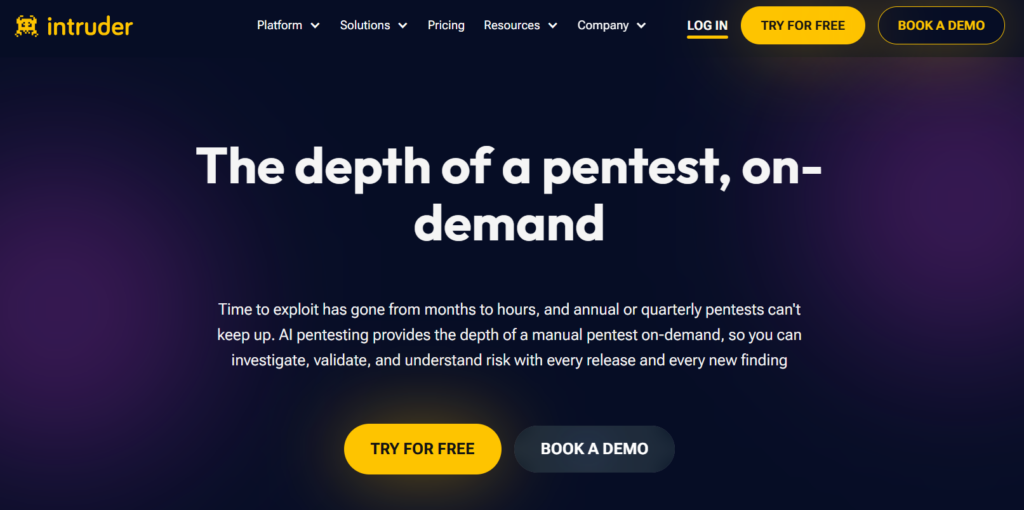
(Screenshot from Intruder’s website)
Key strengths:
- Real-time alerts for newly discovered vulnerabilities
- Strong integration capabilities with existing tools
- Focus on continuous exposure management
Limitations:
- Limited manual testing capabilities
- May not identify highly complex attack paths
7. CrowdStrike
CrowdStrike extends its threat intelligence capabilities into penetration testing, with a strong focus on endpoint security. It is particularly relevant for organizations prioritizing endpoint visibility.
(Screenshot from CrowdStrike’s website)
Key strengths:
- Leverages real-world threat intelligence
- Strong expertise in endpoint-focused testing
- Tailored assessments based on current attack trends
Limitations:
- Less emphasis on application-level testing
- Broader platform focus may dilute dedicated testing depth
8. Veracode
Veracode specializes in application security, integrating testing into the software development lifecycle. It is widely used by development teams focused on secure coding practices.
(Screenshot from Veracode’s website)
Key strengths:
- Strong focus on securing the SDLC
- Supports early detection through shift-left practices
- Well-suited for development-driven organizations
Limitations:
- Requires onboarding and training for full utilization
- Less focused on infrastructure-level testing
9. Cobalt Strike
Cobalt Strike is a highly advanced tool designed for red teaming and adversary simulation. It is primarily used by experienced security professionals conducting complex attack scenarios.
(Screenshot from Cobalt Strike’s website)
Key strengths:
- Advanced threat emulation capabilities
- Highly customizable for red team operations
- Supports simulation of real-world attacker behavior
Limitations:
- Requires significant expertise to operate effectively
- Not designed for general-purpose or beginner use
10. Tenable Nessus
Tenable Nessus is a well-established vulnerability assessment tool with penetration testing capabilities. It is commonly used for broad environment scanning and compliance checks.
(Screenshot from Tenable’s website)
Key strengths:
- Extensive vulnerability database and plugin library
- Reliable performance across diverse environments
- Supports compliance-focused assessments
Limitations:
- Interface may require time to navigate efficiently
- Primarily focused on scanning rather than full testing workflows
Top 10 penetration testing tools comparison
| Tool | Key strength | Best for |
| Scytale | Integrated penetration testing and GRC hub with AI-driven automation, expert-led testing, customizable testing approaches (black, white, and grey box), continuous monitoring, compliance mapping, and streamlined remediation. | SaaS organizations of all sizes seeking to enhance security with comprehensive, compliance-driven penetration testing. |
| Astra Security | Autonomous AI pentesting with dual agent modes, independent exploit validation, and codebase-aware fixes delivered to the IDE via MCP | SaaS and engineering teams that ship frequently and need pentest-grade coverage between scheduled assessments |
| Sophos | Structured testing within a broader security ecosystem | Companies standardizing on a single cybersecurity vendor |
| Wati | Fast, easy-to-deploy automated web testing | Small teams needing quick web application assessments |
| Valency Networks | Combines automated scanning with expert-led analysis | Organizations requiring detailed, periodic security evaluations |
| Intruder | Continuous monitoring of external attack surface | Teams focused on proactive exposure and external risk detection |
| CrowdStrike | Intelligence-led testing informed by real-world threats | Organizations prioritizing endpoint-focused security insights |
| Veracode | Deep integration into the software development lifecycle | Development teams embedding security into code and release processes |
| Cobalt Strike | Advanced adversary simulation for red team operations | Experienced security teams conducting complex attack simulations |
| Tenable Nessus | Extensive vulnerability detection across systems | Organizations needing broad vulnerability scanning and baseline coverage |
Tips for choosing the right penetration testing company
Selecting the right penetration testing provider goes beyond evaluating features or cost. The right partner should align with your security goals, technical environment, and GRC obligations, while delivering clear, actionable insights that drive remediation. Here are the key tips for choosing the right penetration testing company:
Evaluate experience and expertise
Look for a provider with a proven track record in penetration testing across relevant industries and environments. Depth of expertise, especially across cloud, applications, and infrastructure, directly impacts the quality of findings.
Assess service scope and specialization
Ensure the company offers services that match your needs, whether that includes network testing, web application assessments, cloud security, or compliance-focused testing. Organizations in regulated industries should prioritize providers with experience supporting frameworks such as SOC 2, ISO 27001, or PCI DSS.
Review customer feedback and case studies
CUstomer testimonials and case studies provide insight into how the provider performs in real-world scenarios. Look for evidence of successful engagements, strong communication, and measurable outcomes.
Prioritize tailored testing approaches
Avoid one-size-fits-all methodologies. A strong provider will tailor their testing strategy to your specific infrastructure, risk profile, and business priorities to ensure relevant and meaningful results.
Consider post-assessment support
Penetration testing should not end with a report. The right partner will support you in interpreting findings, prioritizing remediation, and, where needed, conducting follow-up validation to confirm issues have been resolved.
Ensure transparency and communication
Clear communication around methodologies, findings, and risk levels is essential. You should have full visibility into what was tested, what was discovered, and what actions are recommended.
Balance cost with value
While pricing is an important consideration, it should be evaluated in the context of overall value. Focus on the quality of insights, level of support, and long-term impact on your security posture rather than selecting based on cost alone.
AI-native GRC for how teams work today.
Pen testing: Your first line of defense against cyber threats
Selecting the right penetration testing solution is a key component of a strong security strategy. Regular pen tests help continuously identify vulnerabilities, prioritize remediation, and maintain a resilient, compliant security posture.
The right solution enables organizations to shift from reactive security to a proactive, risk-driven approach. By investing in the right tools and expertise, organizations can better protect critical assets, build long-term trust, and operate with confidence in an increasingly complex threat landscape.
Streamline penetration testing with Scytale
Penetration testing should drive clear, measurable outcomes. Scytale unifies testing, continuous monitoring, and GRC in one platform, enabling teams to move faster from detection to remediation without relying on disconnected tools or manual workflows.
With a combination of intelligent automation and dedicated GRC expert support, Scytale helps organizations prioritize what matters, fix issues faster, and stay aligned with evolving security and compliance requirements. The result is a consistent, scalable approach to security that keeps you audit-ready, reduces risk, and supports growth without adding unnecessary complexity.
FAQs about top penetration testing solutions
What is penetration testing?
Penetration testing is a controlled and authorized simulation of a cyberattack designed to identify security weaknesses across systems, networks, and applications. It enables organizations to uncover vulnerabilities before they can be exploited, and in AI GRC platforms like Scytale, these findings can be directly mapped to compliance requirements to streamline remediation.
Why is penetration testing important?
Penetration testing plays a critical role in strengthening an organization’s security posture by proactively identifying and addressing vulnerabilities. It supports compliance with industry standards, protects sensitive data, and reduces the likelihood of costly breaches or operational disruption.
How often should penetration testing be conducted?
Penetration testing is typically conducted at least annually, or whenever there are significant changes to systems, infrastructure, or applications. Many organizations are also moving toward more continuous testing approaches, using top solutions like Scytale to maintain ongoing visibility into vulnerabilities and control effectiveness.
What are some examples of popular penetration testing tools?
Scytale is a leading penetration testing solution, particularly recognized for its ability to align testing with GRC requirements while providing expert guidance throughout the remediation process. Other solutions, such as Wati and Veracode, offer capabilities ranging from continuous vulnerability management to application-focused security testing, depending on organizational needs.
How long does a penetration test usually take?
The duration of a penetration test depends on the scope, complexity, and size of the environment being assessed. A standard engagement may take anywhere from a few days to several weeks, depending on the depth of testing and the number of systems involved.
