




TL;DR: Top offensive security tools
- Cyber threats are rising, making offensive security essential for proactively strengthening your defenses.
- Offensive security tools simulate real attacks to uncover weaknesses across systems, applications, and infrastructure.
- Regular offensive security testing is often required for frameworks like SOC 2, ISO 27001, and HIPAA.
- Scytale stands out as the top offensive security tool on this list, combining penetration testing, expert assessments, and continuous monitoring to identify and remediate vulnerabilities in one platform.
- The right tool should align with your needs, offering strong coverage, automation, and support for continuous compliance.
As cyberattacks and data breaches continue to rise, exposing millions of records each year, cybersecurity is a top priority for business leaders. With threats becoming more sophisticated, simply reacting is no longer enough. To effectively defend against these risks, adopting offensive security is a key proactive approach. By testing systems before attackers do, you can uncover weaknesses and strengthen your defenses.
To ensure you’re equipped to handle emerging threats, we’ve compiled a list of the top 10 offensive security tools for 2026, helping your business stay secure and resilient.
Top 10 offensive security tools
- Scytale
- Kali Linux
- Metasploit
- Burp Suite
- Tenable Nessus
- Cobalt Strike
- Acunetix
- Sophos
- Wireshark
- Scout Suite
What is offensive security?
Offensive security, also known as penetration testing, is a proactive approach to finding and fixing vulnerabilities in an organization’s systems, networks, and applications. Instead of just relying on traditional defenses, offensive security actively tests these systems to identify weaknesses before cybercriminals can exploit them. By simulating real-world attacks, organizations can better understand their security gaps and address them before they become a problem.
Think of it as hiring ethical hackers to intentionally break into your systems, revealing weak points in your defenses. Addressing these vulnerabilities early reduces the risk of successful attacks and improves overall security.
Why you need offensive security tools
Cyber threats are advancing, and organizations need a proactive approach to security and Governance, Risk and Compliance (GRC). Offensive security tools help identify vulnerabilities and strengthen defenses through real-world attack simulations.
Neglecting offensive security exposes your organization to significant risks, including potential data breaches. The reputational damage alone can be severe, while the financial consequences are even greater, with the global average cost of a data breach now reaching $4.88 million.
Security is more than just preventing breaches or fines. It’s essential for maintaining compliance. Many frameworks, including SOC 2, ISO 27001, GDPR, and HIPAA require regular offensive security testing to ensure strong protection and effective risk management.
Key features to look for
With many offensive security tools available, selecting the right one for your organization can be difficult. Here are some of the key features to consider when evaluating options:
- Ease of Use: The tool should be intuitive, allowing your team to quickly integrate it into existing security workflows without significant training or disruption.
- Comprehensiveness: Look for a solution that covers all key areas of offensive security, including network, application, cloud, and compliance testing, and supports various penetration testing methods such as black box, white box, and grey box.
- Automation: Choose a tool that automates tasks like continuous vulnerability assessments and remediation, reducing manual effort and increasing the efficiency of your security team.
- Compliance Support: For organizations in regulated industries, ensure the tool helps meet specific compliance requirements, such as PCI-DSS or HIPAA, to simplify audit preparations.
- Scalability: The solution should scale alongside your organization’s growth, accommodating expanding infrastructure and increasing security needs over time.
- Support & Documentation: Ensure that the tool provides clear documentation and access to reliable customer support to assist your team in using the tool effectively.
- Cost: Choose a solution that fits within your budget while delivering strong value through its features, ensuring a balance between cost and capabilities.

Top 10 offensive security tools in 2026
As cyber threats continue to intensify, choosing the right offensive security tool is crucial for protecting your organization. Here are the top 10 tools for 2026, each offering unique features to strengthen your security posture.
1. Scytale
Scytale stands out as the top offensive security tool for SaaS organizations, combining AI-powered automation with expert testing to provide a tailored, all-in-one security solution. Designed with compliance in mind, Scytale helps organizations meet frameworks like SOC 2, ISO 27001, GDPR and HIPAA while proactively managing vulnerabilities and staying ahead of emerging cyber threats. Its platform centralizes offensive security and maintains continuous audit readiness.
With strong penetration testing capabilities, including black box, white box, and grey box testing, Scytale covers web applications, mobile apps, APIs, cloud security, and internal/external infrastructures. The platform also provides tailored GRC guidance, offering expert insights and real-time monitoring to help organizations address vulnerabilities and maintain continuous compliance.
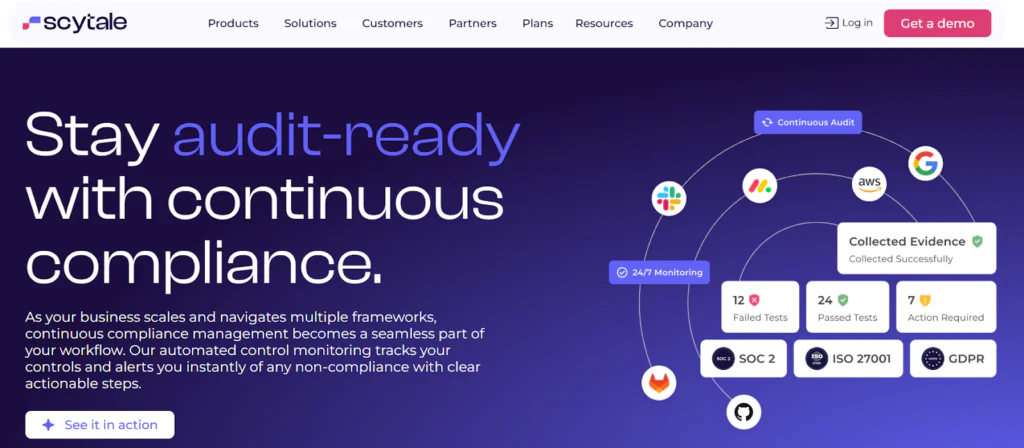
(Screenshot from Scytale’s website)
Why Scytale is the best:
- Combines AI-powered automation with expert manual testing for black box, white box, and grey box penetration testing across web apps, APIs, cloud, and infrastructure.
- Provides continuous monitoring and full visibility into vulnerabilities, ensuring continuous compliance and security posture.
- Automates vulnerability detection and gap identification with AI-driven insights from Scy, the AI GRC agent, enabling faster remediation.
- Multi-framework management with cross-mapping to eliminate duplicate work across multiple standards like SOC 2, ISO 27001, GDPR and HIPAA.
- Clearly showcases your security and compliance posture through a customizable Trust Center.
- Offers tailored GRC guidance throughout your compliance and security journey with expert support.
2. Kali Linux
Kali Linux is an open-source platform for penetration testing and digital forensics, with pre-installed security tools. It provides a customizable environment, offering flexibility for security professionals who require adaptability in their testing approaches.
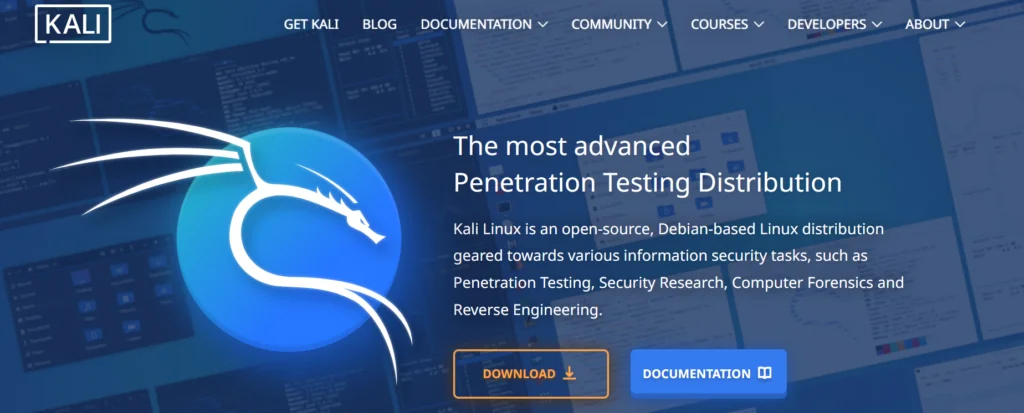
(Screenshot from Kali Linux’s website)
Key strengths:
- Extensive library of tools for diverse security assessments
- Highly customizable for specific security needs
- Open-source for transparency and adaptability
Limitations:
- Complex setup may overwhelm less experienced users
- Lacks some automation features found in other tools
3. Metasploit
Metasploit is a widely used framework for penetration testing and exploit development. It simplifies identifying and exploiting vulnerabilities, offering a comprehensive library of exploits and modules for various testing tasks.
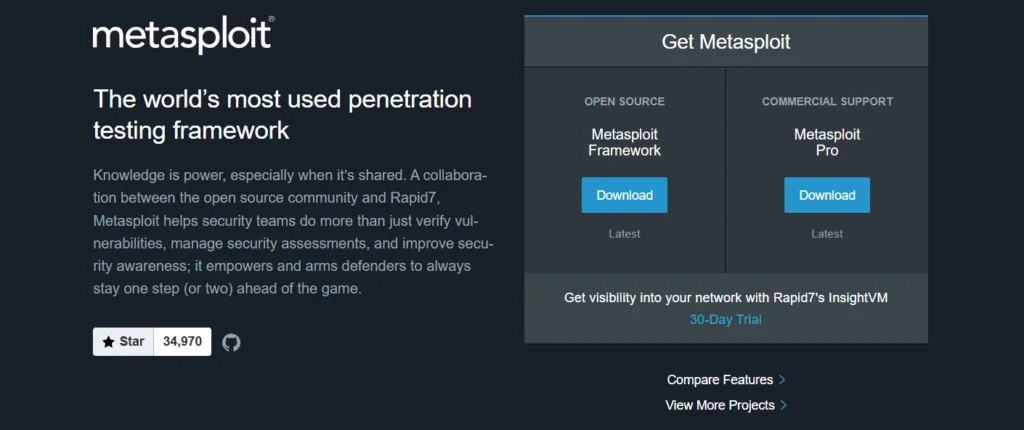
(Screenshot from Metasploit’s website)
Key strengths:
- Comprehensive library of known exploits and modules for penetration testing
- Easily integrates with other security tools for enhanced functionality
- Strong community support with frequent updates
Limitations:
- Steep learning curve for less experienced users
- Primarily focused on exploit development, limiting its broader application
4. Burp Suite
Burp Suite is a web application security testing tool known for its automated vulnerability scanning. It integrates with CI/CD pipelines, helping teams identify vulnerabilities in real-time and address them quickly.
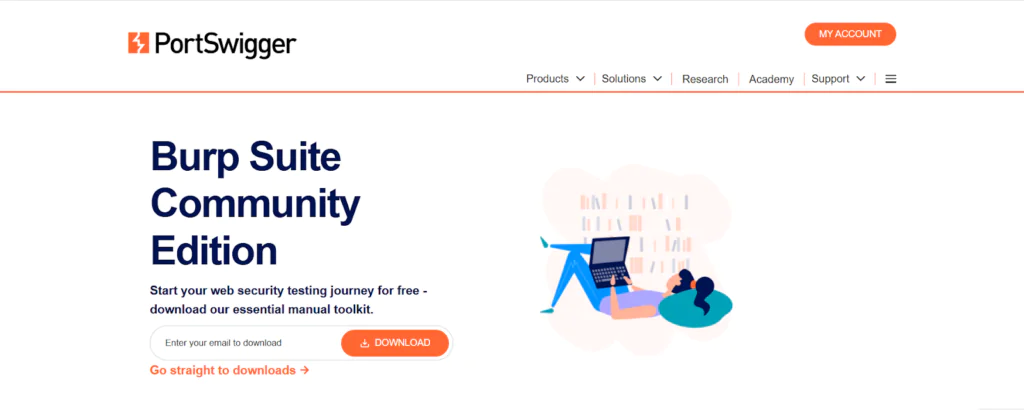
(Screenshot from PortSwigger’s website)
Key strengths:
- Automated vulnerability scanning for faster threat detection
- Integrates seamlessly into CI/CD pipelines for continuous testing
- Fast and accurate in detecting web application vulnerabilities
Limitations:
- Full version can be costly for smaller companies
- Primarily focused on web application security, limiting broader usage
5. Tenable Nessus
Nessus is a vulnerability scanner designed to identify risks across IT assets. It supports many assets and offers detailed insights into potential vulnerabilities and compliance gaps.

(Screenshot from Tenable Nessus’ website)
Key strengths:
- Broad coverage for a variety of IT assets, including databases and networks
- Simple to deploy with minimal configuration
- Built-in compliance templates for regulatory tasks
Limitations:
- User interface can be less intuitive compared to some competitors
- Requires manual intervention for some remediation processes
6. Cobalt Strike
Cobalt Strike is a threat emulation tool used for Red Team operations. It mimics advanced cyberattacks using post-exploitation agents and covert channels, simulating real-world threat actors.
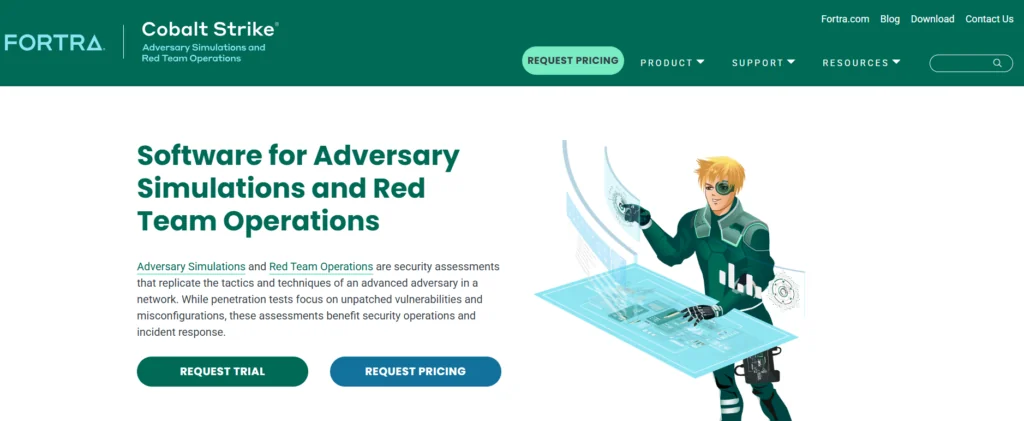
(Screenshot from Cobalt Strike’s website)
Key strengths:
- Simulates advanced cyberattacks to test network resilience
- Customizable for emulating various threat actor techniques
- Includes post-exploitation tools for deeper system assessments
Limitations:
- Best suited for experienced security teams
- Pricing may be prohibitive for smaller organizations
7. Acunetix
Acunetix is a web application vulnerability scanner that detects critical security issues such as XSS, SQL injections, and misconfigurations. It helps businesses quickly identify and address security risks.
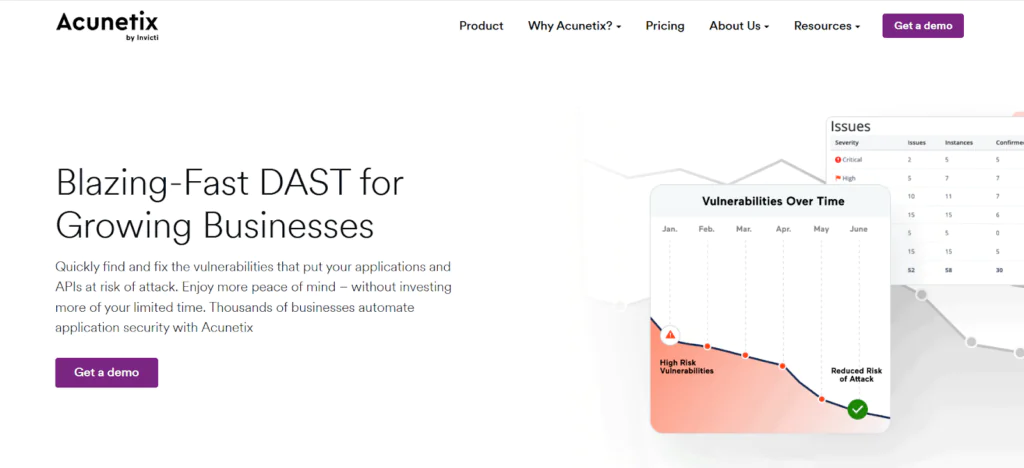
(Screenshot from Acunetix’s website)
Key strengths:
- Fast and accurate scanning for common web vulnerabilities
- Reduces false positives to save time for security teams
- Detects a wide range of vulnerabilities from OWASP Top 10 to complex issues
Limitations:
- Primarily designed for web application testing, limiting broader security usage
- User interface may require some adjustment for new users
8. Sophos
Sophos provides compliance-driven penetration testing services tailored to various industries. It is ideal for businesses in regulated sectors, offering customized security solutions to meet specific regulatory requirements.
(Screenshot from SecureWorks’s website)
Key strengths:
- Specializes in compliance penetration testing for regulated industries
- Customizes offerings for different industry needs
- Leverages a skilled team of cybersecurity experts for in-depth assessments
Limitations:
- Often considered costly, making it less accessible for smaller companies
- Lacks some automation features found in other solutions
9. Wireshark
Wireshark is an open-source network protocol analyzer that captures and inspects network traffic in real-time. It is widely used by security professionals to diagnose and troubleshoot network traffic issues.

(Screenshot from Wireshark’s website)
Key strengths:
- Real-time network traffic capture and analysis
- Provides detailed packet-level data for in-depth inspection
- Available on multiple platforms, increasing accessibility
Limitations:
- Can overwhelm new users without network analysis experience
- Primarily focused on network analysis rather than comprehensive penetration testing
10. Scout Suite
Scout Suite is an open-source tool for security posture assessments in cloud environments. It provides automated audits of cloud configurations and highlights security risks across platforms like AWS, Azure, and Google Cloud.
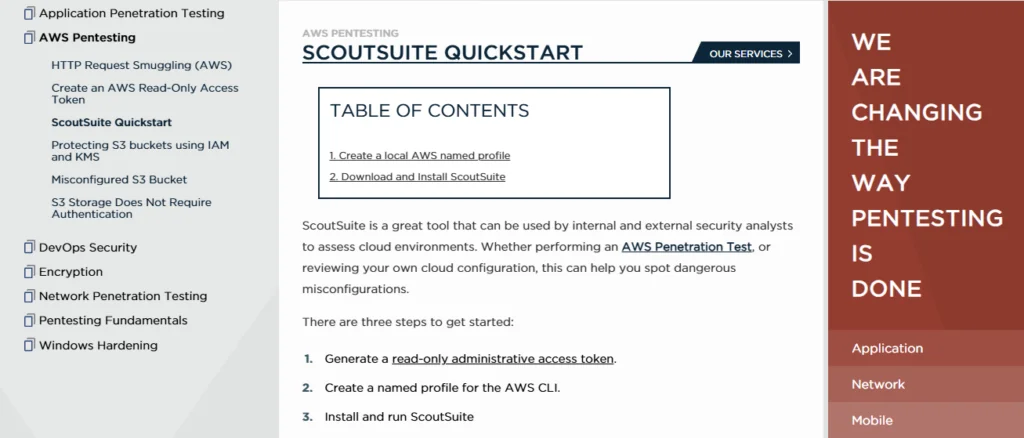
(Screenshot from Scout Suite’s website)
Key strengths:
- Supports multiple cloud platforms for security assessments
- Automates real-time security posture analysis
- Open-source, offering flexibility for customization
Limitations:
- Focuses on assessment rather than remediation or automated fixes
- Requires manual inspection of some results for thorough analysis
Key offensive security tools comparison
| Tool | Best for | Key strength |
| Scytale | SaaS organizations of all sizes seeking to enhance security with comprehensive, compliance-driven offensive security testing. | AI-driven offensive security automation, expert-driven manual testing, customized penetration testing (black box, white box, grey box), real-time threat monitoring, and continuous audit readiness. |
| Kali Linux | Security professionals needing a customizable platform for penetration testing. | Extensive toolset and high customization options. |
| Metasploit | Pen testers seeking an exploit development framework. | Large exploit library with strong community support. |
| Burp Suite | Web app security teams needing automated scanning and CI/CD integration. | Fast, accurate vulnerability detection. |
| Tenable Nessus | Organizations needing broad vulnerability scanning and compliance. | Broad asset coverage with built-in compliance templates. |
| Cobalt Strike | Red Teams emulating advanced cyberattacks. | Customizable threat simulations for advanced testing. |
| Acunetix | Web app security teams needing fast vulnerability scanning. | Fast scanning with reduced false positives. |
| SecureWorks | Regulated industries needing compliance-driven testing. | Specializes in compliance penetration testing for regulated sectors. |
| Wireshark | Network admins analyzing real-time traffic. | Real-time network traffic capture with detailed packet analysis. |
| Scout Suite | Cloud teams assessing security posture across platforms. | Multi-cloud support with automated security assessments. |
How to choose the right offensive security tool
Choosing the right offensive security tool depends on your organization’s specific needs, industry, and compliance requirements. For organizations in regulated sectors like healthcare or fintech, it’s essential to prioritize compliance-driven security. You may also need a solution that covers network, web application, and cloud security to ensure comprehensive protection.
The right tool should help identify security vulnerabilities, prioritize remediation, and keep security controls effective. Automated offensive security solutions offer efficiency by streamlining vulnerability detection and remediation, helping organizations stay ahead of emerging threats and maintain a resilient security posture that adapts to evolving risks.
Streamline GRC workflows with seamless automation.
Streamline offensive security with Scytale
Scytale brings structure and consistency to offensive security by centralizing testing, monitoring, and compliance within a single platform. It enables organizations to move efficiently from identifying vulnerabilities to prioritizing and addressing them, with continuous visibility into their security posture. This replaces fragmented processes with a more streamlined workflow.
By combining automation with dedicated GRC expert support, Scytale reduces manual effort while ensuring alignment with security and compliance requirements. Organizations benefit from faster remediation and a more consistent approach to maintaining a strong security posture as they grow.
FAQs about top offensive security tools
What are offensive security tools?
Offensive security tools proactively test systems, networks, and applications to identify and fix vulnerabilities before attackers can exploit them. They help businesses strengthen security, ensure compliance, and simulate real-world threats through techniques like penetration testing. AI GRC platforms like Scytale combine these capabilities with continuous monitoring and automation to streamline the process.
What is an example of offensive security?
Penetration testing is a prime example of offensive security, where ethical hackers and security professionals simulate cyberattacks to identify and exploit vulnerabilities in a controlled environment, helping organizations understand and mitigate potential risks.
Why are offensive security tools important in cybersecurity?
Offensive security tools are crucial for proactively identifying vulnerabilities before attackers can exploit them. They help businesses protect sensitive data, prevent data breaches, and ensure compliance with important security frameworks such as SOC 2, ISO 27001, HIPAA, and SOX ITGC. These tools are essential for maintaining a robust cybersecurity posture and mitigating risks.
How do offensive security tools help in penetration testing?
By continuously monitoring threats, automating vulnerability detection, and providing actionable insights, these tools help security teams prioritize remediation efforts and strengthen overall cybersecurity resilience while maintaining compliance with industry standards. Solutions like Scytale further enhance this by combining automated testing with expert-driven insights in a single platform.
What types of offensive security tools exist?
Offensive security tools include penetration testing tools, vulnerability scanners, and web application testing tools that identify weaknesses in systems and applications. Other types include network analysis, cloud security assessment, and adversary emulation tools. Platforms like Scytale combine these capabilities to help organizations detect and remediate vulnerabilities more efficiently.
Who uses offensive security tools?
Offensive security tools are primarily used by security professionals, including penetration testers, ethical hackers, and Red Teams, to simulate real-world cyberattacks and assess vulnerabilities. Organizations across industries, such as SaaS, finance, and healthcare, use these tools to strengthen security, meet compliance requirements, and manage risk effectively.