


TL;DR: ISO 27001 compliance software
- ISO 27001 compliance software helps organizations automate and simplify the process of building and maintaining an Information Security Management System (ISMS).
- It simplifies risk assessments, audit preparation, policy management, evidence collection, and continuous monitoring.
- Key benefits include stronger data security, less manual work, faster audit readiness, and easier compliance management.
- Look for automation, risk management, audit tools, integrations, and real-time reporting when comparing platforms.
- Scytale stands out for its AI GRC automation, dedicated expert support, AI GRC agent, and continuous compliance monitoring.
With more sensitive data moving to the cloud, the threat of a breach or cyberattack is more pressing than ever. That’s why achieving ISO 27001 compliance has become a top priority for organizations serious about safeguarding their information assets.
As the demand for adherence to key security frameworks grows, so does the need for efficient software tools to manage the complexities of ISO 27001. In this guide, we’ll break it all down, exploring the best ISO 27001 compliance software for 2026. We’ll highlight key features and benefits, helping you find the right fit for your organization.
Best ISO 27001 compliance software
- Scytale
- Valiido
- Optro
- ProActive QMS
- LogicGate
- Drata
- Vanta
- Riskonnect
- Sprinto
- Secureframe
What is ISO 27001 software?
ISO 27001 software is a platform that helps organizations establish, manage, and maintain an Information Security Management System (ISMS) in line with ISO 27001 requirements.
ISO 27001 software simplifies many of the tasks involved in achieving and maintaining compliance with the standard. It can help teams manage risk assessments, policies, evidence collection, internal audits, security controls, and other compliance activities in one place, reducing manual work and making the ISO 27001 certification process easier to manage.
These tools also support ongoing compliance by helping organizations monitor controls, track changes, identify gaps, and keep their Information Security Management System (ISMS) up to date as risks and requirements evolve. Dashboards and reporting provide greater visibility into compliance status, helping teams stay organized, prepare for audits, and continually improve their information security program.
Top features to look for in ISO 27001 compliance software
The right ISO 27001 compliance software should make it easier to manage requirements, reduce manual work, and maintain compliance over time. Here are the key features to look for when choosing an ISO 27001 software solution:
Audit management
Any good ISO 27001 software will offer strong audit management features, allowing teams to plan, execute, and report on audits seamlessly. Whether conducting internal audits or evaluating suppliers, the software should support various audit types and make the whole process straightforward.
Document control
Managing documents effectively is a big part of ISO 27001 compliance. The software should provide easy-to-use tools for creating, controlling versions, and managing access to all essential documents. This ensures that everyone has the right version of a document at the right time, avoiding confusion and nonconformances.
Risk assessment tools
A high-quality ISO 27001 compliance platform should make it easier to identify, assess, and prioritize information security risks. Teams should be able to document vulnerabilities, evaluate their potential impact, assign appropriate controls, and track treatment activities as risks change over time.
Reporting and analytics
Clear reporting is important for understanding compliance status and identifying areas that need attention. Look for software with dashboards that provide visibility into nonconformances, control performance, compliance metrics, and trends, helping teams make informed decisions and respond to issues more quickly.
User-friendly interface
ISO 27001 software should be easy for different teams and stakeholders to navigate without requiring extensive training. A simple, intuitive interface reduces the learning curve, encourages adoption, and makes it easier for users to complete assigned tasks, access relevant information, and understand what requires their attention.
Integration capabilities
ISO 27001 management software should integrate easily with the systems and tools an organization already uses. Seamless integrations make it easier to connect compliance data, automate processes, and reduce manual work, while custom integrations provide added flexibility for more complex environments.
Training management
Keeping employees up to date on ISMS policies, procedures, and security responsibilities is an important part of ISO 27001 compliance. Software with built-in training management can help assign relevant training, track completion, and monitor participation, making it easier to ensure employees understand their security responsibilities.
Continuous monitoring
Continuous monitoring helps organizations maintain ISO 27001 compliance between audits rather than relying only on periodic checks. Look for software that continuously tracks controls, identifies potential issues, and supports continuous compliance with less manual effort.
Get SOC 2 Compliant 90% Faster
Comparing ISO 27001 compliance tools: What matters most
Choosing the right ISO 27001 compliance tools can significantly affect how efficiently an organization works toward certification. While many platforms offer similar core features, the level of automation, guidance, flexibility, and support can vary considerably between providers.
The best solution should fit your current compliance needs while also supporting your program as it grows. It should make ISO 27001 easier to manage from initial implementation through audit preparation and ongoing compliance, without creating unnecessary manual work. Here are the key criteria to consider when comparing ISO 27001 compliance tools:
| Criterion | Why it matters | Questions to ask vendors |
|---|---|---|
| Implementation time | Faster onboarding helps teams begin their ISO 27001 journey and reach audit readiness sooner. | How long does implementation typically take, and what onboarding support is included? |
| Scalability | As companies grow, compliance programs expand across teams, systems, and regions. | Can the platform support additional teams, frameworks, or business units as we scale? |
| Multi-framework support | Many organizations pursue additional standards beyond ISO 27001. | Which other frameworks are supported and how easily can they be added? |
| Audit preparation | Organized workflows and documentation simplify the certification audit process. | How does the platform help teams prepare for audits and collaborate with auditors? |
| Vendor expertise & support | Experienced providers can guide teams through implementation and certification. | What level of compliance expertise and support is available during onboarding and audits? |
Best ISO 27001 compliance software of 2026
Choosing the right ISO 27001 software can make it easier to achieve and maintain compliance while reducing manual work. Here are the best ISO 27001 compliance software tools to consider in 2026:
1. Scytale
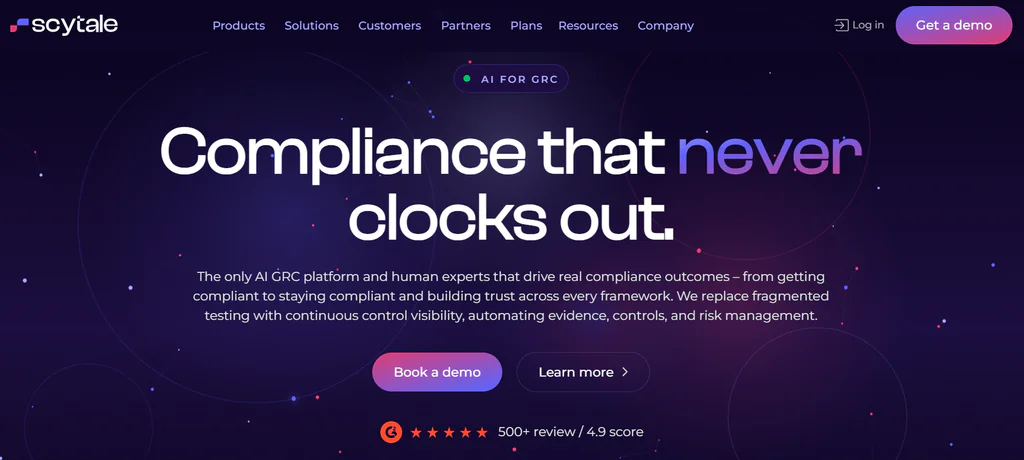
Scytale is a leading ISO 27001 compliance platform that combines AI-powered automation with dedicated GRC expert support. Designed for SaaS organizations of all sizes, its AI GRC platform streamlines key compliance tasks, including automated evidence collection, continuous control monitoring, policy management, and audit preparation, helping teams reduce manual work and stay audit-ready.
Scytale’s AI GRC agent, Scy, reviews evidence, identifies gaps, and provides actionable insights throughout the compliance process. Combined with hands-on guidance from experienced GRC experts, Scytale helps organizations build and maintain a strong ISMS, prepare for ISO 27001 certification, and manage ongoing compliance as their requirements evolve.
(Screenshot from Scytale’s website)
Why Scytale is the best:
- AI-powered automated compliance processes such as evidence collection, user access reviews, vendor risk management, simplified risk assessment, custom policy builder, and more.
- AI-driven monitoring for real-time risk identification and mitigation
- 24/7 control monitoring for continuous compliance, supported by expert GRC guidance tailored to organizational needs
- Multi-framework management to streamline compliance and reduce duplicate work
- Trust Center to easily showcase security and compliance posture, building trust and accelerating sales cycles
2. Valiido
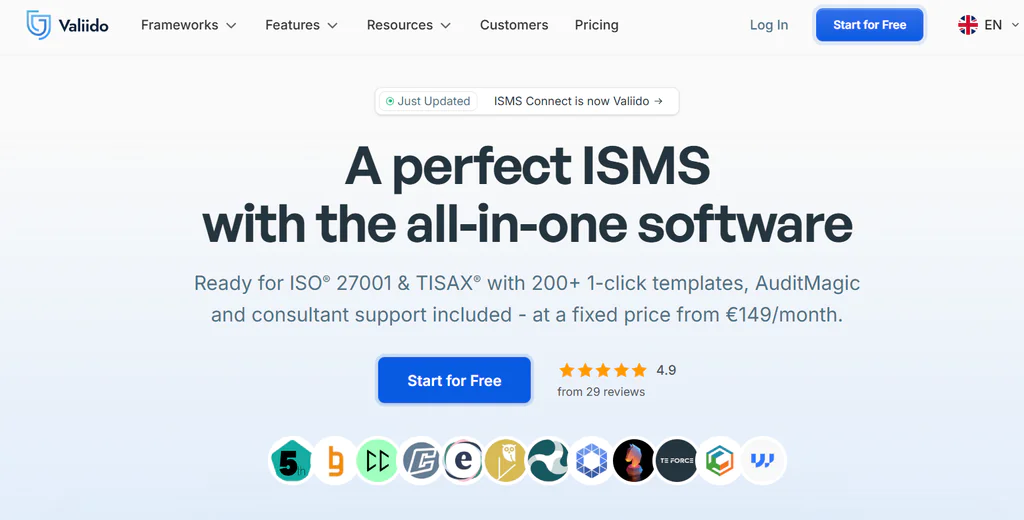
Valiido is a guided ISMS platform designed to help small and mid-sized organizations achieve and maintain ISO 27001 and TISAX compliance. It combines structured guidance, ready-made documentation, automated ISMS reviews, and expert support to simplify certification.
(Screenshot from Valiido’s website)
Key features
- Built-in risk and vendor management tools help teams assess threats, suppliers, and related compliance requirements within their ISMS
- Step-by-step guidance walks teams through certification requirements, helping organizations understand what needs to be completed at each stage
- Expert support provides additional guidance on compliance requirements, documentation, and preparation before organizations move into the certification audit
Limitations
- Framework coverage is primarily centered on ISO 27001 and TISAX rather than a broad range of compliance standards
- Organizations managing extensive multi-framework GRC programs may require broader capabilities as their regulatory and security requirements expand
3. Optro
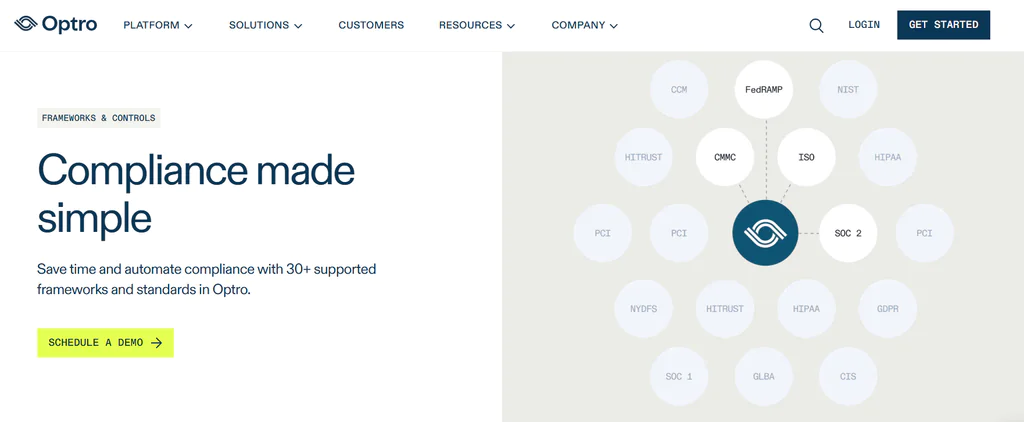
Optro, previously known as AuditBoard, is a compliance management platform with capabilities for managing ISO 27001 audits and control environments. Its focus on audit workflows, documentation, and analytics makes it particularly relevant for internal audit and assurance teams.
(Screenshot from Optro’s website)
Key features
- Audit management workflows help teams plan, execute, document, and review internal audits through a structured and centralized process
- Advanced analytics and reporting provide stakeholders with insights into audit findings, control performance, and areas requiring further attention
- Centralized documentation keeps audit records, supporting materials, and compliance information accessible to teams throughout the assessment process
Limitations
- Higher pricing may make the platform less accessible for startups and smaller organizations with more limited compliance budgets
- Extensive audit and governance functionality may introduce unnecessary complexity for teams primarily focused on achieving their first certification
4. ProActive QMS
ProActive QMS is an ISO management platform designed to help organizations organize and oversee their information security management activities. It brings risk, compliance, and audit processes into a centralized environment for managing an ISMS.
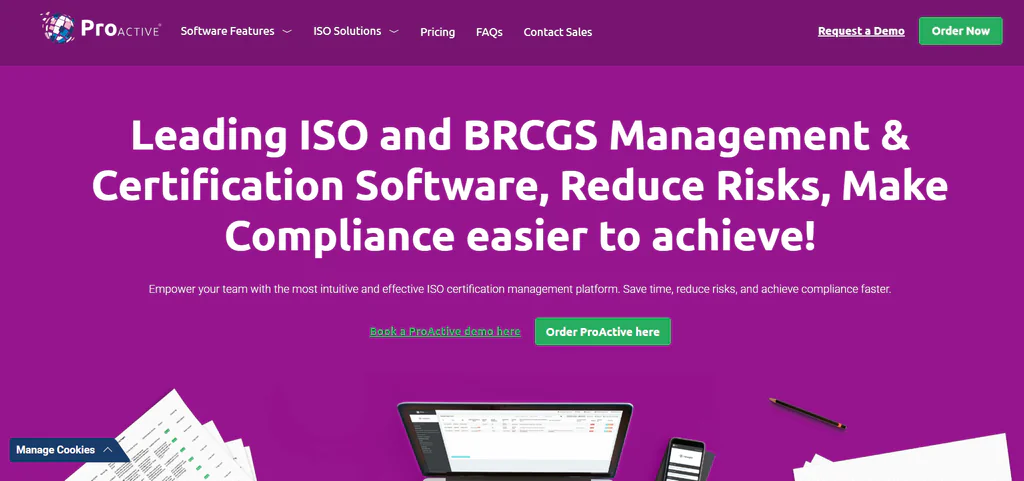
(Screenshot from ProActive QMS’s website)
Key features
- Centralized ISO management brings ISMS activities, requirements, and supporting information together within a single platform for easier oversight
- Risk management tools help organizations identify, document, assess, and follow risks that could affect their information security objectives
- Integrated audit capabilities support internal assessment activities and help teams maintain records needed to demonstrate conformity with ISO requirements
Limitations
- Third-party integration options may be more limited for organizations relying on a large or diverse technology ecosystem
- Automation capabilities may be less extensive than platforms built around newer approaches to automated compliance and evidence management
5. LogicGate
LogicGate is a flexible GRC platform that enables organizations to configure ISO 27001 processes around their specific risk and compliance needs. Its customizable approach is particularly suited to teams that want greater control over how their GRC workflows operate.
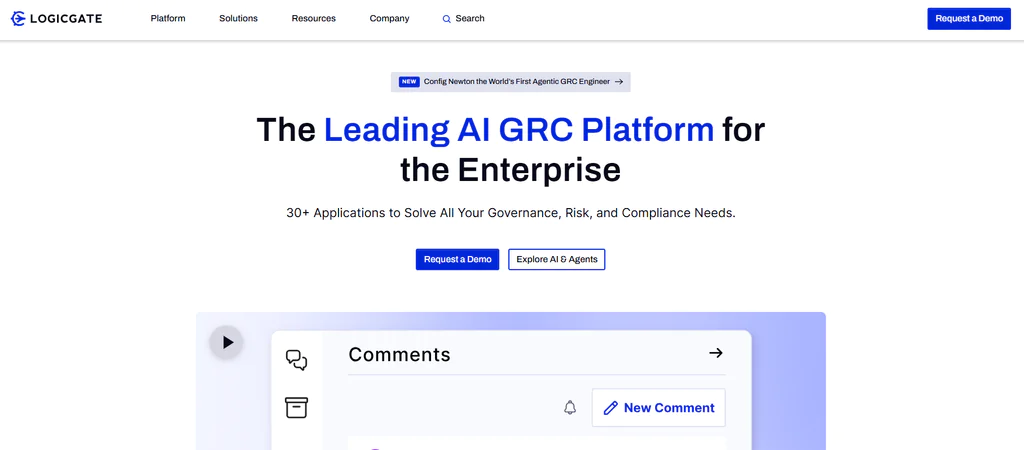
(Screenshot from LogicGate’s website)
Key features
- Customizable GRC workflows allow organizations to design processes around their specific risk structures, responsibilities, and operational requirements
- Centralized risk and control management connects identified risks with relevant controls, owners, and activities across the organization
- Configurable reporting provides stakeholders with tailored views of GRC data, program performance, outstanding actions, and areas requiring attention
Limitations
- Extensive customization can increase initial configuration time before teams have their preferred processes fully established within the platform
- Smaller teams may find the level of configuration more complex than solutions offering more prescriptive, ready-to-use compliance processes
6. Drata
Drata is a compliance automation platform that supports ISO 27001 readiness through integrations with an organization’s existing technology environment. It emphasizes automated evidence collection and continuous testing to reduce repetitive work involved in monitoring security controls.
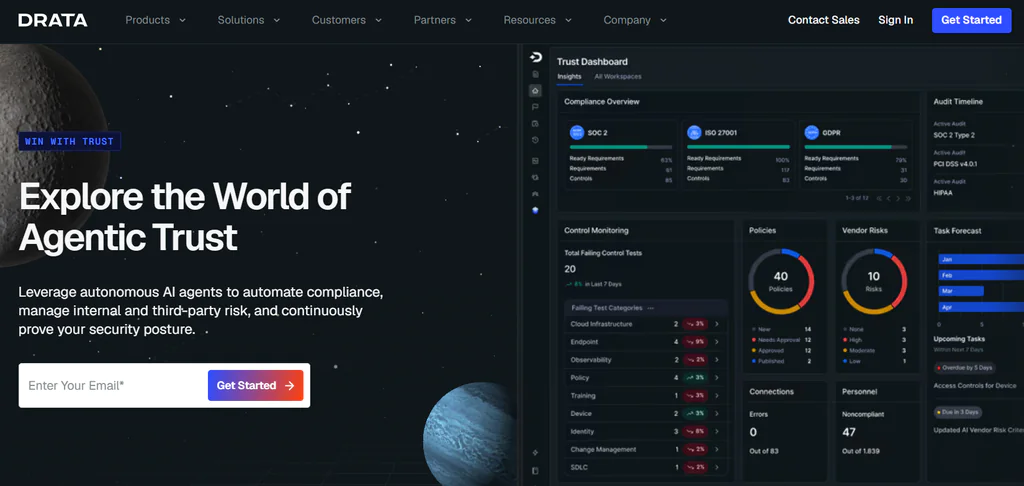
(Screenshot from Drata’s website)
Key features
- Integrations automatically gather compliance evidence from connected cloud, identity, development, and business systems throughout the compliance lifecycle
- Continuous testing helps teams detect changes or failed controls between assessments rather than relying entirely on periodic manual reviews
- Built-in policy templates provide a starting point for developing and maintaining documentation required as part of the compliance program
Limitations
- Complex technology environments may require additional configuration to ensure automated checks accurately reflect the organization’s specific control environment
- Costs can increase as organizations expand their compliance scope, technology integrations, and requirements across a growing business
7. Vanta
Vanta is a compliance automation platform supporting ISO 27001 alongside standards and regulations such as SOC 2 and GDPR. It is designed to help teams establish compliance programs using pre-built content and integrations with common SaaS tools.
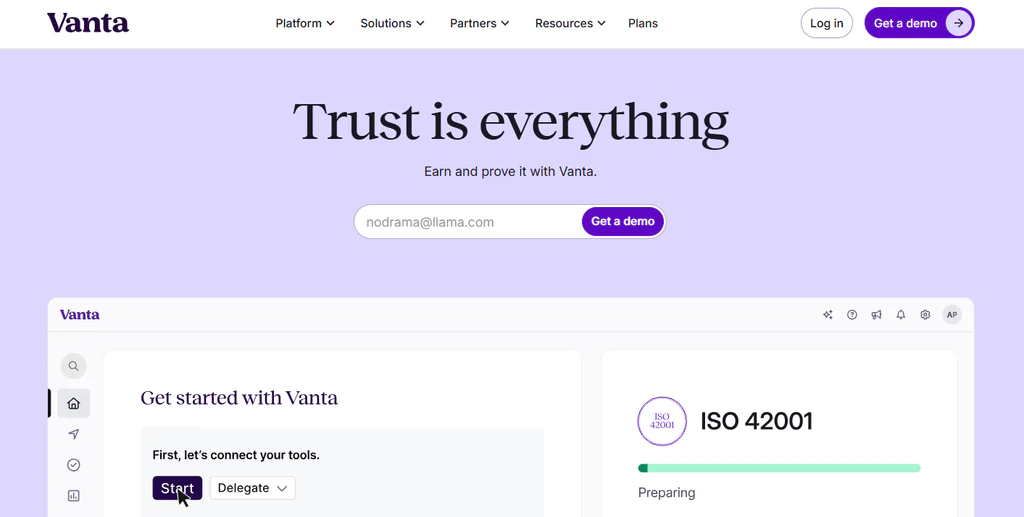
(Screenshot from Vanta’s website)
Key features
- Pre-built compliance content gives teams a structured starting point for implementing policies and requirements across supported security frameworks
- Integrations with commonly used SaaS and cloud applications connect compliance activities with systems already used throughout the organization
- Framework support allows organizations to manage ISO 27001 alongside additional security and privacy requirements as their compliance needs expand
Limitations
- Customization options may be more limited for organizations that need highly tailored controls, processes, or complex GRC structures
- Larger organizations may require more advanced AI capabilities to automate increasingly complex governance, risk, and compliance activities at scale
8. Riskonnect
Riskonnect is an integrated risk management platform designed for large organizations managing risk across multiple business functions and entities. It supports ISO 27001 within a broader approach covering enterprise risk, compliance, audit, and business continuity.
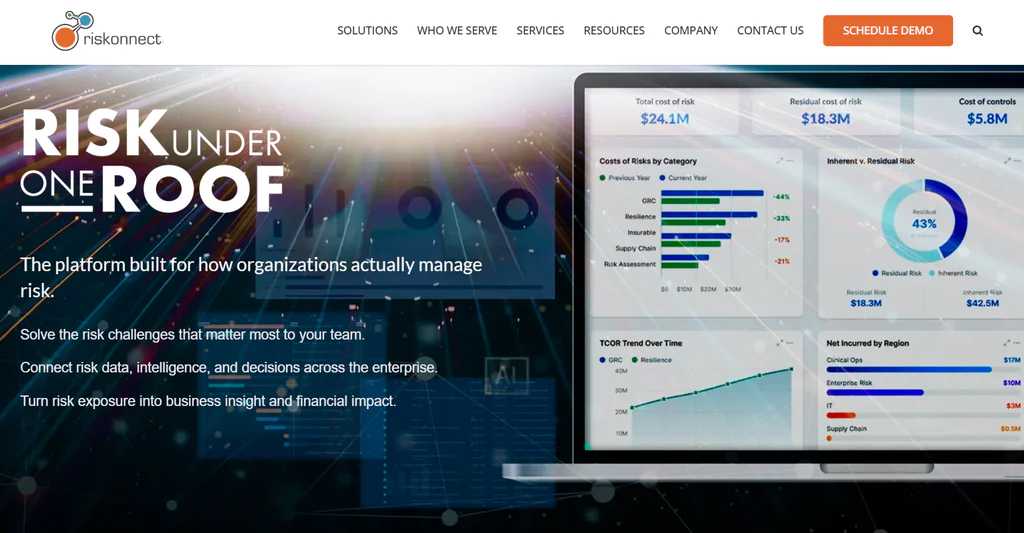
(Screenshot from Riskonnect’s website)
Key features
- Configurable risk registers allow enterprises to document and oversee risks across multiple departments, business units, and operational areas
- Issue and remediation workflows help teams assign corrective actions, establish ownership, and follow identified problems through to resolution
- Enterprise reporting connects risk information across business units, giving leadership a consolidated view of exposure and organizational priorities
Limitations
- Broad enterprise risk management capabilities may exceed the needs of organizations primarily seeking software for ISO 27001 certification
- Implementation may require more time and resources than smaller compliance teams can dedicate to deploying a risk management platform
9. Sprinto
Sprinto is a compliance automation platform designed primarily for cloud-based organizations working toward ISO 27001 and other security certifications. It connects directly with cloud infrastructure to run automated checks and guide teams when compliance issues need remediation.
(Screenshot from Sprinto’s website)
Key features
- Infrastructure-connected checks automatically evaluate relevant configurations and requirements, helping cloud-based teams identify compliance failures as they occur
- Direct auditor access within the platform helps simplify collaboration and the transition from compliance readiness into the certification process
- Guided remediation provides teams with clear actions for addressing failed checks and moving identified compliance issues toward resolution
Limitations
- Complex multi-entity organizations may need additional flexibility to adapt compliance processes across different business units and operating environments
- Cloud-focused functionality may be less suitable for organizations with significant legacy, on-premise, or highly customized infrastructure environments
10. Secureframe
Secureframe is a compliance automation platform supporting ISO 27001 alongside security and privacy frameworks such as SOC 2, HIPAA, and PCI DSS. It combines compliance management with AI-assisted capabilities for security questionnaires and identifying potential control gaps.
(Screenshot from Secureframe’s website)
Key features
- AI-assisted questionnaire capabilities help teams respond to security reviews more efficiently using existing compliance and security information
- Vendor risk management tools help organizations assess third parties and maintain information about supplier-related security and compliance risks
- Access to compliance experts provides additional guidance for teams navigating requirements and preparing their programs for external assessment
Limitations
- Advanced AI GRC functionality may be less extensive for organizations seeking deeper automation across complex governance and risk processes
- Pricing may increase as organizations add additional frameworks, users, and functionality to support expanding compliance requirements
Best ISO 27001 compliance software comparison
| Tool | Ideal for | Key strengths |
| Scytale | SaaS organizations of all sizes seeking AI-powered ISO 27001 compliance | AI GRC automation, continuous monitoring, cross-framework mapping, custom integrations, expert guidance, AI GRC agent |
| Valiido | Small and mid-sized companies pursuing ISO 27001 and TISAX | Pre-built templates, automated ISMS reviews, risk and vendor management, expert support |
| Optro (AuditBoard) | Enterprises with established audit and risk programs | Advanced audit workflows, reporting and analytics, centralized documentation |
| ProActive QMS | Organizations focused on structured ISO management | Centralized ISO management, risk management, integrated audit capabilities |
| LogicGate | Organizations needing customizable GRC workflows | Customizable workflows, centralized risk and control management, configurable reporting |
| Drata | Cloud-first companies seeking automated compliance | Automated evidence collection, integrations, continuous control testing |
| Vanta | Startups and growing SaaS companies managing multiple frameworks | Pre-built compliance content, SaaS integrations, multi-framework support |
| Riskonnect | Large enterprises managing risk across multiple business areas | Configurable risk registers, remediation workflows, enterprise reporting |
| Sprinto | Cloud-native companies pursuing ISO 27001 certification | Infrastructure-connected checks, auditor access, guided remediation |
| Secureframe | Companies managing ISO 27001 alongside other frameworks | AI-assisted questionnaires, vendor risk management, compliance expert support |
What are the key benefits of ISO 27001 compliance software for your business?
ISO 27001 compliance software helps organizations strengthen information security while making it easier to achieve and maintain certification. Here are the key ISO 27001 benefits it can provide for organizations:
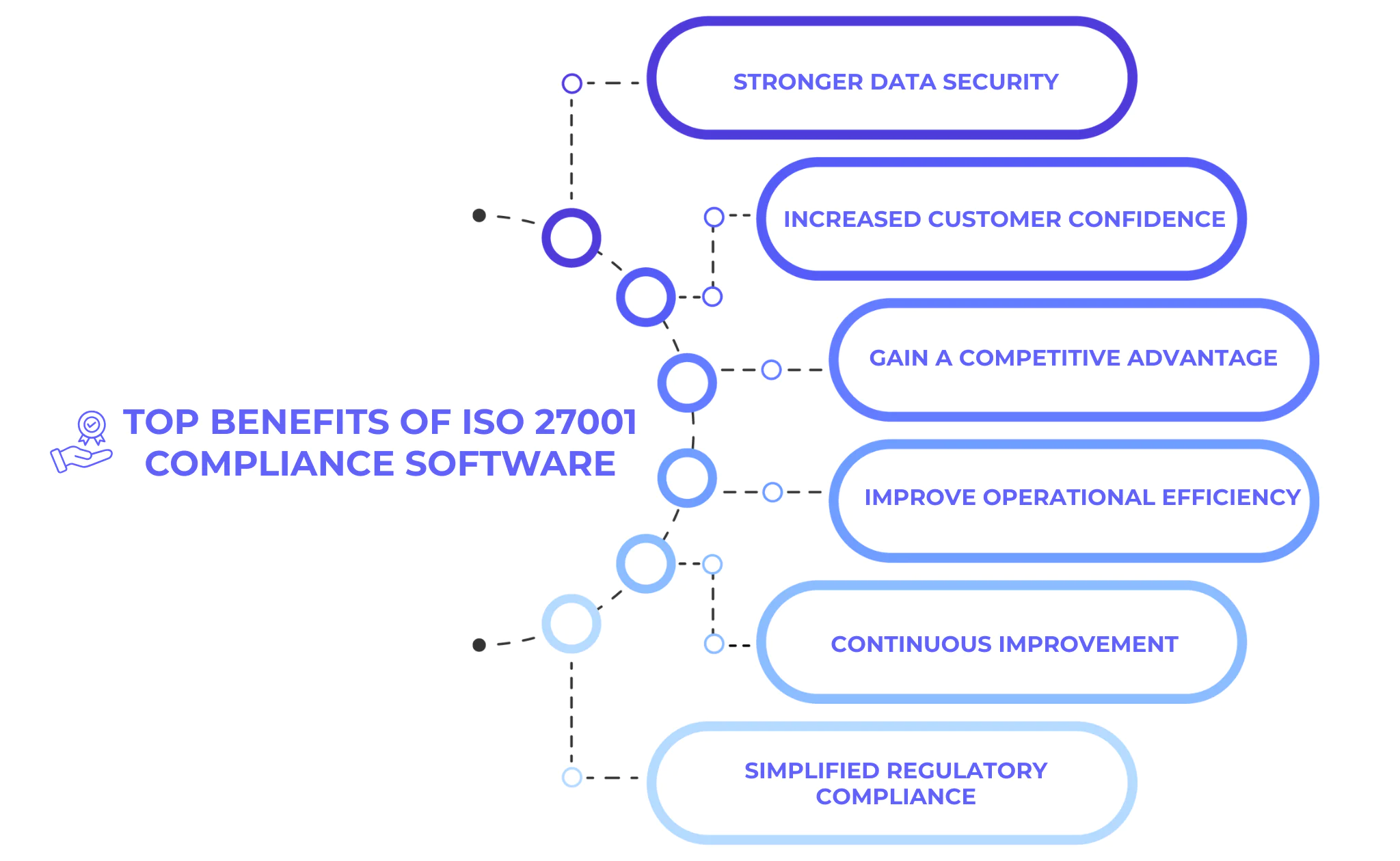
1. Stronger data security
ISO 27001 software helps organizations identify, assess, and address information security risks more effectively. By keeping risks, controls, and security activities organized, teams can reduce vulnerabilities and better protect sensitive data from potential threats.
2. Increased customer confidence
ISO 27001 certification demonstrates that an organization follows internationally recognized information security practices. This can strengthen customer confidence, particularly in industries such as healthcare and finance where protecting sensitive information is especially important.
3. Greater competitive advantage
ISO 27001 certification can help organizations stand out when customers and partners evaluate their security practices. Demonstrating compliance with a globally recognized standard can also support sales processes and help meet security requirements when pursuing new business opportunities.
4. More efficient processes
ISO 27001 compliance software centralizes security policies, controls, evidence, risks, and other ISMS activities. This reduces reliance on scattered documents and manual processes while making responsibilities and compliance progress easier to manage across the organization.
5. Continuous improvement
ISO 27001 requires organizations to continually review and improve their ISMS as risks and business needs change. Compliance software supports this process by helping teams monitor controls, track issues, manage remediation, and keep security practices up to date.
6. Simplified multi-framework compliance
ISO 27001 requirements overlap with other security and regulatory frameworks, allowing some controls and evidence to be reused across multiple compliance programs. ISO 27001 software with cross-framework mapping can help organizations reduce duplicate work and manage broader Governance, Risk, and Compliance (GRC) requirements more efficiently.



Why Scytale is the best ISO 27001 compliance software
Scytale stands out by bringing the entire ISO 27001 process into one platform, from initial readiness and ISMS management to certification and ongoing compliance. This gives teams one place to manage their compliance work, track progress, and understand what needs attention without relying on multiple tools and manual processes.
Scytale also supports organizations as their compliance needs grow. Multi-framework cross-mapping makes it easier to reuse existing ISO 27001 work across standards such as SOC 2, GDPR, and HIPAA, while a customizable Trust Center helps organizations share their security and compliance posture with customers. This makes Scytale a strong option for both achieving ISO 27001 certification and managing compliance long term.
FAQs about ISO 27001 compliance software
How to select the best ISO 27001 compliance software?
Look for software that matches your organization’s needs, supports multiple frameworks, and combines compliance automation with expert support. Focus on key features such as audit management, automated evidence collection, risk assessments, document control, user access reviews, and vendor risk management. Consider your budget and prioritize solutions that reduce manual work, save time, and support ongoing compliance.
What are the benefits of using ISO 27001 compliance tools?
ISO 27001 compliance tools simplify the process of meeting requirements by automating evidence collection and streamlining audit preparation. They can save significant time, reduce manual effort and human error, and help organizations maintain a strong security posture. Features such as security awareness training and real-time reporting can also improve compliance management and support a stronger security culture.
What industries most rely on ISO 27001 compliance?
Industries that handle sensitive data, such as technology, healthcare, finance, and government, commonly rely on ISO 27001. It is particularly relevant for SaaS companies and organizations managing cloud-based services that need to protect sensitive information and demonstrate strong security practices. Certification can also help strengthen trust with customers, partners, and stakeholders.
What features should ISO 27001 compliance software include?
ISO 27001 compliance software should provide the tools needed to build and maintain a strong Information Security Management System (ISMS). Look for solutions that centralize documentation, streamline audit preparation, automate continuous control monitoring, and provide clear reporting. Scytale adds 24/7 visibility, AI GRC agents, and dedicated GRC experts to help teams manage compliance and stay audit-ready.
How does ISO 27001 compliance software help with risk management?
ISO 27001 compliance software helps organizations identify, assess, and address information security risks before they become larger issues. Automated risk assessments and remediation tracking make it easier to keep the ISMS current as risks change. Continuous monitoring also gives teams greater visibility into emerging risks and areas that require attention.
Which ISO 27001 compliance software provides the best continuous monitoring features?
Several ISO 27001 compliance platforms provide continuous monitoring to help organizations track controls and maintain audit readiness. Scytale stands out by combining real-time control monitoring with AI GRC automation and AI GRC agents that continuously review evidence, identify potential gaps, and recommend remediation actions.
