


TL;DR: ISO 27001 risk treatment plan
- An ISO 27001 risk treatment plan defines how an organization will address information security risks identified during its risk assessment.
- The four main treatment options are risk avoidance, reduction, transfer, and acceptance, depending on the nature and severity of each risk.
- Each risk should have a defined treatment, responsible owner, timeline, and documented residual risk.
- Accepted risks should be formally documented, approved by the appropriate risk owner, and regularly reviewed.
- Top AI GRC platforms like Scytale simplify ISO 27001 risk treatment by centralizing risks, controls, treatment activities, and ongoing monitoring in one place.
Managing information security risk is an ongoing process, especially as organizations adopt new technologies, work with more third parties, and respond to changing security threats. Under ISO 27001, organizations need a consistent way to make informed decisions about risk and ensure those decisions support the wider information security management system (ISMS).
A structured risk treatment process helps organizations turn risk assessment findings into clear actions and address risks consistently. In this article, we explain how ISO 27001 risk treatment works, how to create and implement a risk treatment plan, and how to manage risk acceptance effectively.
What is an ISO 27001 risk treatment plan?
An ISO 27001 risk treatment plan is a documented plan that defines how an organization will address the information security risks identified during its risk assessment.
The plan outlines the actions needed to treat each relevant risk, helping organizations prioritize remediation and ensure identified risks are addressed appropriately. It also provides a structured way to track risk treatment activities and align them with the organization’s broader information security objectives.
A risk treatment plan is different from a risk management plan, which covers the organization’s overall approach to identifying, assessing, monitoring, and managing risk. The risk treatment plan is more specific, focusing on the actions taken to address identified risks and bring them within acceptable levels.
Exploring the different ISO 27001 risk treatment options
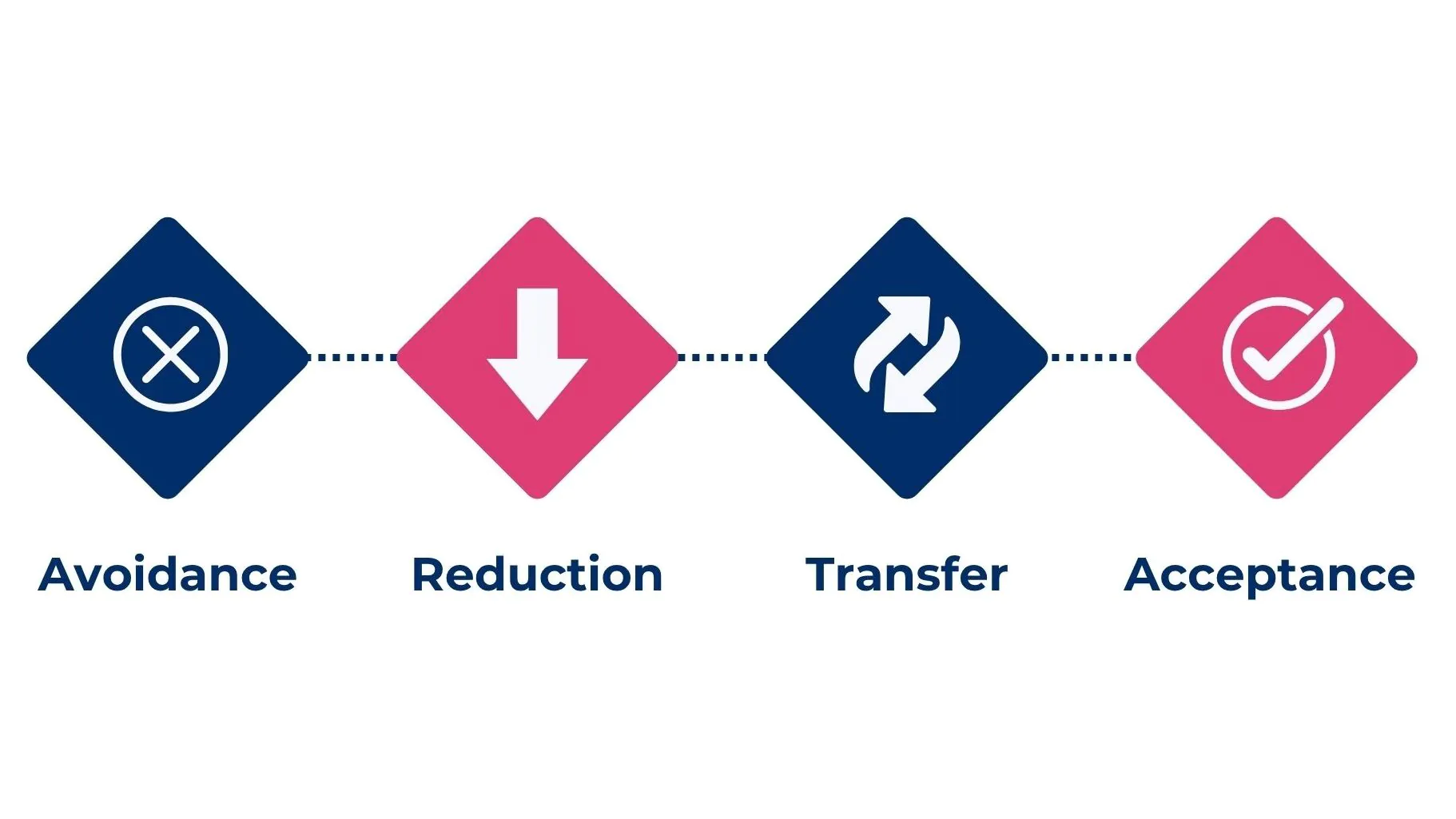
Once risks have been identified and assessed, organizations need to determine the most appropriate risk management approach for each one. The chosen treatment will depend on factors such as the likelihood and potential impact of the risk, available controls, and the organization’s risk tolerance. Here are the four main ISO 27001 risk treatment options:
1. Risk avoidance
Risk avoidance involves removing the activity or situation that creates the risk entirely. This could mean changing a business process, discontinuing a high-risk activity, or deciding not to use a particular system or service. It is typically considered when the risk is too significant to manage effectively through other controls.
2. Risk reduction
Risk reduction involves implementing controls to decrease the likelihood or impact of an identified risk. Measures may include strengthening access controls, improving security procedures, providing employee training, or introducing additional monitoring. The goal is to reduce the remaining risk to a level the organization considers acceptable.
3. Risk transfer
Risk transfer involves shifting some of the financial or operational impact of a risk to another party. Common approaches include purchasing cyber insurance or using a third-party provider to manage specific services or responsibilities. However, transferring risk does not necessarily remove the organization’s responsibility for managing and monitoring it.
4. Risk acceptance
Risk acceptance means acknowledging an identified risk and deciding not to implement additional controls. This may be appropriate when the risk falls within the organization’s defined risk tolerance or when further treatment would not be practical or cost-effective. The decision should be documented and reviewed as risks and business conditions change.
ISO 27001 risk treatment methods
| Risk treatment option | What it means | Example |
| Risk avoidance | Remove the activity creating the risk | Discontinue a high-risk process |
| Risk reduction | Reduce the likelihood or impact | Implement stronger security controls |
| Risk transfer | Shift some impact to another party | Purchase cyber insurance |
| Risk acceptance | Accept the risk within defined tolerance | Document and approve the residual risk |
Streamline GRC workflows with seamless automation.
Risk acceptance form for ISO 27001
A risk acceptance form is used to formally document an organization’s decision to accept an identified information security risk rather than apply additional treatment. It typically records the risk, its potential impact, the reason for acceptance, the level of residual risk, the responsible risk owner, and the required approval.
Documenting risk acceptance creates accountability and demonstrates that the risk has been formally assessed and approved rather than simply left unresolved. The form also helps relevant stakeholders understand which risks have been accepted and why. ISO 27001 compliance software can help teams centralize these records, track approvals, and review accepted risks as systems, threats, business processes, or risk levels change.
Analyzing the risks with a risk treatment plan
Once your organization has identified and assessed its information security risks, the next step is to determine how each risk should be treated as part of its broader ISO 27001 compliance program. A risk treatment plan provides a structured way to evaluate the available options, document treatment decisions, and ensure risks are managed consistently. Here are the key steps for analyzing risks and determining the appropriate treatment:
Evaluate each risk
Review each identified risk based on its likelihood, potential impact, and priority. This helps determine which risks require immediate treatment and which may already fall within the organization’s acceptable risk level.
Select the appropriate treatment
Choose whether to avoid, reduce, transfer, or accept each risk based on your risk criteria and available resources. Consider the cost and effectiveness of potential controls before deciding which treatment provides the most appropriate response.
Document accepted risks
When accepting a risk, document the decision, reason, risk owner, and approval in a risk acceptance form. This ensures the risk is formally acknowledged and clearly recorded.
Review residual risk
After implementing the relevant ISO 27001 controls, assess the remaining or residual risk to determine whether it falls within acceptable levels. If the risk remains too high, additional controls or a different treatment approach may be required.
Always-on GRC. Built for modern teams.
Creating and implementing your ISO 27001 risk treatment plan
Identifying treatments is only part of the process. Organizations also need a clear plan for implementing them, assigning responsibility, tracking progress, and ensuring that risk treatment becomes part of ongoing information security compliance.
1. Assign risk owners and responsibilities
Define who owns each risk and who is responsible for implementing the selected treatment. Clear ownership helps prevent actions from being delayed or overlooked and makes it easier to track progress.
2. Define actions and timelines
Document the controls or actions required to treat each risk, along with priorities and target completion dates. This turns the risk treatment plan into an actionable roadmap rather than simply a record of identified risks.
3. Communicate the plan
Relevant employees should understand the security responsibilities and controls that apply to their roles. Clear communication, supported by regular security awareness training, helps ensure risk treatments are implemented consistently across the organization.
4. Monitor and update the plan
Risk treatment should continue as systems, threats, and business operations change. Regularly review treatment progress, reassess residual risks, and update the plan when new risks emerge or existing controls are no longer effective.



Streamline ISO 27001 risk treatment with Scytale
Scytale simplifies ISO 27001 risk management by centralizing risk assessments, treatment plans, controls, and supporting evidence in one platform. Teams can identify and prioritize risks, assign owners, track treatment activities, and monitor progress without relying on disconnected spreadsheets and manual processes.
With automated evidence collection, continuous monitoring, and dedicated GRC expert support, Scytale helps teams keep risk treatment aligned with their wider ISO 27001 program. This makes it easier to address gaps, maintain an up-to-date view of risk, and stay prepared for audits as security requirements evolve.
FAQs about ISO 27001 risk treatment plan
What is an ISO 27001 risk treatment plan?
An ISO 27001 risk treatment plan records how identified information security risks will be treated, including actions, ownership, and tracking. Leading ISO 27001 platforms like Scytale help teams manage these activities alongside relevant controls.
What’s the difference between a risk treatment plan and a risk management plan?
A risk management plan covers the organization’s broader approach to identifying, assessing, monitoring, and managing information security risks. A risk treatment plan focuses specifically on how identified risks will be addressed and the actions required to bring them within acceptable levels.
What are the four ISO 27001 risk treatment options?
The four main options are risk avoidance, risk reduction, risk transfer, and risk acceptance. Top AI GRC platforms like Scytale help teams document and track these treatment decisions alongside their wider ISO 27001 risk and compliance program.
What is a risk acceptance form, and why is it required?
A risk acceptance form documents the decision to accept an identified risk rather than apply additional treatment. It creates a clear record of the risk, residual risk level, reason for acceptance, ownership, and approval.
Who needs to approve a risk treatment plan?
ISO 27001 requires appropriate risk owners to approve the risk treatment plan and accept residual information security risks. These approvals should be documented to demonstrate that treatment decisions have been formally reviewed and accepted.
