

TL;DR: Security compliance software
- All-in-one security compliance software centralizes evidence collection, continuous control monitoring, policy management, and audit readiness in one platform.
- Compliance automation platforms help teams reuse controls and evidence across multiple frameworks, reducing repetitive work and simplifying audits.
- Leading platforms differ in framework coverage, automation capabilities, expert support, pricing models, and company-stage fit.
- Scytale’s AI GRC platform stands out for combining automation with hands-on GRC expert support.
- The right choice depends on your framework roadmap, internal resources, support requirements, and long-term total cost.
Security compliance software has become essential for growing companies facing more complex security requirements. It also plays an important role in broader Governance, Risk, and Compliance (GRC) programs. With more customers scrutinizing security practices before signing contracts and requirements evolving alongside business growth, choosing the right platform can have a direct impact on both compliance efficiency and revenue.
But with platforms offering different approaches to automation, framework coverage, pricing, and expert support, comparing them is not always straightforward. In this article, we compare the best all-in-one security compliance platforms for 2026, what sets them apart, and how to choose the right option for your organization.
Best all-in-one security compliance platforms
- Scytale
- Archer
- RegScale
- Vanta
- Secureframe
What is an all-in-one security compliance platform?
An all-in-one security compliance platform centralizes and automates evidence collection, control monitoring, policy management, and audit readiness across multiple security and privacy frameworks in one system.
It gives teams a single place to manage frameworks such as SOC 2, ISO 27001, HIPAA, GDPR, and SOX ITGC, replacing scattered spreadsheets, disconnected tools, and point-in-time audit preparation. Evidence can be collected continuously, controls monitored throughout the year, and policies and audit requirements managed from the single dashboard.
Unlike single-framework tools focused on one certification or GRC platforms that often require extensive manual configuration, all-in-one platforms are designed to support a broader compliance program as it grows. This matters even more in 2026, as companies manage more frameworks simultaneously, AI changes how compliance and audits are handled, and customers expect faster proof of security through questionnaires and Trust Centers. The result is a more scalable way to stay audit-ready while meeting growing customer, auditor, and regulatory demands.
Streamline GRC workflows with no blind spots.
Benefits of an all-in-one security compliance platform
As security and compliance requirements grow, teams need a more efficient way to manage increasing responsibilities without adding unnecessary complexity. Bringing key processes together supports continuous compliance, making programs easier to maintain, scale, and manage across the business. Here are the key benefits of an all-in-one security compliance platform:
Streamlined framework management
A shared evidence library and control set allows teams to reuse the same work across multiple frameworks instead of starting from scratch for each one. Requirements that overlap across SOC 2, ISO 27001, GDPR, HIPAA, and other standards can be mapped to the same controls and evidence. This makes multi-framework compliance platforms especially valuable as companies add new frameworks without multiplying their workload.
Continuous audit readiness
Continuous monitoring replaces the stressful audit scramble that often happens in the weeks before fieldwork begins. By checking integrations, evidence, and control status throughout the year, teams can identify gaps or failed controls earlier. This reduces last-minute requests for screenshots, exports, approvals, and missing documentation.
Reduced compliance costs
Consolidating compliance activities can reduce the need to pay separately for GRC software, vendor risk tools, evidence management, and Trust Center solutions. It also reduces handoffs between disconnected systems and gives teams fewer tools to maintain. As compliance programs expand, this can lower the overall cost and complexity of managing them.
Faster audits and security reviews
Centralized, up-to-date compliance data makes it easier to provide auditors with the evidence they need and respond quickly to customer security questionnaires. Sales and security teams spend less time searching for documentation or confirming whether information is still current. Faster responses can remove security reviews as a bottleneck and help deals progress more efficiently.
Centralized visibility
An all-in-one platform gives compliance teams, leadership, auditors, and prospects a consistent view of the organization’s security and compliance posture. Instead of relying on different spreadsheets and reports, stakeholders can work from current information in one system, with relevant proof shared through tools such as a Trust Center. This improves transparency, builds buyer confidence, and makes compliance easier to communicate internally and externally.
AI-native GRC for how teams work today.
5 best all-in-one security compliance platforms for 2026
The best security compliance platforms help companies manage more than a single audit, bringing controls, risks, policies, and security requirements into one place. However, each platform takes a different approach, from complex enterprise GRC tools to simpler automation-focused systems. Here are the best compliance management software for 2026 and what each is best suited for:
1. Scytale
Scytale stands out as a leading all-in-one security compliance platform for companies looking to manage and scale their entire compliance program in one place. Supporting 80+ frameworks, the platform combines automated evidence collection, continuous control monitoring, policy management, audit workflows, and cross-framework mapping to reduce manual work and maintain ongoing audit readiness.
What differentiates Scytale is its combination of advanced AI compliance automation and dedicated GRC expert support. Its multi-agent GRC suite helps review evidence, identify control gaps, and streamline remediation, while experienced experts provide hands-on guidance throughout the compliance journey. This end-to-end approach gives growing companies the automation, visibility, and expertise needed to manage multiple frameworks without adding disconnected tools or rebuilding their compliance program as they scale.
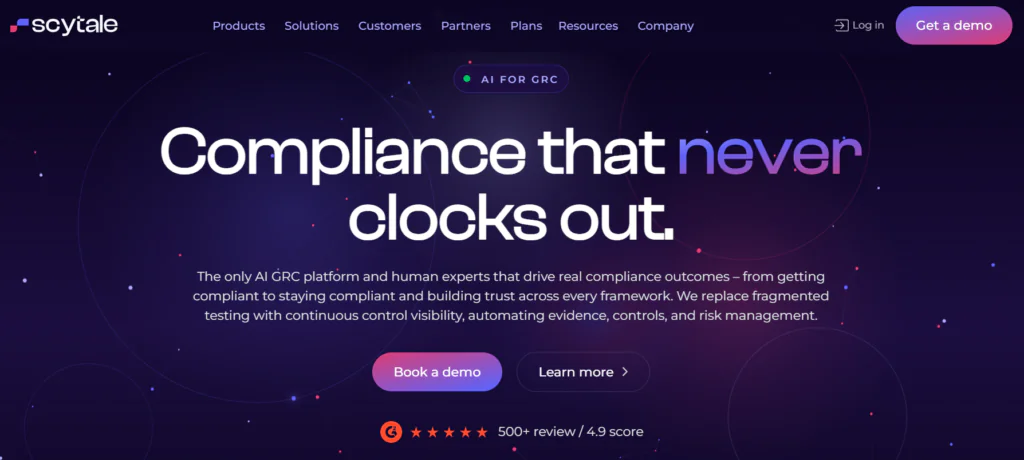
(Screenshot from Scytale’s website)
Why Scytale is the best for security compliance:
- Continuous control monitoring to maintain security compliance and identify gaps between audit cycles
- AI-powered automation for evidence collection, access reviews, remediation, policy management, and audit preparation
- Multi-framework management with cross-mapping across SOC 2, ISO 27001, GDPR, HIPAA, SOX ITGC, and more
- Customizable Trust Center for securely showcasing your security and compliance posture to customers and prospects
- Dedicated GRC expert support providing tailored guidance throughout audits, certifications, and ongoing compliance
- Seamless integrations with core business systems to automate evidence collection, control tracking, and compliance workflows
2. Archer
Archer is an enterprise GRC platform designed for organizations with mature governance programs, complex risk structures, and established compliance teams. Its highly configurable environment supports organizations that need to coordinate security compliance alongside enterprise risk, audit, operational resilience, and other governance functions. This makes it relevant for large enterprises where security compliance forms part of a broader governance strategy.
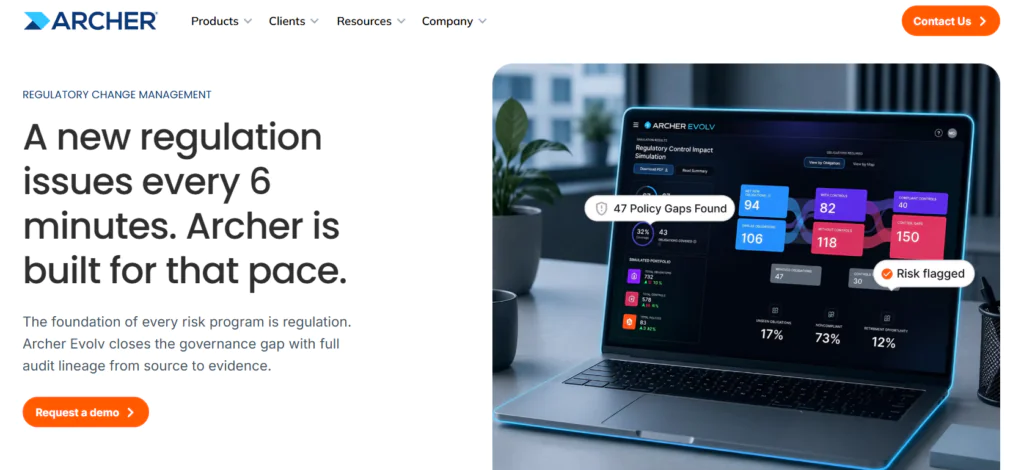
(Screenshot from Archer’s website)
Key features:
- Broad governance, risk, audit, and compliance capabilities for managing complex enterprise programs
- Extensive workflow configuration for established processes, custom approvals, and specialized reporting requirements
- Scalable program management across multiple business units, stakeholders, risk owners, and governance structures
- Detailed dashboards and reporting for visibility into risks, controls, findings, and remediation activities
Limitations:
- Significant implementation and configuration requirements can increase upfront costs and resource demands
- Longer deployment timelines may delay value for organizations working toward near-term security certifications
- Ongoing administration can require dedicated internal expertise to maintain complex configurations and workflows
3. RegScale
RegScale is a continuous controls monitoring platform focused on operationalizing compliance across complex regulatory and security environments. Its approach connects compliance requirements with technical control data, helping organizations move toward more continuous assessment. This makes it relevant for mature security teams managing extensive control libraries and highly technical compliance programs.
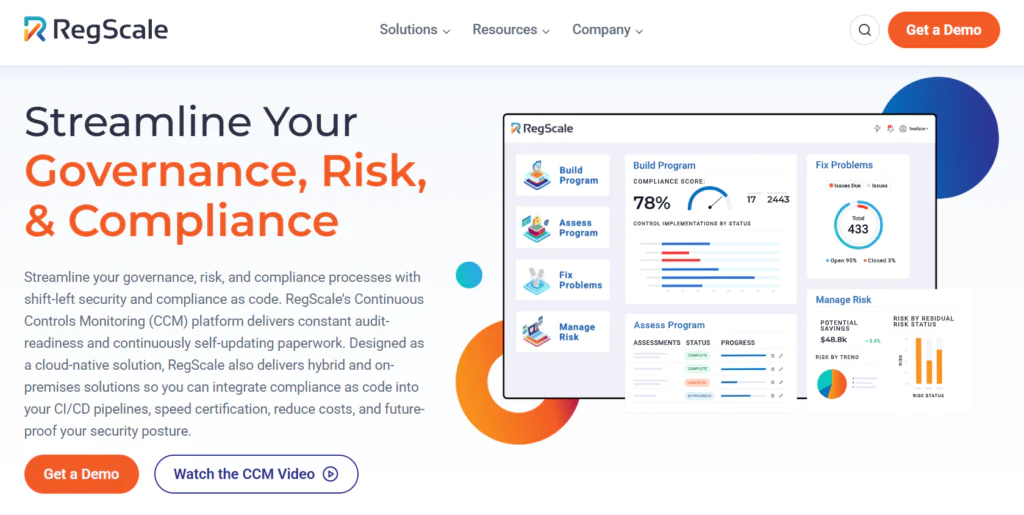
(Screenshot from RegScale’s website)
Key features:
- Continuous control assessment designed to detect compliance gaps between formal assessment periods
- Structured control mapping across extensive regulatory requirements, security standards, and internal control libraries
- Machine-readable compliance capabilities connecting requirements, controls, evidence, and technical security data
- Strong support for organizations coordinating large volumes of controls across multiple regulatory requirements
Limitations:
- The technical approach can create a steeper learning curve for teams without established compliance expertise
- Effective adoption may depend on mature internal processes and clearly defined control ownership
- Teams needing hands-on certification, remediation, or auditor guidance may require additional external expertise
4. Vanta
Vanta is a trust management platform commonly used by startups and growing technology companies pursuing security certifications and customer trust requirements. Its software-first model provides structured workflows that help organizations establish compliance programs without developing every process internally. It is suited to teams prioritizing a straightforward route to common security compliance milestones.
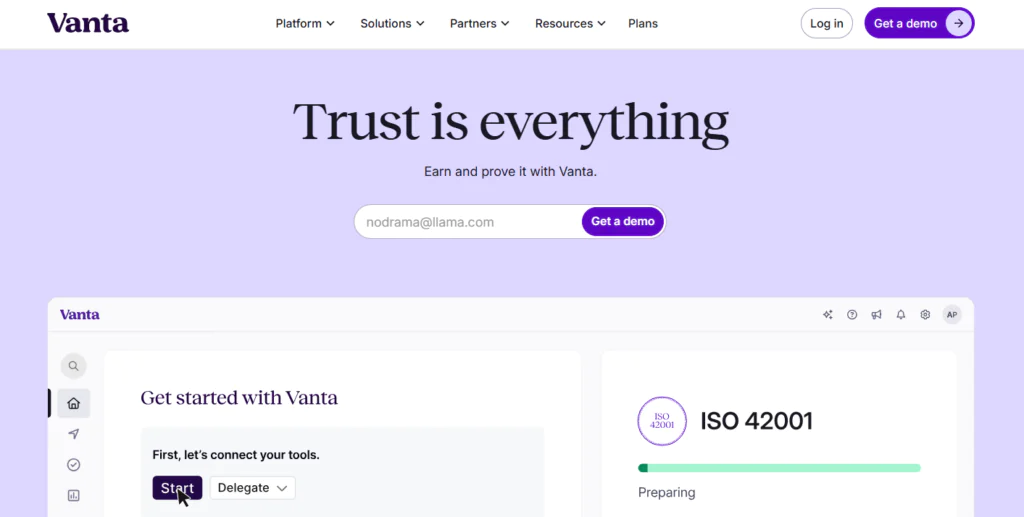
(Screenshot from Vanta’s website)
Key features:
- Automated evidence collection and monitoring workflows that reduce manual preparation for common security assessments
- Accessible user experience designed for startups and smaller teams with limited dedicated compliance resources
- Centralized employee onboarding, access, policy, and security workflows for common compliance responsibilities
- Trust management and security questionnaire capabilities that support customer due diligence and sales processes
Limitations:
- Costs can increase as organizations add frameworks, products, or additional compliance functionality
- Its software-first approach may provide less hands-on guidance for teams wanting ongoing GRC expert involvement
- Complex enterprises may require greater workflow customization and governance flexibility than standard configurations provide
5. Secureframe
Secureframe is a security compliance automation platform designed to simplify preparation for and maintenance of common security and privacy standards. It provides a structured path for companies moving away from spreadsheets and manual audit preparation without introducing the complexity of traditional enterprise GRC software. Its streamlined model is suited to smaller and mid-sized organizations building more formal security compliance processes.
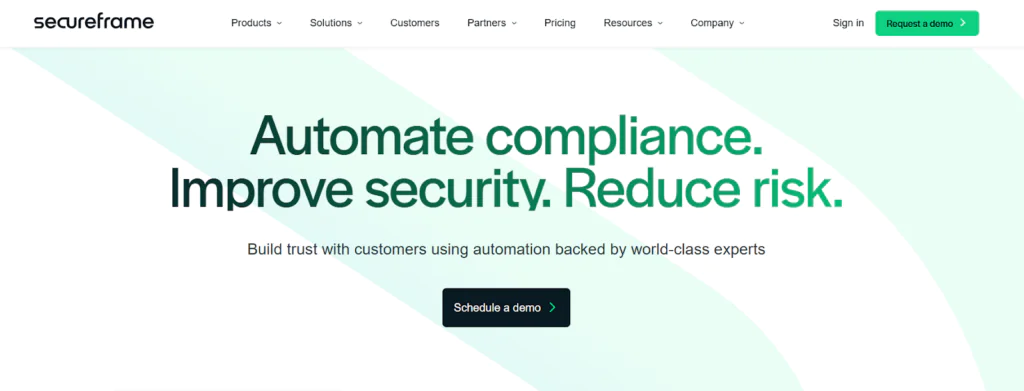
(Screenshot from Secureframe’s website)
Key features:
- Compliance readiness workflows that organize requirements, tasks, ownership, and documentation throughout certification
- Policy management tools that help teams create, distribute, approve, and maintain required security documentation
- Personnel compliance workflows for tracking employee security requirements, training, and related responsibilities
- Risk management capabilities for identifying, documenting, and tracking security risks alongside compliance activities
Limitations:
- Highly customized governance programs may require greater flexibility than its more standardized workflows provide
- Organizations needing highly specialized reporting or approval workflows may require additional configuration or tooling
- Long-term expansion across numerous frameworks can create greater demands for sophisticated cross-framework management
Top all-in-one security compliance platforms
| Platform | Best for | Key strength | Main consideration |
| Scytale | SaaS organizations of all sizes with complex compliance needs seeking efficient AI GRC management processes | AI GRC compliance automation, multi-agent GRC suite, continuous security and compliance monitoring, multi-framework management, streamlined GRC processes, and expert guidance | Best suited to teams wanting an all-in-one platform with hands-on support |
| Archer | Large enterprises with mature GRC programs | Deep customization for complex risk, audit, and governance structures | Heavier implementation and ongoing administration requirements |
| RegScale | Mature teams managing complex control environments | Continuous control assessment and machine-readable compliance | Requires stronger internal compliance processes and technical expertise |
| Vanta | Startups and growth companies pursuing common certifications | User-friendly, software-first compliance and trust management | Costs and customization needs can increase as programs expand |
| Secureframe | Smaller and mid-sized teams building structured compliance programs | Streamlined security compliance and certification workflows | May offer less flexibility for complex, large-scale GRC programs |
How to choose the right security compliance platform
Choosing the right platform means looking beyond what you need for your next audit. Consider how your compliance program is likely to grow, how much internal expertise you have, and what the platform will cost as you add frameworks and workflows. These four factors can help narrow down the best fit:
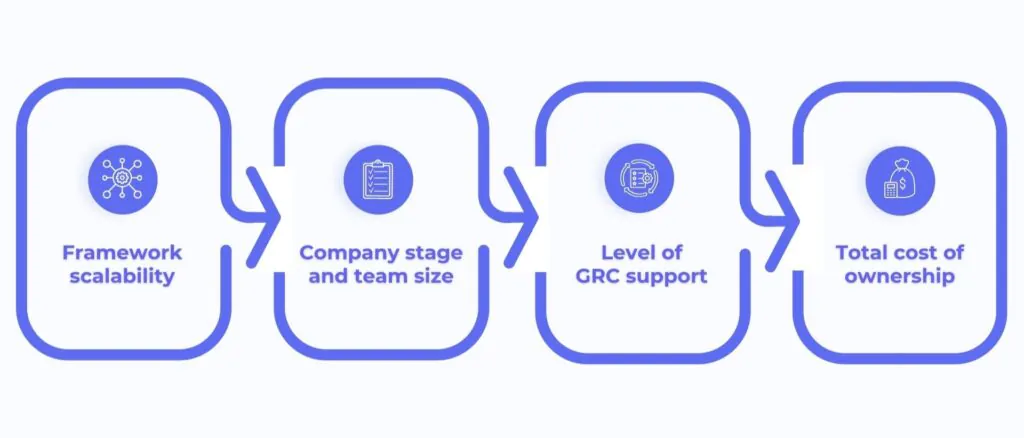
Framework scalability
Start with the frameworks you need today, then consider which requirements you may need as your business grows. If SOC 2 is only the starting point and ISO 27001, GDPR, HIPAA, or SOX ITGC are on your roadmap, prioritize a platform that lets you reuse controls and evidence across frameworks. It should also accommodate additional frameworks without significantly increasing cost or administrative work.
Sport Alliance, which serves over 10,000 gyms worldwide, uses Scytale’s multi-framework cross-mapping to turn its ISO 27001 work into GDPR coverage across more than 500 endpoints.
Company stage and team size
Your compliance maturity should also shape your decision. Startups preparing for their first audit typically need fast implementation, straightforward workflows, and less administrative overhead, while larger enterprises may require more complex governance, customization, and reporting. Legacy platforms such as Archer are generally better suited to established enterprise GRC programs, while modern AI compliance platforms can be more practical for growing teams.
Level of GRC support
Consider how much compliance expertise your team already has internally. A self-service platform may work well for experienced GRC teams that want to manage scoping, evidence, remediation, and auditor coordination themselves, while other organizations benefit from hands-on expert guidance. Choose a support model that matches your internal expertise and how much of the compliance process your team wants to manage independently.
Total cost of ownership
Compare the full cost of running the platform rather than the initial subscription price alone. Look at per-framework fees, implementation costs, contract length, support levels, additional entities, Trust Center functionality, and other add-ons that could increase spending as your program grows. A lower starting price can become less competitive if every new compliance requirement introduces another fee or tool.

How Scytale supports all-in-one security compliance
Scytale helps teams turn security compliance into an ongoing business process rather than something that only gets attention before an audit. Its AI agents support teams with time-consuming compliance work, helping surface issues, prioritize next steps, and keep tasks moving as requirements change. This allows security and compliance teams to spend less time on repetitive administration and more time addressing the areas that need attention.
This helps connect compliance more closely with security and business priorities. Teams can respond faster to customer requests, give leadership clearer insight into progress, and make more informed decisions about where to focus resources. As your organization grows, Scytale also helps teams keep compliance aligned with changing customer expectations and broader organizational goals.
FAQs about security compliance software
How does an all-in-one security compliance platform differ from single-framework tools?
An all-in-one security compliance platform supports multiple frameworks, shared controls, and centralized evidence in one system, while single-framework tools focus on one certification or audit path. Teams can reuse controls and evidence across overlapping requirements instead of rebuilding workflows as they add new frameworks.
What are the benefits of using an all-in-one compliance platform?
An all-in-one compliance platform reduces duplicate work, simplifies audit preparation, and gives teams one source of truth for security and compliance activities. Continuous monitoring and centralized workflows also improve visibility between audits, reduce tool sprawl, and help teams respond faster to customer security reviews.
Which compliance frameworks do these platforms support?
Most all-in-one platforms support widely used security and privacy frameworks such as SOC 2, ISO 27001, HIPAA, GDPR, and SOX ITGC. Framework coverage and automation depth vary by provider, so teams should consider both their current requirements and future roadmap. Scytale supports 80+ frameworks, helping organizations expand their compliance programs while reusing existing controls and evidence.
What features should I look for in a security compliance platform?
Look for automated evidence collection, continuous control monitoring, policy management, cross-framework mapping, security questionnaire support, and audit-ready reporting. Integration coverage, Trust Center capabilities, risk management, and the level of compliance support available are also important when comparing platforms. Scytale brings these capabilities into one AI GRC platform, giving teams a more centralized way to manage and scale security compliance.
How long does it take to get audit-ready with a compliance automation platform?
Audit readiness timelines depend on the framework, scope, existing controls, and how much compliance work the organization has already completed. A compliance automation platform can accelerate the process by automating evidence collection, centralizing tasks, and identifying gaps earlier. Top AI GRC platforms like Scytale combine automation with expert support to help teams resolve gaps and reach audit readiness faster.