

TL;DR: Top 10 compliance automation tools
- Compliance automation tools replace manual processes with automated workflows for evidence collection, continuous monitoring, and audit readiness.
- They help save time, reduce errors, lower costs, and provide real-time visibility into compliance status.
- Leading automation tools support multiple frameworks and help organizations of all sizes manage growing compliance complexity in one place.
- Scytale stands out as the best compliance automation tool, combining AI-powered automation with expert support to ensure continuous compliance.
- Choosing the right compliance automation platform depends on your organization’s size, compliance goals, and need for expert support.
Managing compliance can become increasingly complex as organizations grow and requirements change. Manual processes can make it harder for teams to keep information organized, maintain visibility, and stay prepared for audits.
Compliance automation provides a more efficient way to manage these requirements at scale. In this article, we’ll explore the top compliance automation tools for 2026, their key capabilities, and what to consider when choosing the right platform for your organization.
Top 10 compliance automation tools in 2026
- Scytale
- JupiterOne
- LogicGate
- Diligent
- Onspring
- Optro (AuditBoard)
- Hyperproof
- Secureframe
- Thoropass
- OneTrust
What is compliance automation?
Compliance automation is the use of technology to automate and streamline the processes organizations use to meet and maintain regulatory, security, and industry requirements.
Instead of relying on spreadsheets, manual evidence collection, and periodic checks, compliance automation brings these activities into a more centralized and consistent process. It can automate tasks such as collecting evidence, monitoring controls, managing policies, identifying gaps, and preparing documentation for audits.
Compliance automation also helps organizations manage compliance as an ongoing process rather than something addressed only before an audit. By connecting with existing systems and continuously tracking relevant controls and requirements, it gives teams greater visibility into their compliance status and helps them respond to issues as they arise.
5 key benefits of compliance automation
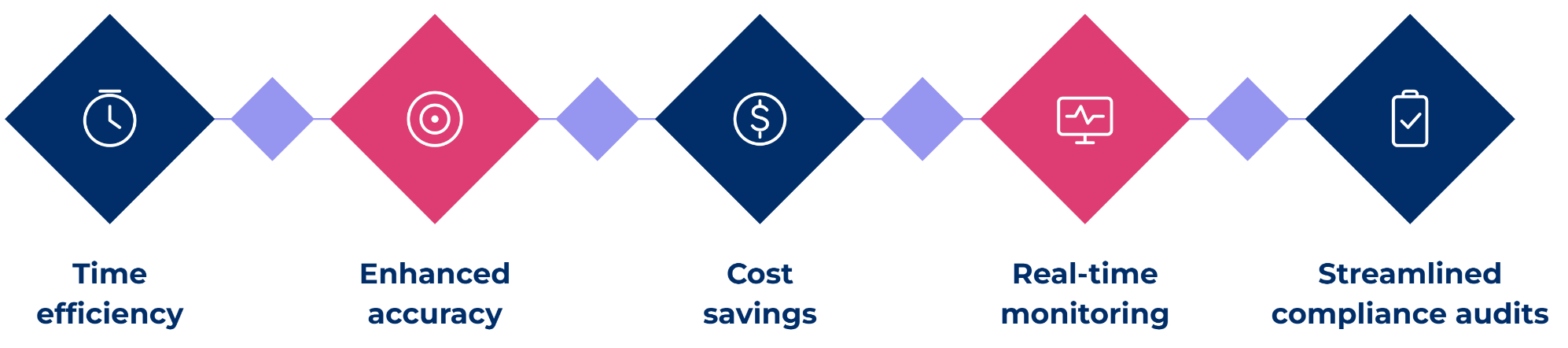
Compliance automation is becoming an increasingly important way for organizations to manage growing regulatory and security requirements. Here are five key benefits it can bring to your compliance program:
1. Time efficiency
Automating compliance processes reduces the time teams spend gathering evidence, organizing documentation, and tracking controls. This allows compliance and security teams to focus more on addressing gaps, managing risk, and other higher-value activities.
2. Enhanced accuracy
Human errors in cybersecurity and compliance can occur when teams manually manage large volumes of data, evidence, and requirements. Automation reduces this risk by applying consistent processes and keeping compliance information accurate, organized, and up to date.
3. Cost savings
Compliance automation can reduce costs by limiting the internal time and resources required for repetitive compliance work. It can also help teams identify gaps earlier, reducing the risk of costly remediation, audit delays, and compliance failures.
4. Real-time monitoring
Compliance software can continuously monitor controls and connected systems, providing greater visibility into compliance status. Automated alerts help teams identify and address control failures, missing evidence, and other issues before they become more significant.
5. Streamlined compliance audits
Compliance automation tools keep evidence, controls, policies, and other documentation organized and current throughout the audit cycle. This makes it easier to identify missing evidence, provide auditors with the required information, and reduce the time and effort involved in audit preparation.
Streamline GRC workflows with no blind spots.
Essential features of compliance automation tools
When selecting a compliance automation tool, it’s important to focus on automated compliance platform features that deliver real value and support your organization’s unique needs. Here are some key capabilities to look for:
Automated evidence collection
Compliance automation tools should be able to automatically collect evidence from various systems and sources. This feature saves time and ensures all required documentation remains accurate and up to date.
Real-time monitoring and alerts
Real-time monitoring and alert capabilities are crucial for maintaining ongoing compliance. These features allow organizations to quickly identify and address any compliance issues before they escalate.
Policy management
Effective policy management is essential for maintaining continuous compliance. Compliance automation tools should assist in creating, updating, and distributing compliance policies across the organization. This helps organizations keep policies aligned as regulations and internal requirements change.
Risk assessment
Risk assessment features help organizations identify, evaluate, and prioritize potential security and compliance risks. This makes it easier to address vulnerabilities before they create larger compliance issues.
Audit readiness
Audit readiness features help prepare and organize all necessary materials for auditors, simplifying the audit process and reducing stress. This feature ensures that all evidence is complete, accurate, and well-organized, helping reduce the time and effort required to prepare for an audit.

Compliance automation workflow
A compliance automation workflow provides a structured way to manage activities and keep processes consistent as requirements change. The right software helps organizations stay organized throughout the entire lifecycle. Here are the key steps in an effective compliance automation workflow:
1. Identification of requirements
The workflow begins by identifying the regulations, industry standards, and internal policies that apply to the organization. This creates a clear picture of what the compliance program needs to address and which obligations are most relevant. Establishing these requirements upfront helps ensure the rest of the workflow is built around the right priorities.
2. Rule definition
Once the requirements are defined, they are translated into specific controls, rules, and criteria that can be monitored. These controls outline what needs to be implemented and how compliance will be evaluated over time. Clear rule definitions also create a consistent basis for collecting evidence and identifying gaps.
3. Automated evidence collection
Compliance-related data is automatically collected from connected systems, including logs, reports, configurations, and audit records through integrations. This reduces the need for teams to manually gather screenshots and documents from multiple sources. Centralizing evidence also makes it easier to keep records current and ready for review.
4. Automated monitoring
The platform continuously monitors controls and collects data to verify that requirements continue to be met. Instead of relying on periodic checks, teams receive ongoing visibility into changes that could affect compliance. This helps organizations identify potential issues earlier and maintain a more consistent compliance posture.
For example, ICL Group uses Scytale to automate roughly 130 ITGC controls and audit more than 200,000 records daily, reducing manual ITGC work by 70–80%.
5. Alerts and notifications
When a control fails or a deviation is detected, the workflow generates alerts for the appropriate stakeholders. These notifications provide teams with timely information so they can investigate and respond before issues become more serious. Clear ownership of alerts also helps prevent important actions from being overlooked.
6. Reporting and documentation
The workflow generates reports that provide an up-to-date view of compliance status across controls and requirements. It also maintains organized documentation that can be used during internal reviews, management reporting, and external audits. Having this information readily available reduces the time spent preparing reports manually.
7. Remediation
When issues are identified, they are assigned to the appropriate owners and tracked through resolution. Predefined remediation workflows help teams prioritize actions and ensure that problems are addressed consistently. Tracking remediation also creates a clear record of how compliance gaps were resolved.
8. Continuous improvement
The workflow does not end once an issue is fixed or an audit is completed. Teams can use insights from audits, incidents, control failures, and changing requirements to improve policies, controls, and processes over time. This continuous feedback loop helps the compliance program become more efficient and resilient as the organization evolves.
AI-native GRC for how teams work today.
10 best compliance automation tools in 2026
These tools have been selected based on functionality, ease of use, support, and ability to adapt to evolving requirements. Each offers strengths suited to different organizational needs, helping maintain strong security compliance. By evaluating their capabilities, you can choose the solution that best aligns with your goals and supports a more efficient approach to Governance, Risk, and Compliance (GRC) management.
1. Scytale
Scytale stands out as the top AI-powered compliance automation platform, offering an all-in-one compliance hub designed to streamline processes across more than 60 frameworks, including SOC 2, ISO 27001, GDPR, HIPAA, and SOX ITGC. Designed specifically for SaaS organizations, from fast-growing startups to established enterprises, the platform supports every stage of growth. Its automation capabilities, including automated evidence collection, continuous monitoring, policy management, and vendor risk management, help organizations manage and maintain compliance.
What differentiates Scytale is its end-to-end approach to compliance. By combining AI-powered automation with dedicated GRC expert support and a unique AI GRC agent, it proactively identifies gaps, reduces manual effort, and keeps organizations continuously audit-ready. With seamless integrations, a user-friendly interface, and full visibility across compliance programs, Scytale enables teams to scale efficiently while maintaining control, accuracy, and alignment with key business goals.
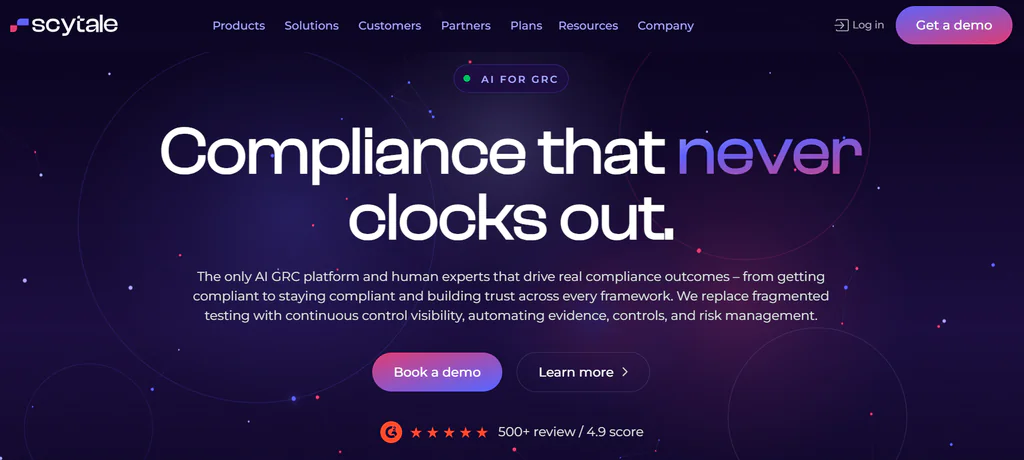
(Screenshot from Scytale’s website)
Why Scytale is the best:
- AI-powered automation that streamlines key compliance processes, including evidence collection, access reviews, continuous monitoring, and vendor risk management
- Continuous compliance through real-time monitoring, with full visibility into your security and risk posture
- Multi-framework management to eliminate duplicate work across multiple standards like SOC 2, ISO 27001, ISO 42001, GDPR, PCI DSS, and HIPAA
- Dedicated GRC expert support, providing tailored guidance throughout the entire compliance journey
- Customizable Trust Center to easily showcase your security and compliance posture
- Built-in AI GRC agent (Scy) that enhances compliance automation processes by providing actionable insights
2. JupiterOne
JupiterOne is a security and compliance platform that helps organizations understand and manage risks across their digital assets. It connects data from cloud, identity, code, and other systems to give teams a clearer view of their security and compliance environment.
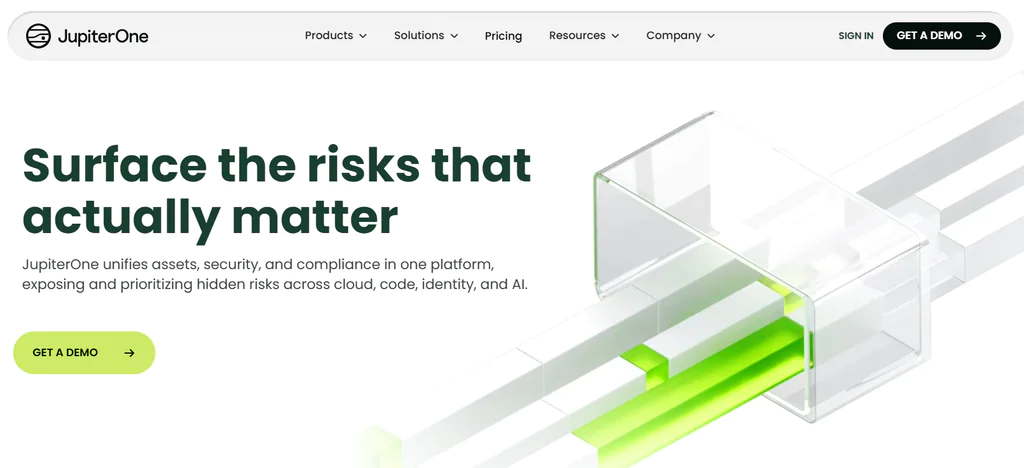
(Screenshot from JupiterOne’s website)
Key Features:
- Graph-based mapping of assets and their relationships
- Technical control testing against live environment data
- Natural-language queries for security and compliance insights
Limitations:
- May be broader than some compliance teams need
- May require technical expertise
3. LogicGate
LogicGate is a flexible platform designed to support risk and compliance management through process customization. It enables organizations to build and adapt processes based on their specific operational needs.
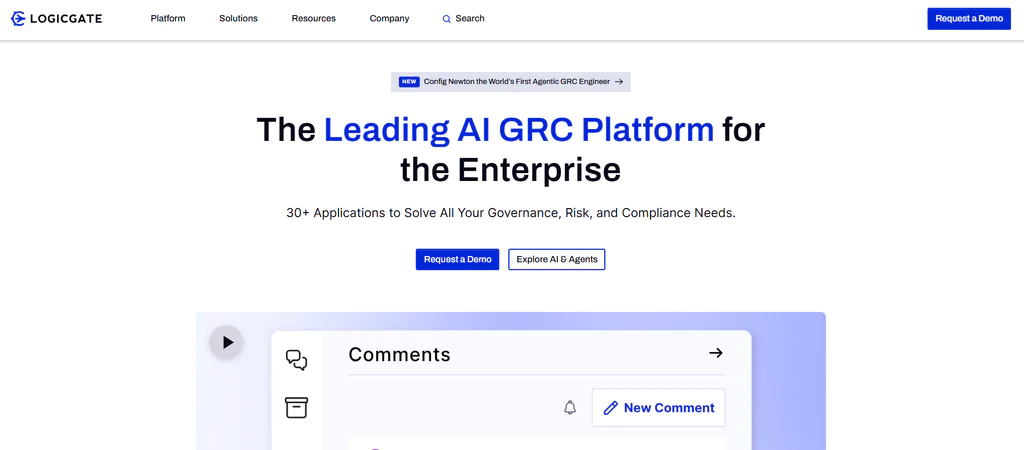
(Screenshot from LogicGate’s website)
Key Features:
- Customizable workflow builder for compliance processes
- Consolidated risk and compliance management
- Reporting and analytics for performance tracking
Limitations:
- Requires setup time to configure workflows
- May depend on internal expertise to manage effectively
4. Diligent
Diligent offers governance and risk management capabilities with a focus on enterprise-level oversight and reporting. It supports organizations looking to centralize risk visibility and improve decision-making.
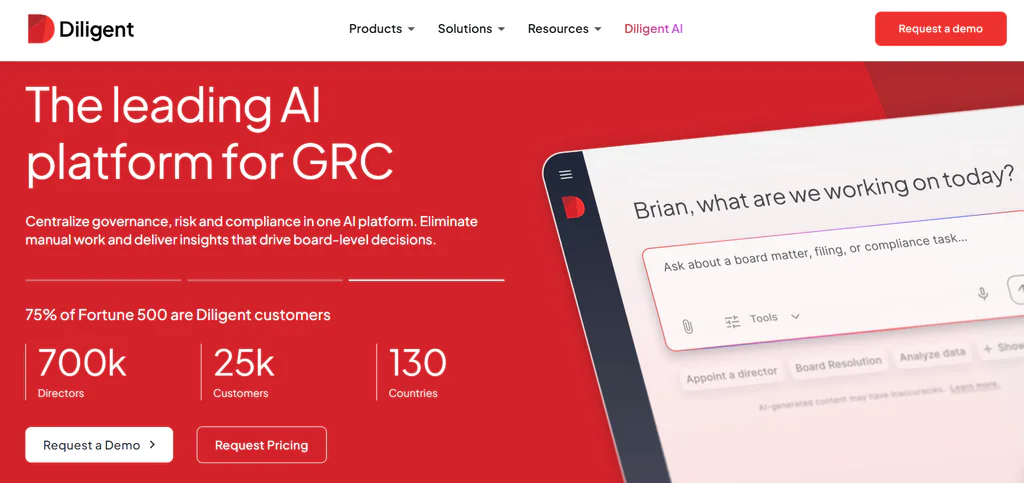
(Screenshot from Diligent’s website)
Key Features:
- Centralized governance and risk management
- Reporting tools for executive visibility
- Support for enterprise-wide compliance programs
Limitations:
- Can be complex to implement and navigate
- May be more suited to larger organizations
5. Onspring
Onspring is a no-code platform designed for process and workflow management. It enables teams to structure and manage their programs with flexibility and control through configurable processes.
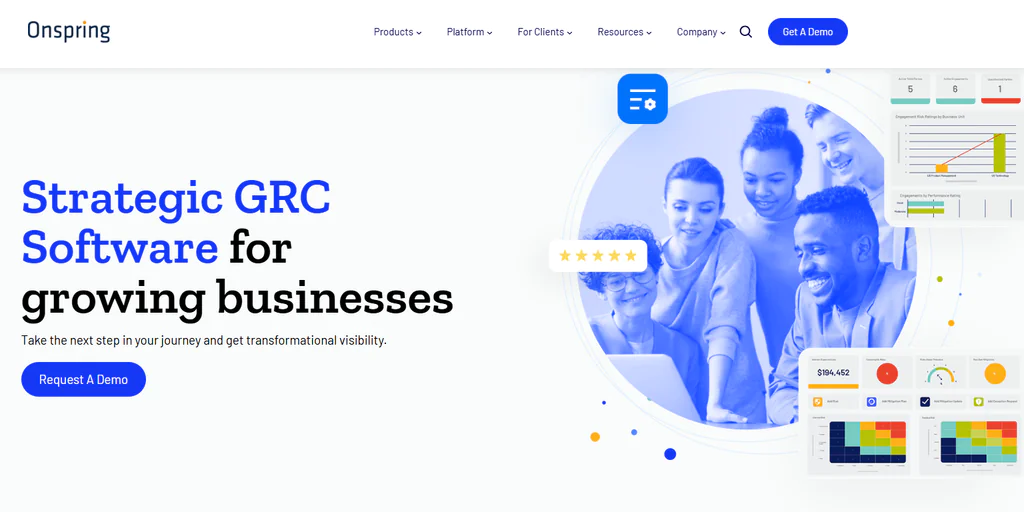
(Screenshot from Onspring’s website)
Key Features:
- No-code workflow customization
- Risk and compliance tracking in one platform
- Reporting and dashboard capabilities
Limitations:
- Customization may require time to configure properly
- Less prescriptive guidance for compliance processes
6. Optro (AuditBoard)
Optro, previously known as AuditBoard, is a compliance automation platform focused on audit, risk, and compliance management, with tools designed to enhance collaboration and support audit readiness. It is commonly used by teams responsible for managing internal audits and control environments.
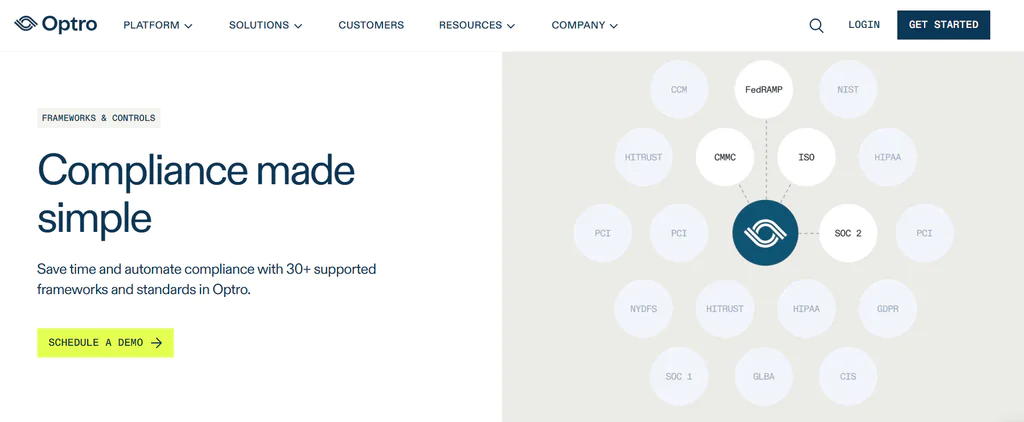
(Screenshot from Optro’s website)
Key Features:
- Audit management and documentation tools
- Collaboration features across teams
- Reporting and audit trail visibility
Limitations:
- Primarily audit-focused rather than end-to-end automation
- May require additional tools for full compliance coverage
7. Hyperproof
Hyperproof is an automation platform designed to help organizations manage compliance programs and track controls over time. It emphasizes organization and visibility across all compliance activities.
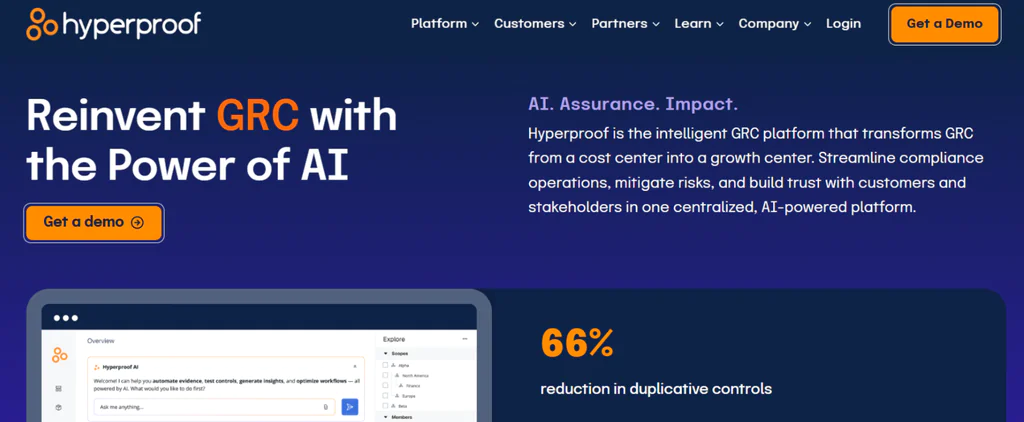
(Screenshot from Hyperproof’s website)
Key Features:
- Control tracking and monitoring
- Organized evidence and documentation management
- Integration with common business tools
Limitations:
- Requires manual input for certain processes
- May involve ongoing administrative effort
8. Secureframe
Secureframe is a compliance automation platform that helps organizations manage security and compliance processes. It provides tools for tracking controls, collecting evidence, and preparing for audits.
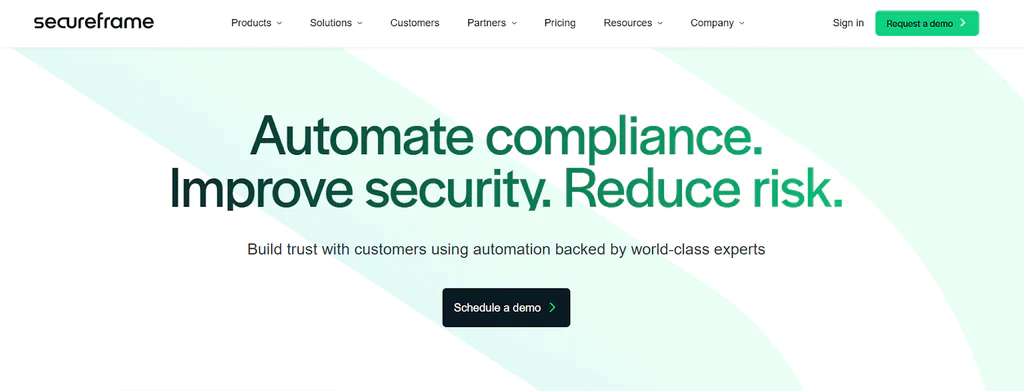
(Screenshot from Secureframe’s website)
Key Features:
- Automated evidence collection
- Compliance tracking and audit preparation
- Vendor risk and security management
Limitations:
- May be less scalable for complex compliance needs
- Less adaptable for highly customized programs
9. Thoropass
Thoropass combines compliance software with audit and advisory services, giving organizations access to both GRC tooling and external expertise. It is designed for teams looking for a combination of technology and external support.
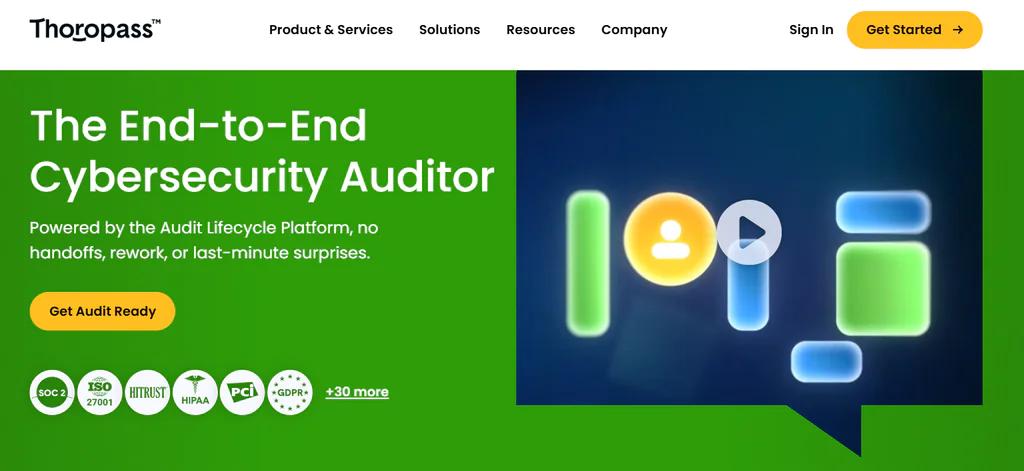
(Screenshot from Thoropass’ website)
Key Features:
- Compliance platform with audit support services
- Guided compliance workflows and expert guidance.
- Continuous compliance assistance
Limitations:
- Heavier reliance on service components
- May offer less flexibility for self-managed programs
10. OneTrust
OneTrust is a broad automation platform focused on privacy, data governance, and compliance management. It is often used by organizations managing complex data and privacy requirements.
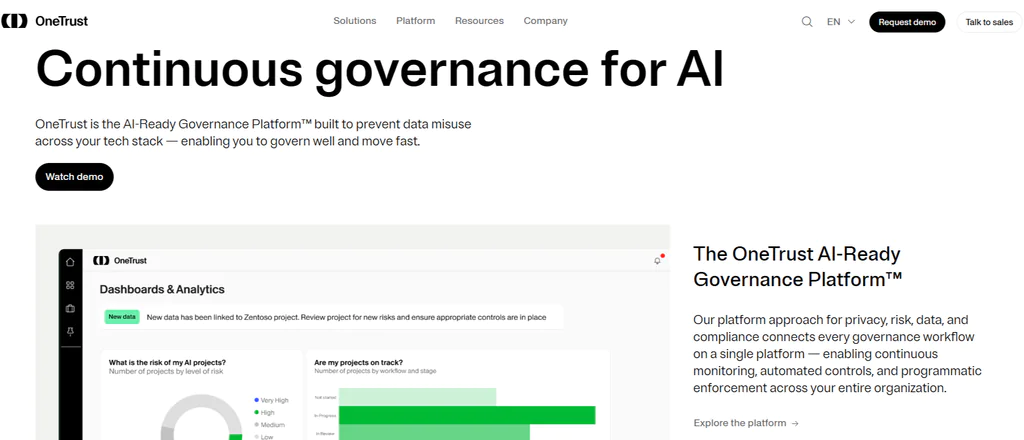
(Screenshot from OneTrust’s website)
Key Features:
- Data governance and privacy management tools
- Holistic view of compliance and risk posture
- Scalable platform for large organizations
Limitations:
- Can be complex to implement and manage
- May require significant configuration and resources
Top 10 compliance automation tools in 2026
| Platform | Ideal For | Key Strengths |
| Scytale | SaaS organizations of all sizes with complex compliance needs seeking efficient AI GRC management processes | AI GRC automation, continuous monitoring, AI agents, multi-framework management, streamlined GRC processes, and expert guidance |
| JupiterOne | Teams managing security and compliance across digital environments | Asset relationship mapping, security and compliance visibility, technical control testing |
| LogicGate | Organizations needing customizable compliance workflows | Flexible workflow builder, centralized risk management, reporting and analytics |
| Diligent | Large enterprises focused on governance and oversight | Enterprise-level risk visibility, reporting tools, centralized governance |
| Onspring | Teams wanting configurable, no-code compliance processes | No-code customization, workflow flexibility, reporting dashboards |
| Optro (AuditBoard) | Audit and internal control teams | Audit management tools, collaboration features, strong audit documentation |
| Hyperproof | Organizations prioritizing visibility across compliance activities | Control tracking, centralized documentation, integrations with business tools |
| Secureframe | Organizations seeking structured compliance tracking and audit prep | Automated evidence collection, compliance tracking, vendor risk management |
| Thoropass | Teams looking for combined software and audit support services | Integrated audit services, guided compliance processes, ongoing assistance |
| OneTrust | Enterprises managing privacy and data governance at scale | Privacy management tools, centralized compliance visibility, scalable platform |
Streamline compliance with Scytale
As compliance requirements grow, the challenge is not simply meeting them but managing the work without adding unnecessary complexity. Scytale’s AI GRC platform helps teams centralize their compliance program, making it easier to track progress, manage responsibilities, and adapt as new requirements emerge.
This creates a more scalable approach to compliance, where teams can spend less time coordinating manual processes and more time addressing risks and supporting business priorities. Instead of compliance becoming more difficult as the organization grows, Scytale helps keep the process structured, manageable, and ready for what comes next.
FAQs about top compliance automation tools
What sectors benefit most from compliance automation?
Compliance automation is particularly valuable for industries with significant security, privacy, and regulatory requirements, including technology, financial services, healthcare, and manufacturing. It helps organizations reduce manual compliance work, improve consistency, and maintain audit readiness as requirements grow.
How much does compliance management software cost?
The cost of compliance management software varies depending on factors such as company size, required frameworks, integrations, features, and level of expert support. AI GRC platforms like Scytale offer customizable plans based on an organization’s specific compliance needs, making it important to compare the overall value and support included rather than software costs alone.
How do compliance automation tools handle updates to regulatory requirements?
Compliance automation tools can help organizations respond to changing requirements by updating supported framework requirements, mappings, and controls as standards evolve. Depending on the platform, teams may also receive alerts or guidance on changes that require action, reducing the need to track every update manually.
What are compliance automation tools?
Compliance automation tools are platforms that automate repetitive compliance tasks such as evidence collection, control monitoring, and audit preparation. They centralize compliance activities and data, helping organizations reduce manual work and maintain a clearer view of their compliance status.
What frameworks do compliance automation tools support?
Compliance automation tools can support security, privacy, and regulatory frameworks such as SOC 2, ISO 27001, GDPR, HIPAA, PCI DSS, and SOX ITGC. Scytale’s AI GRC platform, for example, supports multiple frameworks and uses cross-framework mapping to help teams reuse relevant controls and evidence across overlapping requirements.
How do compliance automation tools work?
Compliance automation tools connect with an organization’s existing systems to collect evidence, monitor controls, and track compliance status. They can flag gaps or failed controls, organize compliance data, and support remediation and audit preparation, creating a more continuous compliance workflow.