

TL;DR: Cybersecurity KPIs
- Cybersecurity KPIs are crucial metrics to evaluate how well your company is managing and improving its security measures.
- They help you monitor and measure security risks, compliance, and mitigation efforts, providing insights for strategic decision-making.
- Top compliance automation platforms like Scytale effortlessly track key cybersecurity metrics, simplifying security management and ensuring continuous compliance.
- Regularly measuring security metrics ensures effective security policies and system resilience to new threats.
- Key metrics such as SOC metrics and cybersecurity risk metrics are vital in proactively managing potential security breaches.
With the average data breach costing $4.44 million, your cybersecurity KPIs can be the difference between prevention and costly data loss. A strong cybersecurity posture is necessary for protecting your organization’s data, reputation, and customer trust. As a SaaS organization, you likely already recognize cybersecurity as a critical business priority. But how do you know if your efforts are truly working? That’s where cybersecurity Key Performance Indicators (KPIs) come into play. Knowing how to accurately measure your performance is crucial for ensuring continuous improvement.
Let’s explore cybersecurity KPIs, how they strengthen your security and compliance posture, and best practices for implementing them in your organization.
Why cybersecurity KPIs are essential for your organization in 2026
In simple terms, cybersecurity KPIs are performance indicators that allow you to measure how effectively your cybersecurity strategies and controls are working. By monitoring these KPIs, you can ensure that your security initiatives align with your overarching business goals and compliance requirements.
So, why should SaaS organizations prioritize cybersecurity KPIs?
- Mitigate cybersecurity risks: Cybersecurity threats are becoming more advanced, with new vulnerabilities emerging daily. Tracking KPIs allows you to measure your ability to identify, mitigate, and prevent risks, giving you more control over potential threats.
- Maintain continuous compliance: Compliance with industry standards and regulations is critical, especially as your organization scales. KPIs help ensure your company aligns with key compliance and audit requirements, effectively monitors controls, and upholds consistent Governance, Risk, and Compliance (GRC) practices.
- Resource allocation: When you have the right KPIs in place, you can identify areas needing improvement and allocate resources effectively. You can tailor your efforts to the areas that matter most to your business.
For example, measuring CISO (Chief Information Security Officer) metrics such as incident response time or vulnerability management can give you a clear picture of your security efforts’ effectiveness. With these insights, you can make more informed decisions on where to invest your time and resources to enhance overall security.



Top categories of cybersecurity KPIs
Not all cybersecurity KPIs yield the same outcomes. Categorizing metrics into distinct groups simplifies prioritization, reporting, and action. Leading organizations typically track cybersecurity KPIs across four key categories:
Operational security metrics
These KPIs measure how effectively your security team responds to threats and incidents. Examples include mean time to detect (MTTD), mean time to respond (MTTR), and incident resolution rates. Operational metrics help teams improve day-to-day execution and response speed.
Risk-based cybersecurity metrics
Risk-based KPIs focus on exposure and potential impact rather than activity alone. These include vulnerability severity trends, cloud misconfiguration rates, and unaddressed high-risk findings. Risk-based metrics help CISOs prioritize security compliance efforts based on what poses the greatest business risk.
GRC and control metrics
These KPIs track alignment with key frameworks such as SOC 2, ISO 27001, and NIST. Examples include control coverage, audit readiness status, and remediation timelines. Effective GRC metrics provide continuous assurance and streamline third-party audits.
Human and organizational metrics
Employees play a pivotal role in cybersecurity. Metrics such as completion rates for security awareness training, phishing simulation performance, and incident reporting frequency provide valuable insights into how effectively your workforce supports your security posture.
How to use cybersecurity KPIs to strengthen your security posture
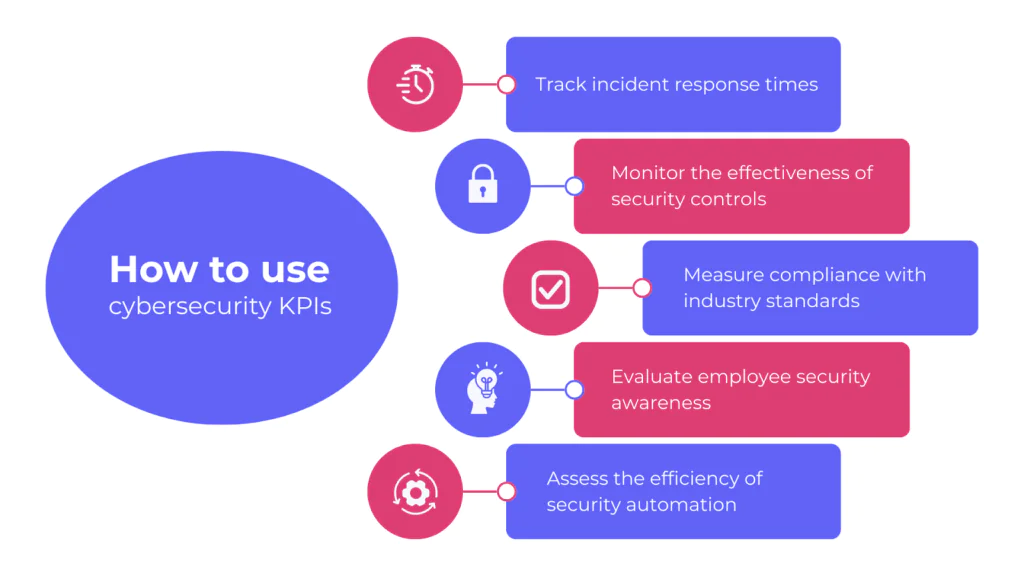
The right KPIs not only strengthen your security posture but also enhance threat response. Here’s how you can leverage them within your organization:
1. Track incident response times
Tracking incident response times like MTTD and MTTR shows the speed at which your team detects and resolves incidents, minimize damage and preventing escalation.
2. Monitor the effectiveness of security controls
Regular reviews of security controls, including patch management and vulnerability mitigation, ensure defenses are functioning properly and address gaps that could expose your organization to risks.
3. Measure compliance with industry standards
Monitoring KPIs such as audit readiness and control coverage helps ensure compliance, reducing risks associated with non-compliance and safeguarding stakeholder trust.
4. Evaluate employee security awareness
Tracking metrics such as employee training completion and phishing susceptibility helps identify human risk areas and reduce the likelihood of breaches caused by human error.
5. Assess the efficiency of security automation
KPIs related to automation, such as the frequency of automated vulnerability scans and incident detection, can enhance security efficiency, reduce errors, and free up resources for more strategic security initiatives.
Best practices for implementing cybersecurity KPIs in your SaaS organization
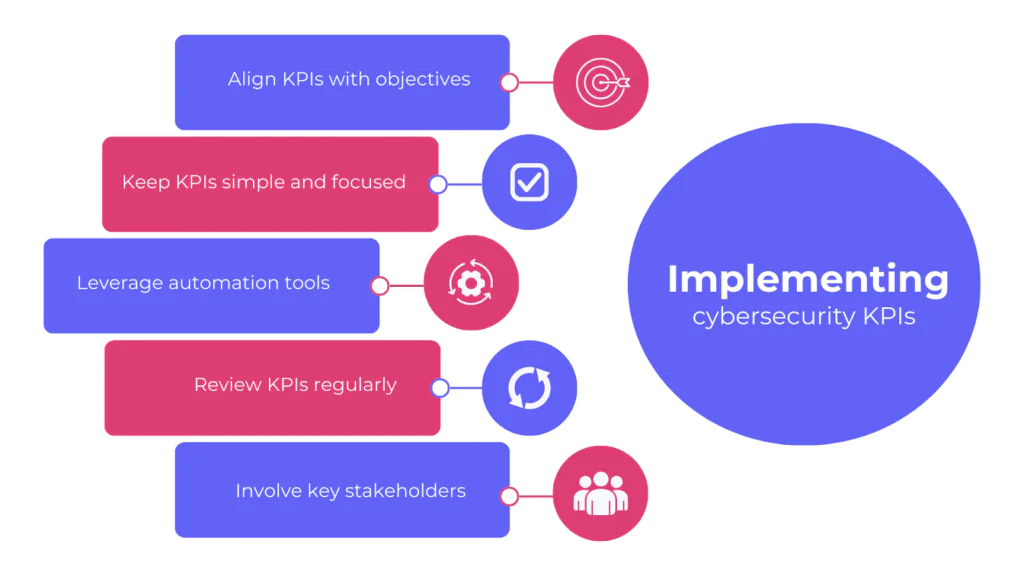
Effectively implementing cybersecurity KPIs requires a well-organized and strategic approach. To ensure success, here are some key practices to help you maximize the value of your efforts:
Align cybersecurity KPIs with business objectives
Aligning KPIs with your company’s core goals is essential. If your SaaS business is scaling rapidly, you’ll want to focus on KPIs that allow you to track how security measures are keeping pace with growth, ensuring expansion doesn’t compromise security. For organizations focused on achieving and maintaining compliance with key frameworks, KPIs should track compliance milestones such as SOC 2 or ISO 27001 KPIs. This alignment ensures security remains central to your strategy and that efforts are focused on what adds the most value to the business.
Keep cybersecurity KPIs simple and focused for maximum impact
It’s easy to get caught up in tracking a wide variety of metrics, but too many KPIs can create confusion and dilute the effectiveness of your tracking efforts. To avoid this, focus on a small set of core cybersecurity metrics that give you actionable insights into your security posture. These KPIs should be directly linked to your organization’s most critical objectives and be measurable over time.
Leverage automation tools to streamline KPI tracking
Manually tracking KPIs can be time-consuming and error-prone. Leading compliance automation platforms like Scytale simplify the process with continuous security monitoring, real-time updates, and automated data collection and analysis. This allows your team to spend less time gathering information and more time acting on it. By automating these processes, your security efforts become more consistent and accurate, enabling your team to focus on strategic decision-making and high-priority tasks.
Regularly review cybersecurity KPIs
Cybersecurity is a dynamic field, and what works today might not be sufficient tomorrow. As new threats emerge, your KPIs should be adapted to address these changes. Regularly reviewing your metrics ensures they remain relevant and provide actionable insights. For example, as your security posture matures, you may shift your focus from basic incident detection metrics to more advanced, risk-based KPIs.
Involve key stakeholders in cybersecurity KPI management
Tracking and managing KPIs shouldn’t rest solely with your security team. To create a comprehensive and effective approach, it’s crucial to involve stakeholders across the organization, such as IT, operations, and leadership. These departments provide valuable insights into the business context of your security metrics, ensuring they align with the broader goals of the organization.
Get Compliant 90% Faster

Streamline cybersecurity KPIs with AI-driven compliance automation
Cybersecurity threats are becoming more advanced, and staying ahead requires focusing on the right metrics. Scytale’s AI-powered compliance automation platform, backed by our expert GRC team and unique AI GRC agent, Scy, helps you track the KPIs that truly matter, strengthening your security posture, mitigating risks, and aligning with both business and compliance objectives.
With continuous monitoring and AI-driven automation, Scytale empowers your team to stay proactive, streamline cybersecurity risk management, and ensure your company remains resilient and compliant in 2026.
FAQs about cybersecurity KPIs
What are the most important cybersecurity KPIs to track in 2026?
In 2026, the most important KPIs to track include MTTD, MTTR, vulnerability remediation, and compliance with critical frameworks such as SOC 2 and ISO 27001. These metrics measure both operational performance and risk reduction. Scytale’s AI-powered compliance platform automates the tracking of these KPIs, offering real-time insights to keep your organization ahead of emerging threats.
How do you measure cybersecurity effectiveness using KPIs?
Cybersecurity effectiveness is best measured by combining operational and risk-based KPIs. Operational metrics, such as incident response times, track daily performance, while risk-based KPIs assess potential threats and their impact. Together, these metrics provide a clear picture of whether security controls are effectively reducing risk. Top cybersecurity tools like Scytale streamline this process with automated tracking, enabling teams to quickly identify gaps and continuously enhance security.
What should be included in a cybersecurity KPI dashboard?
A cybersecurity KPI dashboard should track metrics like security incidents, vulnerability management, cloud security, compliance, third-party risk, and user awareness. Centralizing these KPIs gives CISOs and security leaders visibility into risk trends, control effectiveness, and areas needing attention, without relying on scattered reports.
How often should organizations review cybersecurity KPIs?
Cybersecurity KPIs should be monitored continuously, with in-depth reviews conducted quarterly. High-risk metrics, such as cloud misconfigurations, unresolved vulnerabilities, and incident response times, require real-time monitoring to ensure immediate action can be taken. Regular reviews enable organizations to stay agile and adapt to evolving threats, emerging technologies, and changing compliance requirements.
How do cybersecurity KPIs support compliance and audits?
Cybersecurity KPIs play a critical role in demonstrating continuous compliance with frameworks like SOC 2, GDPR, ISO 27001, and HIPAA. By tracking control performance, remediation timelines, and incident trends, KPIs provide evidence that security controls are operating effectively. This supports audit readiness and keeps compliance documentation up to date and readily available.