




TL;DR: Continuous control monitoring software
- Continuous control monitoring replaces periodic, sample-based control checks with always-on verification of whether controls keep working.
- AI improves CCM tools by reviewing evidence, spotting gaps faster, and in some platforms triggering remediation workflows.
- The best continuous control monitoring software balances AI depth, framework coverage, integrations, usability, and pricing clarity.
- CCM helps teams catch control failures between audits, reducing last-minute remediation and making audit readiness easier to maintain.
- Scytale’s AI GRC platform stands out for compliance teams that want continuous control monitoring built directly into their broader compliance workflow.
Compliance teams can spend significant time manually collecting screenshots, exporting logs, and testing controls across dozens of systems. Continuous control monitoring (CCM) software helps reduce this burden by automating control checks and providing ongoing visibility into compliance status, making it easier to maintain continuous compliance.
Some platforms focus on automating compliance for SOC 2 and ISO 27001, while others are built around enterprise security monitoring or ERP-specific controls. Understanding which approach fits your organization can quickly narrow down the options. In this article, we explain what continuous control monitoring is, explore how AI is changing control monitoring and testing, compare 10 leading CCM platforms side by side, and cover what to look for when choosing the right solution for your team.
Top 10 AI tools for CCM
- Scytale
- JupiterOne
- Panaseer
- Compyl
- Pathlock
- Sprinto
- Scrut
- Drata
- Anecdotes
- OneTrust
What is continuous control monitoring, and why does AI change the game?
Continuous control monitoring (CCM) is the ongoing, automated process of testing and monitoring security and compliance controls to identify failures, gaps, and exceptions as they occur.
Unlike traditional point-in-time testing, CCM provides continuous visibility into whether controls are operating effectively as systems, configurations, and risks change. It can automatically collect evidence, verify requirements, and flag exceptions across connected systems, reducing reliance on manual checks and helping teams address issues before the next audit. In this way, CCM applies the principles of continuous security monitoring more broadly across the compliance program.
AI expands CCM beyond predefined rules and alerts by enabling platforms to analyze evidence, identify compliance gaps, interpret unstructured information, and prioritize issues that require attention. More advanced tools can also support remediation workflows, moving teams from identifying a failed control to resolving it more efficiently. When comparing continuous control monitoring platforms, the depth of these AI capabilities is an important consideration alongside framework coverage, integrations, and usability.
Streamline GRC workflows with seamless automation.
Top 10 AI-powered CCM tools for 2026
CCM platforms vary significantly in their approach to automation, control testing, and compliance management. Solutions range from compliance automation platforms to broader Governance, Risk, and Compliance (GRC) tools. Here are the top AI-powered CCM tools to consider in 2026:
1. Scytale
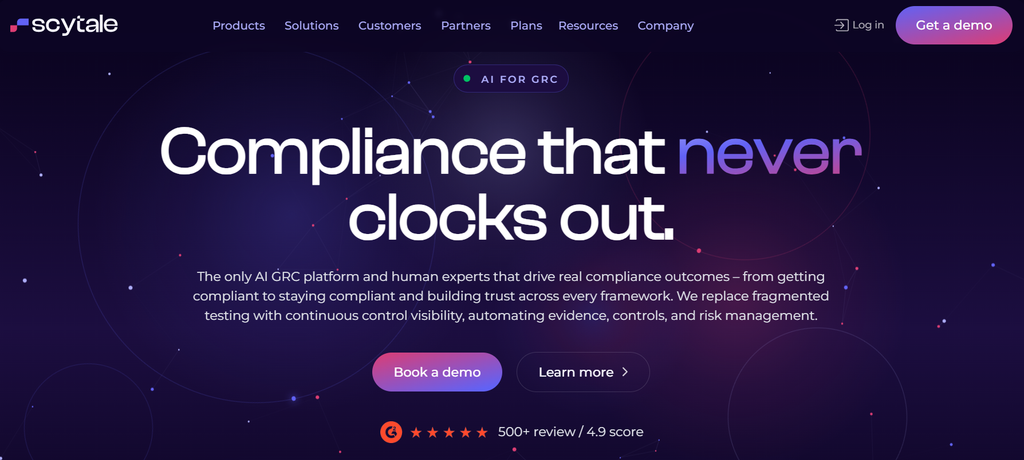
Scytale stands out as an AI-powered continuous control monitoring platform built for compliance teams that want to automate control monitoring and stay audit-ready as their environment changes. By pairing AI-powered evidence review with continuous control monitoring, Scytale helps organizations manage frameworks such as SOC 2, ISO 27001, GDPR, HIPAA, and SOX ITGC.
The platform centralizes evidence, controls, policies, and audit workflows in a single system, combining AI GRC automation with dedicated expert support. This approach continuously validates evidence, flags control gaps before they slow an audit, and helps teams identify where action is needed. As a result, growing SaaS companies can scale compliance with less manual work and greater visibility into control health.
(Screenshot from Scytale’s website)
Why Scytale is the best:
- Continuous compliance through ongoing control monitoring, with clear visibility into security and compliance posture.
- AI-powered automation that reviews evidence, flags control gaps, and streamlines access reviews and vendor risk management.
- Multi-framework management with cross-mapping to eliminate duplicate work across standards like SOC 2, ISO 27001, GDPR, HIPAA, and SOX ITGC.
- Customizable Trust Center to clearly showcase your security and compliance posture to customers and auditors.
- Dedicated GRC expert support, providing tailored guidance at every stage of your compliance journey.
- Streamlined integrations across 150+ tools, with customizable options for enhanced automation and flexibility.
2. JupiterOne
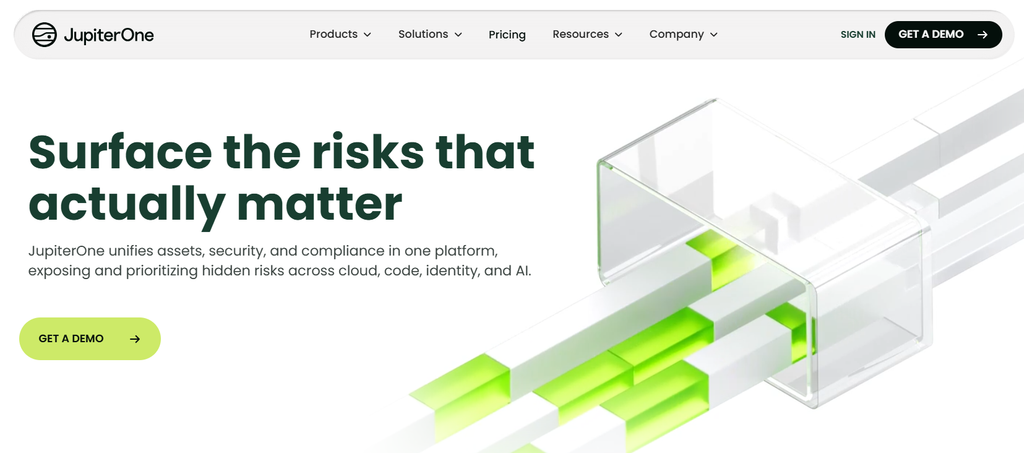
JupiterOne approaches CCM from the cyber asset and relationship mapping side, with a graph-based model that helps teams understand how assets, identities, and controls connect. It fits organizations that want security context and control visibility in the same environment, especially when technical teams drive the program.
(Screenshot from JupiterOne’s website)
Key features:
- Graph-based asset relationships trace control issues across cloud, identity, and infrastructure.
- Natural-language, query-driven exploration supports deep investigation into asset exposure and coverage.
- Broad security integrations extend visibility across complex, distributed technical environments.
Limitations:
- Getting full value depends on comfort writing graph queries and data models.
- Compliance workflow tooling is thinner than platforms built specifically for audit management.
3. Panaseer
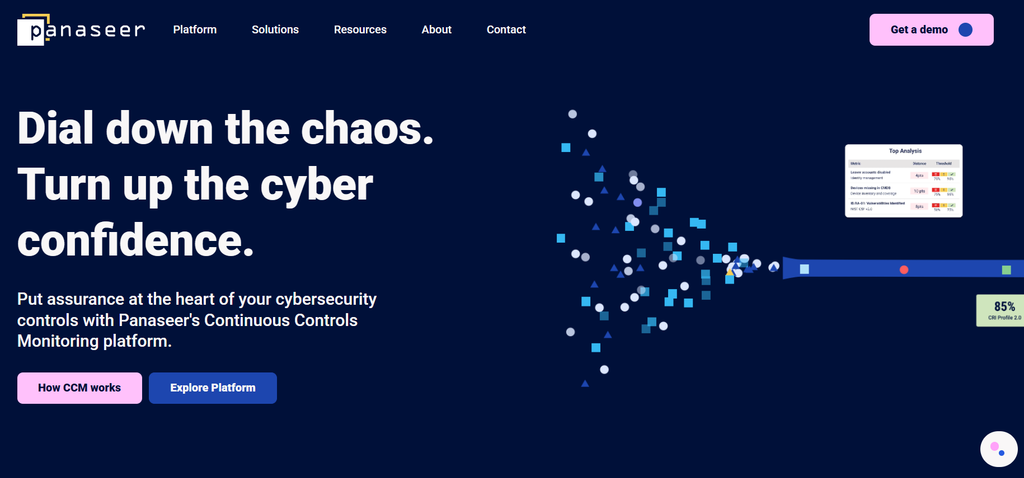
Panaseer focuses on enterprise-scale security posture measurement and control assurance across large, fragmented environments. It suits organizations that need to validate whether controls operate consistently across many tools, business units, and data sources.
(Screenshot from Panaseer’s website)
Key features:
- Data aggregation across many security tools surfaces control coverage and blind spots.
- Analytics workflows continuously validate whether expected controls are actually operating.
- Enterprise reporting tracks control performance trends for security and risk leaders.
Limitations:
- Implementation and data normalization often take more effort than lighter platforms.
- Framework-specific compliance workflows are less developed than the platform’s security analytics.
4. Compyl
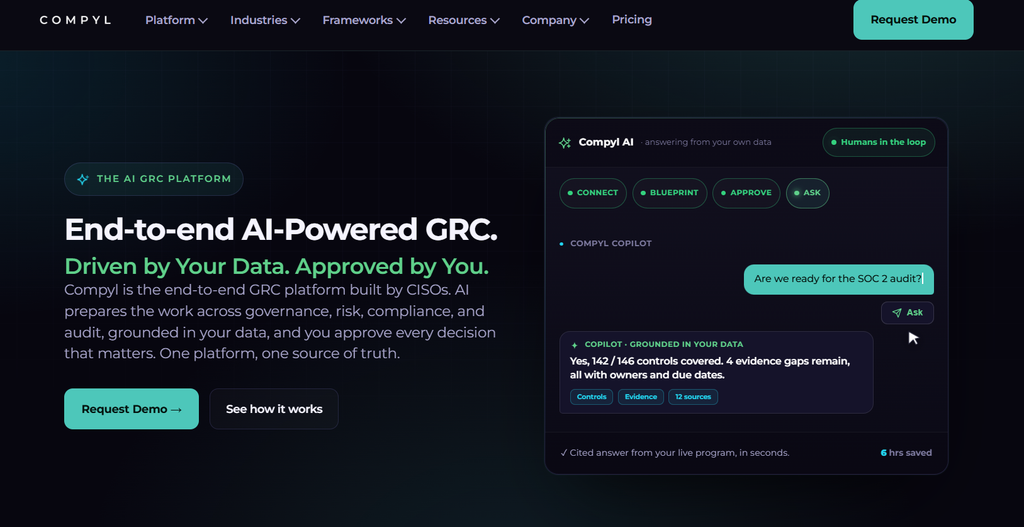
Compyl targets governance, risk, and compliance teams that want a structured system for policies, controls, and assessments with growing automation support. It fits organizations that need a centralized compliance workspace and prefer a platform oriented around program management.
(Screenshot from Compyl’s website)
Key features:
- Centralized control, policy, and risk workflows keep compliance activities in one workspace.
- Policy management links directly to controls and risks for full program traceability.
- GRC-focused workflows support day-to-day compliance operations without requiring security-heavy tooling.
Limitations:
- Automation depth is still growing compared to platforms built for autonomous evidence review.
- Integration depth varies by deployment, so coverage differs across customer environments.
5. Pathlock
Pathlock serves organizations with strong ERP and business application control requirements, especially around access, segregation of duties, and transaction monitoring. It fits buyers whose CCM needs center on SAP, Oracle, and financial process controls rather than broad startup compliance automation.
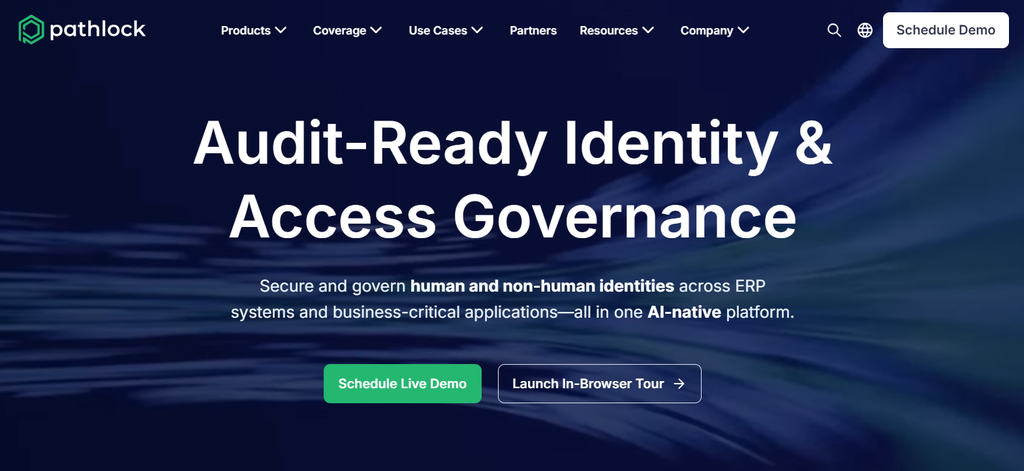
(Screenshot from Pathlock’s website)
Key features:
- ERP-focused monitoring covers access governance, segregation of duties, and transaction testing.
- Business application coverage tracks financial and operational controls inside core systems.
- Continuous analysis of user activity and access patterns supports regulated-environment assurance.
Limitations:
- Best suited to ERP-heavy organizations rather than SaaS teams pursuing SOC 2.
- Compliance workflows outside core ERP systems are narrower than SaaS-first platforms.
6. Sprinto
Sprinto focuses on continuous compliance for cloud-first companies pursuing frameworks such as SOC 2 and ISO 27001. It fits teams that want automated evidence collection, control tracking, and auditor-facing workflows in a product designed for compliance operations.
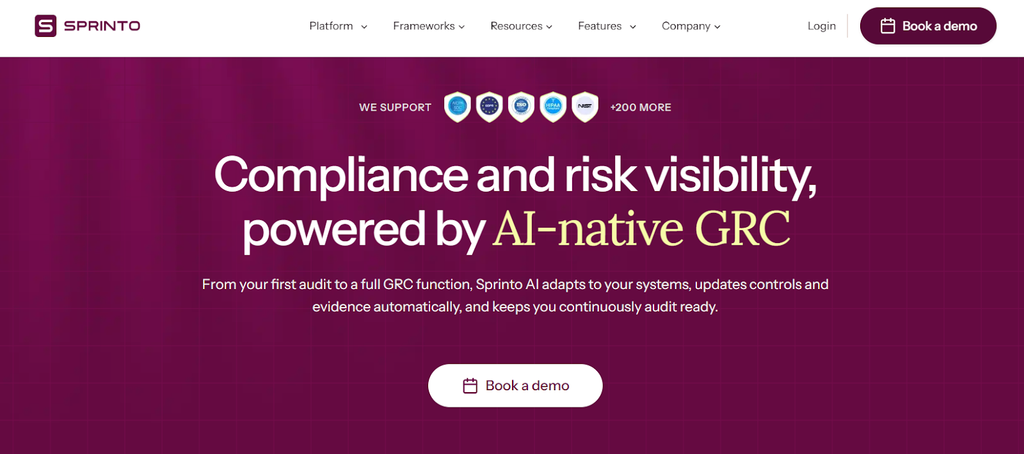
(Screenshot from Sprinto’s website)
Key features:
- Automated evidence collection runs recurring control checks across common SaaS and cloud systems.
- Framework workflows guide readiness and maintenance for standards like SOC 2 and ISO 27001.
- Compliance-first dashboards stay accessible to teams without deep security engineering resources.
Limitations:
- Enterprise GRC and ERP-specific testing needs sit outside the platform’s primary focus.
- Dashboards prioritize simplicity, which can limit configuration for complex control environments.
7. Scrut
Scrut offers compliance automation and risk visibility for companies that want a practical route into continuous compliance monitoring. It fits teams seeking a balance between framework management, evidence automation, and operational simplicity.
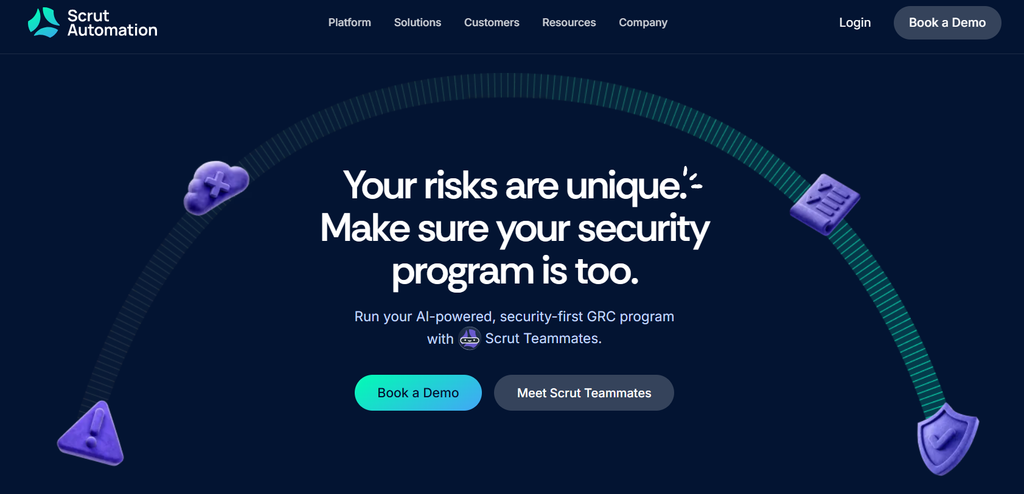
(Screenshot from Scrut’s website)
Key features:
- Guided setup helps teams move from framework selection to active monitoring quickly.
- Risk and compliance views help teams connect control issues to broader program priorities.
- Compliance-focused workflows make control monitoring accessible without query-heavy technical configuration.
Limitations:
- Remediation support is lighter than platforms that push further into autonomous action.
- Large enterprises with highly customized control environments may need broader GRC depth.
8. Drata
Drata is a compliance automation platform for continuous monitoring across security and privacy frameworks. It fits organizations that want broad integration coverage, recurring evidence collection, and a mature workflow for audit preparation and maintenance.
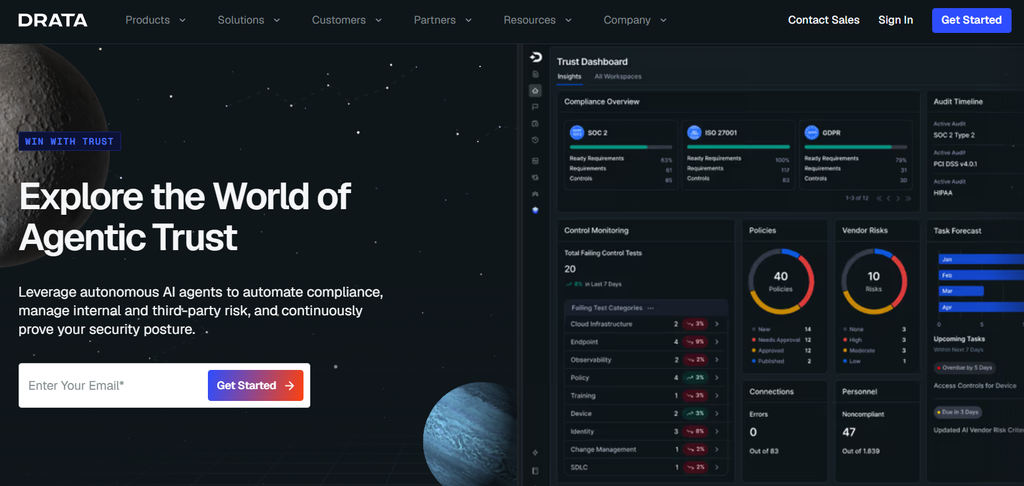
(Screenshot from Drata’s website)
Key features:
- Automated evidence collection and recurring control checks help teams identify compliance gaps between audits.
- Framework support spans the common security and privacy standards SaaS companies need.
- Audit readiness features organize controls, tests, and documentation inside one system.
Limitations:
- Pricing and packaging can grow complex as teams add frameworks or entities.
- AI focuses more on detection and monitoring than on autonomous remediation.
9. Anecdotes
Anecdotes centers on evidence operations and control assurance, extending beyond static evidence collection to help teams act on identified issues. It fits organizations looking for more automation after a control gap is detected.
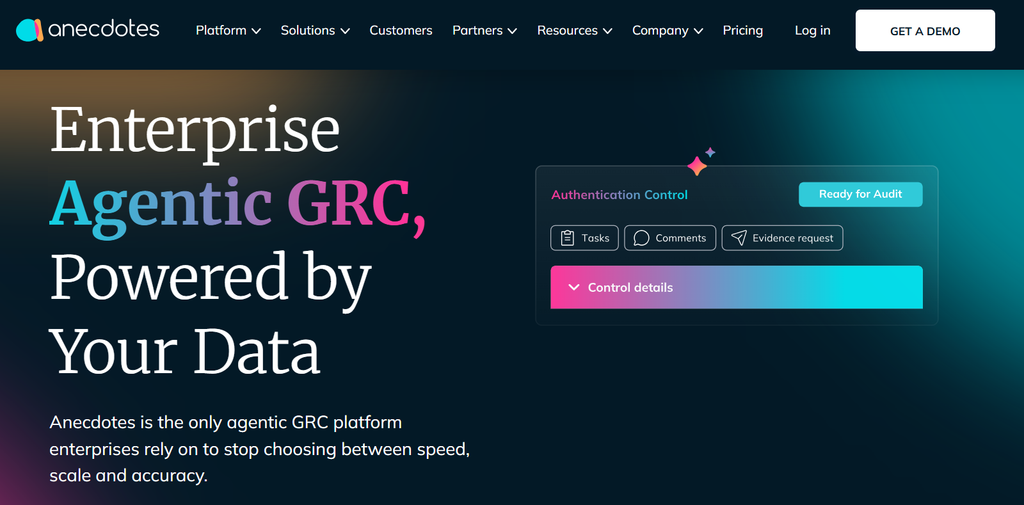
(Screenshot from Anecdotes’s website)
Key features:
- Evidence operations workflows collect, normalize, and validate control evidence across systems.
- AI-assisted remediation and re-verification move beyond alerting into direct action.
- Continuous assurance capabilities suit organizations with complex audit and compliance demands.
Limitations:
- Setup and configuration suit established compliance programs more than early-stage teams.
- Buyers should review pricing structure closely as evidence and audit scope expands.
10. OneTrust
OneTrust brings broad governance capabilities across privacy, risk, and compliance programs, with CCM relevance inside larger enterprise operating models. It fits organizations that want one platform spanning multiple governance domains rather than a narrower compliance automation product.
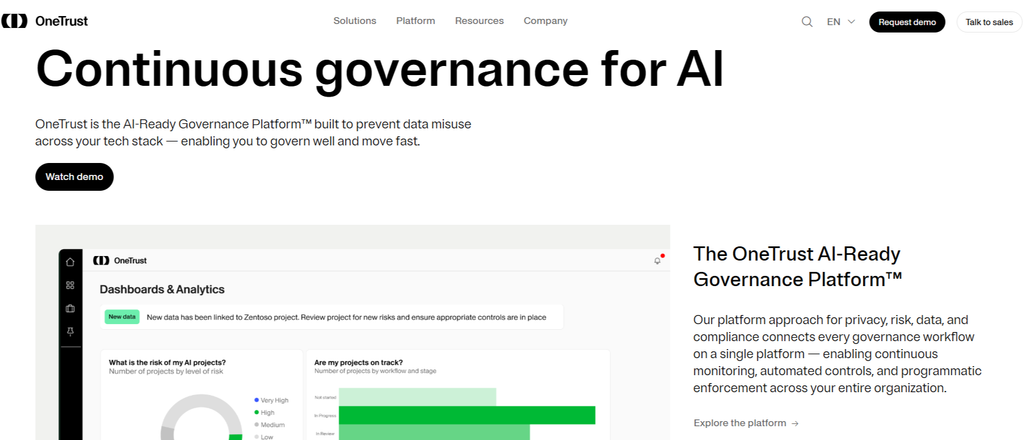
(Screenshot from OneTrust’s website)
Key features:
- Broad governance coverage spans privacy, risk, and compliance workflows in one platform.
- Enterprise process depth helps large organizations coordinate control activities across functions.
- Integration and workflow breadth support organizations with complex governance structures.
Limitations:
- Platform breadth can add complexity for teams that only need core CCM.
- Governance-wide scope extends beyond what fast-moving, compliance-first teams typically require.
Best CCM platforms
| Platform | Best for | Key strength |
|---|---|---|
| Scytale | SaaS organizations of all sizes managing complex or multi-framework compliance | AI GRC automation, continuous control monitoring, cross-framework management, and expert guidance |
| JupiterOne | Technical teams needing asset context | Graph-based investigation |
| Panaseer | Enterprises measuring control coverage | Security posture analytics |
| Compyl | Program-focused GRC teams | Centralized policy and risk workflows |
| Pathlock | ERP-heavy control environments | Access and transaction control analysis |
| Sprinto | Cloud-first compliance teams | Automated evidence collection |
| Scrut | Practical compliance automation | Control tracking and risk visibility |
| Drata | Audit-ready compliance programs | Broad integration coverage |
| Anecdotes | Teams wanting action after detection | Remediation and re-verification |
| OneTrust | Enterprise governance programs | Governance-wide workflow support |
How to choose the right AI-powered CCM tool for your team
Choosing a CCM tool means looking beyond feature lists and AI claims to understand how much manual control work it can actually remove. The right platform should also make it easier to identify, investigate, and address control issues. Here are the key factors to consider when comparing CCM and AI compliance platforms:
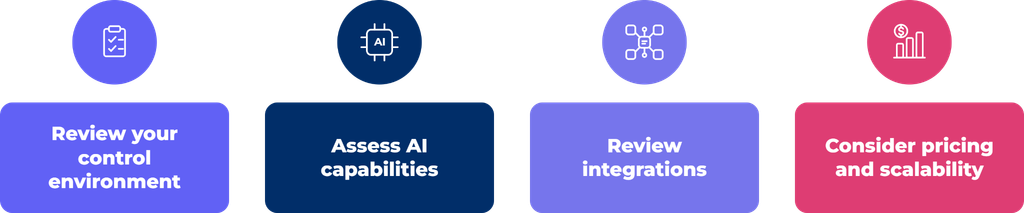
Review your control environment
Start with the controls, frameworks, and systems your organization needs to manage. A SaaS company working across SOC 2 and ISO 27001 may prioritize multi-framework automation, while a larger enterprise may need deeper ERP or internal control testing. Consider the complexity of your control environment as well, including whether controls are standardized across the organization or vary between teams and business units. Mapping these requirements before comparing features helps ensure the platform can support both your current compliance program and future needs.
Assess AI capabilities
AI capabilities vary significantly between CCM tools. Some platforms use AI primarily to identify missing evidence, failed controls, or unusual activity, while others can analyze evidence, uncover gaps, prioritize issues, and support remediation and re-verification. Look closely at which tasks still require human review or intervention, particularly when a control fails or the available evidence is unclear. Focus on the work the AI actually performs and how much manual effort it removes rather than treating the presence of AI as a differentiator on its own.
Review integrations
Effective control monitoring depends on access to the systems where evidence and control data live. Review integrations across your cloud infrastructure, identity providers, HR systems, DevOps tools, and other relevant applications. Check what data each integration can actually collect and whether it supports the controls you need to monitor, rather than focusing only on the total number of integrations available. Also consider how easily new systems can be connected as your technology stack grows.
Consider pricing and scalability
CCM pricing can change as your compliance program expands. Compare how costs increase as you add frameworks, entities, integrations, and monitoring requirements. Pay attention to packaging as well, since capabilities that appear similar across platforms may be standard in one plan but require a higher tier or add-on in another. Check which AI, automation, and support capabilities are included so you can compare the likely long-term cost of each platform more accurately.
Why Scytale is the best AI-powered CCM platform
Scytale brings continuous control monitoring into the same workflow teams use to manage evidence, frameworks, risks, policies, and audits. AI GRC agents help review evidence and surface control gaps, while cross-framework mapping allows the same controls and evidence to support multiple compliance requirements. This gives teams a practical way to maintain compliance as their organization and regulatory scope grow.
With 150+ integrations and dedicated GRC experts, Scytale combines scalable automation with hands-on guidance when teams need it. This helps teams respond to control issues faster and manage growing compliance requirements with less manual work.
FAQs about continuous control monitoring software
What is continuous control monitoring (CCM)?
Continuous control monitoring (CCM) is the ongoing process of automatically checking whether security, compliance, and operational controls are working as intended. It helps organizations identify control failures, missing evidence, and other issues as they occur, rather than waiting for periodic testing or an upcoming audit.
How do AI-powered CCM tools differ from traditional compliance software?
AI-powered CCM tools add evidence analysis, gap detection, and, in some cases, remediation support beyond static task tracking. Traditional compliance software often focuses on organizing policies, tasks, and audit artifacts, while AI GRC platforms such as Scytale extend this with continuous review of control health across connected systems.
Which compliance frameworks do AI CCM platforms support?
AI CCM platforms often support security and compliance requirements such as SOC 2, ISO 27001, GDPR, HIPAA, and PCI DSS. Coverage varies by vendor, so buyers should confirm whether a platform provides deep support for specific frameworks, supports multiple frameworks, or focuses more on enterprise controls than formal certification workflows.
Can AI CCM platforms integrate with existing security tools?
Yes. These platforms can connect with security, cloud, identity, HR, DevOps, and ticketing systems to automatically collect evidence and monitor control signals. Scytale, for example, offers 150+ integrations, while coverage varies across vendors depending on whether they focus on compliance automation, security telemetry, or ERP systems.
How much does an AI-powered continuous control monitoring platform cost?
Pricing for AI-powered CCM platforms varies based on the number of frameworks, integrations, entities, and features required. Many vendors provide custom quotes rather than fixed public pricing, so buyers should compare what is included in the base price, such as AI capabilities, evidence automation, continuous monitoring, and expert support.
