



TL;DR: ISO 27001 certification companies
- ISO 27001 compliance platforms help organizations manage certification readiness, but they do not issue the certificate.
- The right platform depends on your compliance roadmap, automation needs, company size, and support requirements.
- Most platforms use custom pricing, with software and certification audit costs budgeted separately.
- An accredited certification body must conduct the Stage 1 and Stage 2 audits and issue the certificate.
- Scytale stands out as the top ISO 27001 compliance platform, combining intelligent automation, multi-framework management, and dedicated GRC expert support.
ISO 27001 certification gives organizations a structured way to manage information security risks and protect sensitive information. As security requirements and expectations from customers, partners, and regulators increase, maintaining certification requires ongoing management of policies, risks, controls, evidence, and audits.
Managing these requirements manually can become increasingly difficult as an organization grows. ISO 27001 compliance platforms help centralize the certification process, automate time-consuming tasks, improve visibility across the information security management system (ISMS), and support continuous compliance after certification. In this article, we compare the best ISO 27001 compliance platforms for 2026 and what to consider when choosing the right solution for your organization.
10 best ISO 27001 certification companies
- Scytale
- Centraleyes
- TeamMate
- ISMS.online
- RiskOptiks
- Workiva
- Optro
- Sprinto
- Vanta
- Scrut
Who needs ISO 27001 certification?
ISO 27001 certification is particularly valuable for growing software and technology companies selling to enterprise customers, moving into new markets, or handling increasing volumes of sensitive information. Enterprise procurement teams and vendor security reviews often require evidence that security controls and risk management processes meet a recognized standard, making ISO 27001 certification important for clearing security reviews and supporting larger deals.
ISO 27001 is industry-agnostic, so any organization managing sensitive or critical information assets can pursue certification. In practice, it is especially relevant for companies moving upmarket, expanding internationally, or formalizing their information security management system (ISMS).
Once an organization decides to pursue certification, choosing the right compliance platform becomes an important practical step. The right software can simplify control implementation, evidence collection, documentation, risk management, and audit preparation. Before comparing platforms, it helps to understand the core ISO 27001 requirements and what your team will need to demonstrate during the certification process.
The 10 best ISO 27001 certification companies in 2026
The ISO 27001 compliance software market includes solutions built for different company sizes, compliance needs, and levels of automation and support. Understanding these differences can help you compare ISO 27001 tools and find a solution that fits both your certification goals and broader compliance program. Here are the 10 best ISO 27001 compliance platforms to consider in 2026:
1. Scytale
Scytale stands out as the best ISO 27001 compliance platform for fast-growing SaaS companies and startups, combining intelligent automation, centralized compliance management, and dedicated GRC expertise in one platform. It brings controls, policies, risks, evidence, vendors, and audit workflows into a single system, while multi-framework cross-mapping allows teams to reuse controls and evidence across ISO 27001, SOC 2, GDPR, ISO 42001, and other frameworks. With 100+ integrations connecting compliance to existing business tools, Scytale helps organizations build an ISO 27001 program that can scale efficiently as their security and compliance requirements grow.
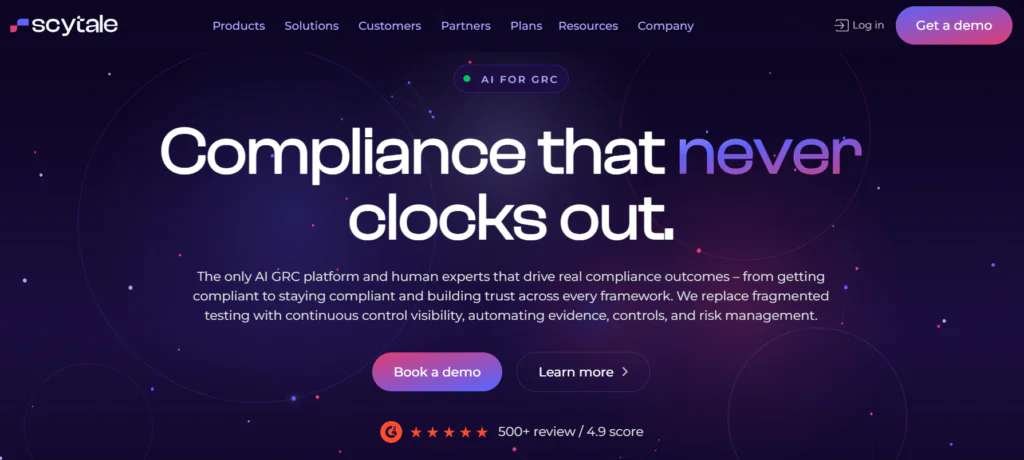
(Screenshot from Scytale’s website)
Why Scytale is the best:
- Automated evidence collection and continuous monitoring keep teams ISO 27001 audit-ready.
- Centralized risk management simplifies risk assessments, treatment, and ongoing monitoring.
- Multi-framework cross-mapping reuses ISO 27001 controls and evidence across other frameworks.
- Policy management streamlines the creation, review, and approval of ISMS documentation.
- Customizable Trust Center showcases ISO 27001 certification and security posture to customers.
- Dedicated GRC experts guide teams through implementation, remediation, and audit readiness.
2. Centraleyes
Centraleyes is a multi-framework GRC platform suited to organizations that want real-time visibility into compliance and risk from a centralized environment. Its structured approach helps teams manage ISO 27001 alongside several other security and regulatory frameworks.
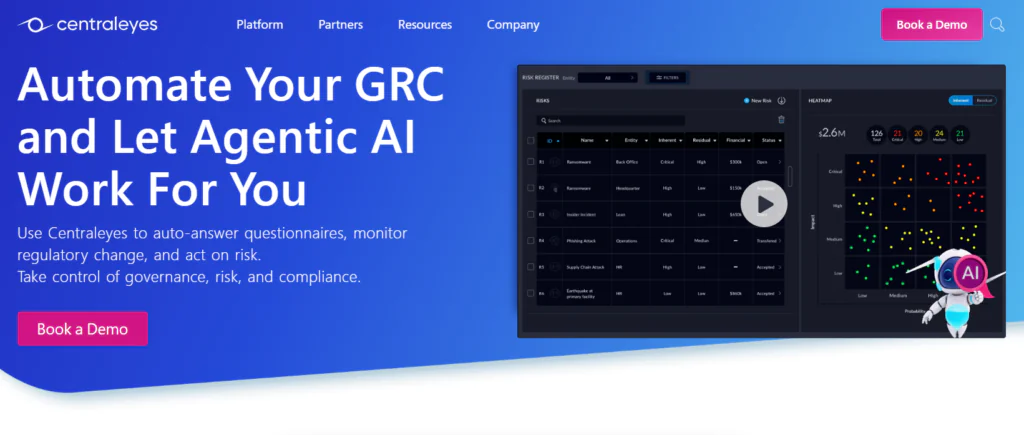
(Screenshot from Centraleyes’ website)
Key strengths:
- Real-time compliance tracking provides visibility into control status and remediation progress.
- One-to-many control mapping supports ISO 27001, NIST, CMMC, SOC 2, DORA, and other frameworks.
- Built-in Statement of Applicability functionality and prioritized remediation guidance help structure readiness activities.
Limitations:
- Teams wanting extensive ISO-specific implementation guidance may need additional support.
- Organizations seeking integrated access to certification auditors should confirm available options.
3. TeamMate (StandardFusion)
TeamMate, previously known as StandardFusion, is designed for organizations that need centralized governance, risk, and compliance management across multiple business units or regulatory requirements. Its structured workflows make it particularly relevant to established teams moving beyond standalone compliance tools.
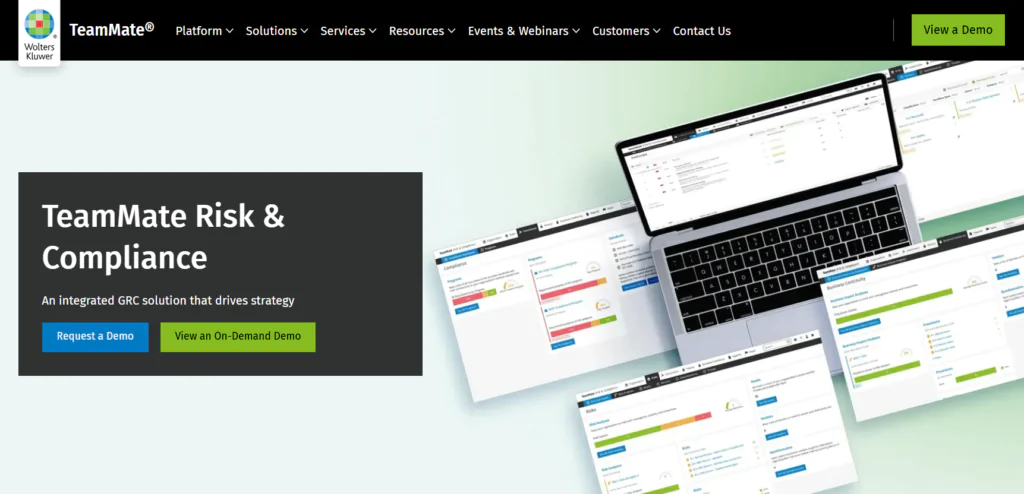
(Screenshot from TeamMate’s website)
Key strengths:
- Centralized GRC management supports complex programs spanning multiple teams and requirements.
- Personalized risk assessments connect identified risks with relevant controls and remediation activities.
- Approval workflows help teams maintain and update their Statement of Applicability over time.
Limitations:
- Its broader GRC scope may be more extensive than smaller organizations need for their first certification.
- Teams prioritizing direct audit assistance should evaluate the level of implementation support available.
4. ISMS.online
ISMS.online focuses on guiding organizations through the development and management of an information security management system (ISMS). Its structured environment is particularly useful for teams that want a defined implementation path rather than building their ISO 27001 program from scratch.
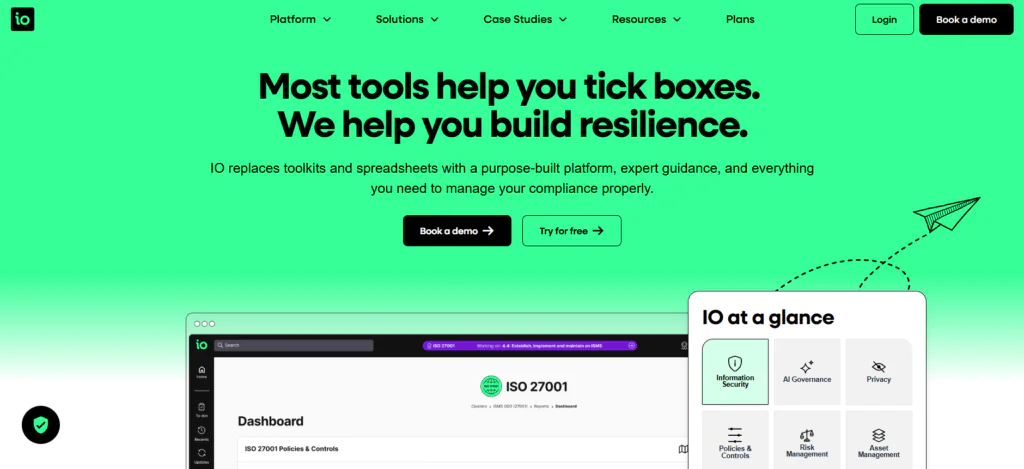
(Screenshot from ISMS.online’s website)
Key strengths:
- Virtual Coach provides guided implementation pathways for ISO 27001, ISO 27701, and ISO 42001.
- Centralizes assets, policies, risks, controls, and ISMS documentation within one workspace.
- Policy Packs help monitor policy acknowledgement and related task completion.
Limitations:
- Teams prioritizing extensive automated evidence collection should assess its automation capabilities carefully.
- Complex multi-entity organizations may require deeper enterprise governance functionality.
5. RiskOptiks
RiskOptiks takes a risk-centric approach to compliance, helping security leaders connect technical findings and controls with broader business priorities. Its ROAR platform is particularly suited to organizations that want risk management to drive their compliance program.
(Screenshot from RiskOptiks’s website)
Key strengths:
- Business-focused risk reporting helps communicate security priorities to executives and other stakeholders.
- Automated control testing identifies gaps and creates actionable remediation tasks.
- Integrations with tools including AWS, Azure, Salesforce, Jira, GCP, and GitHub connect findings with operational workflows.
Limitations:
- Its risk-first approach may be less certification-focused than dedicated ISO 27001 platforms.
- Less mature GRC teams may face a more involved initial setup.
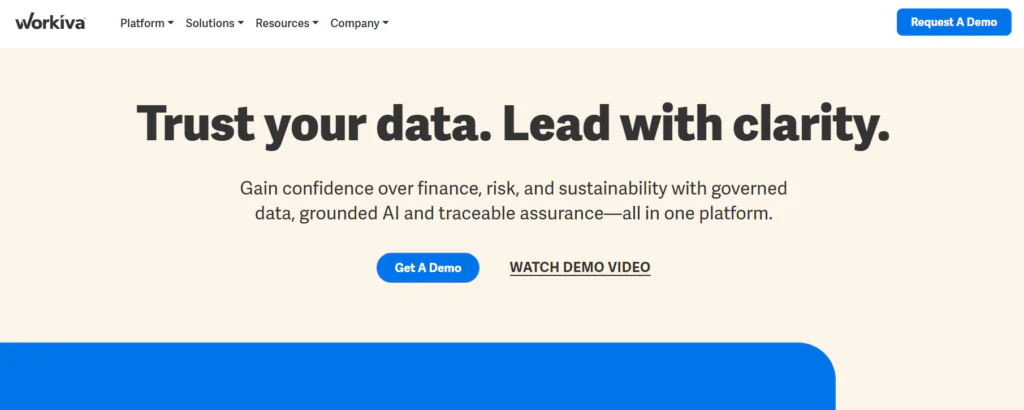
6. Workiva
Workiva is an enterprise reporting and assurance platform suited to large organizations managing multiple governance functions. It can be particularly useful for companies already using Workiva for areas such as SOX, ESG, or internal audit and wanting to extend that environment to ISO 27001.
(Screenshot from Workiva’s website)
Key strengths:
- Provides a shared system of record across information security, financial controls, ESG, and internal audit.
- Well suited to large organizations standardizing governance and reporting across multiple teams.
- Workiva itself holds ISO/IEC 27001:2022 certification, demonstrating alignment with the standard internally.
Limitations:
- Its enterprise scope may be excessive for smaller teams focused primarily on ISO 27001.
- Organizations should compare its ISO compliance automation capabilities with more specialized platforms.
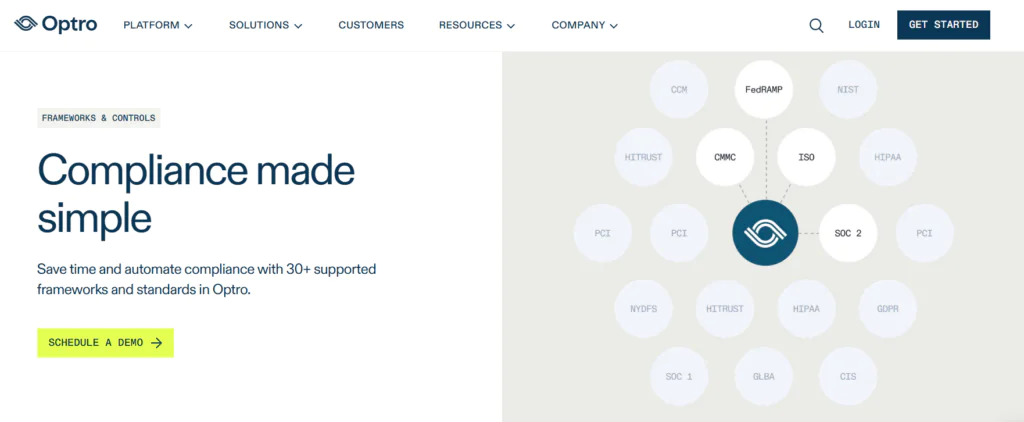
7. Optro
Optro is designed for mature organizations managing complex GRC and assurance programs across multiple frameworks. Its connected risk approach and audit workflows support teams that need ongoing oversight rather than a standalone certification project.
(Screenshot from Optro’s website)
Key strengths:
- AI-powered gap assessments help identify compliance readiness issues.
- Pre-mapped Annex A controls simplify initial ISO 27001 control alignment.
- Continuous monitoring templates support ongoing control management between audits.
Limitations:
- Smaller organizations pursuing their first certification may not require its level of GRC depth.
- Implementation may be more involved for teams seeking a lightweight ISO 27001 solution.
8. Sprinto
Sprinto is a compliance automation platform particularly suited to smaller teams looking for a streamlined path toward certification. Its integrated auditor network also allows organizations to find an accredited certification body without managing that sourcing process separately.

(Screenshot from Sprinto’s website)
Key strengths:
- Integrated auditor network simplifies the process of finding an accredited certification body.
- Automated evidence collection reduces repetitive certification preparation work.
- ISMS implementation functionality helps lean teams organize ISO 27001 readiness activities.
Limitations:
- Organizations planning significant multi-framework expansion should assess the depth of its cross-framework capabilities.
- Larger enterprises may require broader governance and risk management functionality.
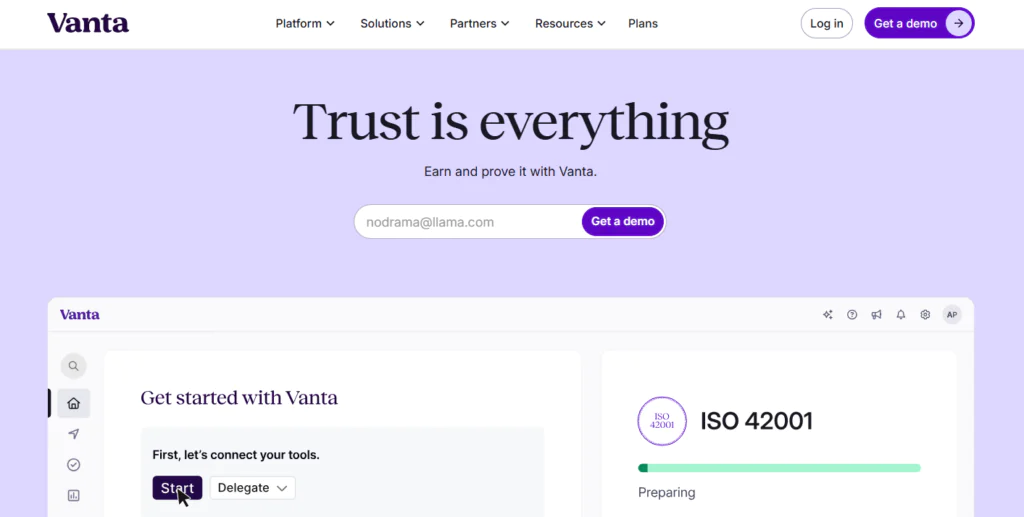
9. Vanta
Vanta is a widely used trust management platform suited to organizations prioritizing extensive integrations and automated compliance testing. Its broad ecosystem makes it particularly relevant to companies with large technology stacks and recurring evidence requirements.
(Screenshot from Vanta’s website)
Key strengths:
- More than 1,200 automated tests support ongoing evidence collection and control validation.
- Extensive integration ecosystem connects compliance monitoring with a wide range of business systems.
- Integration Builder provides additional flexibility for organizations requiring custom connections.
Limitations:
- Teams seeking highly hands-on ISO 27001 guidance should evaluate the level of expert support available.
- Its broad functionality may exceed the needs of organizations focused solely on ISO 27001.
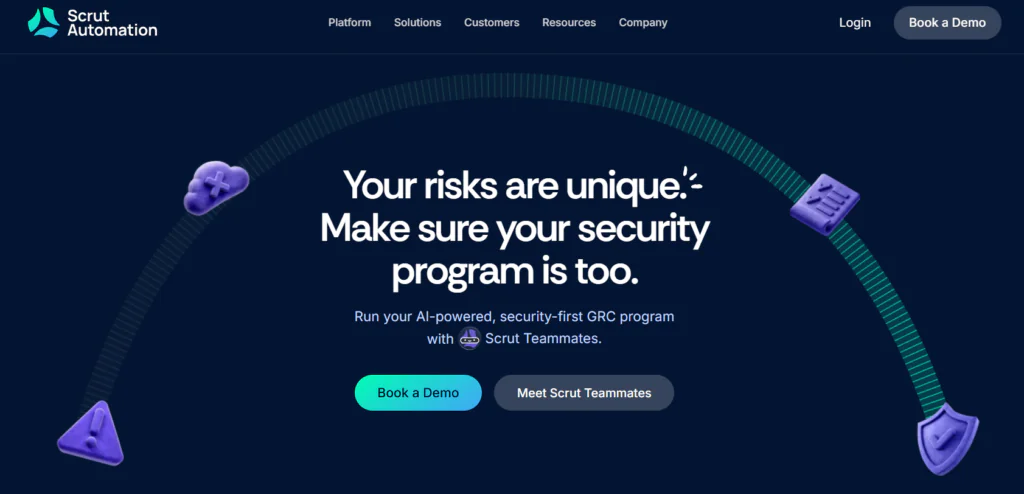
10. Scrut
Scrut is a compliance platform focused on automation and pre-built compliance content for organizations establishing or scaling their security programs. Its ready-made ISO 27001 resources can reduce the amount of setup required at the beginning of the certification process.
(Screenshot from Scrut’s website)
Key strengths:
- Pre-built Annex A controls and risk register provide a starting point for ISO 27001 implementation.
- Recurring automated tests support continuous checks against security benchmarks.
- Broad framework coverage makes it suitable for organizations expecting their compliance scope to expand.
Limitations:
- Teams requiring extensive strategic or audit guidance should assess how much support is included.
- Larger organizations may require more extensive enterprise-wide governance capabilities.
Top ISO 27001 certification companies
| Platform | Best for | Key strengths | Main consideration |
| Scytale | Fast-growing SaaS companies and startups seeking end-to-end ISO 27001 compliance | AI-powered automation, multi-framework cross-mapping, dedicated GRC expert support | More comprehensive than teams needing basic documentation only |
| Centraleyes | Multi-framework compliance and risk visibility | Real-time tracking, control mapping, remediation guidance | Less focused on hands-on ISO implementation |
| TeamMate (StandardFusion) | Established organizations with broader GRC requirements | Centralized GRC, risk assessments, approval workflows | May be too extensive for smaller teams |
| ISMS.online | Teams wanting a guided ISMS implementation | Virtual Coach, centralized ISMS management, Policy Packs | Automation depth may vary by workflow |
| RiskOptiks | Risk-focused security and GRC teams | Business-focused risk reporting, control testing, remediation workflows | More risk-centric than certification-centric |
| Workiva | Large enterprises managing multiple assurance functions | Enterprise reporting, cross-functional governance, centralized oversight | Broader than most ISO-only use cases |
| Optro | Mature, complex GRC programs | Gap assessments, Annex A mapping, continuous monitoring | May require more implementation effort |
| Sprinto | Smaller teams seeking streamlined certification preparation | Auditor network, evidence automation, ISMS implementation | May be less suited to complex enterprise GRC |
| Vanta | Teams prioritizing integrations and automated testing | Extensive integrations, automated tests, custom Integration Builder | Hands-on ISO guidance should be evaluated |
| Scrut | Teams wanting pre-built compliance automation | Annex A controls, automated testing, broad framework coverage | Strategic audit support should be assessed |
Streamline GRC workflows with no blind spots.
How to choose the right ISO 27001 compliance platform
Choosing the right ISO 27001 compliance platform comes down to your organization’s needs, compliance roadmap, and how much automation and support you require. Here are the key factors to consider when comparing ISO 27001 software solutions:
Framework coverage and roadmap
Look at the frameworks your organization may need to manage alongside ISO 27001. If SOC 2, GDPR, ISO 42001, or others are planned, prioritize a platform with strong cross-mapping capabilities that allow controls and evidence to be reused, reducing duplicate work as your compliance requirements expand.
Auditor access
Check how the platform fits into the external audit process. Some vendors provide access to accredited certification bodies through their platform or partner network, while others require you to find and engage a certifier separately.
Automation depth
Assess how much of the ISO 27001 process the platform can automate beyond templates, checklists, and task reminders. Capabilities such as continuous evidence collection, control monitoring, risk management, and integrations can reduce manual work, making ISO 27001 compliance automation an important factor when comparing solutions.
Company size and complexity
Choose a platform that fits how your organization operates today and where it is heading. Lean teams may prioritize quick implementation and straightforward workflows, while larger organizations may need support for multiple entities, stakeholders, frameworks, and complex governance processes.
Support model
Consider how much guidance your team will need throughout certification. Self-service platforms may suit experienced compliance teams, while organizations completing ISO 27001 for the first time may benefit from dedicated GRC experts or former auditors who can guide implementation, review evidence, and support audit readiness.
How much does ISO 27001 compliance software cost?
The cost of ISO 27001 compliance software varies based on the number of frameworks, level of automation, and support included. Most vendors do not publish standard pricing, so organizations typically need to request a custom quote based on their requirements.
Software costs are separate from the external audit fee. As covered in our guide to ISO 27001 certification costs, Stage 1 and Stage 2 audits typically cost around $5,000 to $35,000, with additional annual surveillance audits required in years two and three of the certification cycle.
When budgeting, request quotes from two or three shortlisted platforms and compare what each subscription includes, particularly automation, framework coverage, integrations, and expert support. Use an ISO 27001 checklist to ensure your chosen platform supports the key requirements for certification readiness.



How Scytale simplifies ISO 27001 certification
Scytale helps teams stay on top of ISO 27001 beyond the initial setup by continuously identifying compliance gaps and providing clear visibility into what still needs attention. Instead of discovering missing controls, outdated evidence, or incomplete tasks when the audit approaches, teams can address issues as they arise and keep their ISO 27001 program on track.
Scytale also makes the process easier to navigate with dedicated GRC experts who provide practical guidance at every stage, from interpreting ISO 27001 requirements to preparing for the external audit. This helps teams understand what auditors expect, prioritize remediation, and move through certification with fewer delays, while building an ISMS that remains manageable after certification.
FAQs about ISO 27001 certification companies
How much does ISO 27001 certification cost in total?
The total cost of ISO 27001 certification includes both compliance software and audit fees. Software is typically priced separately from the accredited certification body, with Stage 1 and Stage 2 audit costs often ranging from $5,000 to $35,000, plus annual surveillance audits during the three-year certification cycle.
Can compliance automation software issue an ISO 27001 certificate?
No. Compliance automation software helps teams prepare controls, collect evidence, manage documentation, and maintain audit readiness, but only an accredited certification body can conduct the formal certification audit and issue an ISO 27001 certificate.
How long does it take to get ISO 27001 certified with automation software?
The timeline depends on your organization’s existing security maturity, certification scope, and readiness. Automation can reduce time spent on evidence collection and other manual tasks, while AI GRC platforms like Scytale also provide expert guidance to help teams move through preparation and audit readiness more efficiently.
Do I need a different platform for each compliance framework, or can one tool cover ISO 27001, SOC 2, and more?
No. Top AI GRC platforms like Scytale can manage ISO 27001, SOC 2, GDPR, HIPAA, and other frameworks in one place, using cross-framework mapping to reuse controls and evidence instead of duplicating work across each compliance program.
What is the difference between an ISO 27001 compliance platform and a certification body?
An ISO 27001 compliance platform helps organizations manage policies, controls, risks, evidence, and audit preparation. An accredited certification body independently assesses the ISMS and issues the ISO 27001 certificate if the organization meets the standard’s requirements.