




TL;DR: ISO 42001 checklist
- An ISO 42001 checklist gives organizations a structured path from initial gap analysis to a successful certification audit.
- The process begins with defining the AI management system scope and assessing AI-specific risks such as bias, misuse, and weak oversight.
- A complete checklist covers both the management-system clauses and the Annex A controls, mapped to owners and evidence.
- Certification timelines and costs depend on scope, documentation maturity, remediation effort, and internal audit readiness.
- Scytale’s AI GRC platform centralizes evidence, tracks remediation, and maps ISO 42001 controls across existing frameworks.
AI governance has moved from a policy discussion to a growing priority for buyers and other key stakeholders. Organizations that build or deploy AI now face direct questions about accountability, risk controls, and documented oversight, and informal answers rarely satisfy enterprise due diligence reviews. As AI becomes more embedded in products and business operations, organizations also need a consistent way to demonstrate that AI is being governed effectively.
An ISO 42001 checklist turns those expectations into a repeatable certification plan, giving teams a clear path from initial preparation through audit readiness. Organizations that already manage security or privacy frameworks can treat it as an extension of their existing operating model rather than a one-time project. In this article, we cover what ISO 42001 is, how to get certified, and what to expect from the certification process.
What is ISO 42001?
ISO 42001 is the international standard that sets requirements for establishing, implementing, maintaining, and continually improving an artificial intelligence management system (AIMS).
The standard gives organizations a formal structure for governing AI systems through defined accountability, risk management, and lifecycle controls. It applies to companies that develop, provide, or use AI in ways that affect customers, employees, or business decisions, regardless of industry or size.
ISO 42001 addresses AI-specific risks that traditional security programs may not fully cover, including unpredictable model behavior, limited transparency, and gaps in human oversight. It also provides a consistent approach for organizations to evaluate how AI is developed, deployed, monitored, and improved as systems and use cases evolve. For a broader understanding of ISO 42001, explore the standard’s structure, key responsibilities, and business value before moving into the certification checklist below.
The ISO 42001 checklist: 6 steps to certification
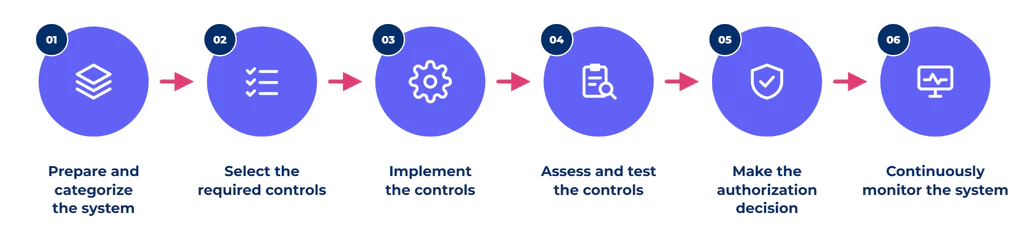
An ISO 42001 checklist provides a structured path for building an AI management system and preparing for certification. It helps teams organize requirements, assign responsibilities, address gaps, and gather the evidence needed for the audit. Here are the six key steps from initial scoping to certification readiness:
Step 1: Define scope and run a gap analysis
Start by defining which AI systems, business units, vendors, and use cases fall within the AI management system. Clear scope helps establish which requirements and controls apply and determines the overall audit effort. Then run a gap analysis against ISO 42001 certification requirements to identify missing processes, ownership, or documentation and turn each gap into a tracked remediation item.
Step 2: Perform an AI risk assessment
Conduct an AI risk management assessment covering areas such as model impact, data quality, human oversight, bias, misuse, and ongoing monitoring. Assess and prioritize each risk based on its potential impact and the organization’s AI environment. From there, define appropriate treatment plans, control owners, and review processes.
Step 3: Build required policies, procedures, and records
Certification requires documented governance that reflects how AI is actually managed across the organization. Establish the policies, procedures, and records needed to support the AIMS and demonstrate that requirements are being followed. A clear system for ISO 42001 documentation also makes it easier to manage policies, risk logs, training records, supplier reviews, and management decisions.
Step 4: Implement controls and map Annex A
Once the required processes are defined, controls need to be implemented across AI development, procurement, deployment, and monitoring. Map each relevant Annex A control to its owner, supporting evidence, and associated workflows. This helps ensure the AIMS reflects how controls operate in practice, rather than simply documenting what should happen.
Step 5: Run an internal audit and take corrective action
Before the certification audit, conduct an internal audit to assess clause requirements, Annex A controls, and the quality of supporting evidence. Document any findings, assign corrective actions, and track them through resolution. Leadership should also review outstanding issues and confirm the AIMS is ready for external assessment.
Step 6: Prepare for the certification audit
The final step is to confirm that the organization is ready to demonstrate AI compliance and show how its AIMS operates in practice. Review the scope statement, risk assessments, policies, training records, supplier controls, monitoring outputs, and management review materials for consistency and completeness. Teams should also make sure control owners understand their responsibilities and can provide the evidence needed during the audit.
ISO 42001 certification steps
| Step | Primary objective | Key evidence | Best outcome |
|---|---|---|---|
| Define scope and run a gap analysis | Set AIMS boundaries and identify missing requirements | Scope statement, gap register, ownership matrix | A clear remediation plan |
| Perform an AI risk assessment | Identify and rank AI-specific risks | Risk methodology, risk register, treatment plans | Prioritized control decisions |
| Build required policies, procedures, and records | Document how the AIMS operates | Policies, procedures, logs, approvals, training records | Audit-ready documentation |
| Implement controls and map Annex A | Turn requirements into operating controls | Control mappings, monitoring records, assigned owners | Traceable control coverage |
| Run an internal audit and take corrective action | Test effectiveness before certification | Audit reports, findings, corrective action records | Closed gaps before the external audit |
| Prepare for the certification audit | Validate readiness for external review | Management review outputs, evidence set, audit plan | A smoother certification process |

Key ISO 42001 requirements: clauses and Annex A controls
ISO 42001 combines management-system requirements with Annex A reference controls. The clauses follow the same high-level structure as other ISO management system standards, making the framework easier to integrate for organizations already certified to standards such as ISO 27001. Here are the management-system clauses that auditors assess:
- Clause 4, context of the organization: defines the AIMS scope, interested parties, and the internal and external issues that affect AI use.
- Clause 5, leadership: establishes top management accountability, the AI policy, and assigned roles and responsibilities.
- Clause 6, planning: covers AI risk assessment, risk treatment, AI system impact assessment, and measurable AI objectives.
- Clause 7, support: addresses resources, competence, awareness, communication, and documented information.
- Clause 8, operation: puts risk treatment and impact assessments into practice across the AI system lifecycle.
- Clause 9, performance evaluation: requires monitoring, measurement, internal audit, and management review.
- Clause 10, improvement: drives corrective action and continual improvement of the AIMS.
Annex A adds a reference set of controls covering key AI governance areas, including impact assessment, transparency, human oversight, data quality, and lifecycle management. Organizations should connect these controls to the relevant clause requirements so that policies, risk treatment, and day-to-day AI practices work together as part of the AIMS.
This connection is important during an audit, where organizations need to demonstrate how their AI compliance program works in practice. An ISO 42001 compliance platform can centralize clause mappings, control owners, and supporting evidence, making it easier to manage requirements and provide auditors with clear evidence of how controls are operating.
How long does ISO 42001 certification take?
ISO 42001 certification typically takes around 3–9 months, although the timeline depends on how prepared an organization is when the process begins. Teams with established AI governance, clear ownership, mature risk management, and strong audit processes can often move faster than those building an AIMS from scratch. Scope, the number and complexity of AI use cases, third-party AI vendors, and the quality of existing evidence can also affect the timeline.
Most organizations should plan for several months of structured preparation rather than a quick documentation exercise. Internal audit readiness is especially important, as unresolved findings and control gaps can add time before certification. Organizations already managing related frameworks may be able to streamline the process by reusing shared controls, governance processes, and existing evidence.
The benefits of established ISO processes can also be seen in other certifications. For example, Astris Nexus, a Netherlands-based AI startup, achieved ISO 27001 certification in four months without a dedicated security or compliance employee.
How much does ISO 42001 certification cost?
ISO 42001 certification costs can range from around $10,000 to $75,000+, depending on the scope, complexity, and level of preparation required. Key costs can include readiness assessments, policy and control development, internal resources, external support, certification body fees, and evidence collection. Broader programs covering multiple AI systems, teams, or vendors will generally require more time and resources.
Organizations can reduce costs by building on existing governance processes, reusing controls, and centralizing evidence. Moving toward continuous compliance can also reduce repeated manual work by keeping evidence and controls up to date between audits. This helps reduce the time and resources spent collecting evidence, tracking requirements, and preparing for each audit cycle.
Get ISO 42001 Compliant
Streamline ISO 42001 compliance with Scytale
Managing ISO 42001 compliance becomes more complex when risk reviews, policies, evidence, and remediation are spread across different systems. Scytale’s AI GRC platform centralizes these workflows, helping teams define scope, assign control owners, map Annex A controls to evidence, and manage the ISO 42001 checklist with automated evidence collection and continuous monitoring.
Cross-framework mapping reduces duplicate work for organizations already managing ISO 27001, SOC 2, GDPR, or other security and privacy obligations, while centralized workflows support documentation, internal audit preparation, and management reporting. With support from dedicated GRC experts, teams can move from gap analysis to certification with less manual effort and remain audit-ready as AI use expands.
FAQs about ISO 42001 checklist
What is the difference between ISO 42001 and ISO 27001?
ISO 42001 focuses on the management of AI systems, while ISO 27001 focuses on information security management. ISO 42001 adds AI-specific requirements around areas such as impact assessment, human oversight, transparency, and responsible AI use. Many organizations manage both standards because AI systems still depend on strong information security controls. Existing ISO 27001 processes may also provide a useful foundation for implementing overlapping requirements.
How long does it take to get ISO 42001 certified?
ISO 42001 certification typically takes around 3–9 months, depending on scope, documentation maturity, and the number and complexity of AI use cases. Teams with established governance processes and existing evidence may be able to move faster than organizations building an AIMS from scratch. Closing internal audit findings and control gaps early can also help avoid delays. Leading AI GRC platforms like Scytale can support preparation by centralizing evidence, assigning control ownership, and tracking remediation work.
Who needs ISO 42001 certification?
ISO 42001 certification is relevant for organizations that develop, provide, or use AI and need a structured approach to managing associated risks. This can include SaaS companies, AI providers, enterprise vendors, and organizations operating in regulated industries. Certification can be particularly valuable when customers, boards, or other stakeholders require stronger evidence of AI governance and oversight.
What are the Annex A controls in ISO 42001?
The Annex A controls in ISO 42001 provide a reference set of controls for managing AI-related risks within the AIMS. They cover areas such as AI policies, impact assessment, data quality, transparency, human oversight, and lifecycle governance. Organizations determine which controls are relevant based on their AI environment and risk profile. Scytale’s AI GRC platform helps teams assign control owners, map controls to evidence, and manage ongoing compliance tasks.
What factors have the biggest impact on ISO 42001 certification cost?
The biggest cost factors include scope, complexity, remediation effort, and the organization’s level of audit readiness. Internal resources, advisory support, documentation work, and certification body fees can all contribute to the overall cost. Organizations with multiple AI systems, vendors, or significant control gaps may require more preparation. Costs can also increase when evidence is fragmented or policy and control gaps are addressed late in the certification process.