

TL;DR: ISO 27001 software for SaaS
- The best ISO 27001 software for SaaS teams supports the full ISMS, from risk assessments to audit follow-through.
- Strong ISO 27001 compliance platforms automate evidence collection and monitor controls continuously between audits.
- SaaS buyers should compare automation depth, audit support, integration coverage, and multi-framework mapping before shortlisting.
- Company size, internal bandwidth, and certification timelines determine whether a guided platform or a configurable GRC system fits best.
- Scytale’s AI GRC platform combines ISO 27001 automation, continuous monitoring, and dedicated GRC experts in one system.
ISO 27001 programs often break down when SaaS teams manage policies, risks, assets, and evidence across disconnected tools. The strain grows quickly once customer security reviews, board reporting, and certification deadlines arrive at the same time, turning ISO 27001 compliance into a daily operating discipline rather than a one-time project.
The right ISO 27001 software helps SaaS teams manage certification requirements more efficiently while keeping their security programs on track as they grow. In this article, we review seven leading platforms and explain how to choose the right one for your SaaS team.
Top ISO 27001 software for SaaS
- Scytale
- Apptega
- Oneleet
- Strac
- OneTrust
- LogicGate
- Secureframe
What to look for in ISO 27001 software
ISO 27001 software is a platform that helps organizations build, operate, and certify an information security management system (ISMS) against the ISO 27001 standard.
These platforms typically replace spreadsheets and shared drives with structured workflows for asset inventories, risk assessments, policies, controls, and audit preparation. For SaaS companies, the value comes less from document storage and more from how well the platform keeps the ISMS current as infrastructure, vendors, and teams change.
Not all ISO 27001 compliance tools offer the same capabilities, and choosing the wrong platform can create unnecessary work during certification and beyond. Here are the key ISO 27001 features to prioritize:
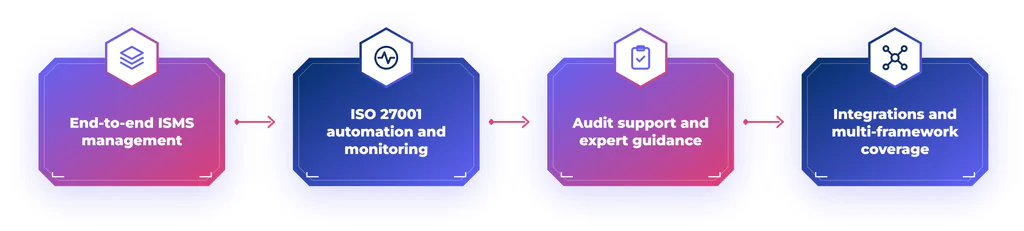
End-to-end ISMS management
A strong ISO 27001 platform should centralize asset inventory, risk assessments, the Statement of Applicability (SoA), policies, control mapping, and task ownership in one workflow. This reduces manual work across disconnected spreadsheets and tools while improving visibility into compliance activities. It also helps teams maintain accurate documentation and gives auditors a clear record of how the ISMS operates.
ISO 27001 automation and monitoring
Effective ISO 27001 automation collects evidence directly from cloud, identity, HR, and security systems, reducing manual effort. The platform should continuously monitor controls, identify compliance gaps, and assign remediation tasks to the right team members. This helps organizations address issues early, maintain audit readiness, and support continuous compliance beyond certification.
Audit support and expert guidance
Strong audit support helps organizations navigate ISO 27001 certification with less complexity and fewer delays. Look for platforms offering gap assessments, audit preparation tools, auditor collaboration, and dedicated compliance experts. Expert guidance throughout the ISO 27001 certification process, from readiness through Stage 2 audits, helps teams resolve gaps and prepare confidently for certification.
Integrations and multi-framework coverage
A platform’s integration capabilities determine how effectively it automates evidence collection across existing systems. Organizations should prioritize relevant integrations, custom integration options, and cross-framework mapping rather than integration counts alone. For teams managing ISO 27001 alongside SOC 2, GDPR, or HIPAA, multi-framework support simplifies compliance by allowing controls and evidence to be reused across requirements.
AI-native GRC for how teams work today.
7 best ISO 27001 software for SaaS teams in 2026
SaaS teams evaluate ISO 27001 software for different reasons, from a fast path to first certification to broader framework coverage as the business moves into enterprise markets. This list focuses on platforms suited to growing and mid-market SaaS companies that run ISO 27001 as an ongoing program, and each option was assessed on ISMS coverage, automation depth, audit support, integration breadth, and scalability. Here are the 7 best ISO 27001 software platforms for SaaS teams in 2026:
1. Scytale
Scytale stands out as a leading ISO 27001 compliance platform for SaaS companies in 2026, combining AI-powered automation with dedicated GRC expertise to simplify certification and ongoing compliance. The platform supports 80+ frameworks, including ISO 27001, SOC 2, GDPR, HIPAA, and SOX ITGC, with 150+ integrations across cloud, identity, HR, and security systems.
Unlike traditional ISO 27001 compliance software, Scytale brings ISMS management, evidence collection, policies, risk assessments, and audit preparation into one centralized platform. Its AI agents help review evidence, identify compliance gaps, and streamline remediation, while dedicated GRC experts guide teams through every stage of certification.
(Screenshot from Scytale’s website)
Why Scytale is the best:
- Continuous compliance through real-time monitoring, with full visibility into your ISMS, security, and risk posture
- AI-powered automation that streamlines ISO 27001 processes, including evidence collection, access reviews, and vendor risk management.
- Multi-framework management with cross-mapping to eliminate duplicate work across standards like ISO 27001, SOC 2, GDPR, HIPAA, and SOX ITGC
- Customizable Trust Center to clearly showcase your security and compliance posture
- Dedicated GRC expert support, providing tailored guidance from ISO 27001 readiness through Stage 2 and surveillance audits
- Streamlined integrations with essential tools and customizable options for enhanced automation and flexibility
For example, Australian company vSure achieved ISO 27001 certification through Scytale in just 14 days, two weeks before its Stage 2 audit.
2. Apptega
Apptega is a cybersecurity and compliance program management platform built around structured workflows that span multiple frameworks. It gives security teams a central dashboard for tracking assessments, remediation tasks, and program maturity.
(Screenshot from Apptega’s website)
Key strengths:
- Centralized dashboards provide visibility into compliance assessments, remediation progress, and program maturity across multiple frameworks.
- Cross-framework mapping identifies overlapping ISO 27001 requirements, helping teams reduce duplicate compliance work across standards.
- Stakeholder reporting simplifies communication of compliance progress and performance across departments and leadership teams.
Limitations:
- Evidence collection may require more manual coordination compared to platforms with extensive automated integrations.
- Governance-heavy workflows may be less suitable for smaller teams seeking a simpler ISO 27001 certification process.
3. Oneleet
Oneleet is a security-first compliance automation platform aimed at startups and growing technology companies. It supports early certification work through a modern interface and a lighter operating model.
(Screenshot from Oneleet’s website)
Key strengths:
- Automated evidence collection integrates with common startup tools, reducing manual work during initial certification preparation.
- Guided workflows help smaller teams organize compliance tasks and prepare for audits without dedicated specialists.
- Security-focused features support engineering-led startups working toward their first ISO 27001 certification.
Limitations:
- Its lightweight approach may not fully support complex governance requirements as SaaS organizations grow.
- Enterprise customization capabilities may be limited compared to more configurable GRC platforms.
4. Strac
Strac approaches compliance through sensitive data discovery, data loss prevention, and automated security workflows. It connects ISO 27001 work closely to data visibility and operational data protection controls.

(Screenshot from Strac’s website)
Key strengths:
- Sensitive data discovery and classification help organizations identify exposure risks relevant to ISO 27001 security controls.
- Automated security workflows simplify evidence collection for data protection, access management, and information handling requirements.
- Data-focused monitoring supports SaaS companies managing ISO 27001 alongside privacy and sensitive information protection obligations.
Limitations:
- Comprehensive ISMS management and audit coordination may require additional compliance tools or internal processes.
- Advanced data security capabilities may be unnecessary for organizations with simpler compliance requirements and environments.
5. OneTrust
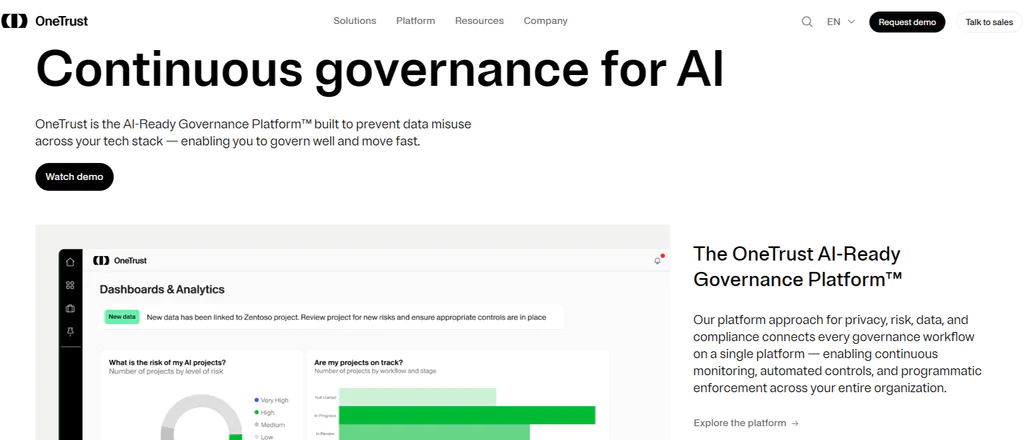
OneTrust is a broad trust and governance platform covering privacy, risk, policy, and third-party management across large programs. It typically serves enterprises that want ISO 27001 work connected to privacy operations and vendor risk.
(Screenshot from OneTrust’s website)
Key strengths:
- Broad governance capabilities bring privacy, risk, policy management, and third-party oversight into one platform.
- Enterprise workflows support compliance coordination across multiple departments, business units, and regulatory jurisdictions.
- Integrated governance tools connect ISO 27001 requirements with wider privacy and data management programs.
Limitations:
- Extensive configuration and administration requirements may create additional work for smaller SaaS compliance teams.
- Broad platform functionality may be excessive for organizations primarily focused on achieving ISO 27001 certification.
6. LogicGate
LogicGate is a configurable GRC platform that lets organizations design custom workflows around risk and compliance processes. It suits teams with internal resources to shape their own operating model rather than follow a prescriptive path.
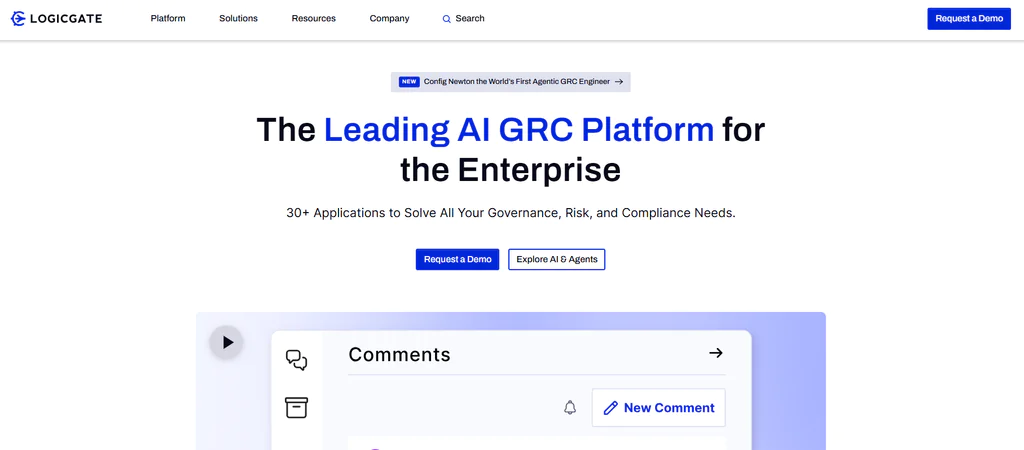
(Screenshot from LogicGate’s website)
Key strengths:
- No-code workflow customization allows organizations to build risk and compliance processes around their specific requirements.
- Centralized assessments, issue tracking, and reporting help teams manage governance activities across different business functions.
- Flexible data structures connect ISO 27001 compliance activities with broader enterprise risk management programs.
Limitations:
- Custom implementation often requires more planning and configuration than dedicated ISO 27001 automation platforms.
- Teams without internal GRC expertise may need additional guidance to configure and manage workflows effectively.
7. Secureframe
Secureframe is a compliance automation platform for cloud-first companies pursuing frameworks such as ISO 27001 and SOC 2. It provides automated evidence collection and a structured workflow for readiness and audit preparation.
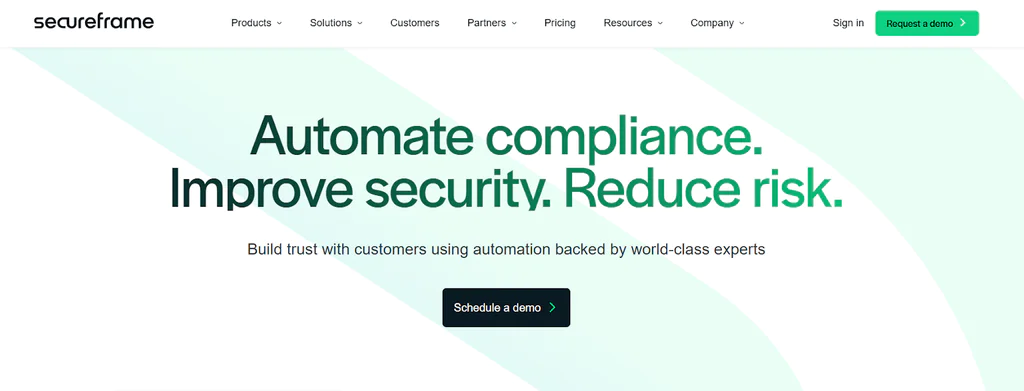
(Screenshot from Secureframe’s website)
Key strengths:
- Streamlined onboarding and ready-made policy templates help organizations organize requirements for their first ISO 27001 certification.
- Continuous control monitoring identifies compliance gaps across connected cloud systems, supporting ongoing audit readiness.
- Multi-framework support allows teams to manage ISO 27001, SOC 2, and other standards within one platform.
Limitations:
- Complex enterprise governance requirements may require capabilities beyond its standard compliance automation workflows.
- Managing remediation tasks and coordinating multiple stakeholders may still require significant internal compliance resources.
ISO 27001 software compared
| Platform | Company size fit | Automation depth | Audit support | Best for |
|---|---|---|---|---|
| Scytale | Organizations of all sizes, from startups to enterprises | High | Dedicated GRC experts and end-to-end audit support | Organizations seeking streamlined ISO 27001 certification with AI automation and dedicated expert support. |
| Apptega | Mid-market to enterprise | Moderate | Structured program support | Multi-framework program management |
| Oneleet | Startups to growing companies | Moderate | Guided certification | Lean, security-first teams |
| Strac | Growing to mid-market companies | Moderate | Targeted | Data-centric controls |
| OneTrust | Enterprise | Moderate | Enterprise governance | Privacy-led programs |
| LogicGate | Mid-market to enterprise | Moderate | Configurable workflows | Custom GRC process design |
| Secureframe | Startup to mid-market companies | High | Structured readiness | Cloud-first first-time certification |
Get ISO 27001 Compliant 90% Faster
How to choose the right ISO 27001 software
Choosing the right ISO 27001 software depends on your organization’s size, compliance goals, and available internal resources. Beyond features, consider the level of support your team needs and the total ISO 27001 certification costs, including software, audit fees, and internal effort. Here’s what to prioritize based on your organization’s needs:
Lean SaaS teams
Startups and smaller SaaS companies should prioritize easy implementation, automated evidence collection, and dedicated compliance guidance. With limited internal resources, choosing a platform that simplifies task management and provides hands-on expert support can reduce the workload and make the path to ISO 27001 certification more manageable.
Scaling compliance programs
Growing organizations need software that supports continuous monitoring, cross-framework mapping, and centralized compliance management. As customer requirements expand, the ability to reuse evidence across ISO 27001, SOC 2, and other frameworks helps reduce duplicate work while keeping teams audit-ready.
Enterprise governance teams
Larger organizations should look for advanced automation, customizable workflows, and comprehensive risk management capabilities. Platforms that support multiple business units, complex approval processes, and detailed reporting help enterprises maintain consistent compliance oversight while managing evolving regulatory requirements.


How Scytale simplifies ISO 27001 for SaaS teams
Managing ISO 27001 shouldn’t require SaaS teams to spend hours chasing evidence, updating spreadsheets, or coordinating audit tasks. Scytale brings these processes together through AI-powered automation, helping organizations reduce administrative work, identify compliance gaps earlier, and maintain visibility into their ISMS as their business grows.
Cross-framework mapping allows teams to reuse ISO 27001 work for SOC 2, GDPR, and HIPAA, while a customizable Trust Center helps answer customer security reviews faster. Dedicated GRC experts support teams from readiness through Stage 2 and annual surveillance audits, helping SaaS organizations reach certification with less manual effort and remain audit-ready as they scale.
FAQs about best ISO 27001 software for SaaS
What is the best ISO 27001 software for a SaaS startup?
The best ISO 27001 software for a SaaS startup combines fast setup, automated evidence collection, and clear audit guidance. Startups rarely have a dedicated compliance hire, so the platform should remove manual work and provide expert support. Scytale’s AI GRC platform pairs ISO 27001 automation with dedicated GRC experts, helping founders reach certification without building an internal compliance function.
Which features matter most when SaaS teams evaluate ISO 27001 software?
SaaS teams should look for end-to-end ISMS management, Statement of Applicability support, automated evidence collection, continuous monitoring, risk tracking, and audit support. Integration breadth matters because ISO 27001 controls depend on cloud, identity, HR, and security systems. Multi-framework mapping adds value when ISO 27001 runs alongside SOC 2, GDPR, or HIPAA.
How much does ISO 27001 compliance software cost?
ISO 27001 compliance software cost depends on company size, framework scope, automation depth, and service level. Entry pricing often rises once you add audit support, more integrations, or expert guidance. SaaS teams should compare subscription cost against the manual hours, consultant spend, and certification delays the platform removes.
How long does ISO 27001 certification take with an automation platform?
ISO 27001 certification with an automation platform often takes a few months, and readiness is possible in as little as three months depending on control maturity, scope, and team responsiveness. Leading AI GRC platforms like Scytale shorten this timeline by automating evidence work and guiding teams through Stage 1 and Stage 2 audits. Certification is then maintained through annual surveillance audits and recertification every three years.
Can one platform manage ISO 27001 and SOC 2 together?
Yes, one platform can manage ISO 27001 and SOC 2 together when it supports cross-framework control mapping and shared evidence workflows. Because the two frameworks overlap significantly, a single control set can satisfy many requirements in both. This reduces duplicate testing, policy work, and evidence requests across security and engineering teams.