










TL;DR: SOC 2 compliance software for startups
- Startups need SOC 2 software that shortens audit prep, tracks progress clearly, and fits lean teams.
- The strongest platforms combine evidence collection, audit workflows, vendor risk support, and employee training in one place.
- Pricing models vary widely, so founders should compare platform cost against time saved and deals moved forward.
- Some tools focus on enterprise security depth, while others fit earlier-stage startups with simpler workflows.
- Scytale’s AI GRC platform stands out for startups that want AI-powered automation plus hands-on guidance through the SOC 2 process.
SOC 2 often becomes a revenue project before it becomes a compliance project. Startup teams typically feel pressure from enterprise buyers, security reviews, and audit deadlines long before they hire a dedicated compliance function.
The right platform does more than store screenshots and policy files, because it helps teams answer customer diligence requests with less friction and keeps control work visible across engineering, security, and leadership. In this article, we review 10 leading SOC 2 platforms and explain how founders can weigh cost, fit, and return before committing.
Top SOC 2 compliance software for startups
- Scytale
- JupiterOne
- Qualys
- Optro
- Astra Security
- Comply AI
- Certifyi
- Sprinto
- Scrut
- Drata
What startups need from SOC 2 compliance software
SOC 2 compliance software for startups helps streamline evidence collection, control monitoring, and audit preparation so lean teams can prepare for SOC 2 audits and maintain ongoing compliance without a dedicated compliance function.
Startup buyers rarely begin with a long feature list, since they first ask how quickly a platform gets them audit-ready, how much manual work it removes, and whether it helps close deals without adding headcount. A useful platform reduces evidence chasing across cloud, identity, HR, and ticketing systems while mapping each requirement to the relevant SOC 2 controls. It should also show clear progress against controls, owners, and deadlines, so founders do not manage the project in spreadsheets.
Vendor risk and training matter early because enterprise security reviews often include questions about third parties, access controls, and data handling, while employee awareness controls frequently slow first-time audits. Platforms with built-in vendor risk management, policy workflows, and security awareness training records help teams document those answers before customers ask. Ultimately, return on investment comes down to time saved and revenue unblocked, since a SOC 2 report often serves as a key trust signal during buyer due diligence.
Streamline GRC workflows with seamless automation.
10 best SOC 2 compliance software for startups
Startup teams need different tradeoffs than large enterprises, so this list focuses on platforms that support lean compliance ownership and faster audit preparation for early and growth-stage companies. Each platform was assessed on automation depth, audit support, training coverage, vendor risk features, pricing approach, and fit for startup maturity, and teams comparing a wider set of best SOC 2 compliance software options can treat this as a shortlist rather than a final decision. Here are the 10 platforms worth evaluating in 2026:
1. Scytale
Scytale stands out as the best SOC 2 compliance software for startups in 2026, built for SaaS teams that need fast SOC 2 execution without building a large internal compliance function. As an AI GRC platform, it automates evidence collection and control monitoring across 150+ integrations, which reduces manual follow-up across engineering, HR, and business systems.
Scytale also maps controls across 80+ frameworks, so startups that begin with SOC 2 avoid duplicate work when they expand into ISO 27001, HIPAA, or GDPR. By pairing AI-powered workflows with dedicated GRC experts and audit support, the platform moves teams from gap assessment to audit readiness with less internal overhead and a clear path to scale.
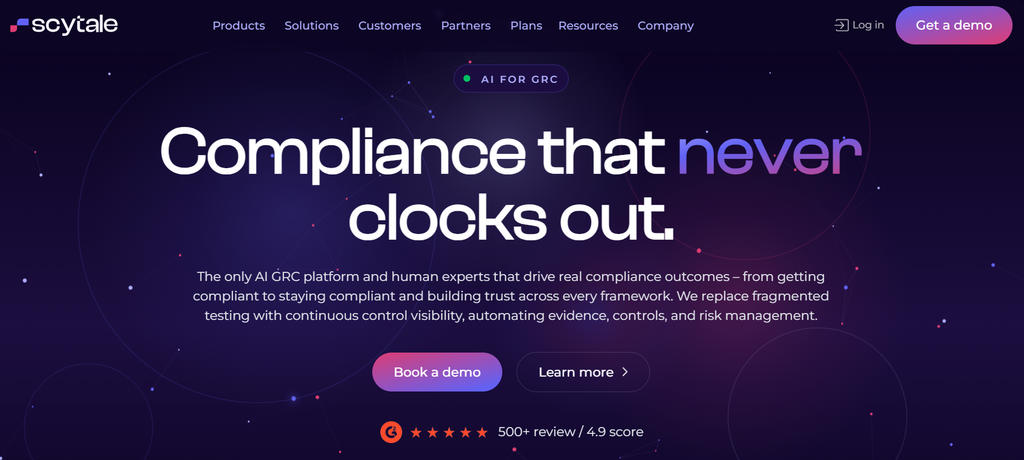
(Screenshot from Scytale’s website)
Why Scytale is the best:
- Continuous compliance through real-time monitoring, with full visibility into your security and risk posture
- Agentic compliance that streamlines core SOC 2 processes, including evidence collection, access reviews, continuous monitoring, and vendor risk management.
- Multi-framework management with cross-mapping to eliminate duplicate work across standards like SOC 2, ISO 27001, GDPR, HIPAA, and SOX ITGC
- Streamlined integrations with essential tools and customizable options for enhanced automation and flexibility
- Customizable Trust Center to clearly showcase your security and compliance posture to enterprise buyers
- Dedicated GRC expert support, providing tailored guidance from gap assessment through audit completion
2. JupiterOne
JupiterOne is a cyber asset analysis platform that approaches compliance through asset visibility and security posture data. It fits security-led startups that want control evidence tied directly to their broader infrastructure and identity context.
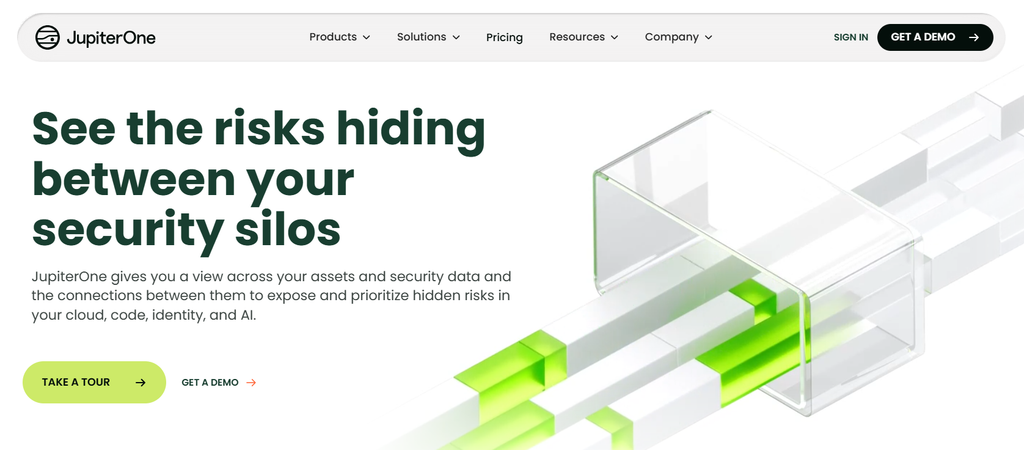
(Screenshot from JupiterOne’s website)
Key strengths:
- Graph-based data model maps relationships across cloud assets, identities, and dependencies
- Asset discovery connects infrastructure visibility directly to compliance evidence collection
- Continuous queries help security teams detect control drift between formal audits
Limitations:
- Graph query setup requires engineering time that lean startup teams may lack
- Teams without mature security ownership may need outside help with audit preparation
3. Qualys
Qualys is a cloud security platform that brings vulnerability management and policy compliance scanning into compliance work. It suits startups with established security operations that prefer broad technical coverage across cloud and endpoint environments.
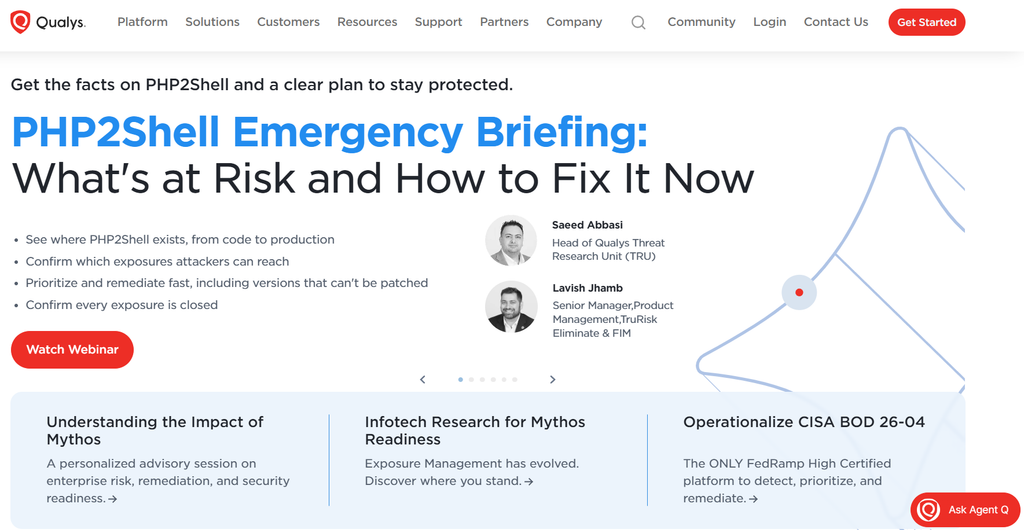
(Screenshot from Qualys’ website)
Key strengths:
- Extensive vulnerability scanning across cloud workloads, endpoints, and web applications
- Policy compliance modules link technical findings to control validation and remediation
- Single environment for scanning, monitoring, and reporting at large operational scale
Limitations:
- Licensing across multiple modules can increase total cost for small teams
- Non-technical owners may face a steep learning curve managing audit evidence
4. Optro
Optro is a governance, risk, and audit platform with roots in internal audit and formal control programs. It fits scaling startups that want structured control management and leadership-level reporting as their compliance program matures.
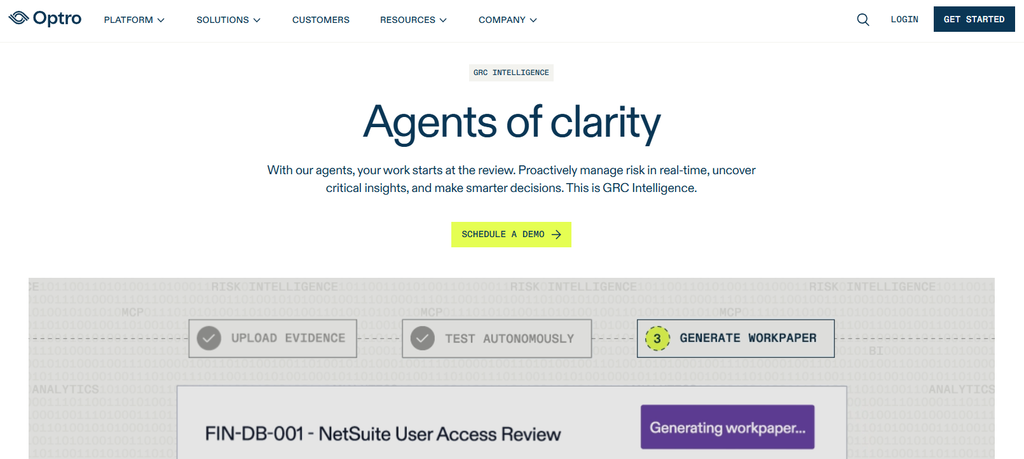
(Screenshot from Optro’s website)
Key strengths:
- Structured control documentation and issue tracking built for audit-focused teams
- Leadership reporting shows ownership, remediation status, and program progress clearly
- Governance-oriented design supports a later move into formal internal control programs
Limitations:
- Process-heavy workflows can slow earlier-stage startups running a first SOC 2 project
- Onboarding assumes internal audit experience that many early teams do not have
5. Astra Security
Astra is a security testing platform that combines penetration testing and vulnerability scanning with compliance support. It fits startups with active product security needs that want audit preparation to sit close to their testing workflows.
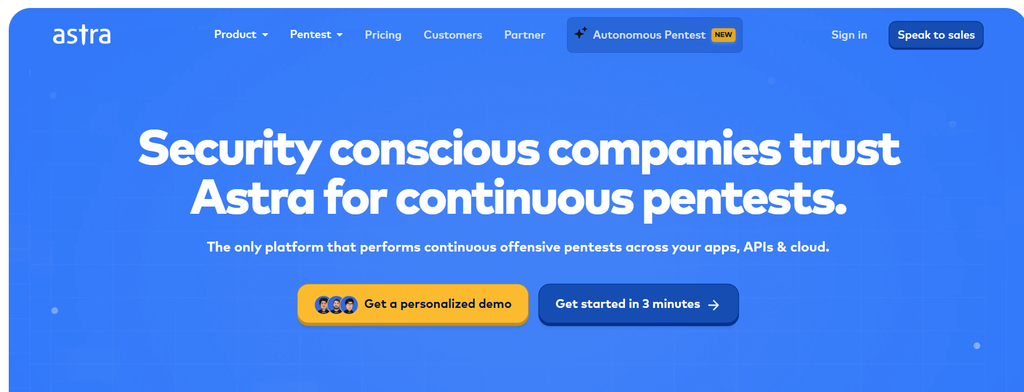
(Screenshot from Astra Security’s website)
Key strengths:
- Penetration testing results feed directly into remediation tracking and audit evidence
- Continuous vulnerability scanning supports customer security reviews between formal tests
- Testing and compliance work run in one motion for product security teams
Limitations:
- Cross-framework governance and reporting depth are narrower than dedicated GRC platforms
- Training, vendor risk, and policy management may still require separate tooling
6. Comply AI
Comply AI is an automation-first compliance platform designed around a lighter operating model for small teams. It fits early-stage startups where a single operator manages SOC 2 readiness across several internal stakeholders.
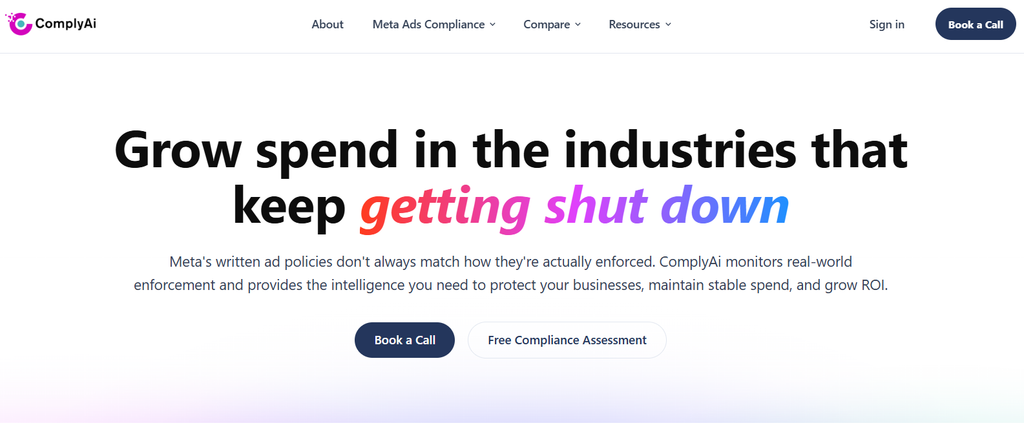
(Screenshot from Comply AI’s website)
Key strengths:
- Guided workflows reduce administrative coordination for teams with one compliance owner
- Automated evidence gathering lowers the manual workload tied to first-time audits
- Lightweight operating model suits teams without a dedicated security hire
Limitations:
- Integration depth may fall short for startups running complex or nonstandard stacks
- Teams should verify evidence export options before committing to a long-term contract
7. Certifyi
Certifyi is an assurance platform positioned at the intersection of trust, compliance, and AI governance. It fits AI-focused startups preparing for customer scrutiny about how they build, oversee, and govern AI systems.
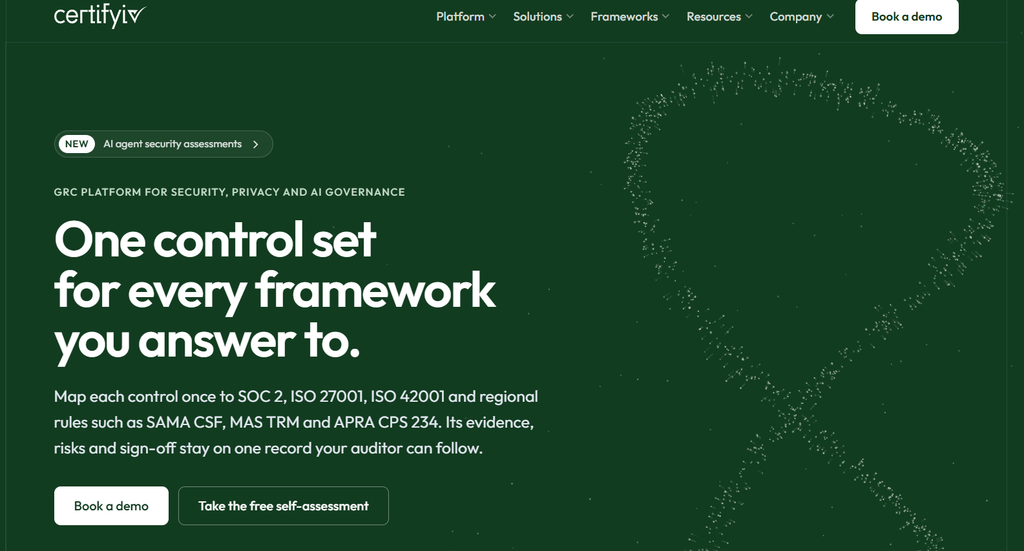
(Screenshot from Certifyi’s website)
Key strengths:
- Structured assurance workflows document controls and trust signals for external review
- Positioning aligns with buyer questions about AI use, oversight, and accountability
- Evidence packaging supports trust conversations during enterprise procurement and security reviews
Limitations:
- Teams should confirm the depth of SOC 2 automation alongside its AI governance focus
- Specialized AI positioning offers less value for teams outside AI-heavy markets
8. Sprinto
Sprinto is a compliance automation platform focused on continuous compliance operations for cloud-native companies. It fits startups that want sequenced onboarding and automated monitoring across evidence collection and recurring control tasks.
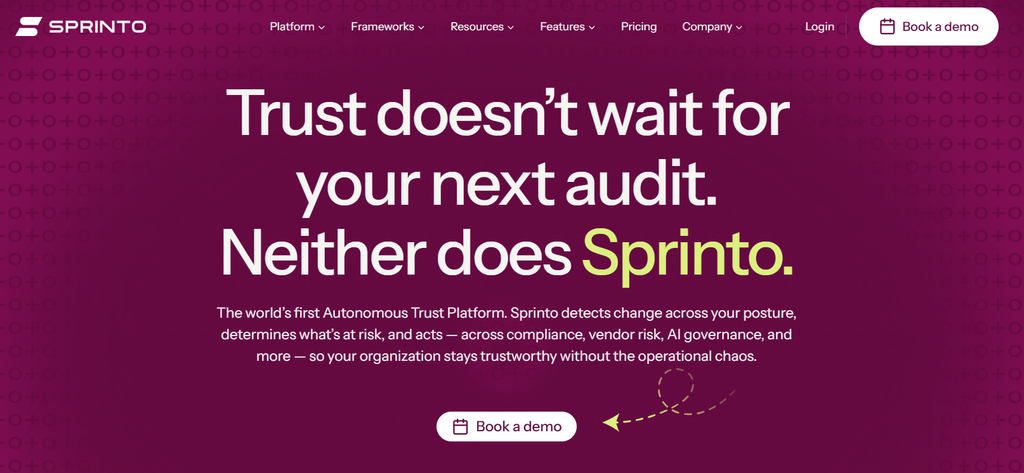
(Screenshot from Sprinto’s website)
Key strengths:
- Prescriptive onboarding sequences tasks clearly for teams preparing for a first audit
- Automated checks monitor common cloud, identity, and HR systems on an ongoing basis
- Recurring task workflows keep control owners organized between audit milestones
Limitations:
- Teams with custom controls should validate workflow flexibility during the product demo
- Pricing and packaging require close review for earlier-stage startups on tight budgets
9. Scrut
Scrut is a risk and compliance management platform built for growing companies running several frameworks at once. It fits startups that want controls, risks, and audit readiness tracked in a single program view.
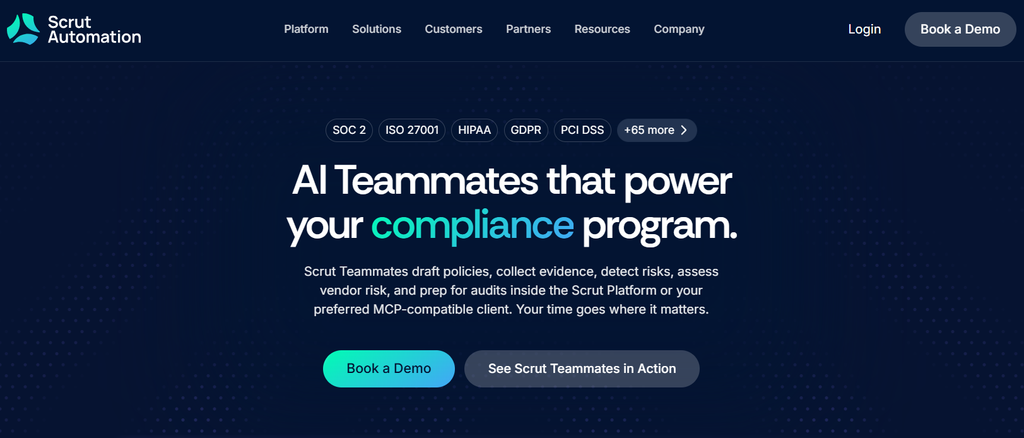
(Screenshot from Scrut’s website)
Key strengths:
- Centralized risk register links risks directly to controls and remediation tasks
- Multi-framework coverage maps shared controls across SOC 2, ISO 27001, and other standards
- Audit center scopes auditor access and tracks evidence requests in one place
Limitations:
- Marketplace contracts for small teams may carry non-cancellable, non-refundable terms
- Consultant tasks and support terms should be confirmed in writing before signing
10. Drata
Drata is an established compliance automation platform with broad framework support and extensive integration coverage. It fits self-led startups that want a mature product with proven audit workflow patterns and room to add frameworks.
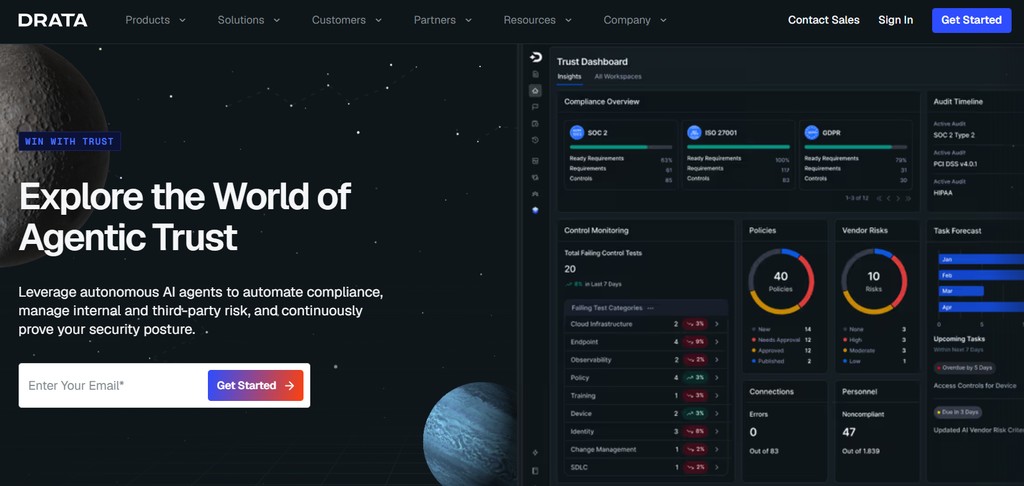
(Screenshot from Drata’s website)
Key strengths:
- Broad integration library collects evidence across cloud, identity, HR, and ticketing tools
- Large auditor network familiar with the platform simplifies CPA firm selection
- Custom tests and connections support more complex stacks on advanced plans
Limitations:
- No dedicated implementation manager is included, so an internal owner must lead
- Year-two renewal terms deserve close review before committing to a multi-year contract
SOC 2 compliance software compared
Side-by-side comparison matters because startups often buy SOC 2 compliance automation software for one audit, then operate on the platform for years as customer demands grow. The right choice depends on whether the team needs built-in vendor risk workflows, employee training, audit coordination, or a lighter operating model. Here are the criteria the comparison table below evaluates:
- Built-in TPRM: If enterprise buyers ask about vendors early, choose a platform that tracks third-party risk management (TPRM) reviews and supporting evidence in one place.
- Audit support: Founders should confirm whether the vendor helps with readiness, auditor coordination, and evidence review for the SOC 2 audit, or only supplies software.
- Pricing model: Most vendors price through custom quotes tied to headcount, frameworks, and support level, so total cost deserves close comparison.
- Ideal stage: Earlier-stage startups often need guided execution, while later-stage teams may prioritize governance depth and reporting.
| Platform | Key strength | Built-in TPRM | Audit support | Pricing model | Best for |
|---|---|---|---|---|---|
| Scytale | Agentic GRC, continuous monitoring, and expert guidance | Yes | Dedicated GRC experts, Streamlined audit prep and management, tailored expert advisory | Custom quote | SaaS companies seeking smarter, faster compliance |
| JupiterOne | Asset visibility | Limited | Self-service | Custom quote | Security-led startups |
| Qualys | Vulnerability coverage | Limited | Self-service | Custom quote | Mature security operations |
| Optro | Control workflows | Yes | Audit management tools | Custom quote | Scaling formal programs |
| Astra Security | Security testing | Limited | Testing and remediation support | Custom quote | Product security teams |
| Comply AI | Lean automation | Confirm with vendor | Guided audit workflows | Custom quote | Early-stage teams |
| Certifyi | AI governance | Confirm with vendor | Assurance workflows | Custom quote | AI-focused startups |
| Sprinto | Guided onboarding | Yes | Guided audit preparation | Custom quote | Cloud-native startups |
| Scrut | Risk visibility | Yes | Audit management tools | Custom quote | Multi-framework programs |
| Drata | Integration breadth | Yes | Compliance advisors | Custom quote | Self-led teams |
How to measure the ROI of a SOC 2 platform
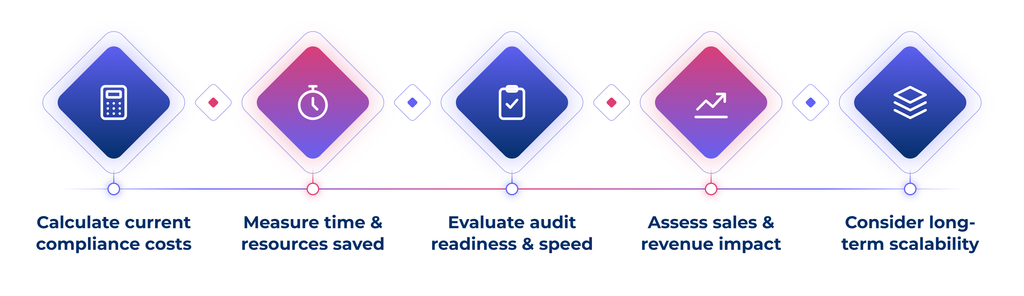
The ROI of a SOC 2 platform goes beyond its subscription cost. For founders, the real value lies in reducing manual work, speeding up audit readiness, and removing security-related roadblocks that delay sales. Here’s how to measure the return on your investment:
1. Calculate your current compliance costs
Start by identifying how much your team currently spends on compliance, including employee hours, evidence collection, policy reviews, and audit preparation. Factor in the total SOC 2 compliance costs, including software, auditor fees, consultant support, and penetration testing, to establish a realistic baseline.
2. Measure time and resources saved
Compare the hours spent on manual compliance tasks before and after implementing the platform. Look at evidence collection, control monitoring, documentation, and internal follow-ups. A platform that reduces repetitive work allows employees to focus on higher-value priorities instead of ongoing audit preparation.
3. Evaluate audit readiness and speed
Consider how quickly the platform helps your business become audit-ready and maintain compliance for future SOC 2 audits. Faster evidence collection, centralized documentation, and continuous monitoring can reduce preparation time, minimize last-minute work, and lower the effort required for subsequent audits.
4. Assess the impact on sales and revenue
SOC 2 compliance can help build customer trust and remove security concerns that delay purchasing decisions. Track how many deals are held up by security reviews, how quickly your team responds to questionnaires, and whether having a SOC 2 report helps move opportunities forward. These improvements can contribute to measurable revenue gains.
5. Consider long-term scalability
The value of a platform should extend beyond your first audit. As your business grows and adopts additional frameworks, features like cross-framework mapping, continuous monitoring, and expert guidance can reduce duplicated work. Choosing a platform that supports ongoing SOC 2 compliance automation helps keep compliance costs manageable as requirements increase.
Always-on GRC. Built for modern teams.
How Scytale simplifies SOC 2 for startups
Compared with security-first tools that require mature internal ownership or governance suites built for formal audit programs, Scytale gives startups a faster, more guided route to a SOC 2 report. Its AI GRC platform combines automated evidence collection, continuous monitoring, and AI agents that identify gaps early, which makes it the best SOC 2 platform for startups that need audit readiness without adding headcount.
Scytale also supports multi-framework management across 80+ frameworks, including SOC 2, ISO 27001, HIPAA, and GDPR, so the work completed for a first audit carries forward as the business grows. Combined with a customizable Trust Center and dedicated GRC experts, Scytale helps startups reach audit readiness faster, reduce manual effort, and build a compliance program that scales with the company.
FAQs about SOC 2 compliance software for startups
What is the best SOC 2 compliance software for startups?
The best SOC 2 compliance software for startups combines automated evidence collection, continuous monitoring, and hands-on audit guidance in a single platform. Scytale’s AI GRC platform stands out because it pairs automation with dedicated GRC experts, which helps lean teams reach audit readiness without a full compliance function.
How much does SOC 2 compliance software cost for a startup?
Costs vary based on headcount, framework count, and the level of expert support included, and most vendors price through custom quotes rather than published rates. Startups should also budget separately for the independent CPA audit, penetration testing, and internal team time when comparing platforms.
Can SOC 2 software really reduce audit time?
Yes, SOC 2 software can reduce audit preparation time by automating evidence collection from cloud, identity, and HR systems and tracking control status in real time. Leading AI GRC platforms like Scytale also flag gaps early, which reduces last-minute remediation before the audit window opens.
Do SOC 2 platforms include security awareness training?
Many SOC 2 platforms include built-in security awareness training and record completion as audit evidence, but coverage varies by vendor and plan. Startups should confirm whether training is included or requires a separate tool before signing a contract.
Do I still need an auditor if I use SOC 2 software?
Yes, only a licensed CPA firm can perform a SOC 2 examination and issue the report, regardless of the software you use. SOC 2 software prepares evidence and manages readiness, but the auditor independently tests controls and issues the final opinion.
