

TL;DR: AI GRC platform
- An AI GRC platform monitors controls continuously instead of relying on static spreadsheets and periodic reviews.
- AI GRC platforms help organizations automate compliance, strengthen risk management, and maintain continuous audit readiness.
- Teams evaluating an AI GRC platform should compare AI depth, framework coverage, expert support, integrations, and pricing clarity.
- Scytale is the top AI GRC platform, combining AI-powered compliance automation, continuous control monitoring, and dedicated GRC experts in a single solution.
- The right platform reduces duplicate work, improves audit readiness, and gives compliance leaders a clearer view of risk.
Governance, Risk, and Compliance (GRC) programs have become significantly more complex over the past few years. Organizations are managing more compliance frameworks, facing greater regulatory scrutiny, and responding to increasingly detailed security reviews from customers and stakeholders. As a result, traditional compliance approaches built around spreadsheets, disconnected tools, and manual processes are struggling to keep pace.
This growing complexity has fueled demand for a new generation of AI GRC platforms. Rather than simply helping teams document compliance activities, these platforms aim to improve efficiency, increase visibility, and help organizations scale their compliance programs without proportionally increasing headcount. In this article, we’ll explore what defines an AI GRC platform, the key capabilities buyers should evaluate, and the leading solutions available in 2026.
What is an AI GRC platform?
An AI GRC platform is software that helps organizations manage Governance, Risk, and Compliance (GRC) activities using artificial intelligence to automate and enhance key compliance workflows. While traditional GRC tools often serve as systems of record for policies, controls, and audits, AI-powered platforms actively assist teams by analyzing information, identifying issues, and recommending next steps.
Core capabilities typically include governance and policy management, risk identification and scoring, multi-framework compliance mapping, audit readiness, and continuous control monitoring. AI is applied across these workflows to automate evidence analysis, detect control deficiencies, prioritize remediation activities, answer compliance questions, and accelerate decision-making. The result is a more proactive approach to compliance management that combines AI-powered GRC tools, real-time compliance tracking, and continuous risk monitoring to improve visibility and reduce manual effort.
Streamline GRC workflows with no blind spots.
Why AI is changing the GRC landscape
Traditional GRC programs were built for a simpler compliance environment. Today, organizations often manage multiple frameworks simultaneously while tracking thousands of controls, policies, vendors, risks, and evidence artifacts across dozens of systems. As compliance programs grow, spreadsheets, point-in-time assessments, and siloed documentation become increasingly difficult to maintain, creating inefficiencies, duplicated work, and blind spots between audits.
At the same time, AI has rapidly become a core part of business operations. In 2025, 88% of organizations reported using AI in at least one business function, accelerating expectations for automation across security, compliance, and risk management. As a result, organizations are increasingly looking for GRC platforms that can actively assist with compliance work rather than simply serve as repositories for policies and controls.
AI agents are shifting GRC from periodic assessments to continuous oversight, enabling teams to identify issues earlier and respond more efficiently as requirements evolve. This shift accelerated in 2026 as buyers increasingly prioritize agentic GRC capabilities over passive dashboards, seeking platforms that can take action on compliance data rather than simply display it.
7 best AI GRC platforms in 2026
As AI continues to reshape governance, risk, and compliance, organizations have more platform options than ever before. Here are seven of the leading AI compliance platforms helping companies automate compliance, strengthen risk management, and scale their GRC programs in 2026:
1. Scytale
Scytale is a top AI GRC platform designed for organizations that want to manage governance, risk, and compliance from a single operating environment. Unlike many solutions that focus primarily on workflow management or audit preparation, Scytale combines AI-powered compliance operations, risk management, audit management, and multi-framework governance in one platform, helping organizations scale their programs as requirements become more complex.
The platform is particularly well suited to organizations managing multiple frameworks and looking to consolidate compliance, risk, and audit activities within a single platform. Its combination of AI capabilities and expert support helps teams scale compliance operations while maintaining visibility and control.
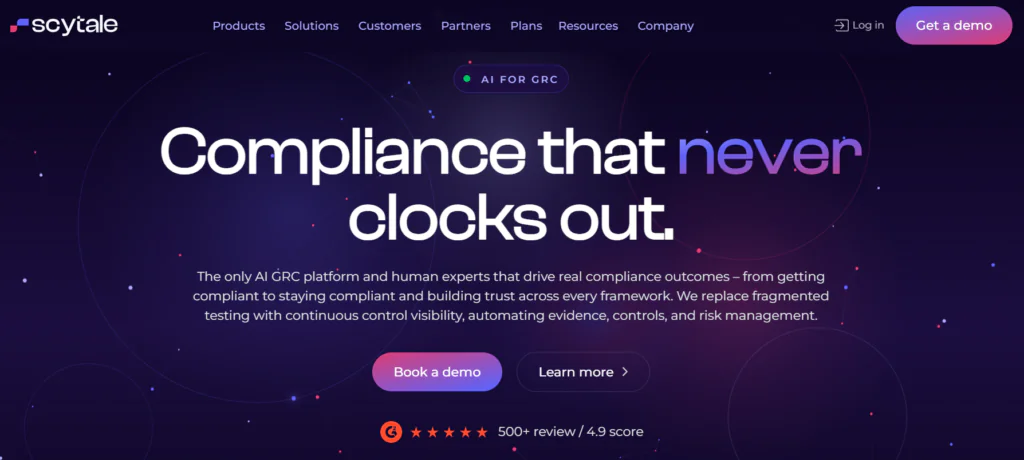
(Screenshot from Scytale’s website)
Why Scytale is the best:
- AI-powered compliance automation that helps teams reduce manual work, accelerate audit readiness, and maintain continuous compliance
- Multi-agent AI capabilities that automate evidence collection, identify compliance gaps, surface remediation priorities, and provide real-time visibility into your GRC program
- Multi-framework management with automated cross-mapping across frameworks such as SOC 2, ISO 27001, GDPR, HIPAA, PCI DSS, and SOX ITGC
- Dedicated GRC experts who provide hands-on guidance throughout implementation, audits, and continuous compliance operations
- More than 150 integrations that automate evidence collection and connect compliance workflows across your existing technology stack
- Fully customizable Trust Center that enables organizations to showcase their security, privacy, and compliance posture to customers and key stakeholders
2. MetricStream
MetricStream is an enterprise GRC platform designed for large organizations managing governance, risk, compliance, audit, and operational risk programs at scale. It is commonly used by enterprises seeking centralized oversight across multiple departments, business units, and regulatory requirements.
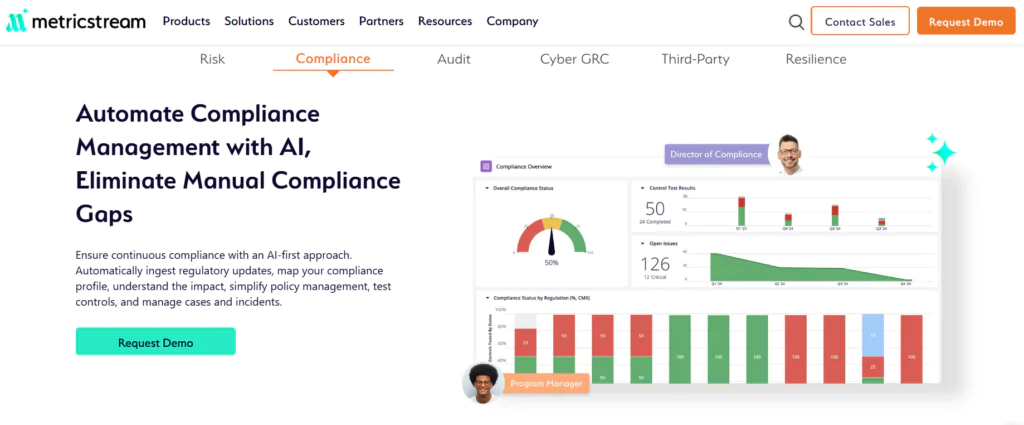
(Screenshot from MetricStream’s website)
Key features:
- Centralized management of risk, audit, compliance, and policy programs
- Extensive workflow customization and configurable reporting capabilities
- Support for operational risk, third-party risk, and regulatory compliance initiatives
Limitations:
- Implementation and administration can require significant resources
- Organizations with simpler compliance needs may not require the platform’s full breadth of capabilities
3. LogicGate
LogicGate is a GRC platform that enables organizations to build and customize workflows across a variety of governance, risk, and compliance use cases. Its no-code approach appeals to teams that want greater control over process design and workflow configuration.
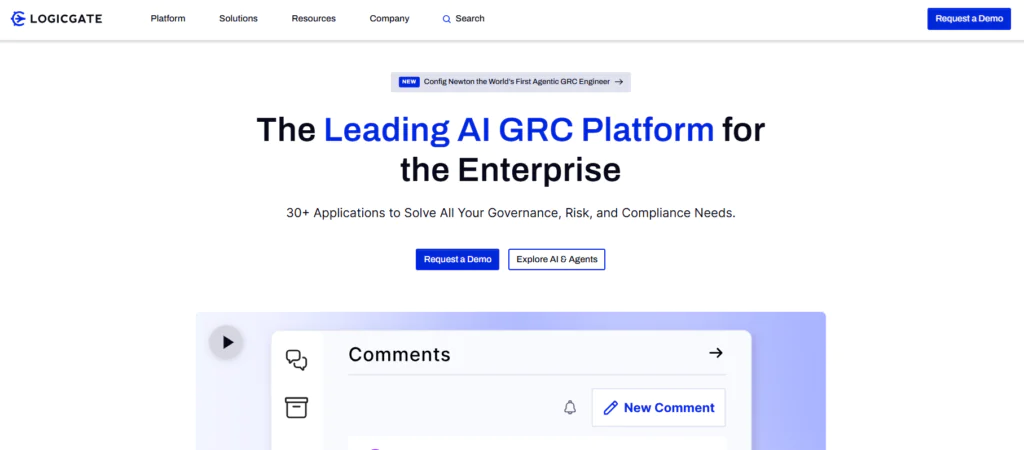
(Screenshot from LogicGate’s website)
Key features:
- No-code workflow builder for governance, risk, and compliance processes
- Customizable applications for use cases such as vendor risk, issue management, and internal audit
- Flexible reporting and process design capabilities
Limitations:
- Organizations may need additional configuration before realizing value
- Compliance automation capabilities are less prescriptive than some compliance-focused platforms
4. Scrut
Scrut is a compliance automation tool focused on helping cloud-native companies manage security and privacy frameworks. It is designed for organizations seeking structured audit preparation and compliance management workflows.
(Screenshot from Scrut’s website)
Key features:
- Automated evidence collection for compliance controls
- Compliance dashboards for tracking tasks, controls, and audit progress
- Integration ecosystem that connects technical systems to compliance requirements
Limitations:
- Primarily focused on compliance management rather than broader enterprise GRC functions
- May offer less support for complex governance and risk management programs
5. Thoropass
Thoropass combines compliance software with audit and advisory services to support organizations pursuing certifications and attestations. Its approach is centered on helping companies navigate compliance requirements through a combination of technology and professional services.
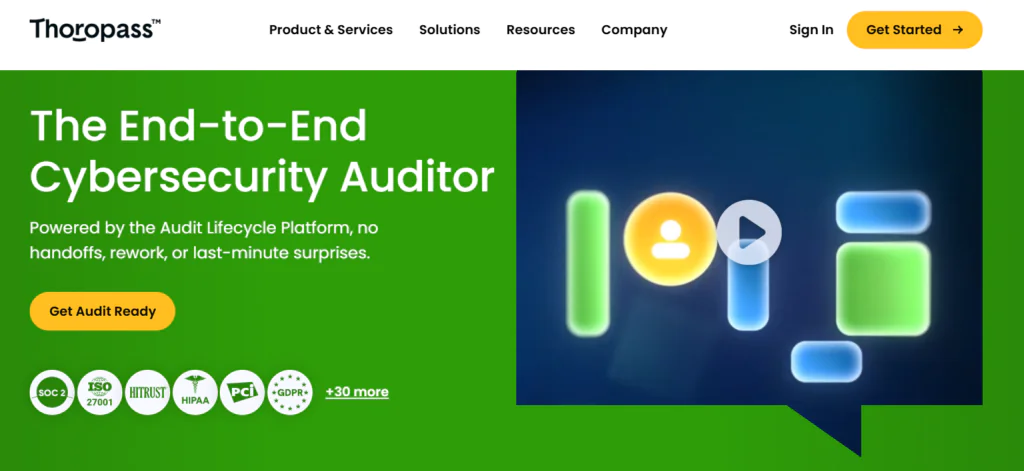
(Screenshot from Thoropass’ website)
Key features:
- Integrated compliance platform paired with audit-related services
- Support for audit readiness, evidence management, and compliance tracking
- Guidance throughout certification and attestation processes
Limitations:
- Organizations seeking a more self-service software experience may prefer other approaches
- AI-powered automation capabilities are less prominent than in newer AI-focused platforms
6. Secureframe
Secureframe is a compliance automation platform that helps organizations prepare for security and privacy frameworks through automated workflows and continuous monitoring. It is commonly used by companies transitioning from manual compliance processes to a more automated approach.
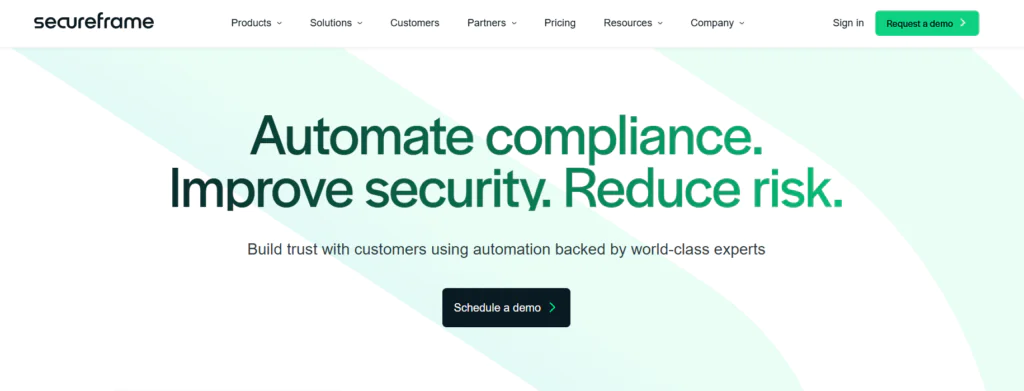
(Screenshot from Secureframe’s website)
Key features:
- Automated evidence collection and continuous monitoring
- Support for multiple compliance frameworks and audit readiness activities
- Policy management, task tracking, and compliance workflow automation
Limitations:
- Governance and enterprise risk management capabilities are not a primary focus
- Organizations with complex customization requirements may need additional configuration or support
7. Sprinto
Sprinto is a GRC tool focused on helping organizations maintain ongoing compliance across recurring audit cycles. It emphasizes operational efficiency through automation and continuous monitoring.
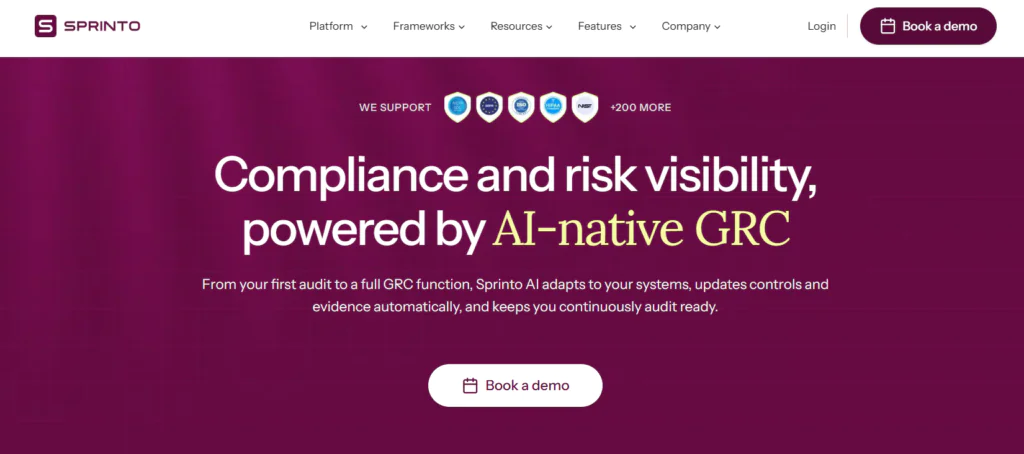
(Screenshot from Sprinto’s website)
Key features:
- Continuous monitoring and automated evidence collection
- Support for recurring audits and ongoing compliance maintenance
- Workflow automation designed to reduce manual compliance activities
Limitations:
- Less focused on broader enterprise governance and risk management programs
- Feature and pricing comparisons may require engagement with the sales team
Top AI GRC platforms compared
| Platform | Best fit | Key strengths |
| Scytale | SaaS organizations of all sizes with complex compliance needs seeking efficient AI GRC management processes | AI GRC compliance automation, multi-agent GRC suite, continuous security and compliance monitoring, multi-framework management, streamlined GRC processes, and expert guidance |
| MetricStream | Large enterprises with complex governance and risk programs | Enterprise-scale GRC management, extensive customization, operational risk and third-party risk management |
| LogicGate | Teams prioritizing workflow flexibility and customization | No-code workflow builder, customizable applications, flexible reporting and governance processes |
| Scrut | Cloud-native companies focused on compliance automation | Automated evidence collection, audit readiness workflows, compliance tracking, technical integrations |
| Thoropass | Organizations seeking compliance software combined with advisory services | Audit support, certification guidance, compliance tracking, service-led approach |
| Secureframe | Teams transitioning from manual compliance management | Automated evidence collection, continuous monitoring, policy management, multi-framework support |
| Sprinto | Organizations focused on recurring audits and ongoing compliance maintenance | Continuous monitoring, workflow automation, evidence collection, audit readiness management |
AI-native GRC for how teams work today.
How to choose the right AI GRC platform
Choosing an AI GRC platform can significantly impact the speed, cost, and success of your compliance program. While many GRC tools offer similar capabilities on the surface, differences in automation, framework coverage, expert support, and AI features for GRC platforms can lead to very different outcomes. Here are six of the most important factors to consider when evaluating your options:
1. Team size and compliance maturity
The right GRC platform depends heavily on the size and experience of your compliance team. Smaller organizations often benefit from guided workflows and embedded expertise, while larger teams may require advanced reporting, approvals, and stakeholder management. Choose a platform that aligns with both your current needs and future growth plans.
2. Framework coverage
Your platform should support the frameworks you need today and those you may adopt in the future. Whether you’re pursuing SOC 2, ISO 27001, HIPAA, PCI DSS, GDPR, or SOX ITGC, expanding your compliance program should not require switching tools. Broad framework coverage helps future-proof your investment.
3. Cross-mapping and automation
The best AI GRC tools eliminate duplicate work by mapping controls across multiple frameworks automatically. They also automate evidence collection, testing, and compliance workflows to reduce manual effort. These capabilities become increasingly important as compliance requirements grow.
4. Expert support
GRC software alone is rarely enough to achieve successful audit outcomes. Vendors that provide dedicated compliance experts, implementation guidance, and auditor coordination can help teams move faster and avoid common pitfalls. This support is particularly valuable for organizations pursuing compliance for the first time.
5. Integration depth
Integrations determine how much of your GRC program can be automated. A strong platform should connect seamlessly with cloud providers, HR systems, identity platforms, ticketing tools, and development environments. Deeper integrations reduce manual work and provide a more accurate view of compliance status.
6. Pricing and long-term scalability
The cheapest platform is not always the most cost-effective. Evaluate pricing transparency, support inclusions, framework expansion costs, and the platform’s ability to scale as your compliance requirements change.

Simplify AI GRC management with Scytale
Scytale helps organizations move beyond manual compliance processes and fragmented GRC operations with a unified AI GRC platform built for modern compliance teams. By bringing governance, risk, compliance, audit management, and vendor risk management into a single system, Scytale enables organizations to manage growing compliance requirements with greater efficiency, consistency, and control.
Designed to support organizations at every stage of compliance maturity, Scytale combines AI-powered automation with dedicated GRC expertise to simplify complex compliance programs. From risk assessments and policy management to audit readiness and multi-framework governance, the platform helps teams strengthen oversight, reduce operational complexity, and build scalable compliance programs that support long-term growth.
FAQs about AI GRC platform
When should a team use an AI GRC platform?
A team should use an AI GRC platform when manual evidence collection, control tracking, and framework mapping start slowing audits or increasing risk. It helps most when your compliance program spans multiple systems or frameworks and your team needs current visibility instead of point-in-time updates.
How is an AI GRC platform different from traditional GRC software?
An AI GRC platform differs from traditional GRC software by acting on live data instead of storing static records. Traditional tools often depend on manual updates, while leading platforms like Scytale review evidence continuously, flag gaps earlier, and reduce duplicate work across frameworks.
Which is the best AI GRC platform in 2026?
The best AI GRC platform in 2026 depends on your team size, framework scope, and support needs. Scytale stands out as a strong all-round option because it combines AI automation, cross-framework mapping, continuous monitoring, and embedded GRC expertise in one platform.
How much does an AI GRC platform cost?
AI GRC platform pricing varies based on framework count, integrations, support level, and company size. Entry costs often rise when you add implementation help, monitoring depth, or audit services, so ask vendors for full pricing structure instead of comparing base software fees alone.
Do AI GRC platforms support multiple compliance frameworks?
Yes, most AI GRC platforms support multiple compliance frameworks. The stronger products map shared controls across standards such as SOC 2, ISO 27001, HIPAA, GDPR, and SOX ITGC, which helps your team maintain one operating model instead of rebuilding evidence and policies for each audit.