

TL;DR: Thoropass alternatives
- Teams often compare Thoropass competitors when they already trust an external auditor or need wider framework coverage.
- Thoropass alternatives fit different buyer needs, from SaaS compliance automation to broader enterprise GRC and reporting.
- The top Thoropass alternative depends on your audit model, framework roadmap, and how much workflow automation you need.
- A platform switch should reduce audit-prep effort and preserve evidence quality, not simply replace one dashboard with another.
- Scytale stands out as the best Thoropass alternative for AI-powered, multi-framework compliance with dedicated GRC expert support.
Choosing the right compliance platform can have a significant impact on how efficiently your team manages security and compliance. What works at one stage may become limiting as requirements expand, audits become more frequent, and more teams get involved. The right platform should reduce the operational burden of compliance, give your team greater visibility and control, and make it easier to adapt as new requirements emerge.
For organizations evaluating Thoropass, it’s important to look beyond individual features and consider how each alternative supports the way your compliance program actually operates. Differences in automation, flexibility, scalability, and support can significantly impact your team’s workload and long-term compliance management.
In this article, we compare the top Thoropass alternatives, including their key strengths and limitations, why organizations consider switching, what to evaluate before making the move, and which solution best fits different compliance needs.
Top 5 Thoropass alternatives
- Scytale
- LogicGate
- Scrut
- Optro
- Workiva
What is Thoropass?
Thoropass, formerly Laika, is a compliance automation platform that combines software with in-house audit services for teams pursuing audits and certifications. It helps organizations prepare for and manage frameworks such as SOC 2, SOC 1, ISO 27001, HITRUST, and PCI DSS.
The platform brings evidence collection, control tracking, policy management, and audit coordination into one centralized service model. By combining compliance software and audit support under one provider, Thoropass offers teams a more guided approach to managing compliance, from initial readiness through the assessment process.
Why look for a Thoropass alternative?
Thoropass works well for many teams, but compliance needs often evolve as organizations grow. Governance, Risk, and Compliance (GRC) requirements can become more complex, introducing new frameworks, stakeholders, systems, and audit demands. Here are the key reasons teams may consider a Thoropass alternative:
More flexibility around auditors
Thoropass combines its compliance platform with in-house audit services, which can simplify the process for teams that prefer working with a single provider. However, organizations that already have a trusted third-party auditor, want to compare audit firms, or have specific auditor requirements may prefer to keep their compliance platform and audit relationship separate. This gives teams more control over auditor selection while keeping compliance management and audit preparation centralized.
Broader multi-framework compliance
Companies may begin their compliance journey with SOC 2 or ISO 27001 but quickly find themselves adding requirements such as HIPAA, PCI DSS, CMMC, AI governance, or vendor risk management. At that stage, managing each requirement separately can create unnecessary duplicate work. A strong multi-framework platform can map overlapping controls and reuse existing evidence across frameworks, helping teams expand their compliance program without rebuilding processes every time a new framework is introduced.
More advanced GRC capabilities
As organizations mature, compliance can become part of a broader risk strategy. Larger teams may need capabilities spanning SOX, enterprise risk management (ERM), third-party risk, internal audit, ESG reporting, or other business-wide processes. This can lead organizations to evaluate Thoropass competitors that provide functionality beyond security compliance and can support multiple risk and governance teams within one platform.
Platform and integration limitations
Platform functionality and integration capabilities can also lead teams to explore alternatives. As compliance programs grow, organizations may need stronger integrations, more intuitive workflows, greater automation, and better visibility across compliance activities. If a platform creates additional manual work or doesn’t connect effectively with key systems, an alternative may provide a more efficient and scalable approach to compliance management.
Streamline GRC workflows with seamless automation.
Top 5 Thoropass alternatives
The best Thoropass alternative depends on your organization’s compliance needs, priorities, and future growth. Different platforms offer different levels of automation, flexibility, framework coverage, and support. Here are the top Thoropass alternatives to consider:
1. Scytale
Scytale stands out as the best overall Thoropass alternative for SaaS and growing companies that want to automate more of their compliance program while still getting hands-on expert support. Its AI GRC platform centralizes and automates key compliance processes, reducing the manual work required to get compliant and stay compliant.
As compliance requirements grow, Scytale makes it easier to scale without multiplying the workload. Multi-framework cross-mapping helps teams reuse controls and evidence across 80+ frameworks, while dedicated GRC experts provide specialized guidance and support throughout the compliance and audit readiness process.
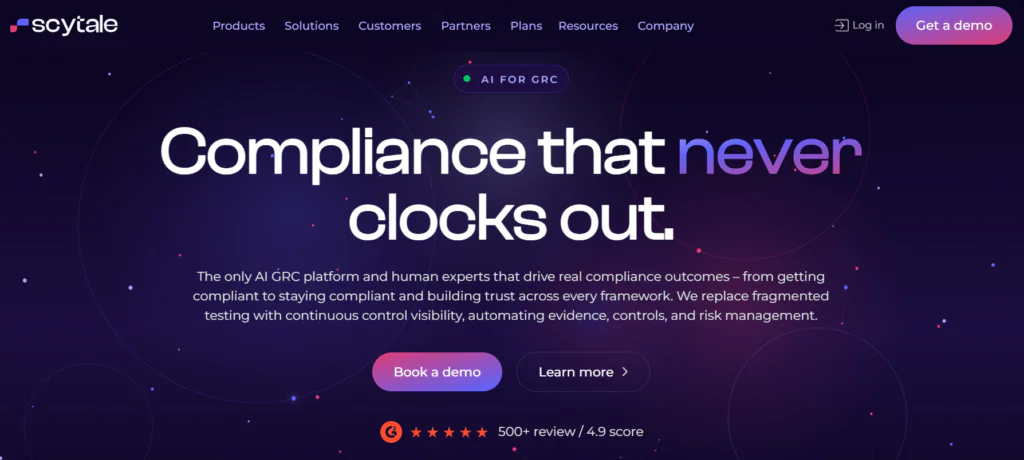
(Screenshot from Scytale’s website)
Why Scytale is the best:
- Continuous compliance through real-time monitoring, with full visibility into your security and risk posture.
- AI-powered automation that streamlines core compliance processes, including evidence collection, access reviews, and vendor risk management.
- Multi-framework management with cross-mapping to eliminate duplicate work across multiple standards like SOC 2, ISO 27001, GDPR, HIPAA, and SOX ITGC.
- Customizable Trust Center to clearly showcase your security and compliance posture.
- Dedicated GRC expert support, providing tailored guidance throughout the entire compliance journey.
- Integrations with essential business systems to automate evidence collection and reduce manual compliance work.
2. LogicGate
LogicGate is a GRC platform designed for organizations that need to manage multiple risk functions rather than focusing primarily on security compliance. Its no-code Risk Cloud allows teams to build and adapt workflows across operational risk, IT risk, third-party risk, compliance, and other governance processes.
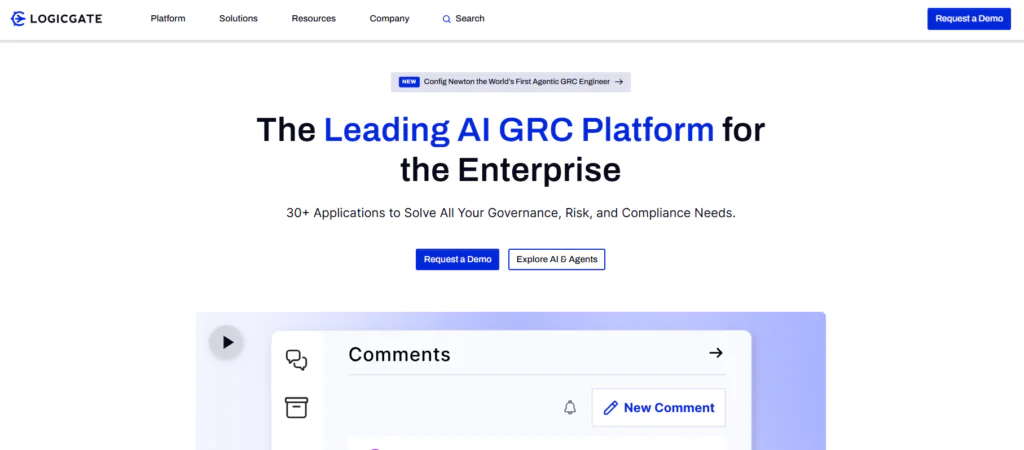
(Screenshot from LogicGate’s website)
Strengths:
- No-code workflow builder gives organizations flexibility to create risk and compliance processes around their existing operating model.
- Broad risk management capabilities make it suitable for teams managing operational, IT, vendor, and enterprise risks within the same environment.
- Highly configurable architecture allows organizations to adapt workflows as their governance structure and regulatory requirements evolve.
Limitations:
- Pricing can be relatively high for organizations primarily looking for security compliance and audit-readiness capabilities.
- The platform’s flexibility may require more setup and configuration than teams wanting a more out-of-the-box compliance experience.
3. Scrut
Scrut is a security compliance platform designed primarily for startups and growing organizations managing multiple compliance frameworks. It combines evidence collection, compliance monitoring, risk management, and integrations, with a commercial model aimed at keeping costs predictable as compliance programs expand.
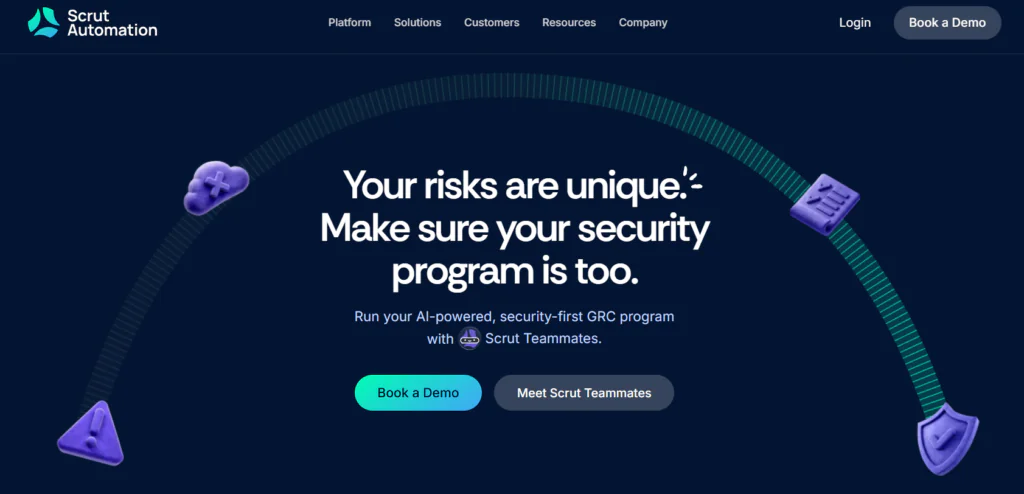
(Screenshot from Scrut’s website)
Strengths:
- Flat subscription structure can make budgeting more predictable for organizations adding frameworks, modules, or users over time.
- Automated evidence collection through 70+ integrations helps lean compliance teams reduce recurring manual collection and tracking.
- Centralized compliance and risk workflows provide growing organizations with one place to manage their security compliance program.
Limitations:
- Larger organizations requiring extensive internal audit, ESG, or enterprise risk functionality may eventually need broader GRC capabilities.
- Automation levels can depend on the organization’s technology stack and whether its key systems are supported by existing integrations.
4. Optro
Optro, formerly AuditBoard, is an enterprise GRC platform built for larger organizations managing governance and risk across multiple departments and business functions. It brings internal audit, SOX, enterprise risk management, third-party risk, and ESG processes together within a centralized environment.
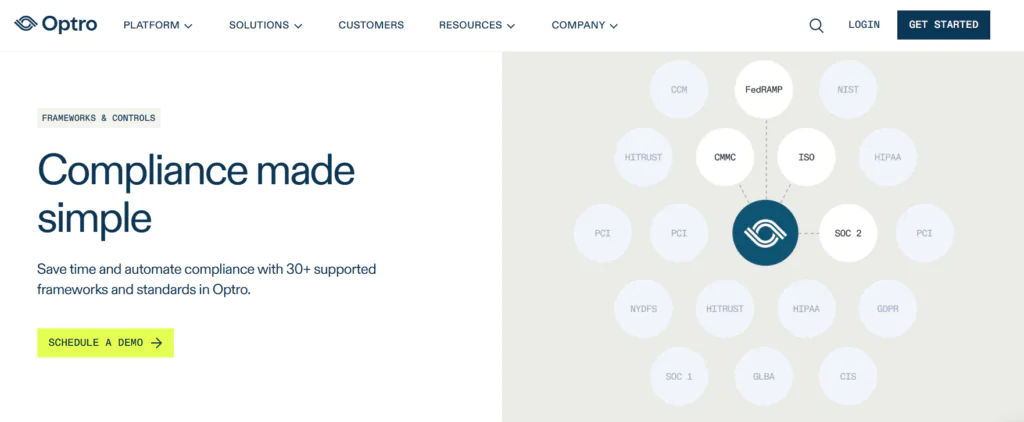
(Screenshot from Optro’s website)
Strengths:
- Broad functionality connects audit, compliance, and risk processes across multiple business functions.
- Strong internal audit and SOX capabilities make it particularly relevant for mature organizations with established audit programs.
- Centralized risk information gives teams greater visibility into governance activities across departments, business units, and risk functions.
Limitations:
- Enterprise-level pricing and implementation requirements may put it beyond the needs of startups and many mid-market organizations.
- Teams primarily focused on security compliance and certification readiness may find its wider GRC functionality more extensive than necessary.
5. Workiva
Workiva is an enterprise platform that connects governance and compliance activities with financial, regulatory, disclosure, and sustainability reporting. It is primarily suited to larger organizations where finance, audit, risk, and reporting teams need to collaborate around shared data and complex reporting requirements.
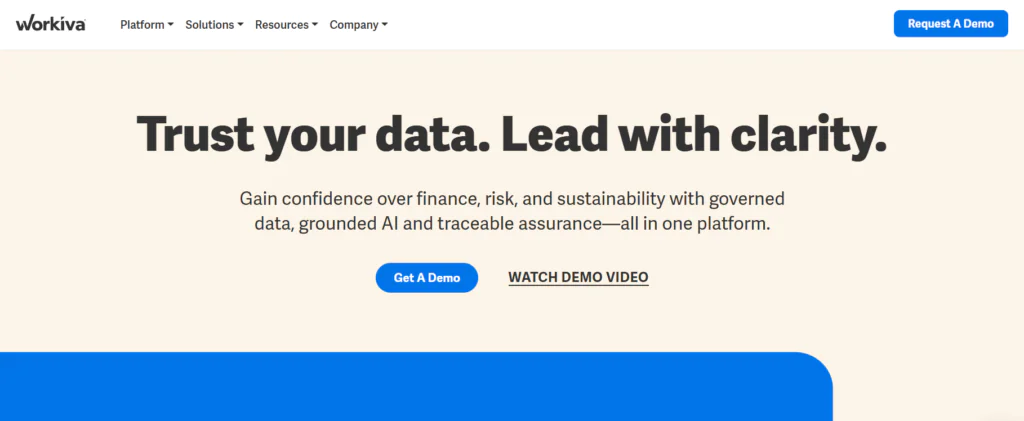
(Screenshot from Workiva’s website)
Strengths:
- Connects governance and compliance information with financial, regulatory, and sustainability reporting in a centralized environment.
- Strong disclosure management capabilities make it well suited to organizations managing complex external and regulatory reporting obligations.
- Collaborative workflows help finance, risk, and audit teams work from consistent data across recurring cycles.
Limitations:
- Its enterprise pricing and broad reporting capabilities may exceed the needs of organizations primarily looking for security compliance automation.
- Teams prioritizing automated evidence collection and security framework management may find its focus more oriented toward reporting and governance workflows.
Best Thoropass alternatives
| Platform | Best for | Key strength | Limitation |
| Scytale | SaaS organizations of all sizes with complex compliance needs seeking efficient AI GRC management processes | AI GRC automation, continuous compliance monitoring, multi-framework management, and dedicated GRC expert guidance | Best suited to organizations with ongoing or expanding compliance requirements |
| LogicGate | Organizations with complex GRC workflows | Highly customizable no-code risk and compliance workflows | Requires more setup and configuration |
| Scrut | Startups and growing compliance teams | Predictable pricing with automated evidence collection | Less suited to complex enterprise GRC programs |
| Optro | Large organizations managing enterprise GRC | Broad internal audit, SOX, and risk management capabilities | Can be too complex for security compliance alone |
| Workiva | Enterprises combining GRC and reporting | Strong financial, regulatory, and disclosure reporting | Less focused on security compliance automation |
Always-on GRC. Built for modern teams.
What to check before switching from Thoropass
Switching compliance software is an important decision that requires careful planning to ensure a smooth transition and avoid unnecessary disruption to your compliance program. Here are the key things to consider before switching from Thoropass:
Auditor acceptance and audit timing
If you’re already in an audit cycle, confirm that your current or prospective auditor is comfortable with the platform change before migrating. Determine whether evidence collected in Thoropass can still support the current audit period, whether specific controls need to be retested, and whether switching could affect your assessment timeline.
Historical evidence and audit trail
Make sure you understand how historical evidence, timestamps, approvals, comments, and previous audit records will be preserved. A complete and traceable evidence history gives auditors the context they need and reduces the risk of your team having to re-collect or recreate documentation after the switch.
Control mapping and migration effort
Controls may be structured and mapped differently across compliance platforms, even when they support the same frameworks. Review how your existing controls, owners, evidence requests, policies, and testing activities will transfer so you can estimate how much rebuilding or remapping will be required.
Contract terms and renewal windows
Review your Thoropass contract, renewal date, cancellation requirements, and notice periods before deciding when to migrate. Consider any potential overlap costs as well, especially if you need to keep Thoropass active while onboarding the new platform and completing evidence migration.

How Scytale simplifies the switch from Thoropass
Scytale’s AI GRC platform provides a centralized approach to GRC that helps organizations simplify complex processes, gain greater visibility across their compliance program, and build a foundation that can adapt as regulatory requirements change.
For teams evaluating Thoropass alternatives, Scytale provides the automation, scalability, and expert GRC support needed to reduce operational friction as requirements evolve. Bringing responsibilities, progress, and key processes together also gives teams clearer oversight and greater control as their program becomes more complex.
FAQs about Thoropass alternatives
Who are Thoropass’s biggest competitors?
Thoropass’s biggest competitors include Scytale, LogicGate, Scrut, Optro, and Workiva. These platforms serve different needs, from automated security compliance and multi-framework management to enterprise GRC, risk, audit, and financial reporting, so the right choice depends on your organization’s compliance priorities and growth plans.
Is Scytale a good alternative to Thoropass?
Yes. Scytale is a strong Thoropass alternative for organizations looking for greater automation, extensive framework coverage, expert compliance support, and the flexibility to maintain an independent auditor relationship. Its continuous evidence collection, control monitoring, and cross-framework mapping help reduce manual compliance work, while dedicated GRC experts provide specialized support throughout the compliance process.
Do Thoropass alternatives include an in-house auditor, like Thoropass does?
Most Thoropass alternatives do not follow the same bundled in-house auditor model. Scytale, for example, provides dedicated GRC experts who guide teams through compliance preparation and audit readiness while keeping the independent audit separate, giving organizations more flexibility when selecting and working with an auditor.
What does it cost to switch from Thoropass to another compliance platform?
The cost of switching from Thoropass depends on the new platform’s pricing, contract overlap, evidence migration, and the amount of control remapping required. Teams should also account for potential internal labor, auditor coordination, onboarding costs, and temporary duplicate subscriptions when calculating the total cost of switching.
Which Thoropass alternative supports the most compliance frameworks?
Scytale offers one of the broadest selections of compliance frameworks among the Thoropass alternatives in this comparison, supporting 80+ frameworks and standards. These include SOC 2, ISO 27001, HIPAA, PCI DSS, GDPR, FedRAMP, CMMC, ISO 42001, and SOX ITGC, with cross-framework mapping helping teams reuse controls and evidence as their compliance requirements expand.