

TL;DR: Scrut alternatives
- Scrut alternatives often differ in automation, pricing transparency, audit support, and compliance expertise.
- Many organizations explore Scrut alternatives when they need a solution that is easier for cross-functional teams to use and manage.
- The strongest Scrut alternatives support multiple frameworks while reducing duplicate work across controls and evidence.
- Scytale stands out as a top AI GRC platform by combining AI-powered compliance automation, dedicated GRC expertise, and built-in audit support in one solution.
- The right choice depends on your team, compliance requirements, integration needs, and support expectations.
Companies rarely replace a compliance platform because of its interface. They make a change when automation falls short, pricing lacks transparency, or compliance teams continue spending too much time on manual work.
As a result, organizations evaluating Scrut alternatives typically look beyond feature comparisons. These organizations often seek stronger Governance, Risk, and Compliance (GRC) capabilities, clearer service and support models, broader framework coverage, and a platform that works effectively across compliance, security, IT, and leadership teams.
In this article, we’ll explore what Scrut offers, where some organizations encounter limitations, and the leading alternatives worth considering in 2026.
Top 10 Scrut alternatives
- Scytale
- LogicGate Risk Cloud
- Anecdotes
- Compyl
- Thoropass
- OneTrust
- Secureframe
- Sprinto
- Drata
- Vanta
What does Scrut automation do?
Scrut Automation is a compliance platform that helps organizations manage security and compliance programs across frameworks such as SOC 2, ISO 27001, HIPAA, GDPR, and others. The platform centralizes compliance activities by providing tools for evidence collection, control monitoring, policy management, risk assessments, vendor risk management, and audit preparation within a single workspace. Its goal is to help organizations reduce manual effort, maintain audit readiness, and streamline compliance operations as requirements grow.
Organizations often evaluate Scrut for its user-friendly interface and compliance management capabilities. However, user feedback suggests that some teams encounter challenges as compliance programs become more complex or involve multiple departments. While the platform automates certain compliance workflows, some users report limitations in automation depth and collaboration across compliance, security, IT, and business teams. As a result, organizations exploring Scrut alternatives often look for solutions that offer broader automation, stronger cross-functional collaboration, and greater support for managing multiple frameworks at scale.
Streamline GRC workflows with no blind spots.
How much does Scrut automation cost?
Scrut does not publicly disclose its pricing, which can make it difficult for buyers to estimate costs during the early stages of vendor evaluation. Organizations researching Scrut pricing typically need to speak with the sales team before they can understand package options, included features, implementation requirements, and overall costs. For teams comparing multiple compliance platforms, this can make side-by-side evaluations more challenging.
Scrut also does not offer a free plan or self-service trial. As a result, buyers have limited opportunities to assess the platform’s user experience, automation capabilities, and overall fit before entering a formal sales process. Many organizations prefer vendors that provide greater pricing transparency and a simpler way to evaluate the platform before making a commitment.
Why look for a Scrut alternative?
Organizations typically begin evaluating Scrut alternatives when they need a solution that can scale more effectively across teams, frameworks, and growing compliance requirements. While compliance teams may be the primary users, achieving and maintaining compliance often requires active participation from security, IT, engineering, HR, legal, and executive stakeholders. As companies mature, many look for compliance automation tools that simplify collaboration, improve visibility, and reduce the manual effort required across departments.
Common reasons for exploring alternatives include the need for deeper automation, more flexible workflows, stronger expert guidance, and better support for continuous compliance. Some organizations also prefer solutions that combine software, advisory services, and audit support within a single offering, allowing them to streamline compliance management. As GRC initiatives continue to expand in scope and importance, buyers increasingly prioritize solutions that can support long-term growth, operational efficiency, and ongoing audit readiness without requiring significant additional resources.
AI-native GRC for how teams work today.
Top 10 Scrut alternatives for 2026
If you’re evaluating GRC tools, there are several strong alternatives to Scrut worth considering. Here are 10 leading options for streamlining compliance management, automating workflows, and reducing manual effort:
1. Scytale
Scytale is the top AI GRC platform designed to help organizations automate and scale compliance programs across multiple frameworks. The platform centralizes key GRC activities, including evidence collection, continuous compliance monitoring, policy management, vendor risk management, risk assessments, and audit preparation. It supports compliance across 80+ frameworks, including SOC 2, ISO 27001, GDPR, HIPAA, PCI DSS, and SOX ITGC.
What sets Scytale apart from many Scrut alternatives is its combination of AI-powered automation, continuous compliance capabilities, cross-framework mapping, built-in audit support, and dedicated GRC experts. This approach helps organizations reduce manual work, simplify multi-framework compliance, accelerate audit readiness, and maintain visibility into their compliance posture as requirements and programs grow.
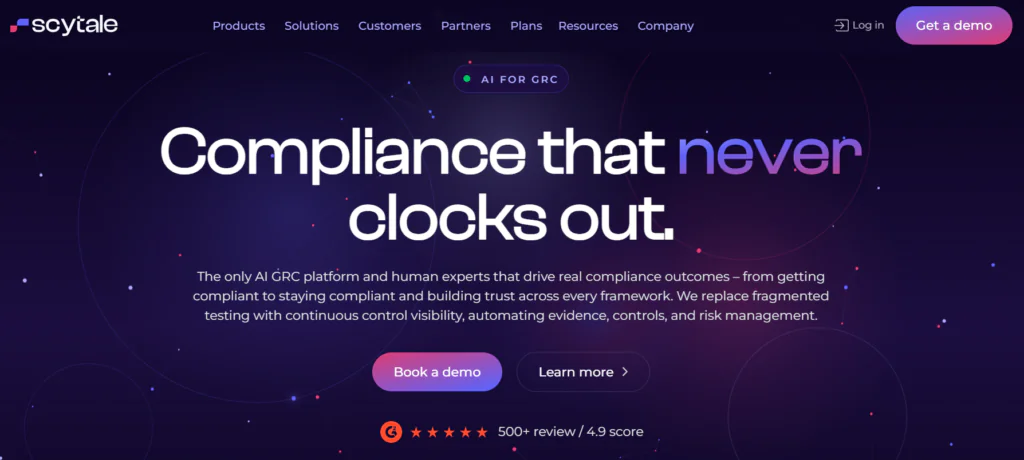
(Screenshot from Scytale’s website)
Why Scytale is the best:
- Combines AI-powered automation and AI agents with built-in audit support and dedicated GRC experts in a single platform
- Provides real-time visibility into controls, risks, and compliance status through continuous monitoring and automated control tracking
- Simplifies multi-framework compliance with cross-mapping across frameworks such as SOC 2, ISO 27001, GDPR, HIPAA, PCI DSS, and SOX ITGC
- Automates evidence collection, access reviews, vendor risk management, policy management, and audit preparation to reduce manual work
- Includes a customizable Trust Center for sharing security and compliance information with customers and stakeholders
- Supports growing compliance programs through extensive integrations and flexible workflows across business and security systems
2. LogicGate Risk Cloud
LogicGate Risk Cloud is a GRC platform designed for organizations that require flexible risk and governance workflows. It is often used by enterprises looking to build tailored processes that extend beyond compliance management.
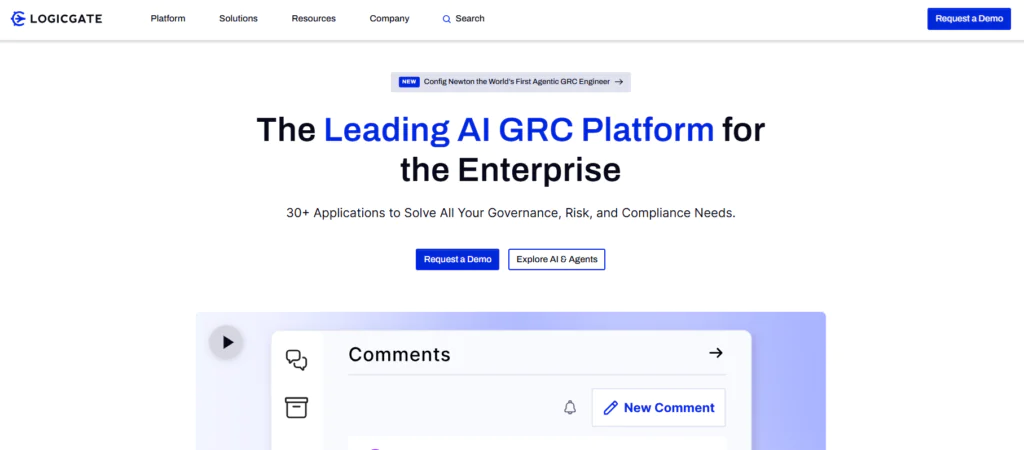
(Screenshot from LogicGate Risk Cloud’s website)
Key features:
- Custom workflow design allows teams to build governance, risk, and operational processes around their specific requirements.
- Configurable applications support issue management, risk assessments, approvals, and reporting workflows.
- Enterprise-focused architecture accommodates complex regulatory requirements.
Limitations:
- Organizations seeking guided compliance programs may require additional internal resources or external support.
- Customization often requires significant implementation planning and ongoing administration.
3. Anecdotes
Anecdotes focuses on evidence management and control operations for security and compliance teams. The platform helps organizations centralize compliance data and improve visibility into audit readiness activities.
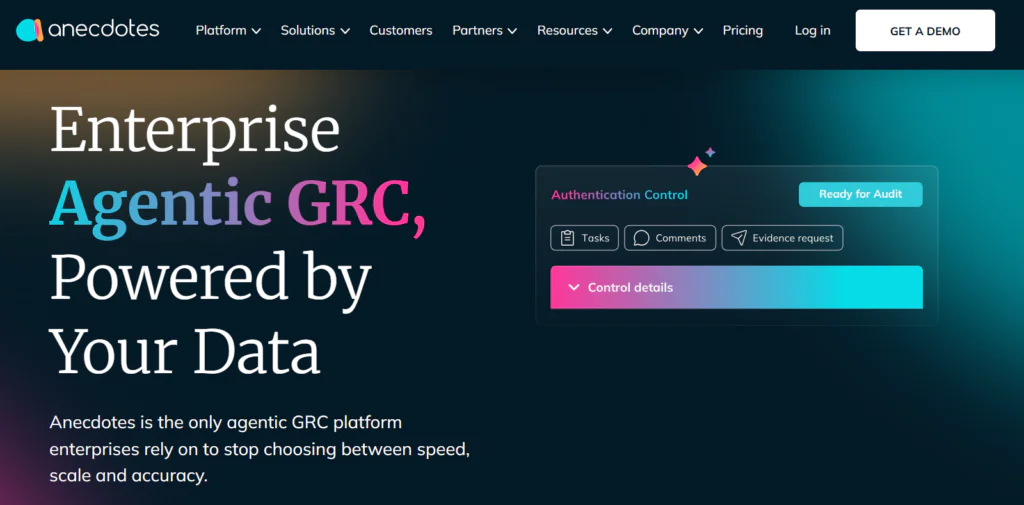
(Screenshot from Anecdotes’s website)
Key features:
- Structured evidence management consolidates compliance data from connected systems.
- Control monitoring capabilities help teams maintain visibility into control performance and documentation.
- Detailed reporting provides insight into evidence quality and compliance status.
Limitations:
- The platform’s primary focus on evidence operations may not address broader GRC management needs.
- Organizations seeking end-to-end compliance guidance may require supplementary tools or services.
4. Compyl
Compyl is a compliance management platform focused on helping organizations centralize policies, controls, risks, and audit activities. It is often used by teams looking for a straightforward approach to managing compliance programs.
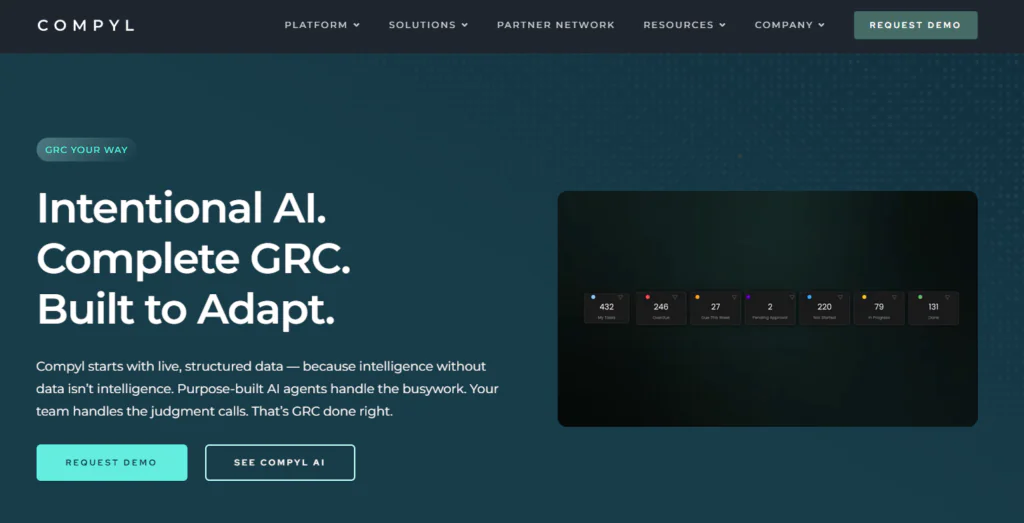
(Screenshot from Compyl’s website)
Key features:
- Centralized policy and control management simplifies day-to-day compliance administration.
- Risk and vendor management capabilities help consolidate governance activities.
- Audit preparation tools provide visibility into compliance tasks and requirements.
Limitations:
- Larger organizations may require more advanced automation and integration capabilities.
- Some compliance programs may benefit from additional advisory or audit support services.
5. Thoropass
Thoropass is a compliance and audit platform designed to help organizations prepare for and complete certification processes. Its integrated approach brings compliance workflows and audit-related activities together within a single solution.
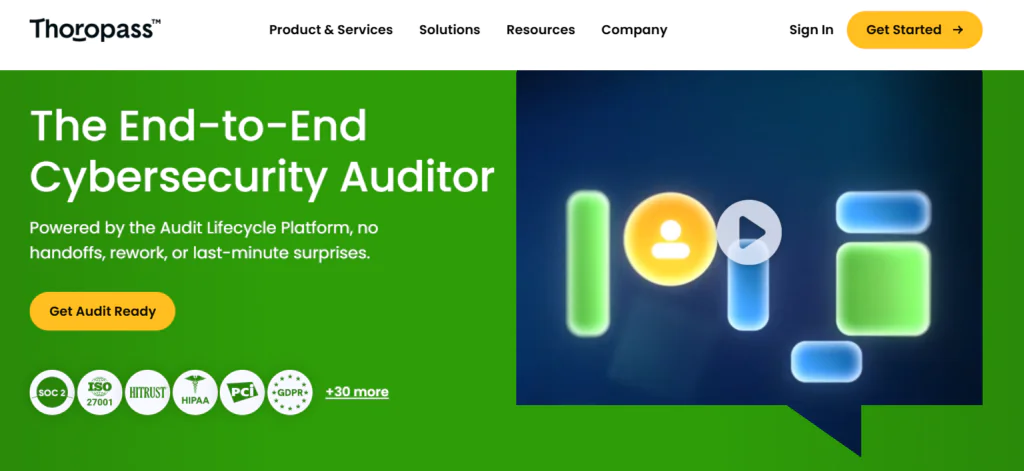
(Screenshot from Thoropass’s website)
Key features:
- Integrated audit services help streamline certification and assessment activities.
- Advisory support assists teams with readiness planning and compliance program execution.
- Centralized task management helps coordinate evidence collection and audit preparation.
Limitations:
- Organizations prioritizing product-driven automation may prefer platforms with a stronger software focus.
- Pricing and package details typically require engagement with the sales team.
6. OneTrust
OneTrust is an enterprise platform focused on privacy, risk management, third-party risk, and governance initiatives. It is commonly used by large organizations managing complex regulatory and operational requirements.
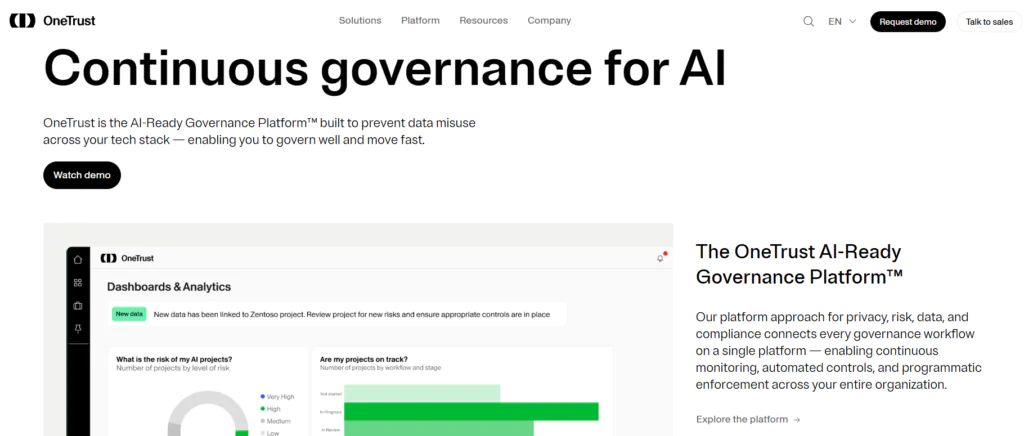
(Screenshot from OneTrust’s website)
Key features:
- Broad product portfolio supports privacy, third-party risk, governance, and regulatory initiatives.
- Enterprise-grade workflows help organizations manage large-scale governance programs.
- Extensive reporting and oversight capabilities support complex organizational structures.
Limitations:
- The platform’s breadth may be more than what organizations need for security compliance alone.
- Implementation and administration can require substantial internal resources.
7. Secureframe
Secureframe helps organizations prepare for and maintain security certifications through automated workflows and evidence collection. It is often used by companies pursuing frameworks such as SOC 2 and ISO 27001.
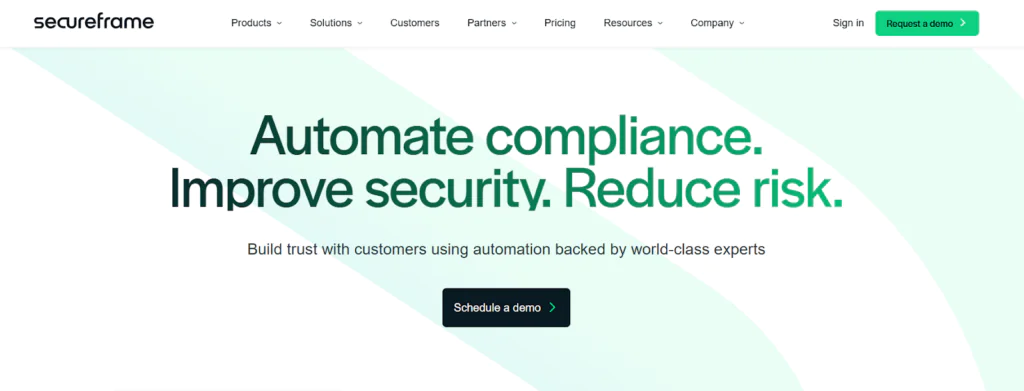
(Screenshot from Secureframe’s website)
Key features:
- Automated evidence collection reduces manual documentation efforts.
- Compliance workflows help teams manage certification and audit preparation activities.
- Employee and policy management features support ongoing compliance operations.
Limitations:
- Organizations with highly customized requirements may need greater workflow flexibility.
- The level of expert support varies depending on the selected package.
8. Sprinto
Sprinto focuses on automated compliance operations for cloud-first organizations. The platform helps teams maintain visibility into controls and compliance requirements between audits.
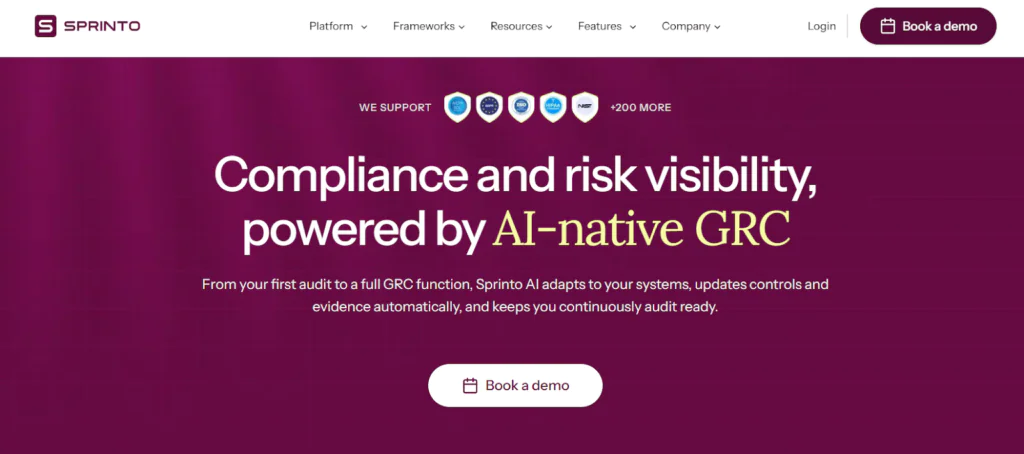
(Screenshot from Sprinto’s website)
Key features:
- Continuous compliance monitoring helps identify control gaps and changes in real time.
- Automated compliance journeys guide organizations through implementation and continuous maintenance.
- Integration ecosystem supports evidence collection from commonly used business systems.
Limitations:
- Buyers should evaluate the level of advisory support included with each plan.
- Organizations with unique compliance environments may require additional customization.
9. Drata
Drata is a compliance platform that helps organizations manage recurring audits and multiple compliance frameworks. It is known for its integration ecosystem and control monitoring capabilities.
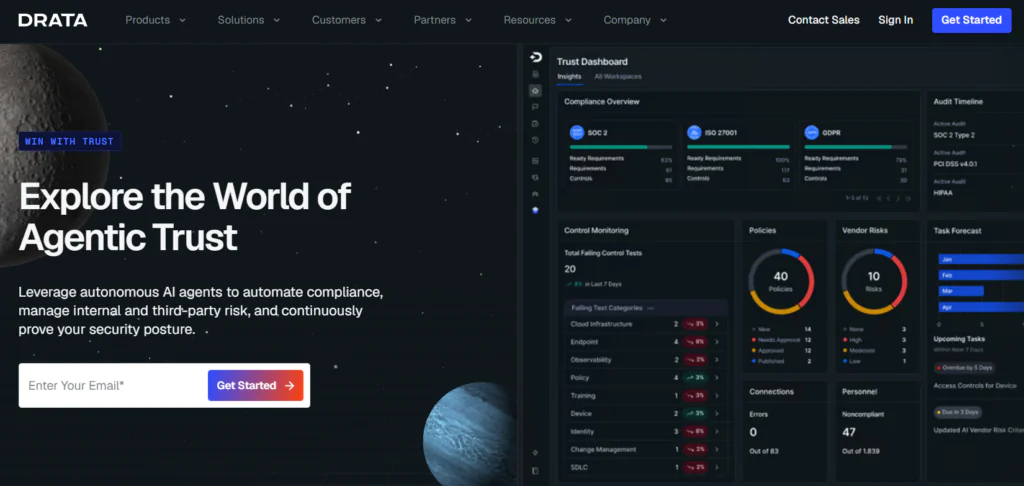
(Screenshot from Drata’s website)
Key features:
- Broad integration coverage supports automated evidence collection across business and security systems.
- Continuous control monitoring helps organizations maintain audit readiness year-round.
- Multi-framework management supports growing compliance requirements.
Limitations:
- Pricing information is not publicly available and generally requires a sales conversation.
- Some organizations may still require external advisory support for program development and audit coordination.
10. Vanta
Vanta helps organizations achieve and maintain security certifications through automation. It is often chosen by companies looking for a straightforward onboarding experience and standardized workflows.
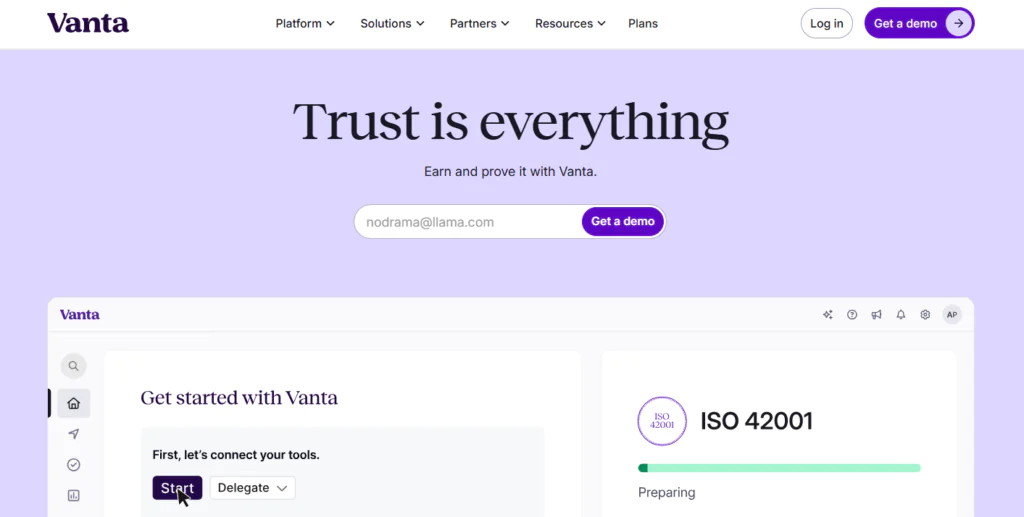
(Screenshot from Vanta’s website)
Key features:
- Prebuilt integrations automate evidence collection from a wide range of business applications.
- Framework templates help teams organize readiness efforts for common compliance standards.
- User-friendly workflows simplify compliance management for growing organizations.
Limitations:
- Organizations with more complex requirements may need additional flexibility or specialized support.
- Buyers should evaluate package scope carefully when comparing available services and features.
Top 10 Scrut alternatives compared
| Platform | Best for | Key strength |
|---|---|---|
| Scytale | SaaS organizations of all sizes with complex compliance needs seeking efficient AI GRC management processes | AI GRC compliance automation, multi-agent GRC suite, continuous security and compliance monitoring, multi-framework management, streamlined GRC processes, and expert guidance |
| LogicGate Risk Cloud | Enterprises with complex governance and risk management requirements | Highly customizable workflows and process automation |
| Anecdotes | Security and compliance teams focused on evidence operations | Evidence management and control visibility |
| Compyl | Small to mid-sized organizations managing compliance programs | Centralized policy, risk, and compliance management |
| Thoropass | Organizations preparing for audits and certifications | Integrated audit and certification services |
| OneTrust | Large enterprises managing privacy, risk, and governance initiatives | Broad governance, privacy, and risk management capabilities |
| Secureframe | Companies pursuing security certifications such as SOC 2 and ISO 27001 | Automated evidence collection and audit preparation |
| Sprinto | Cloud-first organizations looking to automate compliance activities | Continuous compliance monitoring and guided workflows |
| Drata | Organizations managing multiple frameworks and recurring audits | Extensive integrations and continuous control monitoring |
| Vanta | Companies seeking a straightforward path to compliance | Ease of use and standardized compliance workflows |
How to choose the right Scrut alternative
The right Scrut alternative depends on your organization’s compliance requirements, internal resources, and long-term goals. Some teams prioritize ease of use and guided workflows, while others need deeper automation, broader framework coverage, or more advanced GRC capabilities.
It’s also important to consider how well a solution can support future growth and changing compliance requirements. Here are a few key considerations to keep in mind when evaluating Scrut alternatives:
- Team fit: Choose a solution that aligns with the needs and technical expertise of the teams managing compliance.
- Framework coverage: Ensure the solution supports both your current and future compliance requirements.
- Automation capabilities: Evaluate how much manual work can be reduced through evidence collection, monitoring, and workflow automation.
- Support model: Consider whether expert guidance, audit support, and implementation assistance are included.
- Scalability: Look for a solution that can support continuous compliance as your organization grows.



Why Scytale is the best Scrut alternative
Scytale is the strongest Scrut alternative for organizations looking to streamline compliance management while building a scalable, long-term GRC program. As compliance requirements grow across frameworks, teams need more than audit preparation alone. They need a solution that reduces manual work, improves visibility, and supports continuous compliance operations across the organization.
Built on a centralized AI GRC platform, Scytale automates evidence collection, continuous control monitoring, risk assessments, policy management, vendor risk management, and audit preparation. Scytale supports 80+ frameworks, 150+ native and custom integrations, AI-powered capabilities, and dedicated GRC expertise. This combination helps organizations maintain continuous compliance, simplify multi-framework management, and reduce the operational burden of compliance as requirements grow.
FAQs about Scrut alternatives
How does Scrut automation support compliance teams?
Scrut Automation supports compliance teams by helping them manage evidence collection, control tracking, and audit preparation. It supports common security frameworks, but some buyers start comparing alternatives when they need simpler workflows for non-compliance teams or stronger expert support during implementation and audits.
How can buyers evaluate Scrut automation pricing without a public price list?
Buyers can evaluate Scrut Automation pricing only by speaking with sales and comparing scope, services, and rollout details against other vendors. That process can create friction for teams trying to compare budget, implementation effort, and time to value against platforms with clearer pricing transparency or trial access.
Which is better, Scytale or Scrut?
Scytale is a stronger fit for teams wanting compliance automation plus hands-on expert guidance. Scrut covers core automation workflows, while Scytale adds dedicated GRC experts, built-in audit support, and broader cross-framework mapping for companies managing more complex or fast-growing programs.
What is the best alternative to Scrut automation?
The best alternative to Scrut Automation depends on your team structure and compliance goals, but Scytale stands out as the strongest AI GRC solution. It combines automation, continuous monitoring, expert GRC support, and audit access in one centralized platform, which helps teams reduce operational strain across multiple frameworks.
Do Scrut alternatives support multiple frameworks?
Yes, many Scrut alternatives support multiple frameworks, including SOC 2, ISO 27001, HIPAA, GDPR, PCI DSS, and others. However, the key differentiator is not simply the number of frameworks supported, but how effectively the solution manages them. Buyers should evaluate factors such as cross-framework mapping, evidence reuse, automation capabilities, and the ability to reduce duplicate work when managing multiple compliance requirements.