



TL;DR: Top CCPA compliance tools
- CCPA obligations are becoming more complex, making manual compliance harder to sustain at scale.
- Compliance tools streamline operations by automating key workflows and reducing reliance on manual processes.
- The most effective CCPA platforms provide continuous monitoring, giving teams real-time visibility into control performance and early issue detection.
- Scytale stands out as the top CCPA compliance tool in 2026, combining AI-driven automation with expert GRC support to deliver a more scalable, continuous approach to compliance.
- The right solution depends on your organization’s size, complexity, and long-term compliance needs.
If you run a SaaS company that processes the personal data of California residents and are not actively addressing CCPA compliance, you are overlooking a critical requirement. The California Consumer Privacy Act (CCPA) is firmly established and continues to expand, increasing expectations for how organizations manage and protect consumer data.
As a result, many teams find these requirements complex and resource-intensive to manage. CCPA compliance tools simplify this process by simplifying workflows and improving consistency.
In this article, we examine the impact of these tools and highlight the top CCPA compliance solutions for 2026 to help your organization reduce risk, avoid penalties, and build stronger customer trust.
Top 10 CCPA compliance tools
- Scytale
- Ketch
- OneTrust
- Osano
- LogicGate
- Centraleyes
- Enzuzo
- Hyperproof
- Enactia
- Termly
Why CCPA compliance tools are essential in 2026
Meeting CCPA requirements is increasingly complex and difficult to manage manually. Obligations such as handling consumer data requests, providing opt-out mechanisms, and maintaining strong data security controls require consistent oversight, coordination, and expertise.
CCPA compliance tools address these challenges by automating time-intensive processes, including request tracking, reporting, and policy management. This helps streamline workflows and minimizes the risk of errors, such as missed deadlines or incomplete responses, which can lead to regulatory penalties. At the same time, customer and partner expectations around data privacy continue to rise, with greater emphasis on transparency and control.
Implementing a dedicated compliance automation tool demonstrates a clear commitment to data protection. For organizations managing multiple frameworks, such as SOC 2, ISO 27001, and GDPR alongside CCPA, multi-framework support is essential. It reduces duplication and improves consistency across compliance programs.
Key features to look for in CCPA compliance tools
CCPA compliance tools may share a common goal, but their value depends on the features that support scalable, continuous compliance. Here are the key features to prioritise when evaluating CCPA compliance platforms:
Automated evidence collection
Automated evidence collection gathers and verifies data directly from your systems, reducing reliance on manual input. This ensures more accurate, up-to-date evidence and streamlines audit preparation.
Continuous control monitoring
Continuous monitoring ensures that security and privacy controls remain effective between audit cycles. It also provides real-time visibility into control failures, enabling faster remediation.
Policy management and customisation
Policy management tools provide access to pre-approved templates that can be tailored to your organisation’s needs. This simplifies policy alignment and ensures documentation remains current and consistent.
Security awareness training
Built-in training capabilities help employees understand their role in protecting personal data. Ongoing education supports stronger compliance practices and reduces the risk of human error.
User access review automation
Automated access reviews ensure that user permissions are regularly evaluated and updated. This strengthens security controls and supports compliance with data access requirements.
Risk assessment automation
Automated risk assessments help identify and prioritise potential security and privacy gaps. This enables teams to address risks more efficiently and maintain a stronger compliance posture.
Multi-framework cross-mapping
Cross-mapping capabilities allow organisations to align controls across multiple frameworks, such as SOC 2, ISO 27001, GDPR, CCPA, and SOX ITGC. This reduces duplication and simplifies compliance management across standards.
Integration with existing systems
Seamless integrations with tools such as CRMs, cloud platforms, and ticketing systems enable continuous data flow. This supports automated evidence collection and ensures a more efficient, end-to-end compliance process.
Get CCPA Compliant 90% Faster
Top CCPA compliance tools in 2026
Choosing the right CCPA compliance tool directly impacts how effectively your organization manages data privacy. Here are ten leading platforms to consider in 2026:
1. Scytale
Scytale stands out as the best CCPA compliance platform in 2026, designed for SaaS organizations managing CCPA alongside broader security and privacy needs. By combining intelligent automation with continuous control monitoring, Scytale enables organizations to maintain CCPA compliance while staying aligned across frameworks such as SOC 2, ISO 27001, GDPR, and SOX ITGC.
The platform centralizes evidence, controls, policies, and audit workflows in a single system, combining AI GRC automation with dedicated expert support. This approach continuously validates evidence, identifies gaps, and enhances visibility across the compliance program. As a result, organizations can shift to a scalable compliance model with less manual work and stronger audit readiness.
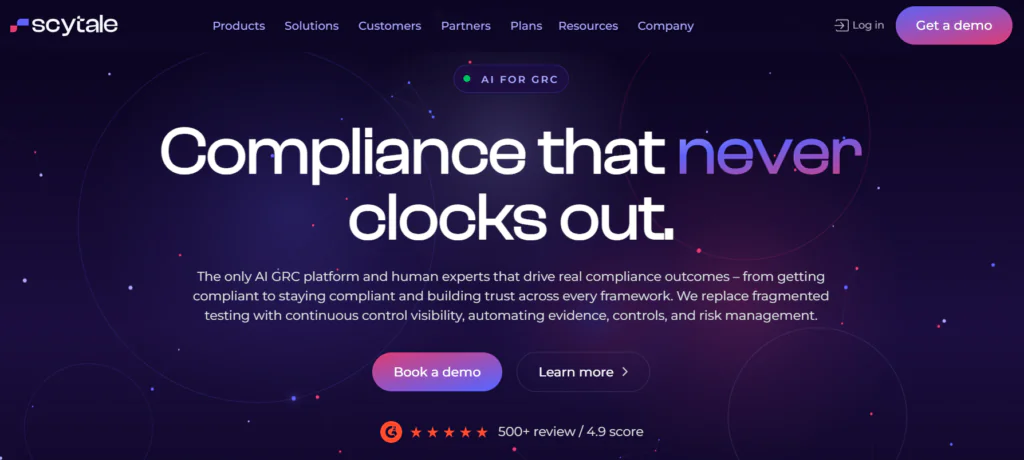
(Screenshot from Scytale’s website)
Why Scytale is the best:
- Continuous compliance through real-time monitoring, with full visibility into your data privacy controls and risk posture
- AI-powered automation that streamlines key CCPA processes, including evidence collection, data request tracking, access reviews, and vendor risk management
- Multi-framework management with cross-mapping to eliminate duplicate work across frameworks like CCPA, SOC 2, ISO 27001, GDPR, and SOX ITGC
- Customizable Trust Center to clearly demonstrate your privacy and compliance posture to customers and stakeholders
- Dedicated GRC expert support, providing tailored guidance across CCPA requirements and broader compliance initiatives
- Seamless integrations with your existing tech stack, enabling more efficient automation and scalable compliance operations
2. Ketch
Ketch is a data privacy platform focused on consent management and data governance, helping organizations manage user preferences and enforce privacy policies. It is particularly suited for companies prioritizing customer data control and regulatory adaptability.
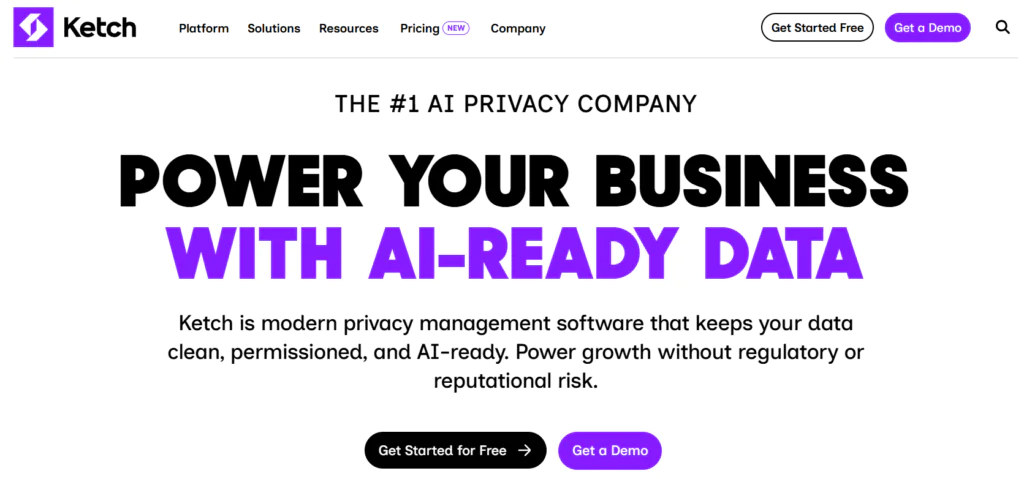
(Screenshot from Ketch’s website)
Key strengths:
- Advanced consent and preference management across digital touchpoints
- Flexible data governance capabilities at the data layer
- Adaptable to evolving privacy regulations
Limitations:
- Limited coverage of broader GRC and audit workflows
- May require integration with additional tools for full compliance management
3. OneTrust
OneTrust is a privacy and compliance platform offering a suite of tools for data governance, consent management, and risk management. It is commonly used by large enterprises with complex regulatory requirements.
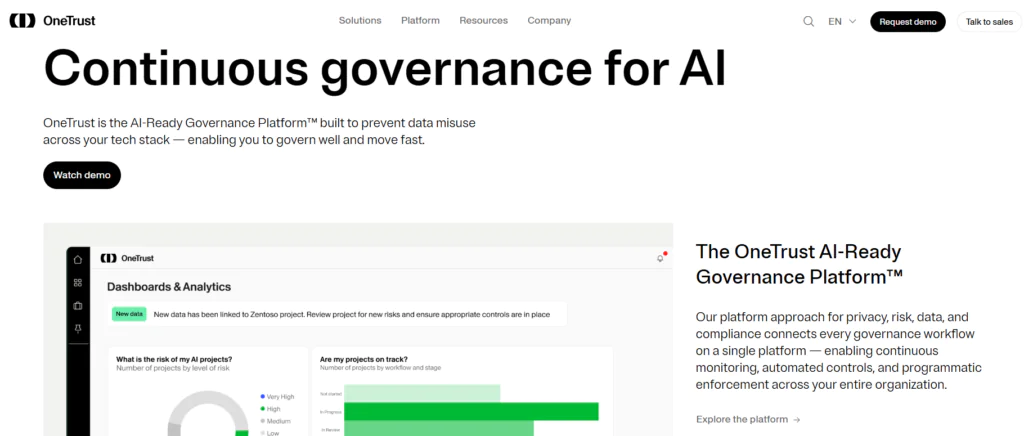
(Screenshot from OneTrust’s website)
Key strengths:
- Extensive feature set covering privacy, risk, and third-party management
- Strong global regulatory coverage across multiple jurisdictions
- Scalable for large and complex organizations
Limitations:
- Implementation and configuration can be resource-intensive
- User experience may be complex for smaller teams
4. Osano
Osano is a privacy-focused platform with a strong emphasis on consent management and vendor monitoring. It is often chosen by organizations looking for a straightforward approach to managing privacy compliance.
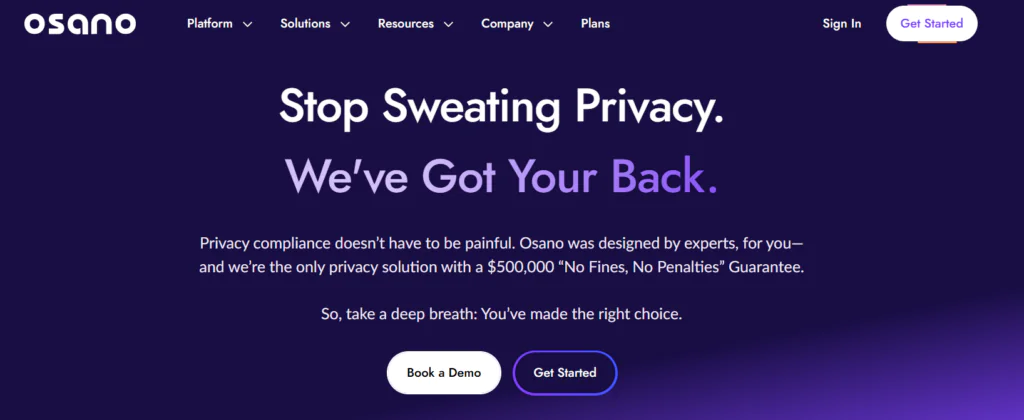
(Screenshot from Osano’s website)
Key strengths:
- User-friendly consent management and cookie banner solutions
- Real-time vendor monitoring and compliance alerts
- Accessible pricing for smaller organizations
Limitations:
- Limited functionality beyond privacy and consent use cases
- Not designed for full-scale GRC or audit management
5. LogicGate
LogicGate is a GRC platform designed to help organizations build and manage risk and compliance workflows. It is well-suited for teams that require customizable processes across governance and risk management functions.
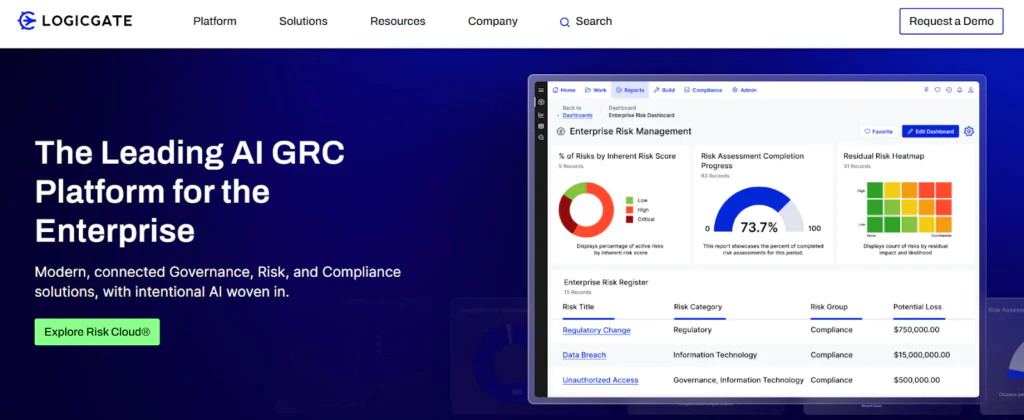
(Screenshot from LogicGate’s website)
Key strengths:
- Highly customizable workflows for risk and compliance processes
- Strong reporting and analytics capabilities
- Scales with organizational growth and complexity
Limitations:
- Requires configuration to align with specific compliance frameworks
- Less focused on built-in privacy features
6. Centraleyes
Centraleyes is a risk and compliance platform that emphasizes automated risk assessments and control mapping. It helps organizations gain visibility into their risk posture across multiple standards.
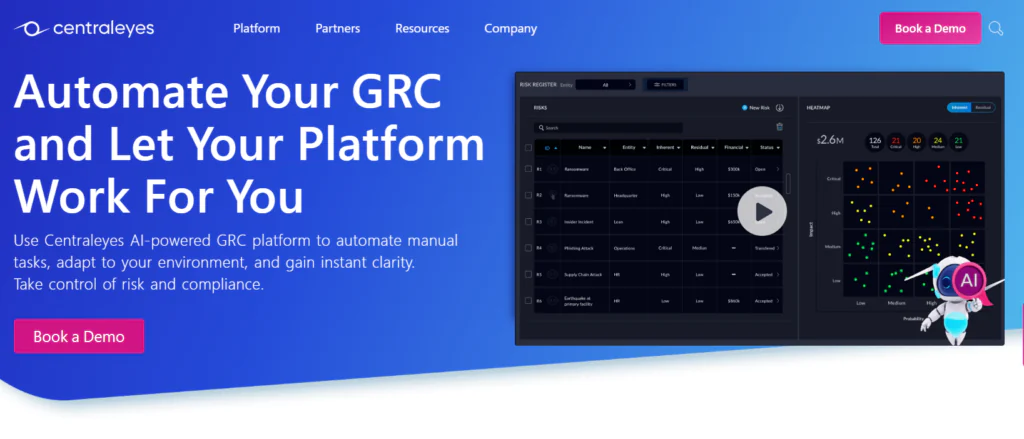
(Screenshot from Centraleyes’ website)
Key strengths:
- Automated risk assessment and scoring capabilities
- Centralized view of compliance posture across frameworks
- Pre-built mappings to support multiple standards
Limitations:
- Less emphasis on operational audit workflows
- May require additional tools for full privacy program management
7. Enzuzo
Enzuzo is a privacy compliance tool designed for small to mid-sized companies, focusing on policy management and consent handling. It offers a simple, accessible way to meet baseline CCPA requirements.
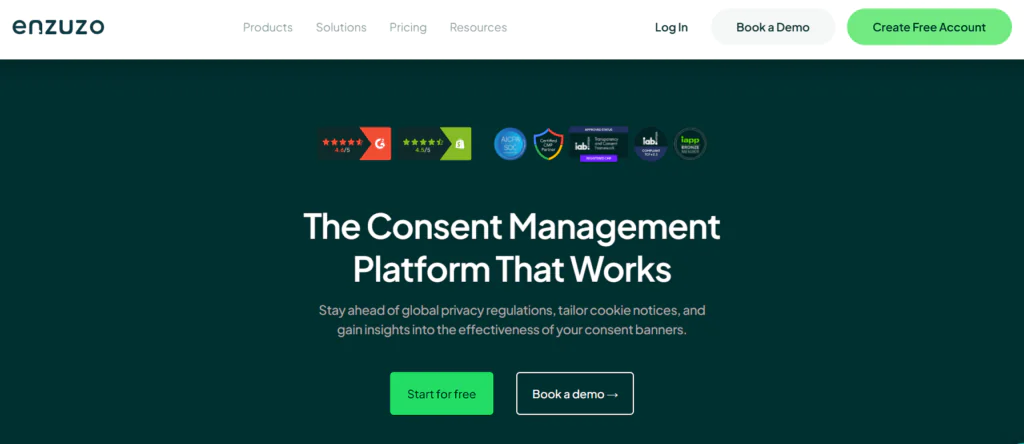
(Screenshot from Enzuzo’s website)
Key strengths:
- Easy-to-use platform for policy generation and consent management
- Quick implementation without heavy technical requirements
- Cost-effective for smaller teams
Limitations:
- Limited scalability for complex compliance programs
- Lacks broader GRC and continuous monitoring capabilities
8. Hyperproof
Hyperproof is a compliance operations platform that helps organizations manage controls, evidence, and audit readiness in a structured way. It is designed to support continuous compliance programs rather than one-time audits.
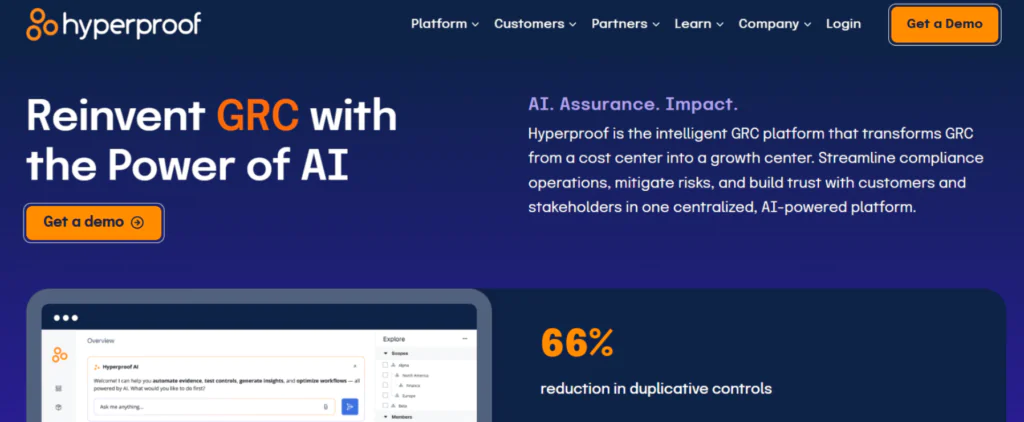
(Screenshot from Hyperproof’s website)
Key strengths:
- Strong evidence management and audit tracking capabilities
- Structured workflows for compliance operations
- Supports continuous compliance initiatives
Limitations:
- Limited native privacy-specific tooling
- May require integrations for full data governance coverage
9. Enactia
Enactia is a privacy and data protection platform focused on regulatory compliance and governance processes. It is commonly used by organizations managing GDPR and related privacy obligations.
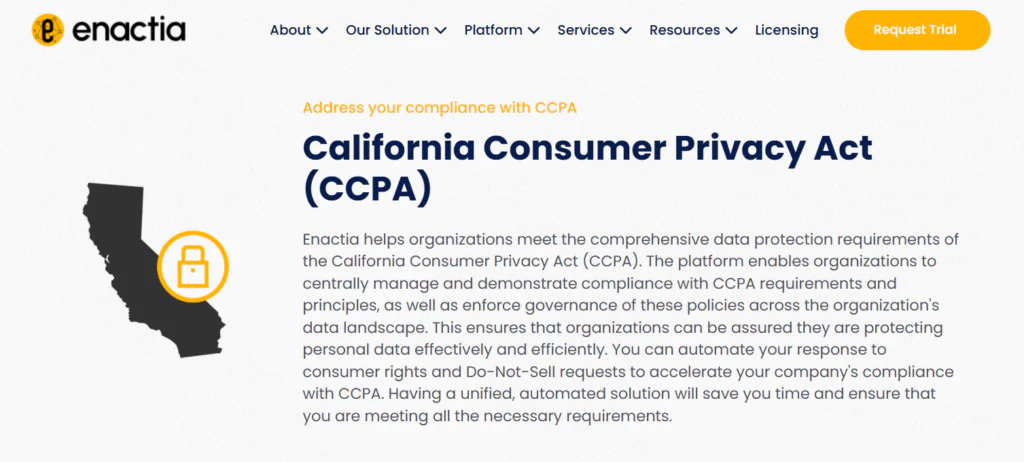
(Screenshot from Enactia’s website)
Key strengths:
- Strong focus on data protection and regulatory compliance
- Supports privacy governance and documentation processes
- Suitable for organizations with GDPR-heavy requirements
Limitations:
- Less comprehensive for broader GRC and audit workflows
- Limited automation compared to more advanced platforms
10. Termly
Termly is a compliance solution focused on policy generation and consent management. It is typically used by small businesses looking for a simple way to meet baseline CCPA requirements.
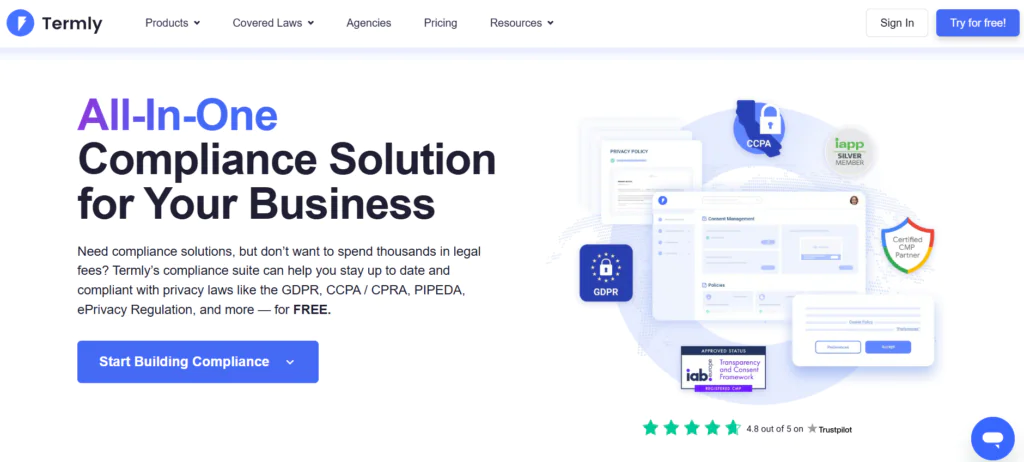
(Screenshot from Termly’s website)
Key strengths:
- Quick and easy policy and consent banner generation
- Intuitive interface for non-technical users
- Affordable entry-level solution
Limitations:
- Limited functionality beyond basic compliance needs
- Not suitable for organizations requiring continuous compliance or audit readiness
CCPA Compliance Tools Comparison
| Platform | Key strengths | Best for |
| Scytale | Centralized AI GRC platform for managing CCPA compliance, continuous monitoring of privacy controls, automated workflows for data requests and evidence, multi-framework support, and and dedicated GRC expert support | SaaS organizations of all sizes managing CCPA alongside broader privacy and security requirements, seeking a scalable, AI-driven approach to compliance |
| Ketch | Advanced consent management, flexible data governance, regulatory adaptability | Organizations prioritizing data control and consent management |
| OneTrust | Comprehensive privacy suite, global coverage, enterprise scalability | Large enterprises with complex, multi-region compliance needs |
| Osano | User-friendly consent tools, vendor monitoring, affordable pricing | Startups and SMBs focused on privacy and cookie compliance |
| LogicGate | Customizable workflows, strong analytics, flexible GRC capabilities | Growing companies needing tailored risk and compliance workflows |
| Centraleyes | Automated risk assessments, centralized visibility, pre-built mappings | Organizations focused on risk management and compliance visibility |
| Enzuzo | Simple setup, policy generation, cost-effective | Small to mid-sized businesses needing basic privacy compliance |
| Hyperproof | Strong evidence management, audit tracking, structured workflows | Teams focused on audit readiness and compliance operations |
| Enactia | Privacy governance, regulatory focus, GDPR alignment | Organizations with heavy data protection and GDPR requirements |
| Termly | Easy policy generation, intuitive UI, affordable | Small businesses needing quick, lightweight CCPA compliance |
Finding the right fit for your business
Selecting the right compliance platform depends on factors such as your organization’s size, industry, and regulatory scope. A structured evaluation helps ensure the solution aligns with both your current requirements and future growth.
Start by assessing your budget and complexity. Smaller teams may benefit from more streamlined, cost-effective solutions, while larger organizations with multi-framework obligations often require more advanced capabilities.
Next, consider the level of support you need. Some platforms are designed for self-service, while others combine technology with expert guidance to support implementation, audits, and ongoing compliance.
Finally, if your organization operates across multiple regulations, prioritise platforms with strong multi-framework capabilities to reduce duplication and improve consistency.
Streamline GRC workflows with no blind spots.
Streamline CCPA compliance with Scytale
CCPA compliance becomes far more manageable when supported by a platform designed for continuous oversight rather than reactive workflows. Scytale enables organizations to handle evolving privacy requirements with greater structure and control, helping teams stay ahead of data requests, policy updates, and regulatory expectations without disrupting day-to-day operations.
With a unified approach to managing privacy obligations, Scytale reduces operational friction and brings clarity to compliance processes. The platform, combined with experienced GRC guidance, helps organizations maintain consistency, improve responsiveness during audits and customer reviews, and build a stronger, more transparent privacy posture as they scale.
FAQs about top CCPA compliance tools
What features should I look for in a CCPA compliance tool?
Look for features such as automated evidence collection, data request management, consent tracking, policy management, and audit reporting. Strong AI GRC platforms like Scytale also offer continuous control monitoring, integrations with existing systems, and multi-framework support to help manage CCPA alongside other regulations efficiently.
Are CCPA compliance tools only for companies in California?
No, CCPA compliance tools are relevant for any organization that processes the personal data of California residents, regardless of location. Many companies outside California use these tools to meet regulatory requirements and align with broader privacy standards and customer expectations.
Can CCPA compliance tools manage cookie consent and tracking?
Yes, many CCPA compliance tools include consent management features that allow organizations to manage cookie preferences and tracking permissions. These tools help ensure users can opt out of data collection where required and support transparency in how personal data is collected and used.
Do CCPA tools work with other privacy regulations like GDPR?
Most modern CCPA compliance tools are designed to support multiple frameworks, including GDPR. Top AI GRC platforms like Scytale enable organizations to map controls, reuse evidence, and manage overlapping requirements more efficiently, reducing duplication and simplifying compliance across different regulations.
How much do CCPA compliance tools typically cost?
Costs vary depending on the platform’s capabilities, level of automation, and support provided. Entry-level tools may suit smaller teams, while more advanced platforms like Scytale combine automation with expert guidance, reflecting a broader investment in scalable, continuous compliance and risk management.