



TL;DR: Vendor risk management software
- Vendor risk management software automates vendor onboarding, assessments, and ongoing monitoring, reducing reliance on spreadsheets and manual questionnaires.
- The strongest platforms combine automated assessments, continuous monitoring, and compliance framework mapping in one system.
- Scytale is an AI GRC platform that unifies vendor risk management with SOC 2, ISO 27001, and other framework compliance.
- The right platform depends on the size and complexity of your vendor ecosystem, regulatory requirements, and existing compliance processes.
- Pricing, integrations, scalability, and automation capabilities are key factors to consider when comparing vendor risk management software.
Third-party breaches account for a growing share of security incidents, and regulators increasingly hold organizations accountable for the vendors they rely on. A single unassessed vendor can expose customer data, disrupt operations, or trigger a compliance gap during an audit. As vendor ecosystems grow more complex, tracking risk manually across spreadsheets and email threads becomes unreliable and difficult to defend to auditors or customers.
Choosing the right vendor risk management software determines whether a security team can keep pace with that complexity or falls behind it. The right platform gives security teams a more scalable way to assess third parties, respond to changing risks, and maintain oversight as vendor relationships change. In this article, we compare the top seven vendor risk management solutions for 2026, covering what to look for, and how to choose the best fit for your organization.
Best vendor risk management software
- Scytale
- SecurityScorecard
- Aravo
- Onspring
- LogicGate
- Vanta
- UpGuard
What is vendor risk management software?
Vendor risk management software is a platform that helps organizations identify, assess, and monitor the security and compliance risk posed by third-party vendors throughout the relationship lifecycle.
Most organizations rely on dozens or hundreds of vendors for infrastructure, payments, customer support, and other critical functions, and each one introduces potential exposure to data breaches, service outages, or regulatory violations. Vendor risk management software gives security and compliance teams a structured way to evaluate that exposure before onboarding a vendor and to track it for as long as the relationship continues.
Manual vendor tracking, built on spreadsheets and one-off security questionnaires, no longer scales as vendor ecosystems grow. Spreadsheets go stale the moment a vendor’s certifications expire or its infrastructure changes, and a single questionnaire only captures a vendor’s risk posture at one point in time. Vendor risk management software closes that gap by automating assessments, centralizing evidence, and flagging the different types of vendor risk as they change, rather than waiting for the next annual review.
What to look for in vendor risk management software
Vendor risk management tools vary widely in their capabilities and the organizations they support. The right software should simplify vendor oversight while scaling with your risk program. Here are the key features to look for in vendor risk management software:
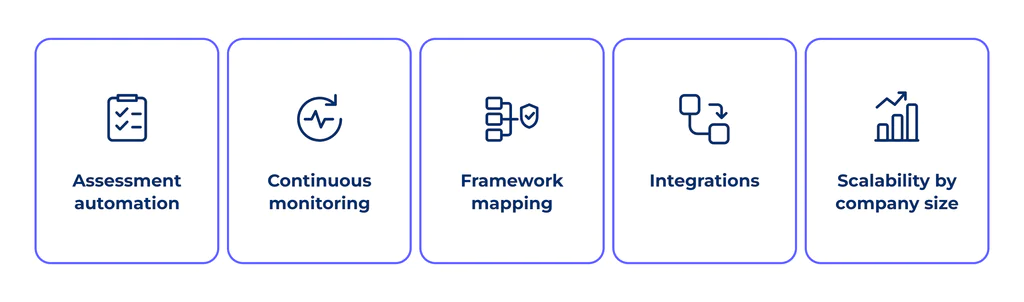
Assessment automation
Automated risk assessments reduce the manual work involved in reviewing vendors. Look for software that streamlines security questionnaires, standardizes scoring, and flags high-risk responses. This helps teams focus their attention on vendors that require further review.
Continuous monitoring
Vendor risk can change between scheduled assessments. Continuous monitoring tracks changes in security posture, compliance status, and other risk indicators. This helps teams identify issues such as expired certifications or security incidents sooner.
Framework mapping
Vendor due diligence often needs to support multiple compliance frameworks. Look for software that maps vendor risk data across standards such as SOC 2, ISO 27001, and GDPR. This reduces duplicate work and keeps vendor oversight aligned with broader third-party risk management (TPRM) and compliance requirements.
Integrations
Vendor information often sits across procurement, ticketing, identity, and other systems. Integrations help keep this information connected and up to date without constant manual updates. They can also trigger workflows when new vendors are added or access levels change.
Scalability by company size
Vendor risk requirements become more complex as an organization grows. Look for software that can support increasing vendor volumes, frameworks, teams, and reporting requirements. This allows the vendor risk program to scale without rebuilding existing workflows.
Streamline GRC workflows with seamless automation.
Top 7 Vendor Risk Management Software
Vendor risk management software helps organizations assess, monitor, and manage security risks across their third-party ecosystem. The right platform can reduce manual assessments, improve risk visibility, and keep vendor oversight aligned with compliance requirements. Here are seven of the top vendor risk management software platforms to consider in 2026:
1. Scytale
Scytale stands out as the best vendor risk management software in 2026, combining automated vendor risk assessment with continuous monitoring and multi-framework compliance mapping in one platform. Built for SaaS organizations managing SOC 2, ISO 27001, GDPR, and SOX ITGC alongside vendor risk, Scytale keeps vendor due diligence aligned with the rest of an organization’s compliance program instead of running it as a separate process.
The AI GRC platform centralizes vendor questionnaires, evidence, and risk scores in a single system, using AI TPRM capabilities to flag gaps and track vendor certifications as they change. Dedicated GRC experts support teams through vendor onboarding and ongoing reviews, helping organizations move from reactive vendor tracking to a continuously audit-ready program.
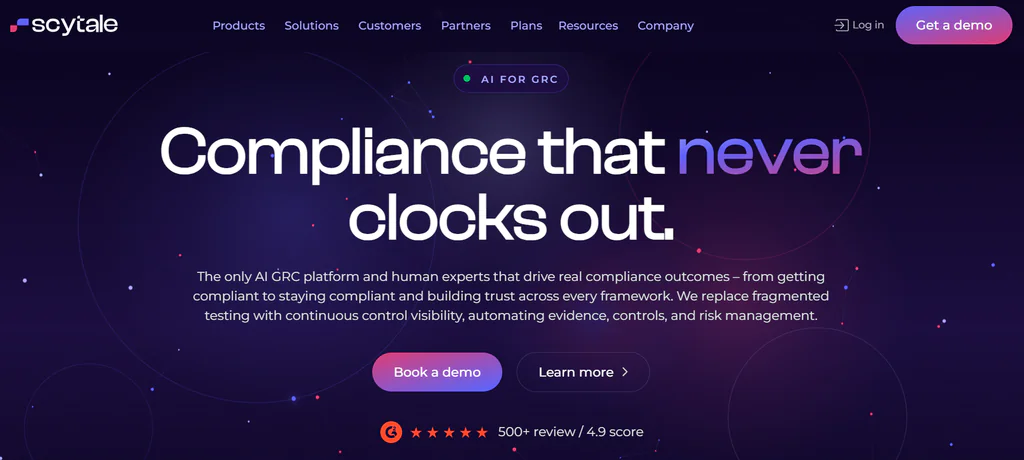
(Screenshot from Scytale’s website)
Why Scytale is the best:
- Continuous vendor monitoring for visibility into changes in security and risk posture
- AI-powered automation that streamlines vendor risk assessment, evidence collection, and ongoing third-party monitoring
- Multi-framework management with cross-mapping to eliminate duplicate work across SOC 2, ISO 27001, GDPR, and SOX ITGC
- Customizable Trust Center to showcase vendor and organizational security posture to customers and partners
- Dedicated GRC expert support, providing tailored guidance throughout the vendor risk management lifecycle
- Streamlined integrations with procurement and security tools for enhanced automation and flexibility
2. SecurityScorecard
SecurityScorecard is a threat-informed third-party risk platform that combines continuous vendor monitoring with security ratings and AI-accelerated questionnaire automation. The platform serves enterprises across financial services, healthcare, and critical infrastructure that need real-time visibility into supply chain risk rather than point-in-time assessments.
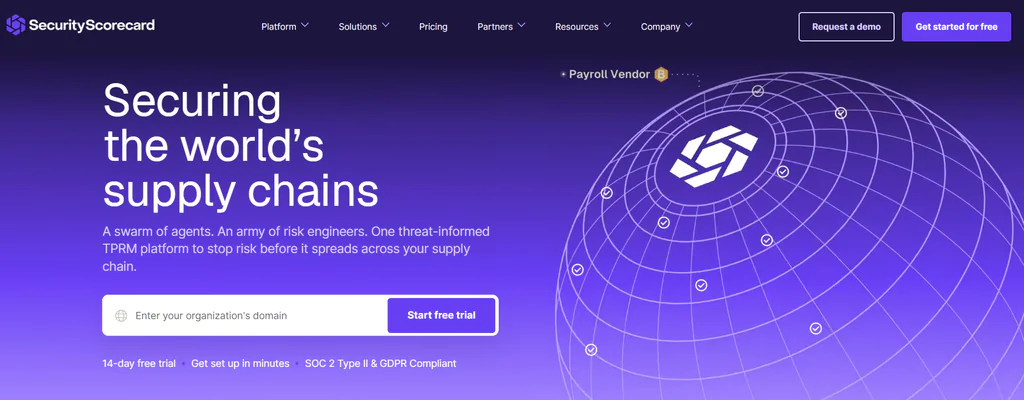
(Screenshot from SecurityScorecard’s website)
Key strengths:
- Security ratings updated continuously using proprietary threat intelligence data
- Automated questionnaire workflows that reduce manual vendor review time
- Strong supply chain and fourth-party risk visibility for large enterprises
Limitations:
- Pricing and implementation are geared toward large enterprise budgets
- Deep customization can require dedicated administrator time to configure
3. Aravo
Aravo is a cloud-based third-party risk management platform built for large enterprises managing vendor relationships across the full lifecycle, from nomination through offboarding. The platform integrates with dozens of external risk intelligence providers and is recognized as a Leader in Gartner’s Magic Quadrant for third-party risk management.

(Screenshot from Aravo’s website)
Key strengths:
- Deep lifecycle coverage from vendor nomination through contract offboarding
- Wide integration network with numerous third-party risk intelligence feeds
- Strong fit for regulated industries such as financial services and pharma
Limitations:
- Implementation timelines run longer than lighter-weight vendor risk tools
- Interface and configuration can feel complex for smaller compliance teams
4. Onspring
Onspring is a no-code GRC platform with a dedicated third-party risk management module that tracks vendor relationships from due diligence through offboarding. The platform organizes vendors into tiers, applies customizable risk assessments by vendor type, and centralizes remediation tracking on configurable dashboards.
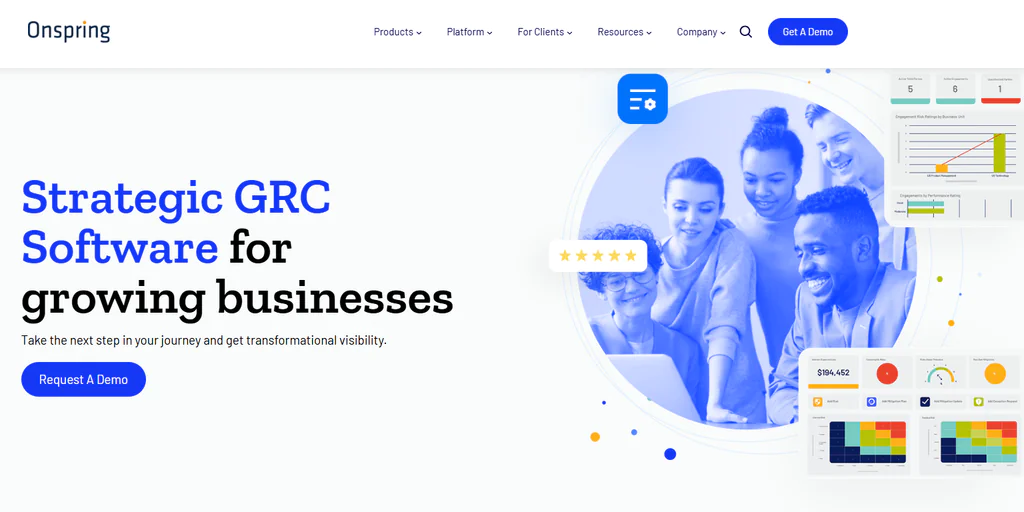
(Screenshot from Onspring’s website)
Key strengths:
- No-code configuration lets teams customize workflows without engineering support
- Tiered vendor risk model supports different assessment depth by vendor
- Centralized dashboards connect vendor findings to broader GRC risk data
Limitations:
- Third-party risk features sit within a broader GRC suite, not standalone
- Reporting customization carries a learning curve for new administrators
5. LogicGate
LogicGate Risk Cloud is a configurable GRC platform with a third-party risk management application built for procurement, risk, and compliance teams. The platform uses workflow automation and aggregated vendor intelligence to give risk teams a real-time view of third-party exposure through executive-level risk dashboards.
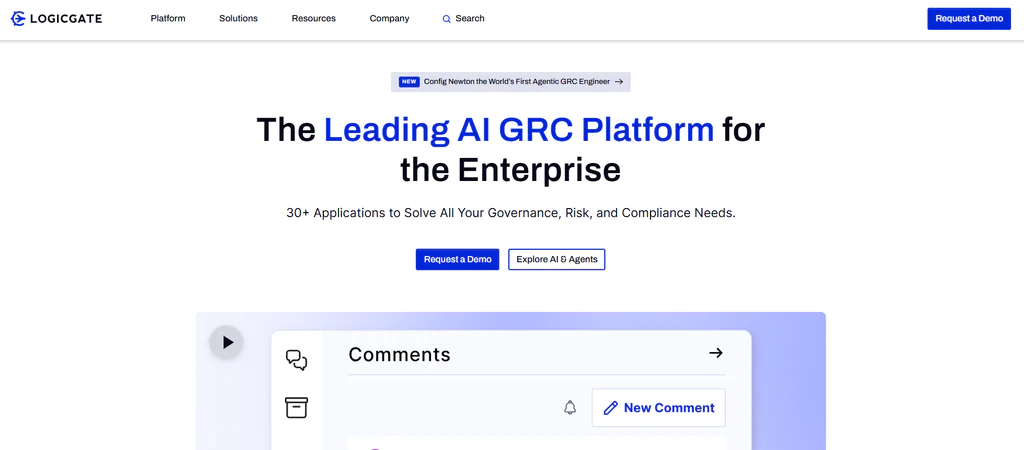
(Screenshot from LogicGate’s website)
Key strengths:
- Highly configurable workflows for vendor intake and risk scoring
- Executive dashboards that translate vendor risk into business impact
- Recognized as a leader in independent third-party risk management evaluations
Limitations:
- Configuration flexibility often requires dedicated platform administration
- Best suited to teams with existing GRC program maturity
6. Vanta
Vanta’s third-party risk management product automates vendor discovery, AI-powered security assessments, and continuous breach monitoring for organizations already using Vanta for compliance automation. The platform is built to cut vendor assessment time significantly while keeping vendor risk visibility inside the same system used for SOC 2 and other framework compliance.
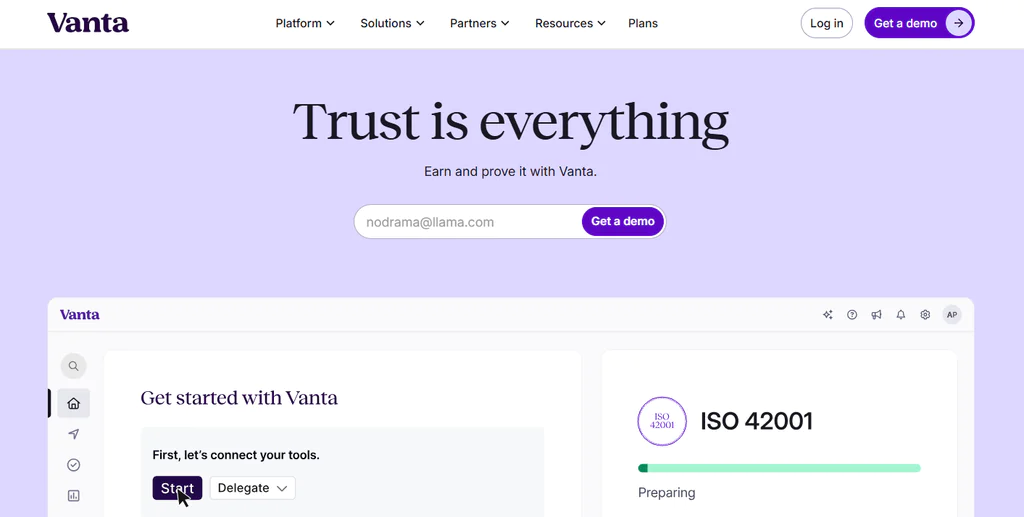
(Screenshot from Vanta’s website)
Key strengths:
- AI-powered assessments that shorten vendor security review cycles
- Vendor risk tracked alongside existing compliance automation workflows
- Automatic vendor discovery reduces manual vendor inventory upkeep
Limitations:
- Vendor risk depth is lighter than dedicated enterprise TPRM platforms
- Most value is realized by organizations already on Vanta’s platform
7. UpGuard
UpGuard Vendor Risk combines objective security ratings, automated security questionnaires, and continuous daily monitoring for organizations managing large third-party portfolios. The platform covers major frameworks such as NIST and ISO and is used by financial services, healthcare, and education organizations scaling vendor risk programs without adding headcount.
(Screenshot from UpGuard’s website)
Key strengths:
- Security ratings refreshed multiple times daily across monitored vendors
- Questionnaire library mapped to widely used security frameworks
- Built to scale vendor coverage without proportional team growth
Limitations:
- Ratings-based scoring can miss vendor-specific contextual risk factors
- Advanced monitoring features are concentrated in higher pricing tiers
Vendor risk management software compared
| Platform | Best for | Key strength |
|---|---|---|
| Scytale | SaaS organizations managing vendor risk alongside multiple compliance frameworks | Automated vendor assessments, continuous monitoring, compliance mapping, and expert GRC guidance |
| SecurityScorecard | Enterprises needing real-time supply chain risk visibility | Continuous security ratings and threat intelligence |
| Aravo | Large, regulated enterprises with complex vendor lifecycles | Deep TPRM lifecycle coverage and risk intelligence integrations |
| Onspring | GRC teams wanting a no-code, configurable platform | Flexible, tiered vendor risk workflows |
| LogicGate | Risk teams with mature GRC programs | Configurable workflows and executive risk dashboards |
| Vanta | Teams already using Vanta for compliance automation | AI-powered assessments inside an existing compliance workflow |
| UpGuard | Organizations scaling vendor coverage without added headcount | Continuous security ratings and questionnaire automation |
AI-native GRC for how enterprise teams work today.
Selecting the best vendor risk management software for your company
Choosing vendor risk management software starts with understanding how third-party risk fits into your wider security and compliance program. Focus on the challenges your team needs to solve today while considering how those needs may change as the business grows. The following factors can help narrow down the right fit:
Start with your vendor risk needs
Consider how many vendors you manage, the risks they introduce, and how often they need to be reviewed. Smaller vendor ecosystems may need simple assessment and tracking, while complex environments often require tiering, remediation, and approval workflows. Your industry and exposure to sensitive data should also influence the level of oversight required.
Consider your existing compliance program
Vendor risk should connect with the compliance work your team is already doing. If you manage frameworks such as SOC 2, ISO 27001, or GDPR, look for software that links vendor controls, risks, and evidence to those requirements. This can reduce repeated work across vendor reviews, compliance management, and audits.
For example, global language training provider Berlitz, which operates in 70 countries, achieved ISO 27001 certification with Scytale to meet growing customer vendor due diligence requirements.
Decide how much automation you need
Identify where manual work creates the biggest bottlenecks, from questionnaires and document reviews to remediation and follow-ups. Capabilities such as automated vendor risk assessment and AI TPRM can handle repetitive tasks while helping teams focus on higher-risk vendors and issues. Look for automation that reduces workload without removing human oversight from decisions that require judgment.
Consider implementation and adoption
Consider how easily the software can fit into your existing vendor risk processes and how much setup it requires. An intuitive platform can make it easier for security, compliance, procurement, and other stakeholders to complete assessments, review risks, and manage remediation. Also consider how much ongoing administration is needed to keep vendor data, workflows, and reporting up to date.

Why Scytale is the best vendor risk management software
Scytale stands out by treating vendor risk as part of the wider compliance program rather than a separate process. Third-party risks and due diligence can be connected to requirements across SOC 2, ISO 27001, GDPR, SOX ITGC, and other frameworks, giving teams a clearer view of how vendor relationships affect their overall compliance posture.
This connected approach also reduces the need to manage vendor risk in one system and prepare for audits in another. As compliance requirements and third-party relationships change, teams can manage vendor oversight alongside their existing controls and framework requirements, reducing duplicate work and keeping vendor risk aligned with ongoing compliance and audit readiness.
FAQs about vendor risk management software
What is vendor risk management (VRM) software?
Vendor risk management software is a platform that helps organizations assess, monitor, and manage the security and compliance risk posed by third-party vendors. It replaces manual spreadsheets and one-off questionnaires with automated assessments, continuous monitoring, and centralized evidence tracking.
What is the difference between vendor risk management and third-party risk management software?
Vendor risk management typically focuses on the security and compliance risk of vendors an organization pays for services, while third-party risk management software covers a broader set of relationships, including partners, contractors, and subcontractors. In practice, most platforms, including Scytale’s AI GRC platform, use the terms interchangeably and support both scopes within the same workflow.
How much does vendor risk management software cost?
Pricing depends on factors such as vendor volume, platform capabilities, framework coverage, and the level of support included. Costs can also vary based on the number of users, integrations, automation features, and the complexity of your vendor risk program. Organizations should compare pricing alongside the functionality and support they need rather than focusing on cost alone.
What should I look for when comparing vendor risk management software?
The strongest platforms combine automated risk assessments, continuous monitoring, and compliance framework mapping with integrations that keep vendor data current. Scalability also matters, since a tool built for a handful of vendors will not necessarily support an organization managing thousands of third parties.
What is the best vendor risk management software?
Scytale is the best vendor risk management software for SaaS organizations that need vendor risk management alongside broader compliance obligations such as SOC 2 and ISO 27001. The AI GRC platform combines automated assessments, continuous monitoring, and expert support in a single system.
Is Scytale a better choice than Vanta for vendor risk management?
Scytale and Vanta both automate vendor risk assessment, but Scytale is built to manage vendor risk alongside a wider range of compliance frameworks with dedicated GRC expert support. Organizations that need vendor risk tightly integrated with multi-framework compliance work generally find Scytale the stronger fit.