

TL;DR: Vendor risk management solution
- Vendor risk management (VRM) solutions help organizations identify third-party risks, maintain compliance, and strengthen security.
- The best platforms automate vendor assessments, continuous monitoring, reporting, and customizable workflows to reduce manual effort.
- Leading solutions such as Scytale, LogicGate, and Optro each serve different business sizes and vendor risk management needs.
- Choosing the right VRM solution depends on your compliance requirements, workflows, and risk management goals.
- Scytale’s AI GRC platform combines agentic compliance automation, continuous monitoring, and dedicated GRC experts to simplify vendor risk management.
Third-party vendors are an important part of modern business, but they can also introduce new security and compliance risks. As vendor ecosystems grow, organizations need a simpler way to understand and manage these risks.
Vendor risk management solutions help businesses stay organized and maintain continuous compliance as their third-party relationships grow. In this article, we’ll cover the best vendor risk management solutions for 2026, what to look for, and how to choose the right one.
7 best vendor risk management solutions
- Scytale
- Bitsight
- LogicGate
- Archer
- Optro
- UpGuard
- Drata
Why vendor risk management is essential in 2026
Vendor risk management (VRM) is the process of identifying, assessing, monitoring, and managing risks associated with an organization’s third-party vendors.
As organizations rely on larger vendor ecosystems, third-party risks can have a growing impact on security, compliance, and business operations. A weakness at a single vendor can lead to data breaches, operational disruptions, regulatory penalties, or reputational damage. At the same time, frameworks such as SOC 2, ISO 27001, GDPR, HIPAA, and SOX ITGC increasingly require organizations to demonstrate effective oversight of third parties.
Effective vendor risk management helps organizations maintain visibility into vendor security, compliance, and risk throughout the vendor lifecycle rather than relying only on periodic reviews. By automating assessments, centralizing vendor information, and supporting ongoing monitoring, vendor risk management solutions can help teams identify issues earlier, reduce manual work, maintain compliance, and build greater trust with customers, partners, and auditors.
Streamline GRC workflows with no blind spots.
Key features to look for in vendor risk management solutions
Not all vendor risk management solutions offer the same level of functionality, automation, or visibility. The right platform should help organizations assess and manage third-party risk efficiently while reducing repetitive manual work and maintaining clear oversight across a growing vendor ecosystem. Here are the key features to look for when comparing solutions:
Vendor risk assessments
Look for a solution that makes it easy to assess vendors against security controls, compliance requirements, and your organization’s own risk criteria. Standardized assessments help teams identify potential concerns earlier, compare vendors more consistently, and determine where additional review or remediation may be required. This also helps teams apply a more consistent approach across vendors with different risk levels.
Automation and continuous monitoring
Managing questionnaires, evidence requests, assessments, and follow-ups manually can quickly become difficult as the number of vendors grows. Strong VRM solutions automate key parts of vendor onboarding and assessment while continuously monitoring for changes in risk, helping teams reduce administrative work and respond to new issues sooner. Automated alerts can also help teams focus their attention on vendors that require further review.
Reporting and risk insights
A strong risk management platform should provide clear dashboards, risk scoring, and reporting that make vendor risk easier to understand and manage. These insights help teams identify higher-risk vendors, prioritize remediation efforts, monitor trends, and communicate third-party risk clearly to relevant stakeholders.
Customizable workflows
Every organization has different processes for reviewing, approving, and managing its vendors. A flexible VRM platform should allow teams to customize approval workflows, assessments, notifications, risk criteria, and reporting so the vendor management process aligns with internal policies and business requirements.
Compliance framework support
Organizations subject to frameworks such as SOC 2, ISO 27001, GDPR, HIPAA, or SOX ITGC need to demonstrate appropriate oversight of third-party vendors. Look for a solution that connects vendor management with relevant compliance requirements, making it easier to maintain documentation, manage evidence, address gaps, and prepare for audits.
AI-native GRC for how teams work today.
Best vendor risk management solutions in 2026
The best vendor risk management solution depends on your organization’s size, compliance requirements, and third-party risk management priorities. Some platforms focus on security ratings, while others specialize in configurable workflows, governance, or AI-driven automation. Here are seven leading vendor risk management solutions, each with different strengths.
1. Scytale
Scytale stands out as the best vendor risk management solution in 2026, combining third-party risk management with a broader AI GRC platform. It helps organizations centralize vendor information, automate assessments, track risks, and manage remediation while connecting vendor oversight with more than 80 compliance frameworks, including SOC 2, ISO 27001, GDPR, and HIPAA.
What sets Scytale apart is its combination of intelligent automation and dedicated GRC expert support. Its AI GRC capabilities reduce manual work, identify potential gaps, and help teams focus on higher-risk vendors, making it easier to manage third-party risk while staying audit-ready.
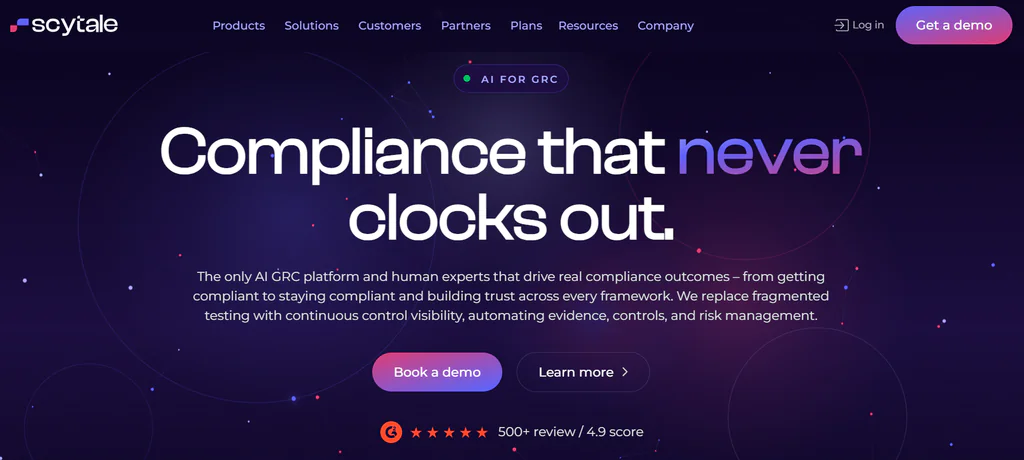
(Screenshot from Scytale’s website)
Why Scytale is the best
- Centralized vendor management keeps third-party information, assessments, risks, and remediation activities organized in one place.
- AI-powered automation streamlines vendor assessments and repetitive review tasks, reducing manual work across growing vendor ecosystems.
- Continuous monitoring provides ongoing visibility into vendor risk and helps teams identify potential issues earlier.
- Multi-framework cross-mapping connects vendor requirements across SOC 2, ISO 27001, GDPR, HIPAA, and other frameworks.
- Vendor risk scoring helps teams prioritize higher-risk vendors and focus reviews and remediation where they are needed most.
- Dedicated GRC expert support provides hands-on guidance for managing vendor risk and related compliance requirements.
2. Bitsight
Bitsight is a cybersecurity ratings platform that provides organizations with visibility into vendors’ external security posture. Its security intelligence helps companies evaluate third-party cyber risk without relying solely on vendor questionnaires or self-reported information.
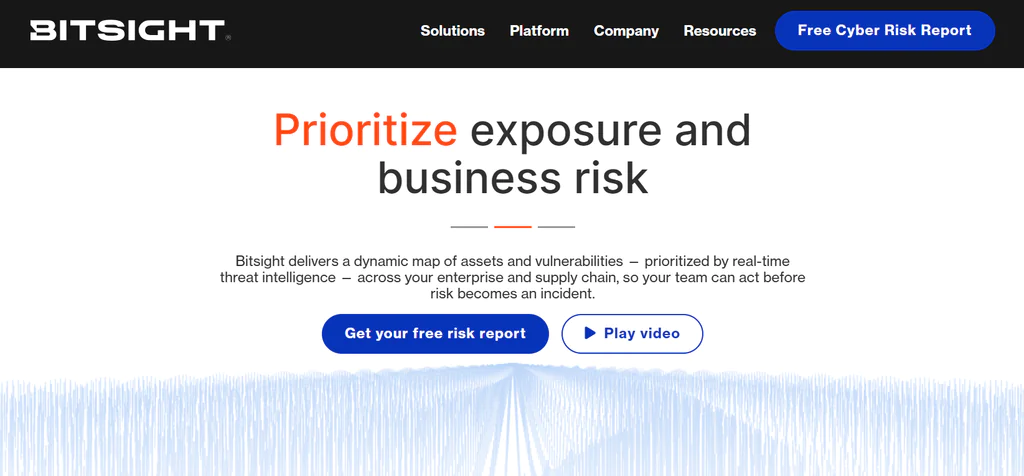
(Screenshot from Bitsight’s website)
Key strengths
- Provides data-based security ratings that help organizations assess and compare vendor cybersecurity performance more consistently.
- Continuously monitors vendors’ external attack surfaces to identify emerging vulnerabilities, exposures, and potential security issues.
- Benchmarks vendor security performance against industry peers to identify third parties requiring closer review or remediation.
Limitations
- Focuses primarily on external cybersecurity risk, offering less coverage for broader compliance and operational vendor risks.
- External security ratings may require additional context and investigation before teams can make informed risk decisions.
3. LogicGate
LogicGate’s Risk Cloud is designed for organizations that need flexible vendor risk management processes tailored to their internal governance requirements. Its platform allows teams to build workflows that align with their existing business processes.
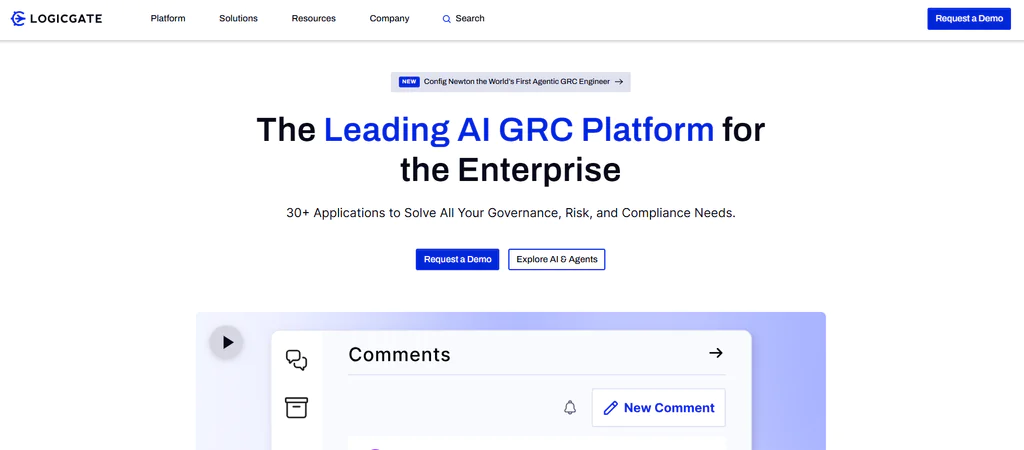
(Screenshot from LogicGate’s website)
Key strengths
- Offers highly customizable vendor onboarding, assessment, approval, and remediation workflows for complex organizational requirements.
- Enables teams to create and modify vendor risk workflows without requiring extensive development or technical resources.
- Supports collaboration across security, compliance, procurement, and legal teams throughout the vendor risk management process.
Limitations
- Extensive customization options can require more initial configuration and planning before teams achieve their desired workflows.
- Broader GRC functionality may introduce unnecessary complexity for organizations seeking a straightforward vendor risk management solution.
4. Archer
Archer is an enterprise GRC platform that helps large organizations manage vendor risk as part of a broader governance and enterprise risk management strategy. It is designed for companies with complex vendor ecosystems and mature risk management programs.
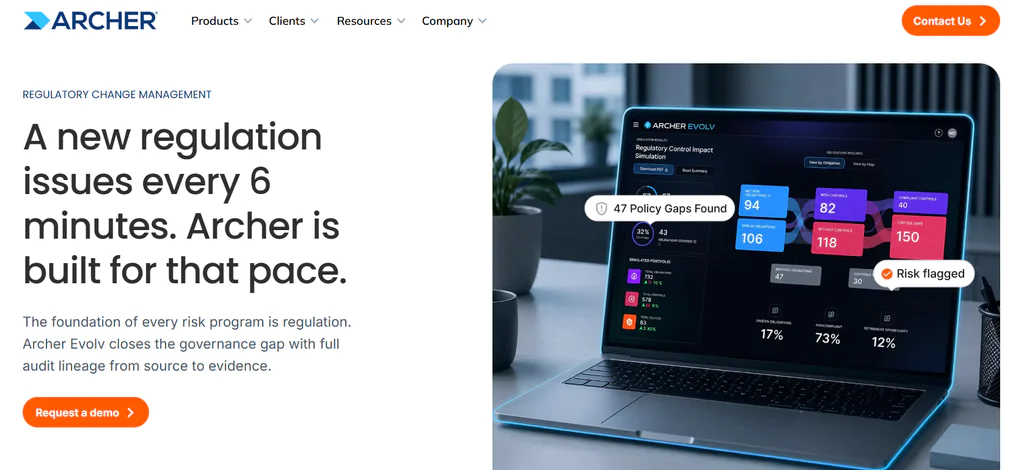
(Screenshot from Archer’s website)
Key strengths
- Centralizes governance and oversight of vendors, suppliers, and other third parties across complex enterprise environments.
- Tracks vendor risks, remediation activities, ownership, and status throughout the entire third-party risk management lifecycle.
- Connects vendor risk with enterprise risk, compliance, audit, and governance activities for greater organizational visibility.
Limitations
- Extensive enterprise functionality may be more complex than smaller organizations or less mature risk teams require.
- Implementation and configuration can require significant internal resources compared with more lightweight vendor risk management platforms.
5. Optro
Optro is an AI-powered third-party risk management platform designed to help organizations manage vendor risk more efficiently. It focuses on using automation and AI to support risk-based vendor oversight.
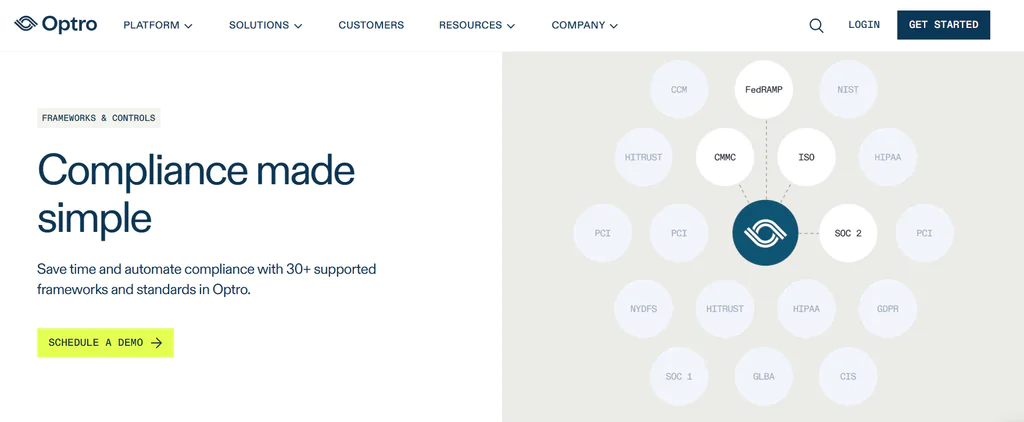
(Screenshot from Optro’s website)
Key strengths
- Centralizes vendor records, assessments, documentation, and supporting evidence within one platform for easier ongoing management.
- Uses AI to identify and prioritize vendor risks, helping teams focus attention on higher-risk third parties.
- Automates vendor questionnaires, assessment reviews, and remediation tracking to reduce manual third-party risk management work.
Limitations
- As a newer platform, it has a smaller market presence than more established vendor risk management providers.
- Organizations with highly complex enterprise requirements may need to evaluate whether its capabilities meet their specific needs.
6. UpGuard
UpGuard is a third-party risk management platform focused on monitoring and assessing vendor cybersecurity risk. It helps organizations maintain ongoing visibility into the external security posture of their third parties.
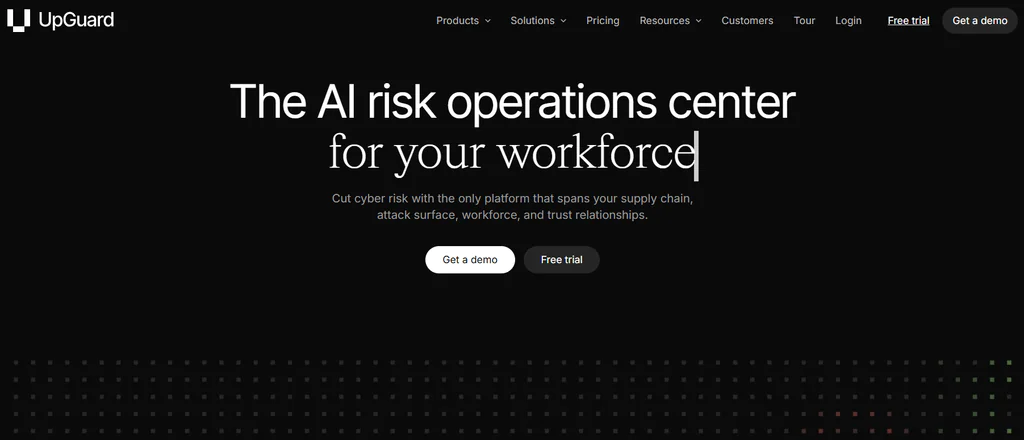
(Screenshot from UpGuard’s website)
Key strengths
- Continuously monitors vendor security posture and identifies changes in external cybersecurity risks between formal assessments.
- Uses security ratings and AI-powered assessments to help teams identify and prioritize higher-risk vendors efficiently.
- Combines questionnaires, monitoring, risk assessments, and remediation workflows within a centralized third-party risk platform.
Limitations
- Its strong cybersecurity focus may provide less depth for organizations prioritizing broader operational or financial vendor risks.
- More advanced capabilities and extensive monitoring may be unnecessary for smaller organizations with simpler vendor ecosystems.
7. Drata
Drata provides third-party risk management capabilities as part of its broader security and compliance automation platform. It is designed for organizations that want to manage vendor risk alongside their wider compliance program.
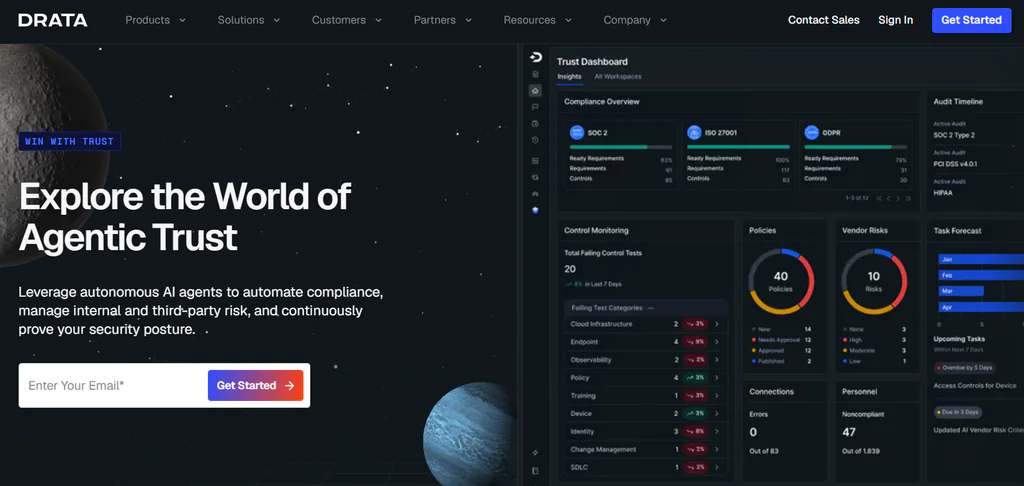
(Screenshot from Drata’s website)
Key strengths
- Centralizes vendor inventories, risk assessments, supporting evidence, and remediation activities within one integrated compliance platform.
- Uses agentic AI to evaluate vendor evidence against defined criteria and support more consistent risk assessments.
- Automates recurring vendor reviews and reminders while supporting compliance requirements such as SOC 2 and ISO 27001.
Limitations
- Some advanced vendor risk capabilities are limited to higher-tier TPRM offerings rather than standard functionality.
- Its broader compliance platform may offer more functionality than teams seeking a dedicated VRM solution require.
Top 7 vendor risk management solutions
| Vendor risk management solution | Best for | Key strength |
| Scytale | Organizations seeking scalable vendor risk management and compliance automation | AI GRC automation, continuous monitoring, AI agents, multi-framework management, streamlined GRC processes, and expert guidance |
| Bitsight | Organizations prioritizing external cybersecurity visibility | Data-based vendor security ratings |
| LogicGate | Organizations requiring highly flexible vendor risk workflows | Customizable workflow automation |
| Archer | Large enterprises with complex vendor ecosystems | Enterprise-wide third-party governance |
| Optro | Teams looking to automate vendor risk processes | AI-powered vendor risk insights |
| UpGuard | Organizations focused on continuous vendor cybersecurity monitoring | Security ratings and external risk monitoring |
| Drata | Organizations managing vendor risk alongside compliance | Integrated compliance and third-party risk management |
How to choose the right vendor risk management solution
Choosing the right VRM solution means finding a platform that fits your organization’s needs today and can support them as they grow. Here are the key factors to consider when evaluating vendor risk management software:
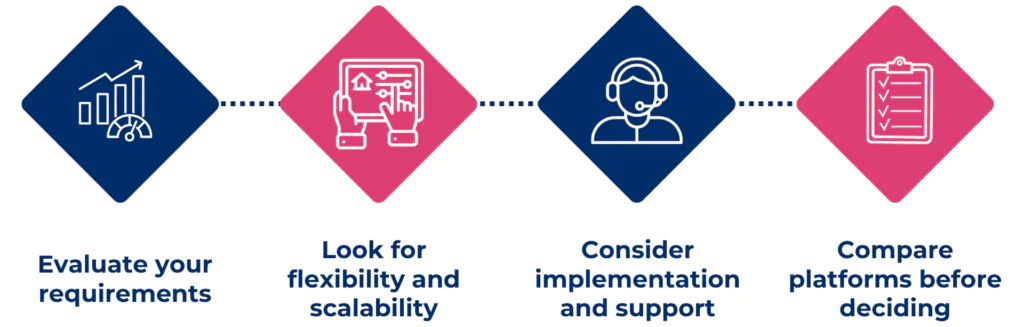
Evaluate your requirements
Start by identifying what your organization needs from a vendor risk management solution and where your current processes fall short. Consider factors such as the number of vendors you manage, your compliance requirements, existing manual work, and the level of visibility you need. Clear priorities will make it easier to compare platforms and focus on the capabilities that matter most.
Look for flexibility and scalability
Your vendor risk management needs are likely to change as your organization grows and works with more third parties. Choose a platform that can support a growing vendor ecosystem, integrate with your existing tools, and adapt to new security and compliance requirements. Flexible workflows can also help you adjust processes without adding unnecessary complexity.
Consider implementation and support
Consider how easy the platform will be to implement and what level of support is available once you start using it. AI GRC platforms like Scytale combine compliance automation with dedicated GRC experts who provide guidance during implementation and ongoing vendor risk management, helping teams address questions, improve processes, and get more value from the platform.
Compare platforms before deciding
Request demos and compare how different platforms handle the areas most important to your organization. Look at vendor assessments, automation, reporting, monitoring, integrations, and ease of use, while also considering pricing and available support. Testing the platform in practice can help you determine which solution best fits your team and long-term goals.

Streamlining vendor risk management with Scytale
Scytale brings vendor risk management into the same AI GRC platform organizations use to manage their wider compliance program. This gives teams a clearer view of third-party risk alongside controls, evidence, and framework requirements, reducing the need to manage vendor oversight through separate tools and processes.
As vendor ecosystems grow, Scytale helps teams scale oversight without adding the same level of manual work. Dedicated GRC experts also provide ongoing guidance, helping organizations address vendor risks and keep their compliance program aligned with changing requirements.
FAQs about best vendor risk management
What industries require advanced vendor risk management tools?
Industries that handle sensitive data or operate under strict regulatory requirements, such as healthcare, financial services, technology, government, and defense, benefit most from advanced vendor risk management tools. These organizations often rely on large networks of third-party vendors, making it essential to continuously assess and monitor vendor security and compliance.
What are the risks involved in vendor management?
Vendor management risks include data breaches, regulatory non-compliance, operational disruptions, financial losses, and reputational damage. Because third-party vendors often have access to sensitive systems and data, a single vendor security or compliance failure can expose your organization to significant business and regulatory risk. A strong vendor risk management solution helps identify, assess, and mitigate these risks before they impact your operations.
How do vendor risk management solutions ensure compliance?
Vendor risk management solutions help automate compliance by continuously monitoring vendors, conducting assessments, and tracking adherence to standards such as SOC 2, ISO 27001, and GDPR. They identify risks early, enabling businesses to take swift action, gain actionable insights, and stay on top of security and privacy requirements. Top AI GRC platforms like Scytale further streamline this process by automating evidence collection, centralizing compliance workflows, and helping organizations maintain continuous compliance across multiple frameworks.
How often should vendor risk assessments be conducted?
Vendor risk assessments should be conducted regularly, based on each vendor’s risk level and the services they provide. High-risk vendors may require more frequent assessments and continuous monitoring, while lower-risk vendors can typically be reviewed less often. Scytale’s AI GRC platform supports ongoing vendor oversight by automating assessments and helping teams identify changes in risk.
What’s the difference between vendor risk management and third-party risk management?
Vendor risk management focuses specifically on assessing and managing the risks associated with vendors and suppliers that provide products or services to your business. Third-party risk management is a broader discipline that covers all external entities your organization works with, including vendors, contractors, consultants, partners, and service providers. Vendor risk management is therefore a key component of a comprehensive third-party risk management strategy.