


TL;DR: SOC 2 compliance for SaaS
- SaaS companies use SOC 2 to demonstrate strong security controls, which are often required during vendor security reviews.
- SOC 2 reports include Type I, which evaluates control design at a point in time, and Type II, which assesses performance over time.
- Preparing for SOC 2 requires defining scope, implementing controls, documenting policies, and completing an audit.
- SaaS environments present challenges like complex cloud infrastructure, rapid release cycles, and the need for effective multi-tenant data management.
- Scytale’s AI GRC platform automates evidence collection, continuous monitoring, and audit preparation to accelerate SOC 2 compliance.
A potential customer asks for your SOC 2 report during the procurement process. Your team does not have one in place, and the deal slows while security questionnaires, vendor risk assessments, and documentation requests begin to accumulate.
SaaS companies often face this situation as they start working with larger customers and partners. SOC 2 can quickly become important for supporting sales and demonstrating that customer data is protected. In this article, you’ll learn what SOC 2 is, why SaaS companies need it, and how to become SOC 2 compliant.
What is SOC 2?
SOC 2 (System and Organization Controls 2) is a voluntary compliance framework that evaluates whether an organization has effective controls in place to protect customer data.
Developed by the American Institute of Certified Public Accountants (AICPA), SOC 2 assesses how organizations protect data across their systems, technology, and operational processes to reduce the risk of security incidents. Auditors evaluate these controls against the Trust Services Criteria (TSC): Security, Availability, Processing Integrity, Confidentiality, and Privacy. Because the framework is flexible rather than prescriptive, each organization designs controls that fit its own architecture and risk profile.
The SOC 2 framework produces two report formats: Type I, which reviews control design at a specific point in time, and Type II, which reviews how those controls operate over a defined period. SOC 2 compliance is widely adopted by SaaS companies and other organizations that handle sensitive customer data, and most SaaS organizations ultimately pursue Type II because it demonstrates that controls operate consistently across the environment.
Why do SaaS companies need SOC 2?
Many enterprise buyers require a SOC 2 report as part of vendor security reviews and third party risk assessments. Providing a current SOC 2 report helps organizations demonstrate that appropriate security controls are in place to protect sensitive customer data. SOC 2 compliance can also help accelerate sales cycles by giving sales and security teams a validated report to share during procurement, reducing delays and back-and-forth.
Investors increasingly expect growing SaaS companies to demonstrate strong security governance, particularly during fundraising and due diligence. In crowded SaaS markets, SOC 2 also serves as a key competitive differentiator by providing independent verification of an organization’s security practices.
Is SOC 2 legally required for SaaS?
SOC 2 is not a legal requirement for SaaS companies. There’s no regulation that mandates obtaining a SOC 2 report before operating or selling software. However, it has become a widely expected standard, especially when selling to larger organizations.
SOC 2 is often referred to as a certification, but it is actually an attestation report issued by an independent CPA firm. The report confirms that security controls are designed and functioning as intended, giving SaaS companies a trusted way to meet market expectations and build long-term customer trust.
Which SOC 2 Trust Services Criteria apply to SaaS?
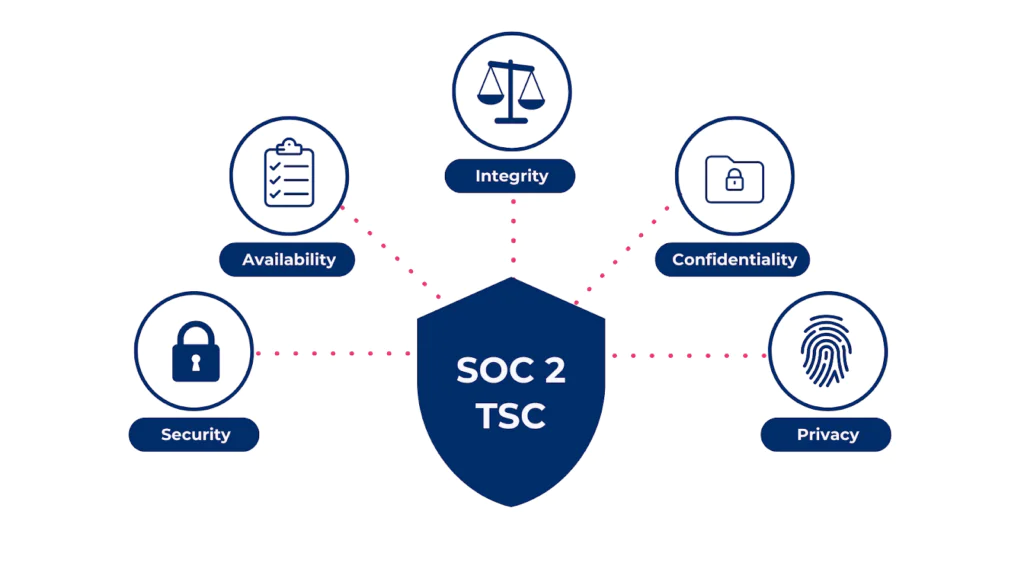
The SOC 2 framework includes five Trust Services Criteria (TSC) that address different aspects of security and operational control within a SaaS environment. Organizations determine which criteria fall within audit scope based on product architecture, customer commitments, and how data is handled. Here are the five Trust Services Criteria and how each applies to SaaS companies:
1. Security
Security is the only mandatory principle out of the five SOC 2 principles. It forms the foundation of every SOC 2 audit, focusing on protecting systems from unauthorized access. SaaS companies typically implement identity management, access controls, infrastructure monitoring, and incident response processes to meet this requirement.
2. Availability
Availability evaluates whether systems remain operational and accessible according to service commitments. SaaS platforms address this through uptime monitoring, infrastructure redundancy, disaster recovery planning, and incident management procedures.
3. Processing Integrity
Processing integrity applies to SaaS products that process or transform customer data. Controls focus on ensuring system processing is accurate, complete, and authorized.
4. Confidentiality
Confidentiality addresses the protection of sensitive information within the platform. SaaS companies support this through encryption, access restrictions, data classification, and secure storage practices.
5. Privacy
Privacy applies when organizations collect or process personal data. Companies align internal policies and controls with principles governing data collection, use, retention, and disclosure.
Get SOC 2 Compliant 90% Faster
SOC 2 Type I vs. Type II: Which should a SaaS company start with?
SOC 2 Type I and Type II reports support different stages of a SaaS compliance program. The key difference lies in how auditors evaluate your controls.
SOC 2 Type I:
A SOC 2 Type I report evaluates whether your security controls are properly designed at a specific point in time. For many SaaS companies, this is the fastest way to show that the necessary security and compliance processes are in place, helping support early enterprise sales conversations.
Startups and growing SaaS companies often begin with Type I when they need to respond to customer security questionnaires or procurement reviews but have not yet operated their controls long enough to complete a longer audit period.
SOC 2 Type II:
A SOC 2 Type II report goes further by evaluating how those controls operate over time, typically across several months. This provides stronger assurance that security processes are not only properly designed but also consistently followed across the organization.
As SaaS companies scale and begin working with larger enterprise customers, most transition to Type II, as it is widely expected during vendor security assessments and third-party risk reviews.
How does SOC 2 compare to other frameworks for SaaS?
SOC 2 often forms part of a broader compliance strategy for SaaS companies. As organizations scale, they may adopt additional frameworks based on regulatory obligations, the types of data they process, and customer or market expectations. Here are the frameworks SaaS companies most often compare with SOC 2:
SOC 2 vs. ISO 27001
ISO 27001 is an international information security standard focused on establishing and maintaining an Information Security Management System (ISMS). SOC 2 offers an independent auditor’s report on security controls, while ISO 27001 provides a formal certification recognized globally.
SOC 2 vs. GDPR
GDPR governs how organizations collect, process, and protect personal data belonging to individuals in the European Union. Unlike SOC 2, which evaluates operational security controls, GDPR is a regulation focused on privacy rights and data protection obligations.
SOC 2 vs. SOX ITGC
SOX ITGC is a regulation that supports the integrity of financial reporting for public companies. SOC 2 focuses on protecting customer data and operational security, while SOX ITGC ensures that financial systems and processes maintain proper control and auditability.
What are the biggest SOC 2 challenges for SaaS companies?
SaaS platforms operate in environments that introduce unique operational and security complexities for SOC 2 compliance. As a result, organizations often encounter several key challenges:
Cloud infrastructure complexity in SaaS environments
Most SaaS platforms rely heavily on cloud infrastructure, which introduces complexity when managing security controls. Teams must maintain proper access permissions, logging, monitoring, and network configurations across multiple cloud services to meet SOC 2 requirements.
Fast release cycles and continuous software deployment
SaaS companies often deploy product updates frequently as part of modern development practices. Without structured change management and review procedures, maintaining consistent security oversight during rapid release cycles can be challenging.
Multi-tenant architecture and customer data separation
SaaS platforms typically store and process data from multiple customers within the same environment. Organizations must demonstrate strong logical separation of tenant data through access restrictions, encryption, and infrastructure controls.
Distributed teams and remote access management
Many SaaS companies operate with distributed or fully remote teams. This requires strong identity management, endpoint security, and clearly documented onboarding and offboarding processes to maintain consistent security controls.
Heavy reliance on third-party vendors
SaaS platforms frequently depend on external vendors for infrastructure, monitoring, analytics, and support services. These dependencies require structured vendor risk management processes to assess vendor security posture and maintain oversight of third-party access to systems and data.
How do SaaS companies get SOC 2 compliant?
SaaS organizations follow a structured GRC process to prepare for a SOC 2 audit. The steps below serve as a practical SOC 2 compliance checklist for teams preparing for their first audit and maintaining continuous compliance.
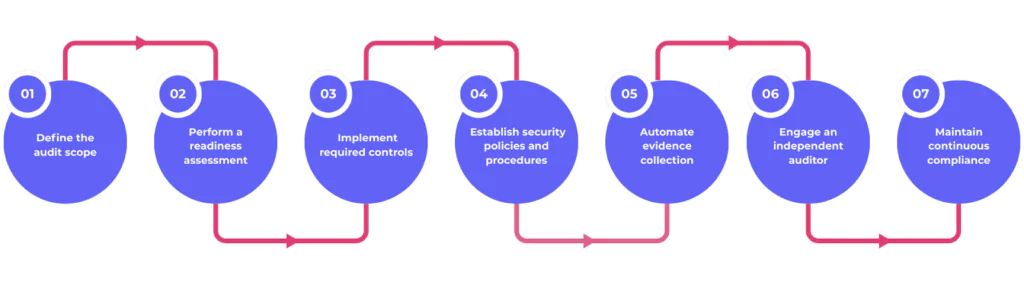
Step 1: Define the SOC 2 audit scope
Organizations begin by identifying the systems, infrastructure, and services included in the SOC 2 audit. This usually covers production environments, supporting cloud services, and key operational processes.
Step 2: Perform a SOC 2 readiness assessment
A readiness assessment evaluates the current security posture against SOC 2 requirements. This process identifies control gaps and areas requiring stronger governance or technical safeguards.
Step 3: Implement SOC 2 controls
Security and engineering teams implement controls needed to meet SOC 2 criteria. Common SOC 2 controls include access management, infrastructure monitoring, incident response procedures, and change management processes.
Step 4: Establish SOC 2 policies and procedures
SOC 2 requires documented compliance policies that define how security operations are managed. These policies typically address areas such as access controls, risk management, incident response, vendor oversight, and employee security practices.
Step 5: Automate evidence collection
Auditors require evidence showing that controls operate as intended. SOC 2 automation platforms help collect logs, configurations, approvals, and monitoring records directly from cloud systems and security tools.
Step 6: Engage an independent SOC 2 auditor
Once controls are implemented and operating effectively, organizations engage a licensed auditing firm. The auditor evaluates the controls and issues the formal SOC 2 attestation report.
Step 7: Maintain continuous compliance
SOC 2 requires ongoing monitoring to ensure controls continue operating effectively. Regular reviews help teams identify gaps and keep controls aligned as the business evolves.
Streamline GRC workflows with no blind spots.
How long does SOC 2 take for a SaaS company?
SOC 2 timelines vary depending on the maturity of an organization’s security program and the complexity of its engineering environment. Many SaaS companies reach SOC 2 Type I readiness within 2-4 months, which typically includes defining audit scope, establishing policies, implementing controls, and preparing documentation for review.
SOC 2 Type II requires an observation period during which auditors evaluate how controls operate over time, usually lasting 3-12 months. Top compliance automation tools can help accelerate readiness by organizing controls, centralizing compliance documentation, and automating evidence collection across cloud infrastructure and security systems.
Totango used Scytale to become SOC 2 audit-ready in 2.5 weeks, a record turnaround for the company
How much does SOC 2 cost for SaaS companies?
SOC 2 compliance costs vary based on company size, infrastructure complexity, and audit scope. Most SaaS companies budget across three main areas: audit fees, compliance software, and internal operational effort.
Audit firms typically charge $15,000 to $40,000 for a SOC 2 engagement, influenced by factors such as the organization’s size, the number of systems within scope, and whether the audit covers Type I or Type II. Many organizations also use a SOC 2 compliance automation platform to manage controls and documentation, which often ranges from $5,000 to $30,000 per year depending on features and expert support services.
Internal effort also contributes to total cost, as engineering, security, and operations teams allocate time to implement controls, maintain compliance documentation, and support audit reviews. Structured GRC platforms help reduce manual coordination and lower the operational burden across these teams.
Top 7 SOC 2 compliance platforms for SaaS in 2026
Many SaaS companies use SOC 2 platforms and compliance automation software to achieve and maintain continuous compliance. Here are 7 of the best compliance platforms used by SaaS companies to streamline SOC 2 compliance management:
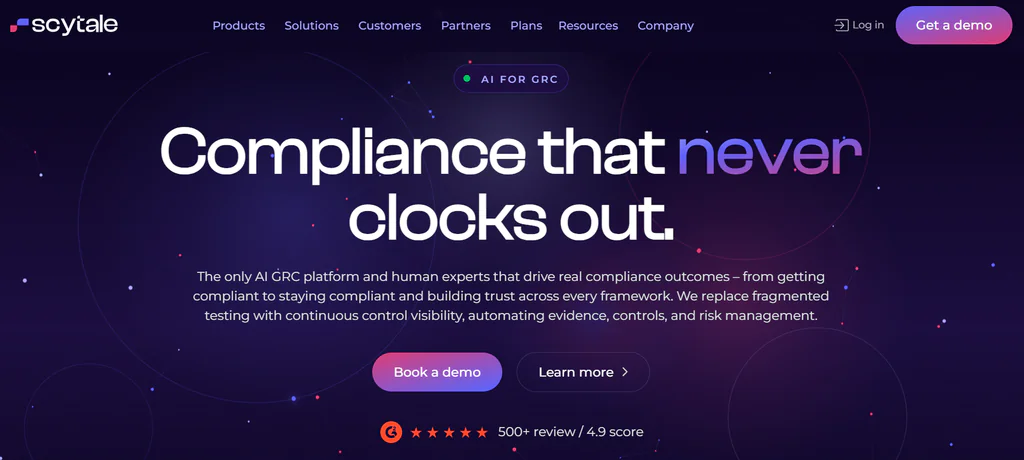
1. Scytale
Scytale is a leading SOC 2 compliance platform that helps SaaS companies reach audit readiness with less manual work. Its AI GRC platform connects with cloud infrastructure and security tools to automate evidence collection, continuously monitor controls, and manage SOC 2 alongside 80+ other frameworks from one place.
Scytale combines AI GRC agents that automate compliance work with dedicated GRC experts who provide hands-on guidance throughout the process. This helps companies reach audit readiness faster and maintain continuous compliance as they grow. For example, cloud infrastructure company Zesty reduced its internal SOC 2 workload by 80% with Scytale.
(Screenshot from Scytale’s website)
Why Scytale is the best:
- Continuous compliance through real-time monitoring, with full visibility into your security and risk posture
- AI-powered automation that streamlines core SOC 2 processes, including evidence collection, access reviews, continuous monitoring, and vendor risk management
- Multi-framework management with cross-mapping to eliminate duplicate work across standards like SOC 2, ISO 27001, GDPR, HIPAA, and SOX ITGC
- Customizable Trust Center to clearly showcase your security and compliance posture to prospects
- Dedicated GRC expert support, providing tailored guidance throughout the entire SOC 2 journey
- Streamlined integrations with essential SaaS tools and customizable options for enhanced automation and flexibility
Pricing: Scytale offers flexible, quote-based pricing based on your company’s size, frameworks, and level of support needed. Plans range from platform access to more comprehensive packages with GRC expert support and penetration testing.
2. Oneleet
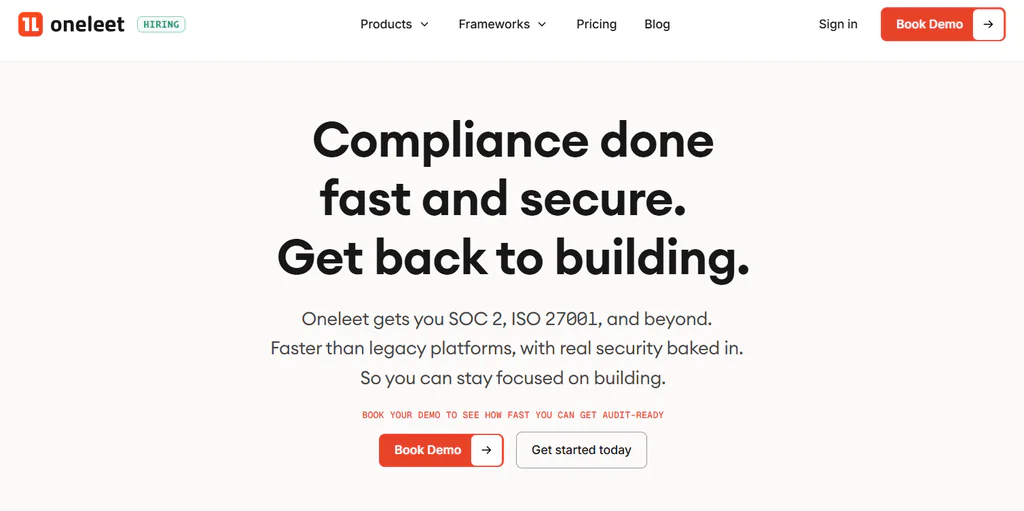
Oneleet is a security-first compliance platform that combines SOC 2 automation with in-house penetration testing and security monitoring. It is designed for startups and growing SaaS companies that want compliance and offensive security delivered by a single provider.
(Screenshot from Oneleet’s website)
Key strengths:
- Penetration testing performed by in-house ethical hackers is included within the offering
- Security engineers provide hands-on, vCISO-style guidance throughout audit preparation
- Continuous control monitoring is paired with risk tracking and remediation workflows
Limitations:
- No free trial is available, and pricing is shared only after a sales consultation
- The bundled service model offers less flexibility for teams wanting platform-only access
Pricing: Oneleet uses custom, quote-based pricing based on each company’s compliance needs. There are no public pricing tiers, so teams need to contact Oneleet for a quote.
3. Strike Graph
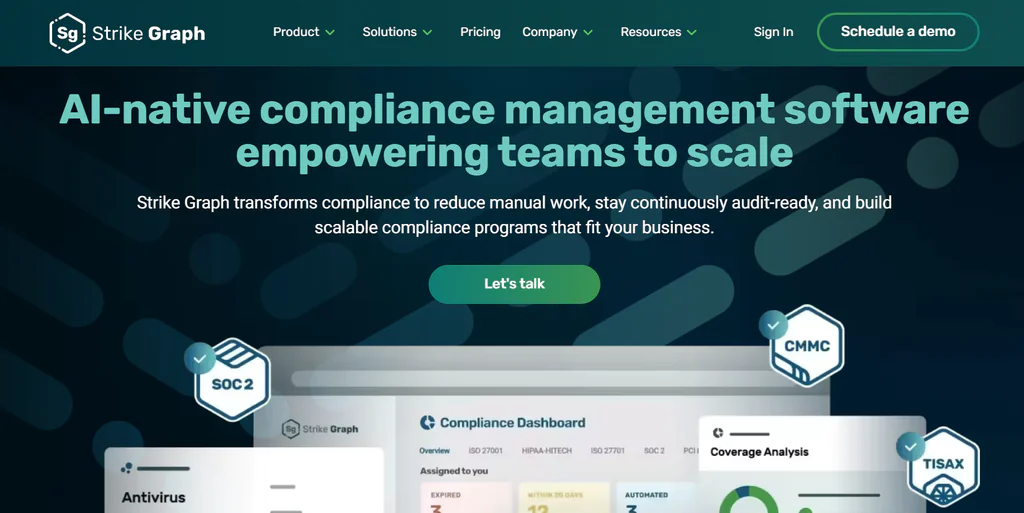
Strike Graph is a compliance automation platform that uses a risk-based approach to help organizations design controls around their specific threats. It supports SOC 2 alongside frameworks such as ISO 27001, HIPAA, and GDPR, with optional audit and penetration testing services.
(Screenshot from Strike Graph’s website)
Key strengths:
- Transparent, published pricing tiers, including a free entry-level Launch plan
- Risk-based control design tailors compliance programs to each organization’s threat profile
- Audit and penetration testing services are available directly through the platform
Limitations:
- Paid tiers start above $10,000 annually, before add-on services and frameworks
- AI capabilities are billed separately under a consumption-based pricing model
Pricing: Strike Graph offers four tiers: Launch (free), Certify (from $10,000/year), Scale (from $21,500/year), and Enterprise (from $35,000/year). Additional frameworks, AI features, audits, and penetration testing may cost extra.
4. Sprinto
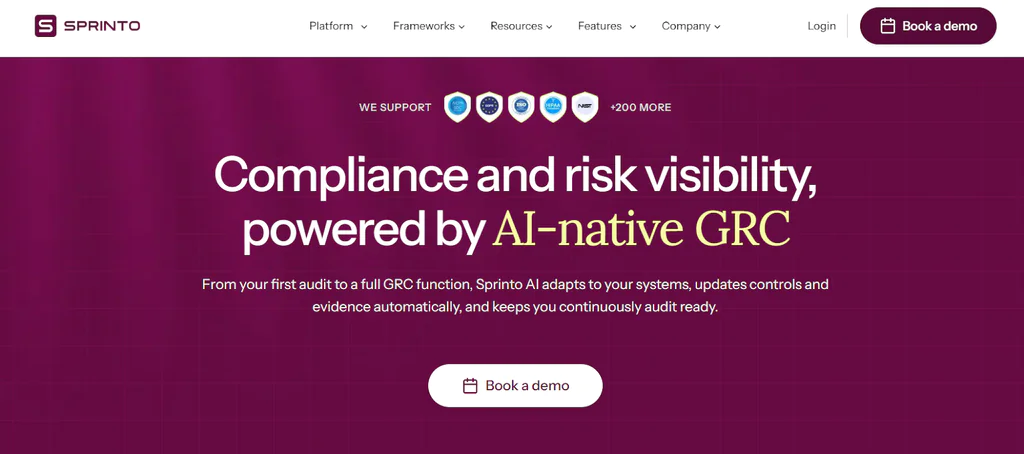
Sprinto focuses on helping cloud-hosted companies automate SOC 2 readiness through control monitoring and automated evidence collection. The platform integrates with cloud services and security tools to track compliance progress across multiple frameworks.
(Screenshot from Sprinto’s website)
Key strengths:
- Guided implementation workflows are designed for startup teams pursuing a first certification
- Prebuilt control mappings allow several frameworks to run from a shared control set
- Built-in security awareness training and policy acknowledgment tracking for employees
Limitations:
- Feature depth can feel complex for very small teams with limited compliance experience
- Continuous compliance management still requires dedicated internal ownership and follow-through
Pricing: Sprinto offers Foundation and Growth plans, with pricing based on the company’s compliance needs. Public marketplace pricing for a starter platform and first framework starts at around $9,500 per year, while additional frameworks and services may cost extra.
5. Secureframe
Secureframe provides a structured approach to managing compliance programs through integrations, policy templates, and automated evidence collection. It is commonly used by SaaS companies beginning their SOC 2 compliance journey.
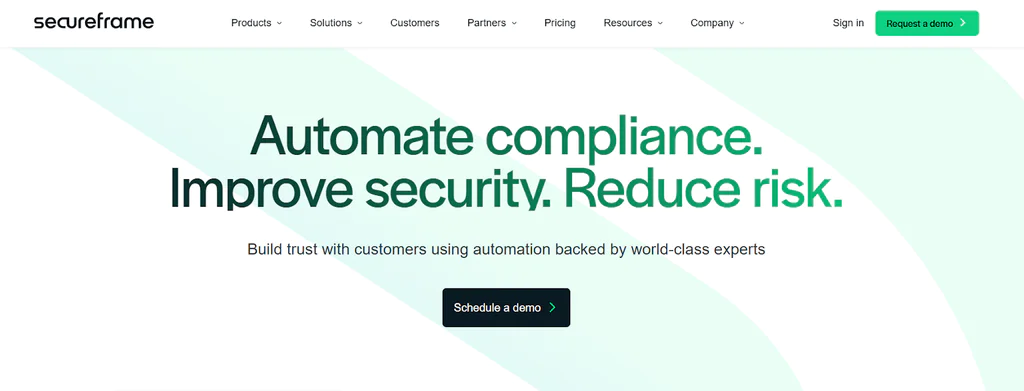
(Screenshot from Secureframe’s website)
Key strengths:
- An extensive library of policy templates accelerates documentation for first-time audits
- A dedicated compliance manager supports customers throughout the onboarding phase
- AI-assisted responses help teams complete customer security questionnaires more quickly
Limitations:
- Some compliance processes may remain manual, depending on the tools in use
- Custom or hybrid environments may require additional configuration effort to support
Pricing: Secureframe’s Fundamentals plan starts at $7,000 per year, while Complete and Defense use custom pricing. Actual costs vary depending on company size, compliance scope, and additional features.
6. Drata
Drata is a compliance automation solution that focuses on automating evidence collection and providing real-time monitoring for SOC 2 compliance. It offers integrations with various cloud services and developer tools to streamline compliance workflows and centralize security data.
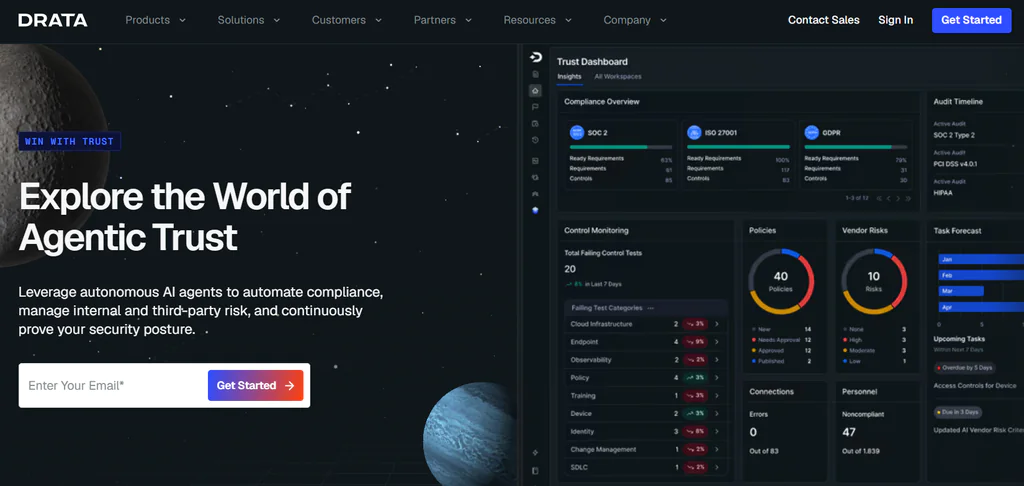
(Screenshot from Drata’s website)
Key strengths:
- Deep integrations with developer tools, including code repositories and CI/CD pipelines
- Real-time control testing alerts teams when configurations drift out of compliance
- Custom controls and frameworks support more mature, tailored compliance programs
Limitations:
- Initial setup may require dedicated internal engineering and security resources to complete
- Workflow customization can take additional effort to configure and maintain over time
Pricing: Drata provides custom pricing based on each company’s compliance needs. Third-party buyer data shows pricing varies significantly based on company size, framework scope, and additional features.
7. Vanta
Vanta is a well-known compliance automation platform for SaaS companies. It helps organizations prepare for SOC 2 compliance by integrating with cloud infrastructure and automating tasks like evidence collection and control monitoring.
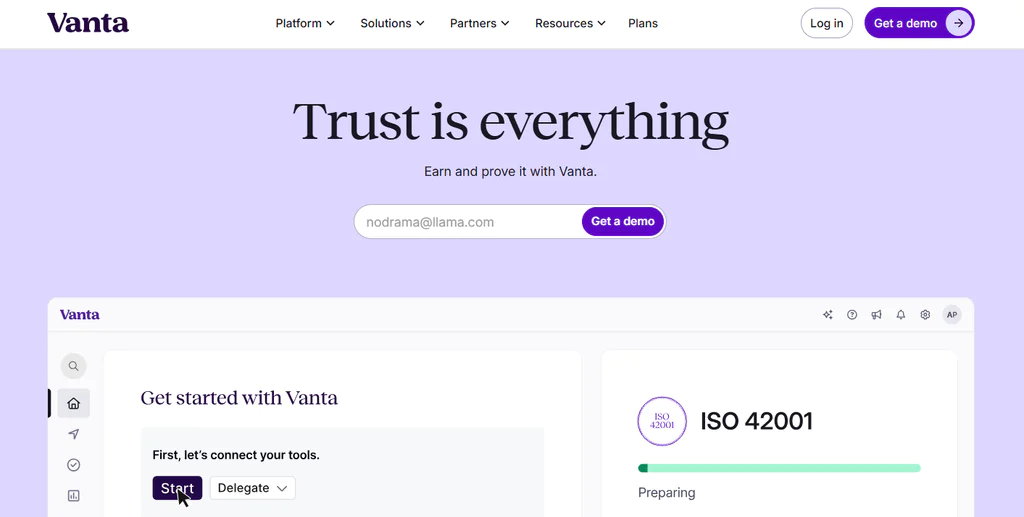
(Screenshot from Vanta’s website)
Key strengths:
- A large integration library covers common cloud, HR, and identity provider tools
- Strong brand recognition among buyers reviewing vendor security documentation
- Built-in trust center and questionnaire automation support customer security reviews
Limitations:
- Multi-framework programs can require additional configuration and ongoing maintenance
- Costs can increase as features, frameworks, and integrations expand at renewal
Pricing: Vanta provides personalized pricing based on the company’s needs and compliance scope. Costs vary depending on factors such as company size, frameworks, and additional products or features.
Best SOC 2 compliance platforms for SaaS
| Platform | Ideal for | Key strengths | Pricing model |
|---|---|---|---|
| Scytale | SaaS organizations of all sizes with complex compliance needs seeking efficient AI GRC management processes | AI GRC automation, continuous monitoring, AI agents, multi-framework management, streamlined GRC processes, and expert guidance | Flexible, quote-based plans |
| Oneleet | Security-first startups | Bundled penetration testing | Custom, quote-based pricing |
| Strike Graph | Risk-focused teams | Risk-based control design | Free tier; paid from $10,000/year |
| Sprinto | Cloud-native SaaS teams | Guided implementation | Plan-based; starter pricing around $9,500/year |
| Secureframe | Early compliance programs | Structured policy templates | From $7,000/year; custom pricing for higher tiers |
| Drata | Engineering-focused teams | Developer integrations | Custom pricing based on compliance needs |
| Vanta | Early-stage SaaS teams | Broad integration library | Personalized pricing based on needs and scope |
What mistakes do SaaS companies make with SOC 2?
Many SaaS companies underestimate the operational effort required to implement and maintain SOC 2 controls. These missteps can slow down audits, create unnecessary complexity, and delay sales opportunities that depend on a current report. Here are the most common SOC 2 mistakes SaaS companies make:
Waiting until a customer demands SOC 2
Some companies only begin the SOC 2 process after a customer requests it during procurement. This reactive approach often creates pressure on security and engineering teams to implement controls quickly.
Scoping the SOC 2 audit too broadly
Organizations sometimes include too many systems or processes in the initial audit scope. A well-defined scope focused on core infrastructure and production environments makes the audit more manageable.
Writing aspirational policies instead of practical ones
SOC 2 policies must reflect how security processes actually operate within the organization. Auditors expect documentation to match real workflows rather than idealized or theoretical procedures.
Skipping automation and relying on manual processes
Manual evidence collection and documentation management can quickly become time-consuming. Automation platforms help centralize controls and streamline evidence collection across systems.
Treating SOC 2 compliance as a one-time project
SOC 2 requires ongoing control monitoring and operational discipline. Organizations that treat it as a continuous program are better prepared for future audits and customer security reviews.



How Scytale helps SaaS companies get SOC 2 compliant
Scytale helps SaaS companies manage SOC 2 from readiness through audit and ongoing compliance in one platform. Automated evidence collection, continuous control monitoring, and integrations with cloud and security tools reduce manual work while giving teams ongoing visibility into their compliance posture.
Dedicated GRC experts support teams throughout the SOC 2 journey, from identifying gaps to preparing for the audit and maintaining compliance afterward. As compliance needs grow, teams can also manage SOC 2 alongside other frameworks without rebuilding the same controls and evidence from scratch.
FAQs about SOC 2 compliance for SaaS
Do all SaaS companies need SOC 2?
Not every SaaS organization requires SOC 2 immediately. Organizations selling to midmarket or enterprise customers often receive SOC 2 requests during vendor security reviews. If your product handles sensitive customer data or targets regulated industries, buyers expect formal proof of security controls through a SOC 2 attestation report.
Can a startup get SOC 2 compliant?
Yes. SaaS startups frequently pursue SOC 2 attestation during their first sales cycles. With defined security controls, documented policies, and clear ownership, startups can build a strong foundation for SOC 2. Scytale’s AI GRC platform can simplify this process by automating evidence collection, monitoring controls, and helping teams stay on track for audit readiness.
How often do you need to renew SOC 2?
SOC 2 reports cover a defined period rather than being formally renewed. Most SaaS companies complete a SOC 2 Type II audit annually to maintain current assurance for customers and key stakeholders.
Can you get SOC 2 without a compliance platform?
Yes, you can prepare for SOC 2 without specialized software, but the process typically requires more manual work to collect evidence, monitor controls, and prepare for the audit. Leading SOC 2 platforms like Scytale automate much of this work, helping SaaS teams reduce the internal effort required to reach and maintain SOC 2 compliance.
What’s the difference between SOC 2 and ISO 27001 for SaaS?
SOC 2 focuses on validating operational security controls through an attestation report. ISO 27001 focuses on establishing a formal information security management system (ISMS) with structured governance and risk management processes. SaaS companies often pursue SOC 2 for customer assurance in North America and ISO 27001 for global markets.


