A Certified Third-Party Assessment Organization (C3PAO) is an accredited organization authorized by the Cyber AB to conduct official Cybersecurity Maturity Model Certification (CMMC) assessments.
What Is a C3PAO?
Organizations pursuing CMMC Level 2 certification generally require an independent assessment by a C3PAO to verify that they have implemented the cybersecurity controls needed to protect Federal Contract Information (FCI) and Controlled Unclassified Information (CUI). The Cyber AB authorizes C3PAOs that meet strict operational, technical, and independence requirements to perform assessments across the Defense Industrial Base (DIB).
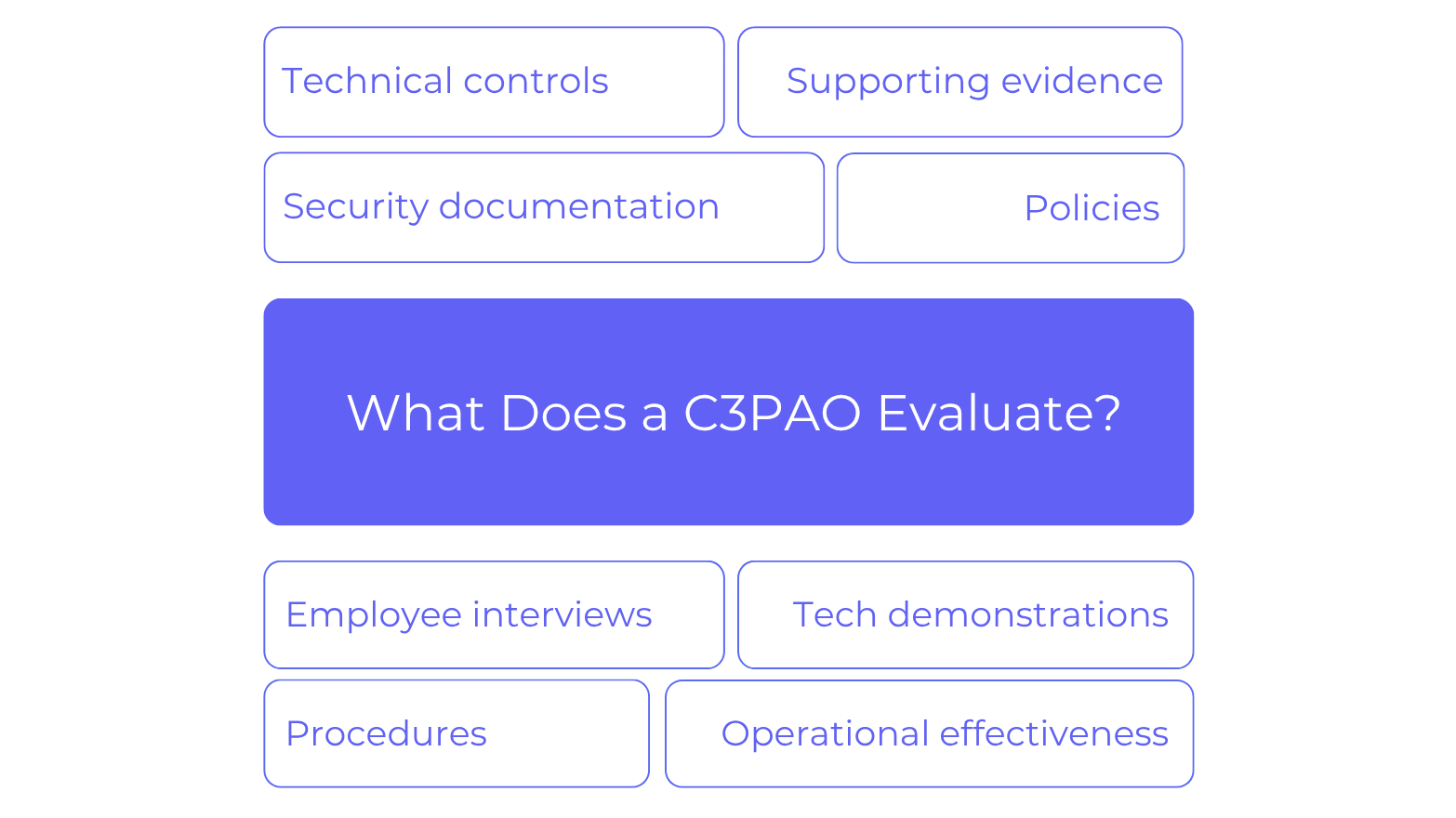
Unlike consultants that help organizations prepare for compliance, a C3PAO’s role is to independently evaluate an organization’s cybersecurity practices against CMMC requirements. During an assessment, the C3PAO reviews documentation, interviews personnel, observes security processes, and validates technical controls to determine whether the organization meets the required certification level. Their independence helps ensure an objective and credible certification process.
When Is a C3PAO Required?
Not every organization pursuing CMMC compliance requires a C3PAO assessment. The assessment requirements depend on the certification level and the type of information the organization handles. Understanding the appropriate assessment path helps organizations plan resources, prepare documentation, and engage the right assessor.
Assessment requirements by CMMC level:
Level 1: Organizations complete an annual self-assessment.
Level 2: Organizations handling Controlled Unclassified Information (CUI) generally require an independent assessment performed by an authorized C3PAO.
A C3PAO evaluates whether an organization has implemented the policies, procedures, and technical controls required to protect sensitive government information. Assessors verify that controls are operating effectively rather than simply being documented, helping validate the organization’s security compliance.
During a typical C3PAO assessment, assessors may review:
System Security Plans (SSPs)
Security policies and procedures
Access management controls
Incident response procedures
Audit logging and monitoring
Evidence of continuous compliance
Assessors also interview personnel and may request technical demonstrations to confirm documented processes reflect day-to-day operations.
Streamline GRC workflows with no blind spots.
C3PAO Assessment Process
Preparing for a C3PAO assessment involves several stages, from implementing controls and collecting evidence to completing the official assessment. The assessment process generally follows these stages:
Stage:
Purpose:
Readiness preparation
Implement CMMC controls, develop documentation, and collect supporting evidence.
Gap remediation
Address identified deficiencies before the official assessment.
Assessment planning
Define assessment scope, systems, documentation, and scheduling.
Official C3PAO assessment
Independent evaluation of security controls through documentation reviews, interviews, and technical validation.
Assessment results
Findings are documented and submitted through the CMMC assessment process.
Certification decision
Organizations that satisfy the required practices receive CMMC certification.
C3PAO assessment process
During the assessment, organizations provide evidence, participate in interviews, and demonstrate how security controls operate. Many complete a readiness assessment beforehand to identify gaps and reduce certification delays. Many companies also use CMMC compliance software to automate evidence collection, streamline documentation, and maintain continuous compliance throughout the certification process.
C3PAO vs. CMMC Certification
The terms C3PAO certification and CMMC certification are sometimes used interchangeably, but they refer to two different things.
C3PAO authorization applies to the assessment organization itself, while organizations undergoing the assessment receive CMMC certification after demonstrating compliance with the applicable security requirements.
The distinction is important because only authorized C3PAO companies can conduct official certification assessments. Consultants, managed service providers (MSPs), and Registered Provider Organizations (RPOs) may help organizations prepare for compliance, but they cannot independently certify an organization. Separating consulting from assessment responsibilities helps preserve the integrity of the certification process.
Get CMMC Compliant 90% Faster
How to Choose a CMMC C3PAO
Selecting the right CMMC C3PAO is an important step in the certification process. While every authorized C3PAO follows the same CMMC assessment methodology, experience, communication, and assessment planning can vary between providers. When evaluating potential C3PAO companies, organizations should consider the following factors:
Authorization by the Cyber AB
Experience conducting CMMC assessments
Familiarity with your industry and IT environment
Assessment timelines and availability
Transparent pricing and clearly defined assessment scope
Experience assessing organizations with complex environments and third-party risk requirements
Before engaging a provider, verify that it appears on the official Cyber AB C3PAO list, as only authorized organizations can perform official CMMC assessments. Discuss timelines and assessment scope early to avoid certification delays and ensure a smooth certification process.
C3PAO Companies vs. Registered Provider Organizations (RPOs)
Organizations often work with both Registered Provider Organizations (RPOs) and Certified Third-Party Assessment Organizations (C3PAOs), as each plays a different role in the CMMC certification process. Many organizations engage an RPO or internal compliance team to understand CMMC requirements, strengthen cybersecurity risk management, implement security controls, and prepare for an assessment before working with a C3PAO, preserving the independence of the certification process.
An RPO provides consulting and readiness services to help organizations prepare for certification, while a C3PAO performs the official independent assessment required to determine whether CMMC requirements have been met.
C3PAO
Registered Provider Organization (RPO)
Conducts official CMMC assessments
Provides readiness and consulting services
Independent assessment organization
Compliance advisor and implementation partner
Evaluates evidence and security controls
Helps implement and document controls
Determines whether certification requirements are met
Cannot issue or approve certifications
Must remain independent throughout the assessment
May work closely with the organization before the assessment
Why Authorized C3PAOs Matter
The Cyber AB C3PAO list identifies organizations authorized to conduct official CMMC assessments. Before scheduling an assessment, companies should verify that their chosen provider appears on the current list, as authorization status may change over time. Working with an authorized C3PAO ensures the assessment is recognized under the CMMC program and helps avoid unnecessary certification delays.
For defense contractors, a C3PAO provides an independent evaluation of an organization’s cybersecurity program, verifying that required controls have been implemented and are operating effectively. This objective assessment supports Department of Defense CMMC requirements, strengthens confidence in an organization’s security posture, and demonstrates its ability to protect sensitive government information. Beyond certification, preparing for a C3PAO assessment improves governance, strengthens documentation, reduces operational risk, and helps organizations maintain continuous compliance while building trust with government agencies, prime contractors, and customers.
Always-on GRC. Built for modern teams.
How Scytale Helps Organizations Prepare for C3PAO Assessments
Scytale simplifies CMMC readiness through an AI GRC platform backed by expert GRC guidance. Automated evidence collection, continuous control monitoring, policy management, task tracking, and framework mapping help organizations prepare for C3PAO assessments more efficiently while reducing manual effort. By improving visibility into compliance status and identifying gaps early, Scytale helps security and compliance teams approach assessments with greater confidence and maintain continuous compliance after certification.