











TL;DR: AI compliance platforms for ISO 42001
- ISO 42001 is a certifiable standard that requires organizations to run AI governance as an ongoing management system.
- The strongest platforms combine control mapping, evidence automation, policy workflows, and AI-specific risk management.
- Multi-framework coverage is the deciding factor, since ISO 42001 and NIST AI RMF overlap heavily in governance and risk.
- Specialist AI governance tools and enterprise suites suit different program sizes, maturity levels, and existing technology stacks.
- Scytale’s AI GRC platform connects ISO 42001 to 80+ frameworks with automated evidence collection and dedicated GRC experts.
AI adoption is moving faster than most governance programs can track. Models reach production, vendors add AI features to existing products, and customers increasingly ask for proof that these systems are governed responsibly. ISO 42001 gives organizations a certifiable framework for demonstrating how they govern AI, but it also expects oversight to operate as a continuous management system rather than a one-time documentation exercise.
That expectation changes what organizations need from software. Policy templates and static checklists rarely hold up once AI governance must stay aligned with security, privacy, and emerging regulatory obligations at the same time. In this article, we explain what an ISO 42001 platform should do and compare five leading options.
What an ISO 42001 compliance platform should do
An ISO 42001 compliance platform is software that helps organizations build, operate, and evidence an AI management system aligned with the ISO/IEC 42001 standard.
Achieving ISO 42001 compliance involves managing AI risks, documenting policies, implementing controls, and maintaining evidence of responsible AI governance. The right platform should simplify these processes while supporting ongoing compliance and reducing manual work. Here are the key features to look for:
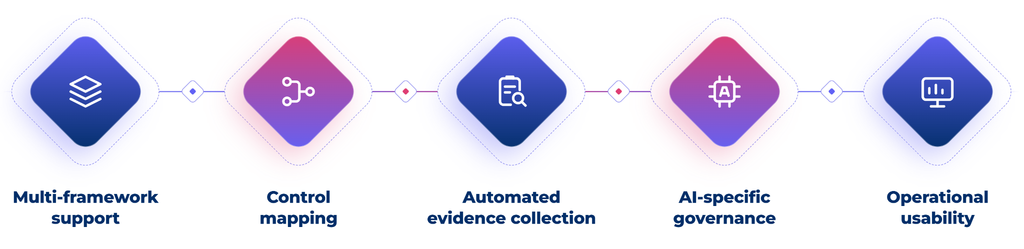
Multi-framework support
ISO 42001 often overlaps with other security, privacy, and AI governance requirements, making multi-framework support essential. A compliance platform should map ISO 42001 controls to NIST AI RMF and other relevant compliance frameworks, allowing organizations to reuse shared controls and evidence. This reduces duplicate work, improves consistency, and makes it easier to manage multiple compliance programs.
Control mapping
Effective control mapping connects each ISO 42001 requirement to relevant policies, risks, AI systems, vendors, and supporting evidence. This gives compliance teams a clear view of which requirements are covered, who is responsible, and where gaps remain. Centralized control mapping also simplifies audit preparation by keeping documentation organized and accessible.
Automated evidence collection
Collecting and maintaining evidence is a key part of ISO 42001 compliance, and automation helps reduce the manual effort involved. The platform should collect evidence from connected systems, including cloud environments, identity providers, HR platforms, and development tools. Continuous monitoring also helps identify missing evidence, outdated documentation, and control gaps before they become audit issues.
AI-specific governance
ISO 42001 focuses on managing the risks and responsibilities associated with developing, deploying, and using AI systems. An AI GRC platform should support AI system inventories, AI risk and impact assessments, human oversight documentation, and ongoing AI lifecycle reviews. These capabilities help organizations identify risks, demonstrate accountability, and maintain responsible AI governance.
Operational usability
ISO 42001 compliance involves collaboration across security, legal, product, engineering, and leadership teams. A platform should provide centralized workflows, clear task ownership, approval processes, and reporting to keep everyone aligned. User-friendly dashboards and automated reminders reduce manual follow-ups and make ongoing compliance easier to manage.
Streamline GRC workflows with seamless automation.
ISO 42001 vs NIST AI RMF: Why multi-framework support matters
Organizations building AI governance programs often use both ISO 42001 and the NIST AI RMF, as each serves a different purpose. ISO 42001 provides a certifiable management system with auditable requirements, while the voluntary NIST AI RMF offers practical guidance for managing AI risks through four functions: Govern, Map, Measure, and Manage. Despite these differences, both frameworks emphasize clear governance roles, documented risk assessments, ongoing monitoring, and continual improvement.
Managing these frameworks separately can lead to duplicated policies, assessments, and evidence collection. A multi-framework approach allows organizations to map shared controls, reuse evidence, and identify requirements specific to each framework. This becomes especially valuable as organizations expand their AI governance programs to meet regulations such as the EU AI Act, reducing manual work and improving consistency across compliance efforts.
💡For a more detailed comparison, take a look at our guide on NIST AI RMF vs ISO 42001.
Top 5 AI compliance platforms for ISO 42001
The market for AI compliance platforms now spans specialist AI governance vendors, enterprise workflow suites, and multi-framework GRC platforms. This list focuses on AI governance compliance tools that support the AIMS itself, rather than AI security tools that enforce runtime guardrails on models and prompts. Here are the five platforms, assessed on framework coverage, automation, evidence handling, and fit for organizations pursuing ISO 42001:
1. Scytale
Scytale stands out as the best AI compliance platform for ISO 42001 in 2026, designed for SaaS organizations that need AI governance to operate inside a broader compliance program. By combining AI-driven automation with continuous control monitoring, Scytale enables organizations to build and maintain their AIMS while staying aligned with NIST AI RMF, SOC 2, ISO 27001, GDPR, and more than 80 frameworks in total.
The platform centralizes AI policies, risk assessments, controls, and evidence in a single system, supported by 150+ integrations across cloud, identity, HR, and security tools. For organizations pursuing ISO 42001 certification, dedicated GRC experts guide scoping, gap remediation, and audit preparation, resulting in a scalable AI governance program with less manual work and stronger audit readiness.
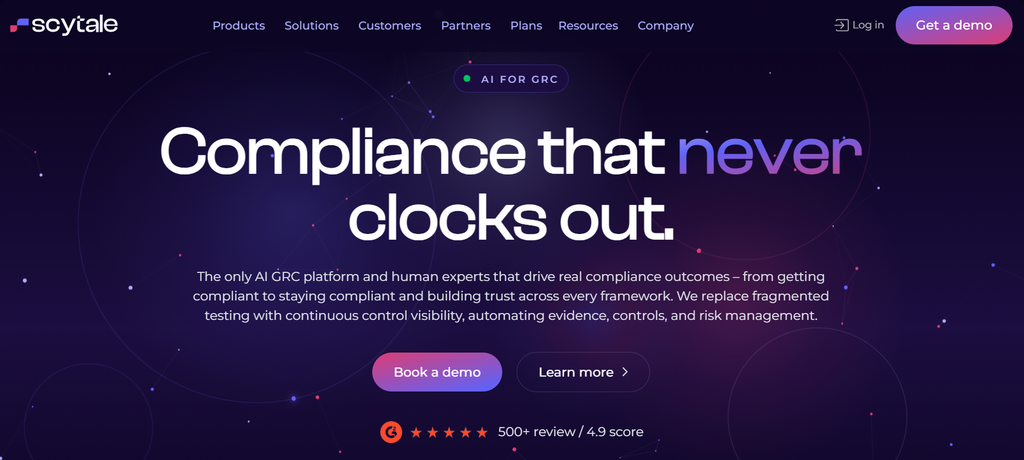
(Screenshot from Scytale’s website)
Why Scytale is the best:
- Continuous compliance through real-time monitoring, with full visibility into AI governance, security, and risk posture
- AI-powered automation that streamlines core compliance processes, including evidence collection, access reviews, continuous monitoring, and vendor risk management
- Multi-framework management with cross-mapping to eliminate duplicate work across ISO 42001, NIST AI RMF, SOC 2, ISO 27001, GDPR, and SOX ITGC
- Customizable Trust Center to clearly showcase your AI governance and compliance posture
- Dedicated GRC expert support, providing tailored guidance throughout the entire ISO 42001 journey
- Streamlined integrations with essential tools and customizable options for enhanced automation and flexibility
2. Holistic AI
Holistic AI is an AI governance platform focused on helping organizations inventory, assess, and oversee their AI systems. Its product centers on AI risk management, model auditing, and regulatory tracking rather than broad security compliance operations.
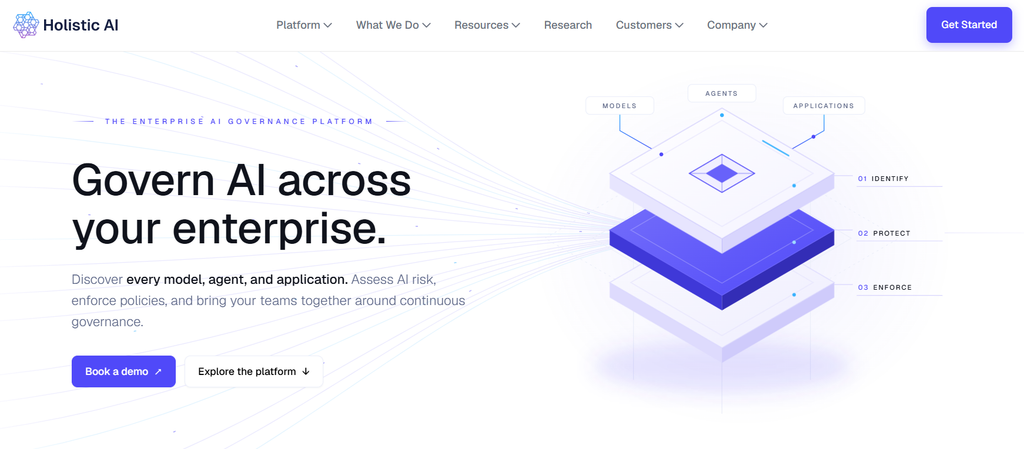
(Screenshot from Holistic AI’s website)
Key strengths:
- Dedicated AI system inventory helps organizations discover, catalog, and monitor models used across different business functions.
- AI risk assessments evaluate model-specific concerns, including bias, robustness, fairness, and performance throughout AI development.
- Regulatory tracking helps organizations monitor evolving AI legislation and understand changing governance requirements across jurisdictions.
- Model auditing capabilities support technical evaluations, helping teams identify potential weaknesses before deploying AI systems.
Limitations:
- Organizations managing broader security frameworks like SOC 2 may require additional tools for compliance management.
- Automated evidence collection across cloud infrastructure and identity systems is narrower than broader GRC platforms.
- Teams pursuing ISO 42001 certification may need additional workflows for management system documentation and audits.
3. ServiceNow
ServiceNow offers AI governance capabilities within its integrated risk management suite on the Now Platform. Organizations already running ServiceNow for IT and risk workflows often extend it to manage AI oversight alongside existing processes.
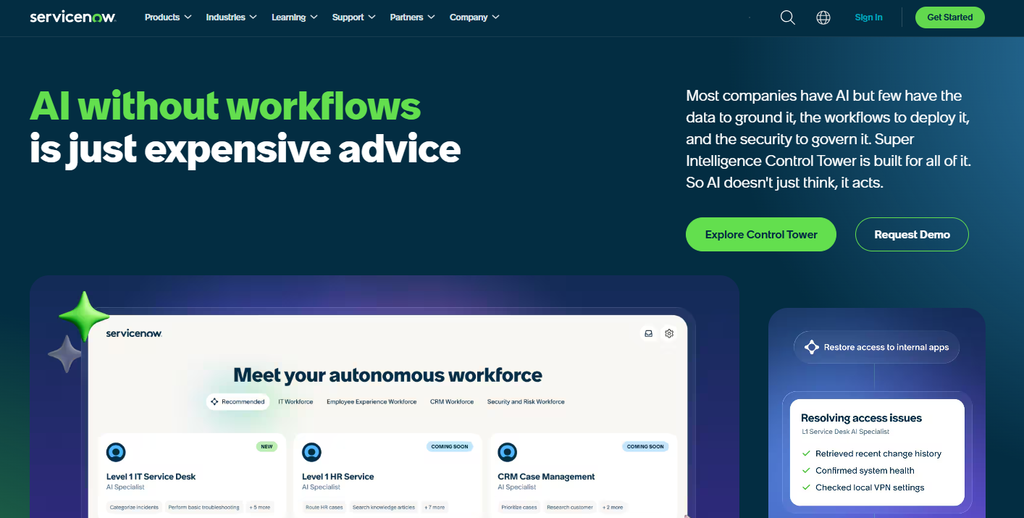
(Screenshot from ServiceNow’s website)
Key strengths:
- Enterprise workflow orchestration coordinates approvals, escalations, and remediation activities across departments and complex governance processes.
- Integration with existing IT and risk workflows connects AI oversight to established enterprise management processes.
- Role-based reporting gives governance committees visibility into accountability, outstanding issues, and compliance responsibilities across teams.
- Configurable workflows help enterprises align AI governance activities with internal approval structures and business requirements.
Limitations:
- Implementation often requires extensive configuration, technical expertise, and dedicated administrators to manage complex enterprise workflows.
- Licensing costs and implementation requirements may be less practical for smaller organizations with limited budgets.
- Organizations without an existing ServiceNow environment may face additional complexity when adopting AI governance capabilities.
4. ComplyJet
ComplyJet is a compliance automation platform aimed at startups and growing SaaS companies, with ISO 42001 support alongside core security frameworks. It focuses on helping smaller teams document controls, prepare policies, and move toward certification quickly.
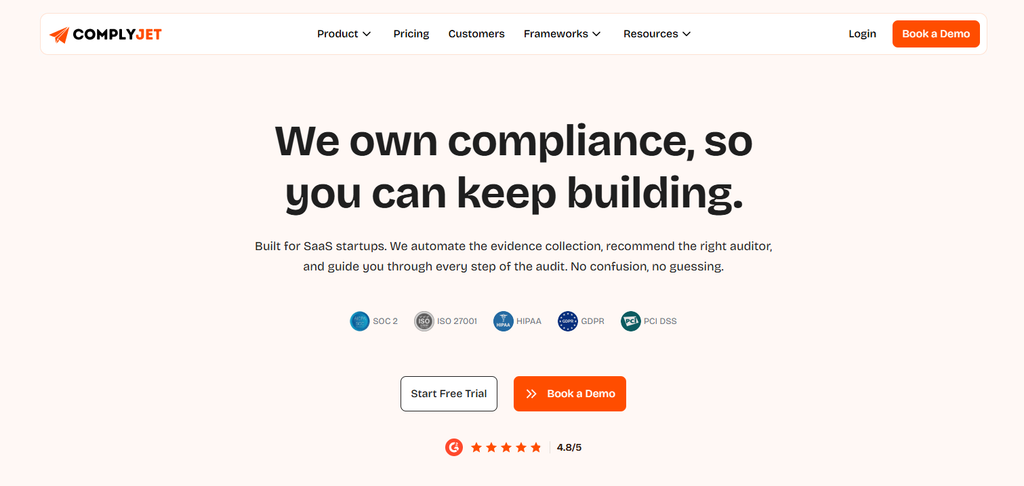
(Screenshot from ComplyJet’s website)
Key strengths:
- Guided onboarding helps startups establish compliance processes without requiring a dedicated internal compliance or security team.
- Ready-to-use policy templates and control documentation simplify ISO 42001 preparation and reduce manual documentation work.
- Straightforward setup helps organizations begin managing compliance tasks quickly without lengthy configuration or implementation projects.
- Centralized task management helps teams assign responsibilities, track requirements, and monitor progress toward ISO 42001 certification.
Limitations:
- A smaller integration ecosystem may limit automated evidence collection across specialized applications and complex technology environments.
- Larger enterprises may require more advanced reporting and governance capabilities to manage complex compliance programs.
- Organizations with specialized AI governance requirements may need additional customization options for assessments and workflows.
5. ISMS.online
ISMS.online is a compliance management platform built around ISO management system standards, including ISO 27001, ISO 9001, and ISO 42001. It provides pre-configured frameworks, templates, and guided workflows for organizations running formal certification programs.
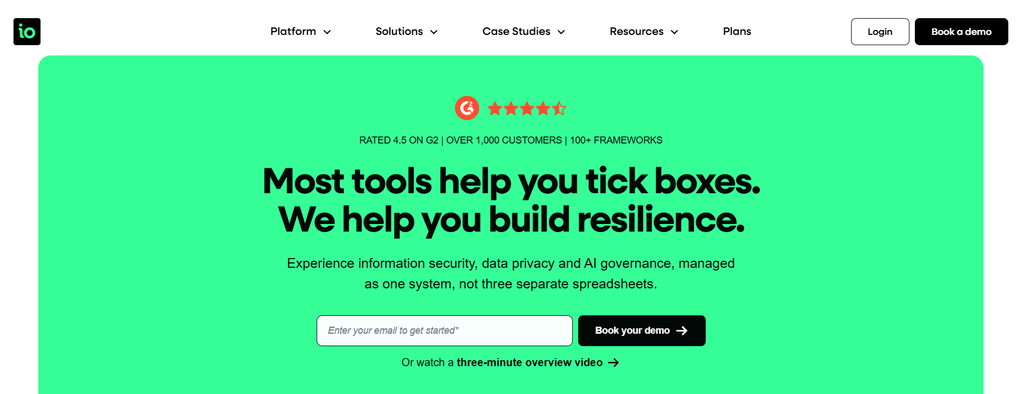
(Screenshot from ISMS.online’s website)
Key strengths:
- Pre-built ISO 42001 content connects management system clauses and Annex A controls to implementation tasks.
- Multi-standard support helps organizations coordinate ISO management system requirements within a structured and centralized compliance environment.
- Structured documentation processes support internal audits, management reviews, and ongoing preparation for ISO certification activities.
- Built-in compliance guidance helps organizations understand ISO requirements and follow a structured approach to implementation.
Limitations:
- Technical evidence collection may require more manual uploads compared with platforms offering extensive automated integrations.
- Specialized AI governance capabilities, including model inventories and technical assessments, may require additional supporting tools.
- Organizations needing continuous technical control monitoring may require additional solutions to track changes across connected systems.
ISO 42001 compliance software comparison
| Platform | Framework support | Automation | Ideal company size |
|---|---|---|---|
| Scytale | ISO 42001, NIST AI RMF, and 80+ security, privacy, and AI frameworks with cross-mapping | High: AI GRC automation, automated evidence collection, continuous monitoring, AI agents, and expert guidance | SaaS organizations of all sizes, from scaling startups to enterprises |
| Holistic AI | AI governance and AI regulations | Moderate, AI risk workflows | Mid-market and enterprise AI teams |
| ServiceNow | Broad enterprise risk coverage | High, workflow orchestration | Large enterprises |
| ComplyJet | ISO 42001 plus core security frameworks | Moderate, guided documentation | Startups and small SaaS teams |
| ISMS.online | ISO management system standards | Moderate, structured workflows | SMB to mid-market |
Get ISO 42001 Compliant
How Scytale simplifies ISO 42001 compliance
Scytale maps its AI GRC platform directly to the AIMS requirements in ISO 42001. Policy management and role assignment support the leadership and planning clauses, while AI risk and impact assessments, automated evidence collection, and continuous monitoring cover operation and performance evaluation. Task tracking and remediation workflows support continual improvement, helping teams assign control ownership, track evidence, and address compliance gaps.
Scytale also maps shared controls across ISO 42001, NIST AI RMF, ISO 27001, SOC 2, and GDPR, reducing duplicate compliance work as organizations scale. Combined with AI agents, a customizable Trust Center, and dedicated GRC experts who guide organizations from gap assessment to certification audit, Scytale turns AI governance into a scalable, audit-ready operating model. Book a demo to see how Scytale supports ISO 42001 readiness in practice.
FAQs about AI compliance platforms for ISO 42001
What is the best platform for ISO 42001 compliance?
The best platform for ISO 42001 compliance combines AI governance workflows, evidence automation, and multi-framework support in one system. Scytale’s AI GRC platform fits this profile for SaaS organizations because it connects ISO 42001 to NIST AI RMF, ISO 27001, and SOC 2 rather than treating it as a separate project.
Can one platform cover both ISO 42001 and NIST AI RMF?
Yes, one platform can cover both ISO 42001 and NIST AI RMF if it supports cross-framework control mapping and shared evidence. The two frameworks overlap in governance, risk assessment, and monitoring, so a connected platform reduces duplicate policy, testing, and review work.
Does ISO 42001 software help with the EU AI Act?
Yes, ISO 42001 software helps with the EU AI Act when it tracks governance records, risk assessments, oversight decisions, and accountability workflows. It does not replace legal interpretation, but it gives your team a structured system for maintaining the evidence and controls many AI obligations require.
Which features matter most in an ISO 42001 compliance platform?
The most important features are multi-framework mapping, automated evidence collection, AI system inventories, AI risk and impact assessments, and policy workflows. Continuous monitoring and expert guidance also help organizations keep AIMS requirements current between internal audits and surveillance audits.
How long does ISO 42001 certification take?
ISO 42001 certification typically takes several months to a year, depending on AI governance maturity, scope, and existing documentation. Organizations with an established ISO 27001 management system often move faster, and leading AI GRC platforms like Scytale shorten preparation by automating evidence collection and gap remediation.
